



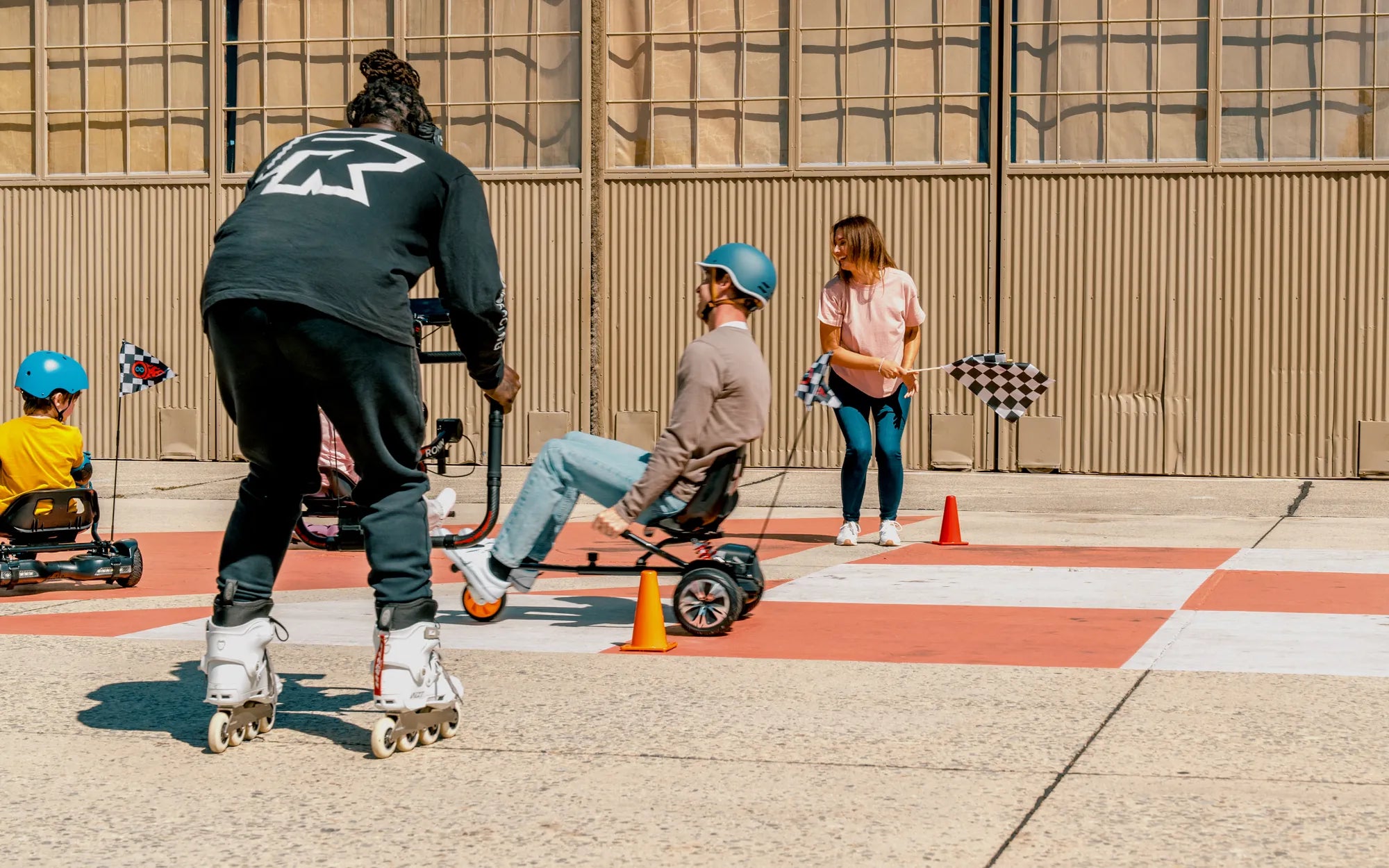
Introduction: Why the Right Off-Road Hoverboard Matters for Your Child's Adventure
Choosing the best off-road hoverboard for kids is about more than just picking a fun toy. It's an investment in your child's outdoor exploration, physical coordination, and safe enjoyment. Parents face a critical decision: balancing the thrill of off-road capability with non-negotiable safety and durability standards.
This guide provides the data-driven insights you need to navigate the market. We'll dissect the engineering behind true off-road performance and translate technical specs into practical advice. A well-chosen board opens up parks, trails, and backyards, moving play beyond the confines of smooth pavement.
Leading brands like Gyroor, trusted by over 100,000 riders, build this balance into their designs. The goal is to empower you with knowledge, ensuring your child's adventures are built on a foundation of safety and quality engineering.
What Makes an Off-Road Hoverboard "Off-Road"? Key Features Decoded
Standard hoverboards are designed for flat, hard surfaces. Off-road models are engineered differently, with specific components to handle unpredictable terrain. Understanding these features is the first step in identifying the best off-road hoverboard for kids.
The core differentiators are tire design, motor power, and overall build robustness. These elements work together to provide stability, traction, and power where standard boards would falter. Ignoring any one of these can compromise both performance and safety on rough ground.
Tire Type & Size: All-Terrain vs. Solid Rubber
Tires are the most visible differentiator. Off-road hoverboards use larger, air-filled (pneumatic) tires, typically 8.5 inches or more in diameter. These tires feature deep, knobby treads similar to mountain bike tires for grip on grass, dirt, gravel, and sand.
The air cushion inside provides essential shock absorption, smoothing out bumps and reducing strain on the board's frame and the rider's joints. In contrast, standard boards use smaller (6.5-7 inch) solid rubber tires, which offer no suspension and minimal traction on anything but smooth concrete.
For the best off-road hoverboard for kids, pneumatic all-terrain tires are non-negotiable. They are the primary component that defines the board's ability to leave the sidewalk behind safely.
Motor Power & Climbing Ability
Dual motor power is critical for off-road travel. Each wheel is typically driven by its own motor, with combined wattage often starting at 600W (300W per motor) for genuine off-road capability. This power directly translates to climbing ability.
Manufacturers specify a "climbing grade," usually between 15-30 degrees. In practical terms, a 20-degree grade means the board can handle moderate grassy hills or gravel inclines commonly found in parks. Insufficient power will cause the board to stall on slopes, potentially throwing the rider.
When evaluating the best off-road hoverboard for kids, ensure the motor power aligns with your local terrain. More power provides a safety margin for unexpected obstacles and ensures consistent performance.
Build Quality & Water Resistance
The frame must withstand constant vibration and impacts from rough terrain. Look for frames constructed from reinforced aluminum alloy or high-grade ABS plastic. This durability prevents flexing and cracking under stress.
Water and dust resistance is equally crucial. An IP rating indicates this protection. For example, Gyroor models feature an IPX5 rating, meaning they can withstand water jets from any direction. This protects the electrical components from puddles, wet grass, and light rain, significantly enhancing the board's longevity and safety outdoors.
Safety First: Non-Negotiable Features for Young Riders
Performance means nothing without safety. For children, certain safety features must be considered mandatory. This section outlines the absolute requirements every parent should verify before purchase.
These standards separate reputable, well-engineered products from potentially dangerous ones. Prioritizing these features mitigates the most significant risks associated with self-balancing electric vehicles.
The Importance of UL 2272 Certification
UL 2272 is the paramount safety certification for self-balancing scooters. It involves rigorous testing of the entire electrical system, including the battery, charger, and motor control circuits, for fire and electrical safety hazards.
A board with this certification, like those from Gyroor which use UL-certified battery packs, has passed tests for overcharge, short circuit, and mechanical abuse. Never purchase a hoverboard without this certification. It is the single most important factor in preventing battery-related fires.
Stable Learning Modes and Speed Limits
A good off-road hoverboard for kids should include a beginner or training mode. This software feature limits the top speed, often to 4-7 mph, and makes the controls less sensitive. It allows children to build confidence and master balance in a controlled way.
As skills improve, parents can unlock higher speed modes via a companion app or button sequence. Even in standard mode, a sensible speed cap (around 10-12 mph) is appropriate for most young riders, balancing fun with manageable risk.
Essential Protective Gear: Beyond the Board
The board is only one part of the safety equation. Proper protective gear is essential every time your child rides. This non-negotiable kit should include:
- Helmet: A multi-impact certified helmet designed for skateboarding or cycling.
- Wrist Guards: Crucial for preventing fractures during falls.
- Knee and Elbow Pads: Protect joints from scrapes and impacts.
Investing in high-quality, comfortable gear ensures your child will wear it. Make it a non-negotiable rule before the board is ever turned on.
Top Considerations When Choosing: A Parent's Checklist
With features and safety standards understood, apply this practical checklist to match a specific model to your child and your environment. This systematic approach ensures you find the best off-road hoverboard for kids for your unique situation.
Matching the Board to Your Child's Age, Weight, and Skill Level
Manufacturers provide recommended age and weight ranges. Generally, off-road boards suit kids aged 8 and up, but maturity and coordination are key factors. The board must support your child's weight with a margin for a backpack.
Typical weight limits range from 44 lbs to 220 lbs. Choosing a board with a limit well above your child's current weight ensures stable performance and allows for growth. A board too powerful for a beginner can be intimidating; one with a learner mode is ideal.
Battery Life & Range: Planning for Real-World Play
Battery specs are given in voltage (V) and amp-hours (Ah). A common configuration is 36V/4.0Ah. Advertised range (e.g., "up to 12 miles") is achieved under ideal conditions on smooth pavement.
Real-world off-road use—climbing hills, navigating grass—consumes more power. A realistic expectation is 60-70% of the advertised range. For most kids, 6-8 miles of actual range is ample for a play session. Look for a charge time of 3-5 hours.
Warranty and Customer Support: Ensuring Long-Term Peace of Mind
A substantial warranty reflects the manufacturer's confidence in their product. A comprehensive 1-year warranty on parts like the battery, motors, and frame, like Gyroor offers, is a strong indicator of quality.
Equally important is accessible customer support. Check if the brand has responsive service channels in your region. This support is invaluable for troubleshooting or obtaining replacement parts, ensuring the board remains functional for years.
Gyroor's Approach to Off-Road Adventure for Kids
Gyroor's engineering philosophy directly addresses the critical needs outlined for young riders. Their designs start with core safety, utilizing UL 2272 certified battery packs tested for over 500 charge cycles, providing a foundation of reliability and fire safety.
The IPX5 water-resistant construction is a key feature for an off-road hoverboard for kids, protecting the internal electronics from the elements encountered during outdoor play. This durability is paired with robust aluminum alloy frames and powerful dual-motor systems capable of handling varied terrain.
For parents, the assurance extends to a clear 1-year warranty and customer support network. Gyroor focuses on creating a stable, controllable riding experience, with features like beginner modes to help young riders build skills confidently, making their boards a strong contender for the title of the best off-road hoverboard for kids.
Comparison Table: Key Features at a Glance
| Feature | Off-Road Hoverboard (Recommended) | Standard Hoverboard |
|---|---|---|
| Tire Type | 8.5"+ Pneumatic All-Terrain (Air-Filled) | 6.5" Solid Rubber |
| Motor Power | Dual 300W+ (600W+ Total) | Dual 250W or Less |
| Terrain Capability | Grass, Dirt, Gravel, Hills, Pavement | Smooth Pavement Only |
| Shock Absorption | Excellent (Air Cushion) | Poor |
| Water Resistance | IPX4 or Higher (e.g., IPX5) | Minimal or Unrated |
| Ideal For | Outdoor Exploration, Parks, Trails | Indoor/Smooth Outdoor Courts |
Frequently Asked Questions (FAQs) for Parents
Q: What is the best age for a child to start using an off-road hoverboard?
Most manufacturers recommend ages 8 and up. This recommendation considers the necessary balance, coordination, and maturity to follow safety rules. Always assess your individual child's physical ability and responsibility level first.
Q: Can these hoverboards truly handle hills and wet grass?
A genuine off-road model with adequate motor power (600W+) and pneumatic tires can handle moderate grassy hills and damp conditions. However, performance decreases on steep slopes or very thick, wet grass. Always supervise and start on gentle terrain.
Q: How long does the battery take to charge, and how can I maximize its lifespan?
Full charge typically takes 3-5 hours. To maximize battery lifespan: avoid draining it completely before charging, store the board in a cool, dry place, and use only the manufacturer-provided charger. Don't leave it plugged in indefinitely after a full charge.
Q: Are off-road hoverboards significantly heavier or harder to carry than regular ones?
Yes, due to larger motors, bigger tires, and sturdier frames, off-road models are heavier, often weighing 25-30 lbs compared to 20 lbs for standard boards. This is a trade-off for durability and capability. Consider this if your child needs to carry it frequently.
Q: What is the most important maintenance tip for an off-road model?
Regularly check and maintain proper tire pressure. Pneumatic tires can slowly lose air. Riding with under-inflated tires reduces range, makes steering harder, and increases the risk of damage. Keep them inflated to the PSI level listed in the manual.
Conclusion: Empowering Safe and Exciting Outdoor Play
Selecting the best off-road hoverboard for kids requires a focus on certified safety, robust engineering, and features that match your child's environment. Prioritize UL 2272 certification, powerful dual motors, pneumatic all-terrain tires, and strong water resistance.
This investment, paired with mandatory protective gear and proper supervision, transforms the board from a simple gadget into a tool for adventure. It encourages outdoor activity, improves balance and coordination, and builds confidence through mastered challenges.
By making an informed choice, you provide a platform for fun that is built to last and designed with safety as the core principle. Explore engineered options that put these priorities first and unlock a new world of outdoor exploration for your child.
Ready to explore durable, safety-focused options for your young adventurer? Browse the full Gyroor collection at gyroorboard.com.
Hoverboard 8 Inch Wheels: The Ultimate Guide to Compact and Powerful Rides
What Is the Cheapest Hoverboard? A Budget-Friendly Guide to Smart Spending