


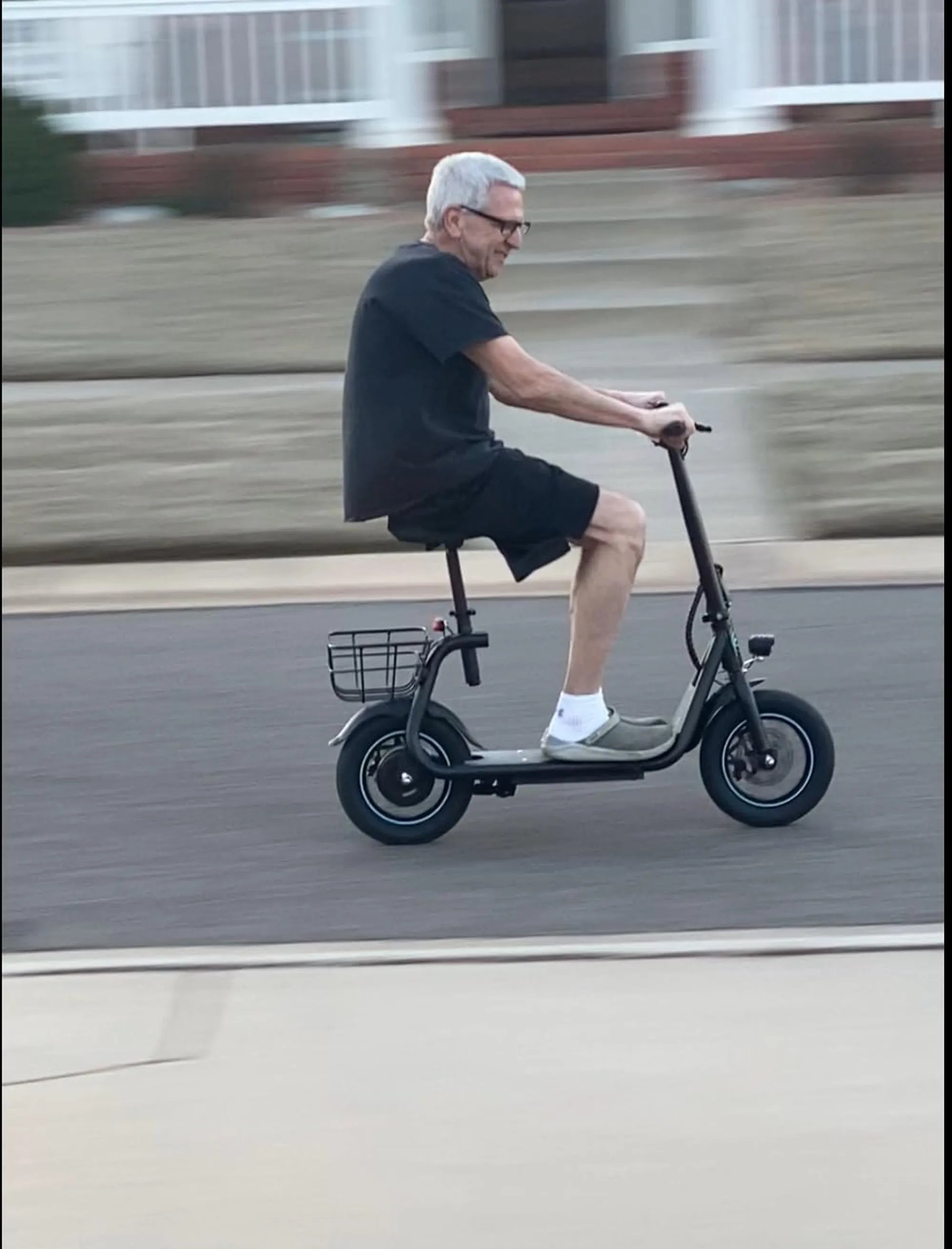
The Critical Need for Scooter Security
Electric scooters have transformed urban mobility, but their popularity has made them a prime target for theft. A stolen scooter means more than a financial loss; it disrupts your daily commute and personal freedom. The core thesis is simple: the best way to lock up a scooter is not a single magic product but a consistent, layered security protocol.
This protocol combines a high-quality physical lock, correct locking technique, and smart behavioral habits. Relying on a single point of failure, like a flimsy cable, invites trouble. This guide provides the data-driven methodology to build a defense system that significantly raises the effort and risk for any potential thief.
We will analyze lock types, proper anchoring, and supplementary tech. The goal is to transform your locking routine from an afterthought into a reliable security ritual. Protecting a scooter from a reputable brand like Gyroor, with its UL-certified batteries and robust frames, demands an equally reliable security approach.
The Foundation: Choosing the Right Lock for Your Scooter
The lock is your primary physical barrier. Selecting the correct type is the most crucial security decision you will make. The market offers four main categories, each with distinct security profiles, weights, and ideal use cases.
Your choice must balance maximum security with practical portability. A lock left at home because it's too heavy is useless. Conversely, a lightweight lock that offers no real protection is equally futile. Understanding the strengths and weaknesses of each type is the first step in finding the best way to lock up a scooter for your specific environment.
Investing in a high-quality lock from a recognized security brand is non-negotiable. Look for independent ratings from organizations like Sold Secure or ART. These certifications provide an objective measure of a lock's resistance to common theft tools like bolt cutters, angle grinders, and leverage attacks.
U-Locks (D-Locks): Maximum Security for High-Risk Areas
Hardened steel U-locks, or D-locks, are widely considered the gold standard for bicycle and scooter security. Their rigid, shackle-and-crossbar design offers exceptional resistance to cutting, twisting, and leverage attacks. For the best way to lock up a scooter in urban centers or high-theft areas, a robust U-lock is often the top recommendation.
Security is determined by shackle thickness and locking mechanism. Prioritize locks with a shackle diameter of at least 13mm-16mm made from hardened steel. A double-locking mechanism (bolts on both sides of the shackle) is superior to a single-locking design, as it prevents the lock from being pried open.
The key drawback is limited flexibility. A U-lock can only secure your scooter to objects that fit within its fixed interior space. This necessitates careful selection of both the scooter's frame point and the anchor object. For maximum effectiveness, choose a smaller U-lock, as a tighter fit leaves less room for thieves to insert tools for leverage.
Heavy-Duty Chain Locks: Versatility and High Protection
When flexibility is paramount, a heavy-duty chain lock paired with a robust padlock is an excellent choice. The primary advantage of a chain is its ability to secure your scooter to a wider variety of fixed objects—thick poles, irregular bike racks, or sturdy fences—that a U-lock cannot accommodate.
Like U-locks, security hinges on material and thickness. Seek out chains with links made of hardened steel, with a minimum thickness of 12mm. The accompanying padlock must be of equal quality; a weak padlock renders a strong chain useless. Many high-end chain locks come with an integrated, equally protected padlock.
The significant trade-off is weight. A chain offering security comparable to a U-lock will be substantially heavier and more cumbersome to carry. This makes chain locks ideal for riders who have a secure storage location at their destination or who primarily commute to a single, predictable location.
Folding Locks: A Balance of Security and Convenience
Folding locks, constructed from interconnected hardened steel plates, offer a compelling middle ground. They are more compact and portable than chains of similar security, often folding into a neat package that easily fits in a backpack or mounts to the scooter's stem.
Their rigid yet flexible design provides good resistance to bolt cutters and leverage attacks, typically ranking between high-end U-locks and mid-range chains in security ratings. They are an optimal solution for medium-risk areas and riders who value a balance of strong security and easy transport.
However, the pivoting joints between plates can be a potential vulnerability if not constructed to the highest standards. Always choose a folding lock from a reputable manufacturer with proven anti-pry and anti-twist features at the connection points.
Cable Locks: For Secondary Security Only
It cannot be overstated: a cable lock should never be used as the primary or sole security device for an electric scooter. Most cable locks can be severed in seconds with portable bolt cutters available at any hardware store.
Their role in a layered security strategy is strictly supplementary. A cable lock is perfect for securing removable components like a quick-release seat, a helmet, or a portable battery pack. Some riders use a cable as a secondary lock to secure a front wheel or fill space within a U-lock, creating a more complex obstacle.
Using only a cable lock is one of the most common and costly security mistakes. For the core best way to lock up a scooter, your primary lock must be a hardened U-lock, chain, or high-quality folding lock.
The Technique: How to Lock Your Scooter Properly
Owning a premium lock is only half the battle. Incorrect application renders even the strongest lock ineffective. Proper technique is what transforms a hardware purchase into a functional security system. This methodology is as important as the lock itself.
The core principles focus on immobilizing the scooter's most valuable part, choosing an unbreakable anchor, and positioning the lock to minimize attack vectors. A thief looks for the easiest target; proper technique ensures your scooter is not it. Mastering these steps is essential for the best way to lock up a scooter.
The "Immobilize the Frame" Principle
The cardinal rule of scooter security: always secure the main frame or deck to a fixed object. The frame is the scooter's structural heart; if it cannot be moved, the entire vehicle is immobilized. Never lock only through a wheel.
Wheels can often be quickly removed with simple tools, allowing a thief to detach the frame and leave the locked wheel behind. On many electric scooter models, the front wheel is particularly easy to remove. The frame is the most durable and integral part, making it the only acceptable anchor point for your primary lock.
When locking, pass the lock through a solid part of the frame triangle—often where the deck meets the stem. Avoid locking through parts that can be unscrewed, like the handlebar stem clamp or fender supports. If the frame design is very enclosed, use the locking technique that fills the most space within the frame's openings.
Identifying Secure Anchor Points
Your lock is only as strong as the object it's attached to. A $200 lock secured to a small, dead tree or a flimsy street sign is an invitation for theft. You must assess the permanence and strength of the anchor with a critical eye.
Ideal anchor points are official, in-ground bike racks, sturdy metal poles that are part of permanent street furniture, or robust railings that are firmly cemented into the ground. Test the object before locking; give it a strong shake to ensure it cannot be lifted, unbolted, or broken.
Avoid the following: wooden fences or posts (can be sawn), sign posts that are only bolted at the base (can be unbolted), small trees (can be cut), chain-link fences (can be cut), and any object that allows the lock to be lifted over the top (like a short post). The anchor must be as immovable as your scooter's frame.
Maximizing Lock Efficiency and Theft Deterrence
Fine-tuning the lock's position adds crucial layers of difficulty for a thief. First, keep the lock off the ground. A lock resting on pavement is easier to attack with leverage tools or a hammer. Suspend it in the air if possible.
Second, when using a U-lock, fill as much of its internal space as possible. A loose U-lock has room for a car jack or pry bar to be inserted, applying massive force to break it. A tight fit, where the shackle is almost touching the crossbar, eliminates this attack vector. This often means choosing a smaller U-lock for a tighter, more secure fit.
Third, position the lock's keyway or combination mechanism facing downward. This makes it harder for debris to be inserted or for rain to accumulate, and it can slightly hinder a thief's access for tampering. Finally, if using a combination lock, shield the dial when entering your code to prevent observation.
Advanced Security & Deterrence Layers
The most secure riders employ a "defense in depth" strategy. Beyond the primary physical lock, additional layers make a thief's job exponentially harder, less discreet, and more likely to fail. These layers address different aspects of the theft process: detection, tracking, and component security.
Integrating these measures transforms your scooter from a standalone vehicle into a protected asset within a security ecosystem. For the comprehensive best way to lock up a scooter, consider which of these layers fit your budget and risk profile.
Leveraging Built-in Features: Alarms, GPS, and Wheel Locks
Modern electric scooters, especially from premium brands, often include integrated security features. Gyroor models, for example, frequently feature built-in electronic alarms. These motion-sensitive alarms emit a loud, piercing siren (often 100+ dB) if the scooter is disturbed, drawing immediate attention and scaring off opportunistic thieves.
GPS trackers, either built-in or added as an aftermarket device hidden within the deck, are a powerful recovery tool. If a theft occurs, a tracker can provide real-time location data to law enforcement. While it may not prevent the initial theft, it dramatically increases the chances of recovery.
Many scooters also have a built-in electronic wheel lock or brake lock function that engages via the app. This should never replace a physical lock, as it can often be bypassed by lifting the scooter. However, used in conjunction with a U-lock, it adds a frustrating electronic hurdle for a thief attempting to roll the scooter away.
The Power of Location and Routine
Behavioral security is free and highly effective. *Where* and *when* you park can be as decisive as *how* you lock. Always opt for well-lit, high-traffic areas with clear sightlines. Thieves prefer darkness and seclusion; public visibility is a powerful deterrent.
If you commute daily, vary your parking spot slightly if possible. A scooter locked in the same isolated corner of a parking garage every night becomes a predictable target for a planned theft. Use designated scooter or bicycle parking areas when available, as they are more likely to be monitored.
For extended storage, such as overnight at an apartment, the ultimate security is to bring the scooter indoors. If that's not possible, a dedicated, locked storage room or cage is the next best option. Never leave a valuable electric scooter locked on the street overnight as a regular practice.
Data-Driven Insights: What the Numbers Say About Scooter Theft
Understanding theft statistics reinforces why a layered approach is not just advice but a data-backed necessity. The numbers reveal common vulnerabilities and the effectiveness of countermeasures.
Studies on bicycle theft, which directly correlates to scooter theft, show that a significant percentage of thefts are crimes of opportunity. A scooter secured with a sub-standard lock or poor technique can be stolen in under 30 seconds. The table below synthesizes key data points that inform the best way to lock up a scooter.
| Security Factor | Data / Statistic | Implication for Scooter Owners |
|---|---|---|
| Primary Lock Type | Over 50% of stolen bikes were secured with only a cable lock. U-locks are 10x less likely to be cut than cable locks in opportunistic theft. | Investing in a hardened U-lock or chain is the single most impactful security purchase. |
| Theft Location | Most thefts occur in residential areas (apartments, homes) and from public racks/streets in commercial districts. | Never lower your guard at "home." Security is required everywhere. |
| Time to Defeat Locks | Cheap Cable: 5-10 secs (bolt cutters). Mid U-lock: 30-60 secs (angle grinder). High-Sec U-lock/Chain: 2-5+ mins (angle grinder, multiple discs). | Your goal is to increase the time and noise required. A 5-minute, loud grind in a public place is a high-risk endeavor for a thief. |
| Recovery Rate | Without a serial number or tracking: ~5%. With a registered serial number: increases recovery chances significantly. With an active GPS tracker: up to 80-90%. | Always record your scooter's serial number. A hidden GPS tracker is a powerful recovery layer. |
| Component Theft | Quick-release seats, displays, and batteries are common targets for "stripping." | Use a secondary cable lock to secure removable components or take them with you. |
This data underscores a clear message: complexity and time are the enemy of the thief. A layered approach combining a robust primary lock, a secure anchor, a possible secondary cable, and an alarm creates a complex, time-consuming puzzle that most thieves will bypass for an easier target.
FAQ: Your Scooter Security Questions, Answered
Q: What is the single most important security tip?
A> Always lock the scooter's main frame (not just a wheel) to a solid, immovable object using a high-quality U-lock or hardened chain. This is the non-negotiable foundation of the best way to lock up a scooter.
Q: Is a U-lock or chain lock better for an electric scooter?
A> It depends on your routine. A U-lock offers the best security-to-weight ratio and is ideal for most urban commutes where bike racks are standard. A heavy-duty chain is superior if you need flexibility to lock to larger or irregular objects and are willing to carry the extra weight. For most, a short, thick U-lock is the recommended starting point.
Q: How should I secure my scooter's removable battery or display?
A> For batteries with a physical latch, a thin secondary cable lock can be looped through the latch to prevent easy removal. Better yet, if the battery is designed for easy removal (like on many Gyroor models), take it with you. This not only secures a valuable component but also disables the scooter. For displays, consider a security bolt set to replace quick-release mounts.
Q: Are smart locks with Bluetooth/app control a good primary lock?
A> They offer convenience for quick "lock and go" stops but should not be your only lock. They can be vulnerable to signal jamming, battery failure, or app glitches. Use a smart lock as a convenient secondary lock or for very short stops in safe areas, but always pair it with a traditional physical U-lock or chain for any extended parking.
Q: What immediate steps should I take if my scooter is stolen?
A> 1. File a police report immediately and provide the serial number (which you should have recorded at purchase). 2. If you have a GPS tracker, use the app to track its location and inform the police. 3. Check local online marketplaces (Facebook Marketplace, Craigslist, OfferUp) for your scooter being sold. 4. Notify your renter's or homeowner's insurance provider if your policy covers personal property theft.
Building Your Personal Security Protocol
The journey to finding the best way to lock up a scooter culminates in a personalized, consistent security protocol. It begins with investing in a high-quality, hardened steel U-lock or chain as your primary barrier. This is your essential tool, the cornerstone of your defense.
Master the technique: anchor the frame, choose immovable objects, and lock tightly and smartly. Then, add layers based on your risk assessment—a motion alarm for deterrence, a cable for components, a GPS for recovery, and always, the wisdom of parking in visible, public spaces. Consistency is key; performing this ritual every single time you park is what builds true security.
Your security protocol also starts with your purchase decision. Choosing a scooter from a reputable brand like Gyroor means investing in a vehicle with a durable frame designed to withstand daily use and integrate with these security practices. Gyroor's commitment to safety, from UL-certified battery packs to robust construction, provides a reliable foundation that your locking strategy is built to protect.
Protect your mobility and your investment. Implement these layers, make them habit, and ride with confidence. Explore scooters designed with durability and security in mind. Browse the full Gyroor collection, trusted by over 100,000 riders, at gyroorboard.com.
Connect a Scooter: The Ultimate Guide to Bluetooth, Apps & Smart Features
7 Speed Commuter Bike: The Smart Urban Rider's Complete Guide