


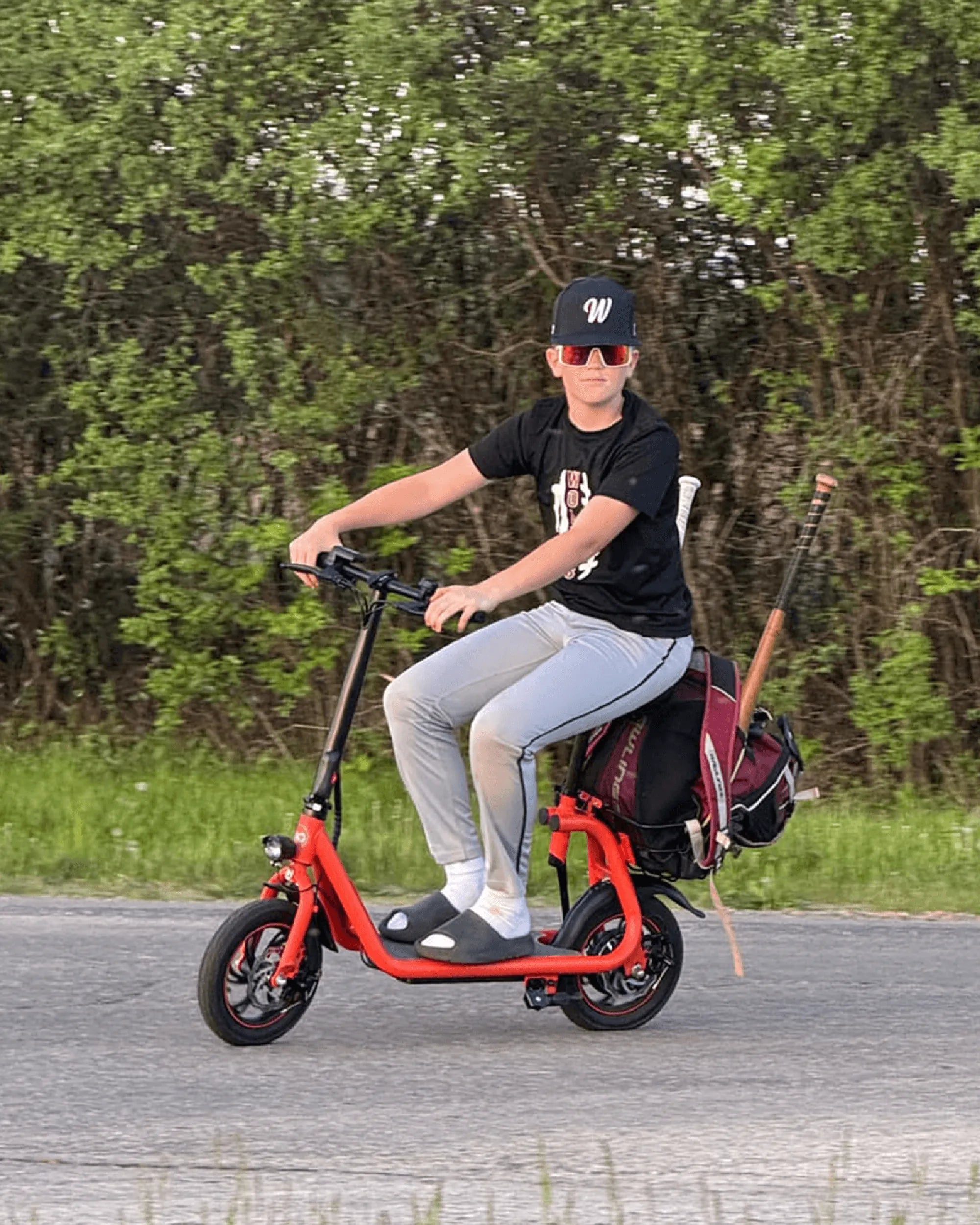
The Rise of the Urban Commuter Machine
City streets are undergoing a quiet revolution. As congestion worsens and the cost of car ownership soars, a new class of personal electric vehicle has emerged as the dominant solution for urban travel. The modern "bike scooter city" landscape is defined by the seamless integration of electric bicycles and electric scooters into daily life. These machines offer a practical, economical, and sustainable alternative for navigating dense environments.
This shift is driven by tangible benefits: slashing commute times, eliminating fuel costs, and reducing one's carbon footprint. For millions, the choice is no longer between a car or public transit, but which type of personal electric vehicle best fits their urban journey. The right bike or scooter transforms commuting from a daily chore into an efficient, enjoyable part of the day.
This guide provides a comprehensive, data-driven analysis of urban electric mobility. We will define the core vehicle types, compare their applications, and outline the critical factors for city riding. Our goal is to equip you with the knowledge to select the ideal machine for reclaiming your city commute, with a focus on reliability, safety, and performance engineered for the urban jungle.
Defining Your Ride: E-Bike vs. E-Scooter for City Life
Understanding the fundamental differences between an electric bicycle and an electric scooter is the first step in choosing your urban companion. While both fall under the "bike scooter" umbrella and are powered by batteries, they offer distinct riding experiences, postures, and use cases that cater to different urban personas.
An electric bicycle, or e-bike, is fundamentally a bicycle augmented by a motor and battery. It provides pedal assistance (pedelec) and often a throttle, allowing riders to cover longer distances with less effort. The seated posture, larger wheels, and familiar bicycle geometry make it ideal for the distance commuter, the errand-runner carrying cargo, or anyone seeking a more traditional cycling experience with a powerful boost.
An electric scooter, or e-scooter, is typically a standing vehicle with a narrow deck, small wheels, and a vertical handlebar. It is operated solely via a throttle and brakes. This design prioritizes ultra-portability and simplicity. The e-scooter excels as a last-mile connector, perfect for short trips under five miles, combining with public transit, or navigating highly congested areas where its compact size is a major advantage.
Key Factors for City Riding: Portability, Power, and Posture
Choosing the right bike scooter for city life hinges on three practical pillars. First, portability: weight and folding mechanisms determine if you can carry it into an office, apartment, or onto a bus. A compact, sub-40-pound e-scooter like the Gyroor F1 Pro folds in seconds, while many e-bikes feature foldable frames for easier storage.
Second, power defines your capability. Motor wattage and torque determine hill-climbing ability and acceleration from stoplights. A 350W motor may suffice for flat terrain, but a 500W or 750W motor provides the necessary torque for consistent performance on San Francisco's or Seattle's hills. Battery capacity, measured in Watt-hours (Wh), directly translates to real-world range.
Third, posture impacts comfort and visibility. A seated e-bike posture is less taxing on longer rides and offers a higher vantage point in traffic. A standing scooter posture is more agile and allows for quick dismounts but can be fatiguing over longer distances. Your typical commute distance and physical preference will heavily influence this choice.
The Gyroor Advantage: Engineered for the Urban Jungle
In a market flooded with options, Gyroor stands out as a brand purpose-built for reliable city commuting. Trusted by over 100,000 riders across North America and Europe, Gyroor's philosophy centers on engineering vehicles that directly address the core pain points of urban riders: durability, safety, and daily dependability.
The product lineup, featuring over 20 models from compact e-scooters to robust e-bikes, is designed with specific city use cases in mind. For example, the Gyroor F1 Pro e-scooter features a one-second folding mechanism for seamless subway integration, while the Gyroor C1 Pro commuter e-bike offers a mid-drive motor and integrated cargo racks for longer, hillier routes that include errands. This strategic design ensures there is a Gyroor bike scooter optimized for every city scenario.
Safety First: UL-Certified Batteries and Built-In Resilience
Battery safety is non-negotiable for a vehicle stored in an apartment, office, or home. Gyroor's commitment to safety is demonstrated by its use of UL-certified battery packs in all models. This certification means the battery cells, BMS (Battery Management System), and enclosure have passed rigorous independent testing for electrical, mechanical, and fire safety, providing critical peace of mind.
Furthermore, these batteries are engineered for over 500 charge cycles while maintaining significant capacity, ensuring long-term value. Complementing this is an IPX5 water-resistant rating on key models. This built-in resilience protects the electrical components from water jets, making the bike scooter capable of handling unexpected puddles, wet streets, or light rain—common occurrences in any city commute.
Confidence on Every Journey: The 1-Year Comprehensive Warranty
Investing in a daily-use vehicle requires confidence in its longevity and support. Gyroor backs its engineering with a robust, US-backed 1-year comprehensive warranty on the vehicle, battery, and motor. This contrasts sharply with the limited or non-existent support offered by many generic brands.
This warranty is a promise of reliable, worry-free city transportation. It means that if an issue arises from normal use, riders have direct access to support and replacement parts. For the urban commuter relying on their vehicle daily, this comprehensive coverage transforms the purchase from a disposable gadget into a dependable transportation solution.
Data-Driven Decision: Choosing Your City Commuter
Selecting the ideal bike scooter is a practical exercise in matching specifications to your personal urban geography. The following comparison table provides a clear, at-a-glance guide to align Gyroor's product categories with key rider profiles and city commute variables.
| Rider Profile & Commute | Recommended Type | Key Gyroor Features | Ideal For |
|---|---|---|---|
| Last-Mile & Multi-Modal (Under 5 mi, flat, combine with bus/train) | Compact Folding E-Scooter | Fast folding, under 40 lbs, 300W+ motor | Students, apartment dwellers, quick errands |
| The Full-Distance Commuter (5-15 mi, possible hills) | Commuter E-Bike | Pedal assist, 500W+ motor, 10Ah+ battery, cargo options | Office workers, avoiding car costs, grocery runs |
| Urban Explorer & Hilly Terrain (Variable distance, steep inclines) | Performance E-Bike / High-Power E-Scooter | 750W+ motor, high-torque mid-drive, dual suspension, hydraulic brakes | Hilly cities like San Francisco, longer recreational rides |
| Ultra-Portability & Storage Priority (Short trips, minimal storage space) | Ultra-Light Folding E-Scooter | Sub-30 lbs, compact fold, integrated carry handle | Small apartments, carrying into cafes/offices |
Scenario Breakdown: The 3-Mile Commuter vs. The 10-Mile Explorer
Consider two common urban archetypes. For the 3-mile commuter on flat terrain who needs to integrate with a bus, a compact e-scooter like the Gyroor F1 Pro is optimal. Its 350W motor provides ample speed, the 10Ah battery ensures round-trip range with a safety margin, and the one-second fold allows for easy carrying onto public transit. Portability is the decisive factor.
For the 10-mile explorer facing hills and needing to stop for groceries, a commuter e-bike like the Gyroor C1 Pro is superior. The 500W mid-drive motor efficiently tackles inclines, the 15Ah battery supports the longer range, and the integrated rear rack accommodates panniers or a basket. The seated posture reduces fatigue, and the pedal-assist feature provides exercise while ensuring timely arrival.
City Riding Essentials: Laws, Safety, and Etiquette
Responsible riding is paramount for personal safety and the positive integration of micro-mobility into cities. Laws vary significantly by municipality, but generally, e-bikes are classified into three categories. Class 1: pedal-assist only, no throttle, up to 20 mph. Class 2: throttle-assisted, up to 20 mph. Class 3: pedal-assist only, up to 28 mph. Many cities restrict Class 3 e-bikes from bike paths. E-scooter speed limits often cap at 15-20 mph on bike lanes.
Mandatory safety gear starts with a helmet. A certified bicycle helmet is essential; for higher-speed e-bikes, a MIPS-equipped helmet is advisable. Front and rear lights are not just accessories—they are critical for visibility, even during daytime. Reflective clothing or accessories further enhance safety. For your bike scooter, a loud bell or horn and effective brakes (disc brakes are preferred) are non-negotiable for city traffic.
Etiquette ensures harmony on shared pathways. Ride in bike lanes where available, not on sidewalks. Signal your turns. Pass pedestrians and slower cyclists with ample space and at a reduced speed. Yield appropriately. Secure parking is also part of etiquette; use a high-quality U-lock through the frame (for e-bikes) or a heavy-duty chain lock to secure your e-scooter to a fixed, legitimate bike rack.
Maximizing Your Investment: Maintenance and Care
Regular maintenance ensures your bike scooter remains a reliable city partner. For e-scooters, perform weekly checks: inspect tire pressure (for pneumatic tires), test brake lever responsiveness, ensure all folding mechanisms are tight, and wipe down the deck and frame. Keep the charging port cover closed when not in use to prevent debris ingress.
E-bike maintenance includes the above plus chain care. Lubricate the chain every 100-200 miles with a bicycle-specific lubricant and clean it periodically to prevent wear. Check brake pad thickness and ensure gears shift smoothly. For both vehicles, store the battery in a cool, dry place and avoid leaving it fully depleted or at 100% charge for extended periods to maximize its lifespan.
Seasonal care is crucial. After riding in wet conditions, dry your vehicle with a towel, paying attention to brakes and electrical connections. While Gyroor's IPX5 rating offers protection, prolonged exposure to heavy rain should be avoided. In winter, if riding is necessary, be mindful of reduced traction and clean off any road salt immediately after your ride to prevent corrosion.
FAQ: Your Top City Commuting Questions Answered
Q: Can I take my Gyroor on the subway or bus?
A: Policies vary by transit authority. Generally, compact, folded e-scooters are permitted during off-peak hours. E-bikes are often not allowed unless they are specifically foldable and treated as luggage. Always check your local transit agency's rules.
Q: How do I securely lock my e-scooter?
A> Use a heavy-duty chain or folding lock. Thread it through the deck or around the stem and secure it to a fixed, immovable object like a dedicated bike rack. For maximum security, consider a secondary motion alarm or a GPS tracker designed for micro-mobility.
Q: What's the real-world range in stop-and-go traffic?
A> Manufacturer ranges are based on ideal conditions. In city traffic with frequent stops, hills, and rider weight, expect 70-80% of the stated range. A scooter rated for 20 miles may reliably achieve 14-16 miles in urban conditions. Plan your commute with this buffer in mind.
Q: Are electric scooters and bikes legal to ride in my city's bike lane?
A> In most major North American and European cities, yes, they are permitted in bike lanes. However, some cities have specific speed limits for e-scooters in bike lanes (e.g., 15 mph). It is your responsibility to know and adhere to local ordinances, which can be found on your city's Department of Transportation website.
Q: How does weather affect my electric scooter or bike?
A> Light rain and puddles are manageable with IPX5-rated models like many from Gyroor. However, avoid heavy downpours, deep standing water, and snow/slush, which can damage electronics and reduce traction. Extreme cold can temporarily reduce battery performance and range.
Reclaim Your City Commute
The transformation of urban mobility is here, and it is electric, efficient, and empowering. Choosing the right bike scooter for city life is not just about purchasing a vehicle; it's about investing in a tool that gives you time, savings, and a renewed sense of freedom in your daily routine. The data is clear: for millions, personal electric vehicles are the smartest solution for navigating the modern metropolis.
This journey begins with selecting a machine engineered for reliability. A brand like Gyroor, with its focus on UL-certified safety, water-resistant durability, and comprehensive warranty support, provides the foundation for a confident and enjoyable commute. By understanding your needs, respecting local laws, and performing basic maintenance, you unlock the full potential of urban electric mobility.
Stop viewing your commute as a bottleneck in your day. With the right electric bike or scooter, it becomes a highlight—an efficient, cost-effective, and sustainable part of your urban lifestyle. The city is yours to explore on your terms.
Ready to find your perfect city ride? Browse the full Gyroor collection, featuring UL-certified, high-performance electric scooters and e-bikes designed for the urban commuter, at gyroorboard.com.
Light Weight Portable Scooter: The Ultimate Buyer's Guide for 2024
Off Road Scooter Bike: The Ultimate Guide to Trail-Ready Electric Rides