



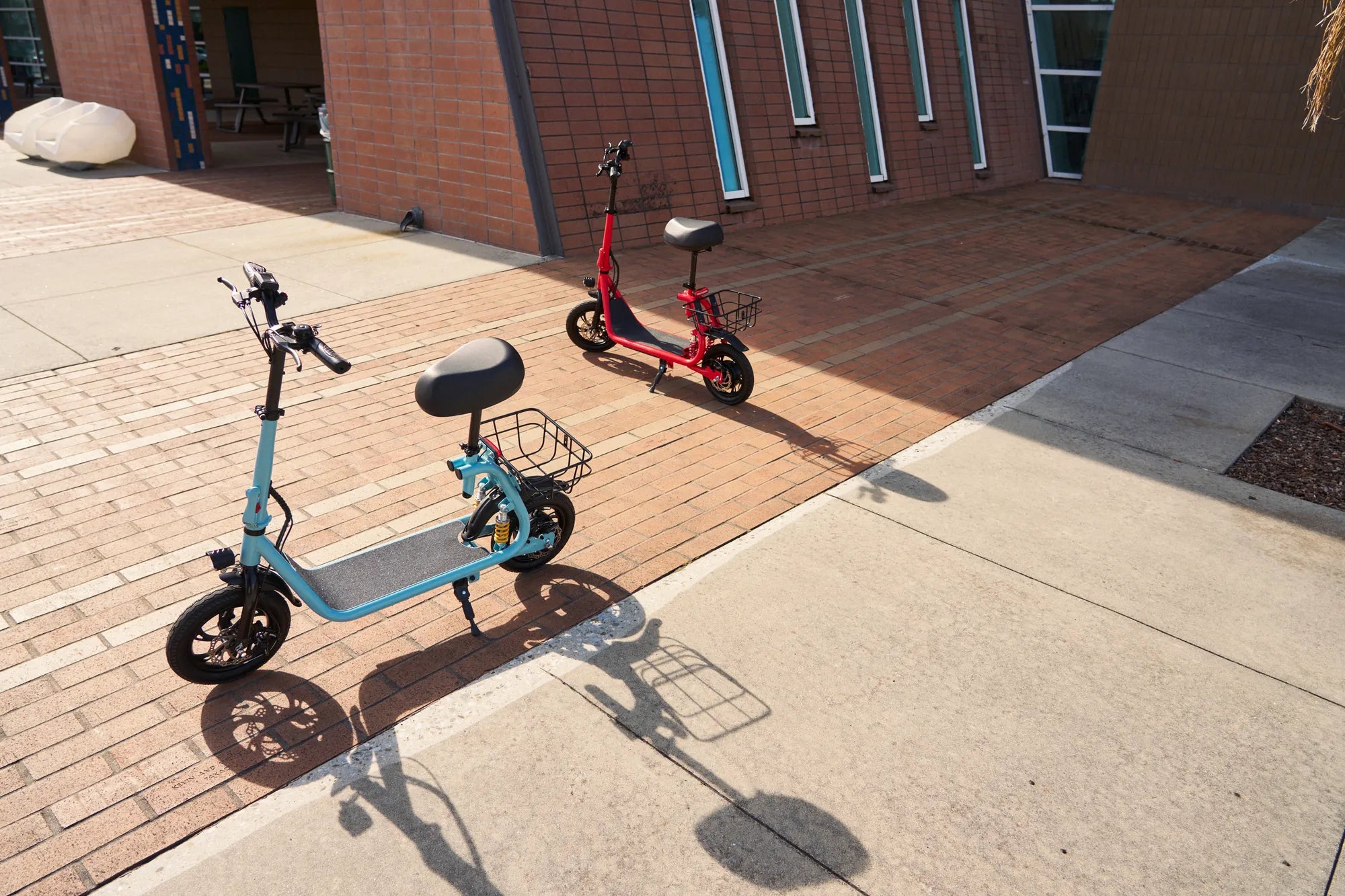
Introduction: Redefining Your Ride in the Modern Era
The classic bicycle represents freedom, fitness, and simplicity. For over a century, it has been the quintessential human-powered machine. Now, the electric bike, or e-bike, has emerged as a powerful contender, augmenting human effort with a silent motor. The core debate of bike vs ebike is not about which is objectively better, but which is the right tool for your specific journey.
This comparison goes beyond a simple spec sheet. We will dissect the fundamental mechanics, analyze real-world performance for commuting and recreation, and provide a data-driven framework for your decision. Whether you're a daily commuter, a fitness enthusiast, or an adventure seeker, understanding the nuances between these two-wheeled options is key to unlocking your ideal ride.
The choice between pedal power and pedal-assist power shapes your experience on the road. It affects your budget, your fitness routine, and your ability to conquer terrain. This guide will equip you with all the information needed to navigate the bike vs ebike landscape confidently, ensuring your next two-wheeled investment perfectly matches your lifestyle.
Core Mechanics: How They Work and What Powers Your Journey
The fundamental difference in the bike vs ebike debate lies in the drivetrain. A traditional bicycle is a purely mechanical system. The rider's leg power is transferred through the pedals, turning a chainring, which moves the chain, and finally rotates the rear wheel's cassette. Gears provide mechanical advantage, but every watt of forward momentum comes directly from the rider.
An e-bike integrates an electro-mechanical system into this familiar frame. Key components include a battery (the energy source), a motor (the power unit, typically in the hub or mid-drive), sensors (cadence or torque), and a controller (the brain). The system is designed to assist, not replace, the rider's pedaling effort.
When you pedal an e-bike, the sensor detects your motion or the force you're applying. It signals the controller to deliver power from the battery to the motor, which then provides a boost. This is pedal-assist (PAS). The level of assistance—often from Eco to Turbo—is selectable by the rider, allowing precise control over how much electric help is provided.
This integrated design means an e-bike rider is always contributing effort. The motor amplifies that effort, making hills feel flat and headwinds negligible. It's a synergy of human and machine, fundamentally different from the direct, unassisted connection of a traditional bike vs ebike dynamic.
The Practical Rider's Comparison: Cost, Commute, and Capability
Upfront Investment and Long-Term Value
The initial cost is the most stark contrast. A quality traditional bicycle can be found for a few hundred dollars, with premium models reaching several thousand. E-bikes carry a significant premium due to their electrical components. Entry-level models start around $1,000, with mainstream reliable options in the $1,500-$3,000 range, and high-performance models exceeding that.
However, the long-term value proposition of an e-bike shifts when viewed as a car replacement. For urban commuters, the savings on fuel, parking, insurance, and public transit fares can offset the higher upfront cost within a year or two. The operating cost of an e-bike is remarkably low—just pennies per charge for electricity versus dollars per gallon for gas.
Maintenance costs also differ. Traditional bikes require standard drivetrain, brake, and tire upkeep. E-bikes incur these same costs, plus potential servicing for the motor, battery, and display. Investing in a brand with a strong warranty, like Gyroor, which offers a 1-year comprehensive warranty, is crucial for protecting your long-term investment and managing potential repair costs in the bike vs ebike equation.
The Daily Commute & Urban Mobility
For the urban commuter, this is where the bike vs ebike debate gets practical. A traditional bike demands significant physical exertion. Arriving sweaty, especially in work clothes or on hot days, is a major drawback. It also requires the rider to provide all the power for acceleration from stops and climbing bridges or hills.
An e-bike transforms the commute. The electric assist allows for consistent, higher average speeds (15-20 mph easily) with markedly less sweat. It demolishes hills, making routes previously considered too taxing completely feasible. This expanded range turns a 30-minute grueling ride into a comfortable 20-minute journey, increasing the viability of biking for more people.
Cargo and passenger capability is another win for e-bikes. Transporting groceries, a child in a seat, or work gear is far less daunting with motorized assistance. This utility makes the e-bike a genuine tool for errands and family logistics, not just exercise. The reduced physical strain also makes commuting by bike a sustainable daily habit, not an occasional workout.
Fitness, Fun, and Terrain Exploration
A common misconception is that e-bikes offer no fitness benefit. Studies show the opposite: e-bike riders often get more total exercise because they ride more frequently, for longer distances, and tackle more challenging terrain. The assist encourages riding when a traditional bike might feel too daunting, leading to greater overall calorie burn and cardiovascular health over time.
The pure, traditional bicycle offers an unmatched athletic challenge. It provides maximum calorie burn per mile and a direct feedback loop between effort and speed. For the fitness purist or competitive cyclist, it remains the undisputed tool. The sense of accomplishment from conquering a climb purely on your own power is unique.
For adventure and exploration, e-bikes are game-changers. They flatten hills and extend range, allowing riders to explore scenic routes, cover more ground on weekend tours, and keep pace with friends of differing fitness levels. They make cycling accessible to older adults, those recovering from injury, or anyone who wants to enjoy the ride without being exhausted by it. The bike vs ebike choice here is between focused athleticism and expanded, accessible adventure.
Data-Driven Decision Factors: A Side-by-Side Analysis
To crystallize the bike vs ebike comparison, here is a detailed breakdown of key performance and practical attributes. This table provides a snapshot for direct comparison, followed by deeper analysis of what the data means for your ride.
| Attribute | Traditional Bicycle | Electric Bike (E-Bike) |
|---|---|---|
| Top Speed | Limited by rider fitness/terrain | Often limited to 20 mph (Class 1/2) or 28 mph (Class 3) by law |
| Avg. Commute Speed | 10-14 mph | 15-20 mph |
| Effective Range | Unlimited (human fuel) | 20-60+ miles per charge (varies by battery & assist level) |
| Hill Climbing | High physical demand | Low to moderate effort with assist |
| Physical Effort | High, direct correlation | Adjustable from moderate to high |
| Upfront Cost | $300 - $3,000+ | $1,000 - $5,000+ |
| Operating Cost | Negligible | ~$0.10-$0.20 per full charge |
| Maintenance | Standard mechanical | Mechanical + electrical system checks |
| Typical Weight | 20-30 lbs | 45-70 lbs |
| Cargo/Utility | Limited by rider strength | Greatly enhanced by motor assist |
The data highlights clear trade-offs. The e-bike's superior speed, range, and hill-climbing come with added weight, cost, and maintenance complexity. However, brands focused on reliability are engineering solutions to these challenges. For instance, Gyroor e-bikes incorporate UL-certified lithium-ion battery packs, tested for over 500 charge cycles, directly addressing safety and longevity concerns that are paramount in the bike vs ebike decision.
Furthermore, features like IPX5 water-resistant designs protect the electrical components from rain and splashes, enhancing durability for all-weather commuters. This reduces a key point of maintenance anxiety. When evaluating an e-bike, prioritizing these built-in reliability features from trusted brands is as important as comparing spec sheets.
Making Your Choice: Which Bike is Right for Your Lifestyle?
Your ideal choice in the bike vs ebike debate hinges on your primary use case, physical goals, and environment. There is no one-size-fits-all answer, but a clear decision matrix emerges from the analysis.
Choose a Traditional Bicycle if: Your primary goal is intense physical fitness or training. You have a limited budget for upfront purchase and maintenance. Your commute or regular routes are short (under 3 miles) and predominantly flat. You value minimalist design, lightweight handling, and the pure, unassisted connection between your effort and your speed. You have secure, ground-floor storage where lifting a heavy e-bike is not an issue.
Choose an Electric Bike (E-bike) if: You are using it to replace car trips for a commute of 5 miles or more. Your route includes significant hills or bridges. You want to arrive at your destination less sweaty and more presentable. You need to carry cargo, groceries, or children regularly. You want to extend your cycling range for weekend adventures without exhaustion. You have a physical condition, or are returning to fitness, and want a boost to make cycling enjoyable and sustainable.
For most urban and suburban adults looking for practical transportation, the e-bike presents a compelling case. It removes the largest barriers to daily cycling: sweat, hills, and distance. By choosing a reputable brand known for quality and safety—a brand like Gyroor, trusted by over 100,000 riders—you invest in a durable machine that makes the bike vs ebike decision a long-term win for your mobility and health.
Addressing Common Questions (FAQ)
Q: Do you need a license, insurance, or registration for an e-bike?
A: In most of the U.S. and Europe, low-speed e-bikes (Classes 1 & 2, up to 20 mph) are regulated like bicycles and require no license, registration, or insurance. Class 3 e-bikes (up to 28 mph) may have age restrictions or require helmets but generally still do not need a license. Always check your local regulations.
Q: Are e-bikes cheating? Do they provide real exercise?
A: No, they are not cheating. Multiple studies, including one published in the International Journal of Behavioral Nutrition and Physical Activity, found that e-bike riders get moderate to vigorous physical activity and can meet weekly exercise guidelines. The assist encourages more frequent and longer rides, leading to significant fitness gains.
Q: How far can an e-bike really go on a single charge?
A: Range varies widely based on battery capacity (watt-hours), assist level, terrain, rider weight, and wind. A typical 500Wh battery might offer 20-40 miles on higher assist levels, or 50-70 miles on Eco mode. Brands like Gyroor provide realistic range estimates based on standardized testing to help you choose the right model for your needs in the bike vs ebike spectrum.
Q: Is e-bike maintenance much harder and more expensive?
A> It is more complex but not necessarily prohibitive. You still have all the standard bike maintenance (tires, brakes, chain, gears). Added are periodic checks on battery health, motor function, and electrical connections. Choosing a bike with a reliable, sealed motor system and a strong warranty mitigates major repair risks and costs.
Q: Can I ride an e-bike in the rain?
A> Quality e-bikes are built for real-world conditions. Look for a stated IP (Ingress Protection) rating for water and dust resistance. An IPX5 rating, as found on Gyroor models, means the bike can withstand water jets from any direction, making it perfectly suitable for commuting in the rain. Always avoid submerging the bike or charging it when wet.
Conclusion: Two Wheels, One Perfect Ride for You
The bike vs ebike discussion reveals two brilliant, yet distinct, paths to freedom on two wheels. The traditional bicycle remains a masterpiece of efficiency and a powerful fitness tool, offering purity and direct reward for effort. The electric bike is a catalyst for change, breaking down barriers to make cycling a practical, empowering choice for daily transportation and expanded adventure.
Your decision should be guided by your personal geography, physiology, and purpose. Assess your primary need: is it uncompromising fitness, budget-friendly simplicity, car-replacement utility, or terrain-conquering exploration? The right machine is the one that gets you riding more often, with more joy, and integrates seamlessly into your life.
Both choices represent a victory for personal health and sustainable transport. Whether you choose the timeless rhythm of your own power or the amplified capability of pedal-assist, you are choosing movement, independence, and a connection to your environment. The road awaits.
Ready to explore the world of electric mobility? Discover a range of reliable, feature-packed e-bikes designed for real riders. Browse the full Gyroor collection at gyroorboard.com to find your perfect electric companion for commuting, adventure, and beyond.
E-Bike Under $2,500: The Ultimate Guide to Value, Performance, and Reliability
Class Three E Bike: The Ultimate Guide to 28 MPH Commuting