

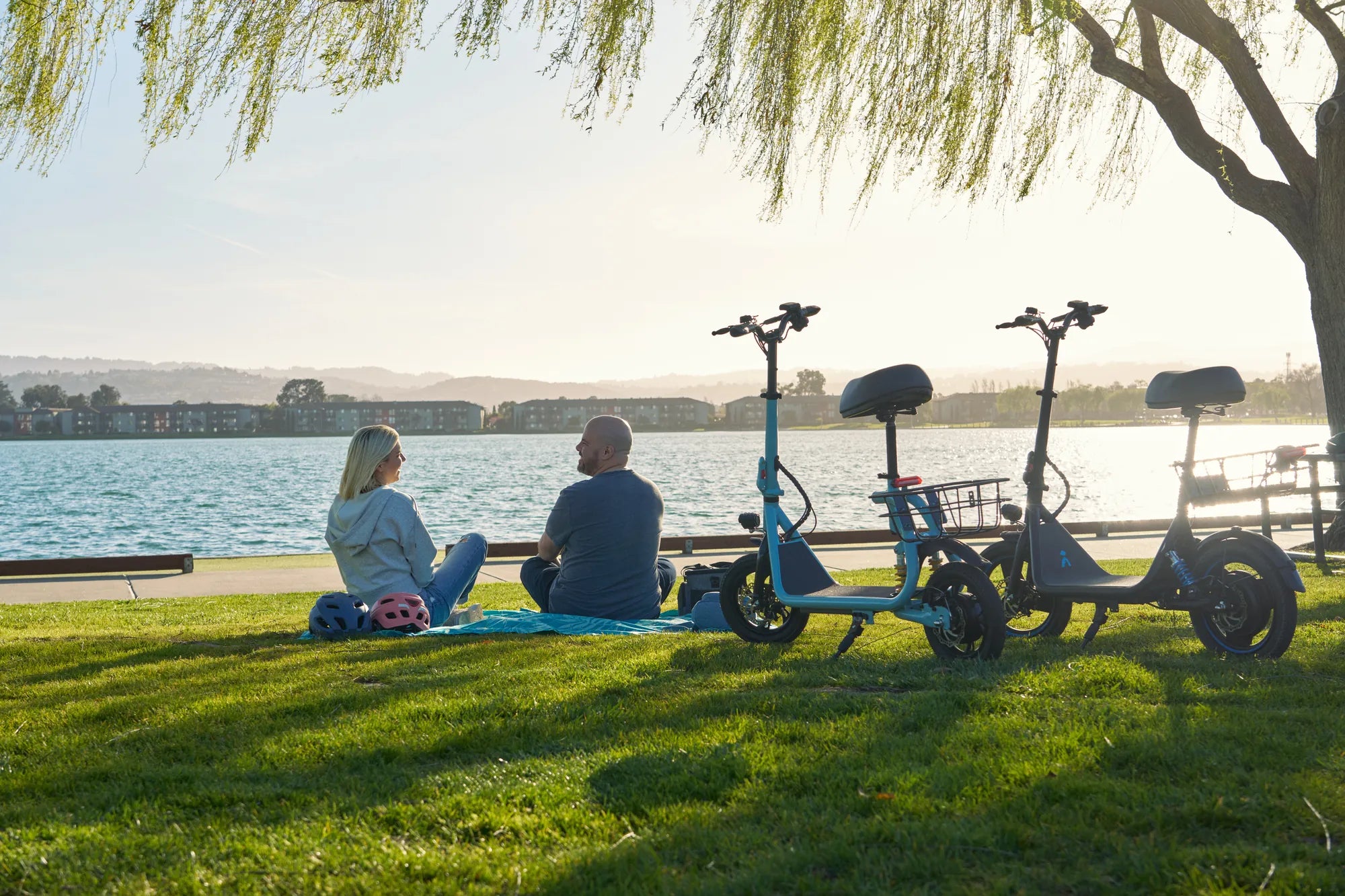
Introduction: Why the Right Electric Riding Scooter Matters
Choosing the wrong electric scooter leads to frustration, unsafe rides, and wasted money. The right model transforms your daily commute, unlocks new recreational adventures, and becomes a reliable tool for years. This guide provides the objective, data-driven analysis you need to cut through marketing hype.
Your decision impacts safety, performance, and long-term value. We'll focus on factual specifications, real-world performance metrics, and critical build quality elements. As a leader in personal electric mobility, Gyroor designs scooters with UL-certified batteries, IPX5 water resistance, and robust warranties, principles that inform our entire analysis.
This guide is structured to first help you define your needs, then decode technical specs, and finally evaluate the total value of your purchase. By the end, you'll know exactly what to look for when you buy electric riding scooters.
Understanding Your Needs: The First Step Before You Buy
Before comparing wattage or range, define your primary use case. The ideal scooter for a student on campus differs vastly from one needed for suburban errands or trail riding. This self-assessment is the most critical step in the process.
Misaligning your scooter with its intended use is the most common purchasing mistake. A lightweight, short-range model will disappoint a daily commuter, while an overpowered, heavy off-roader is impractical for subway transitions.
Commuting vs. Recreation vs. Off-Road
For urban commuting, prioritize portability, range, and reliability. You need a scooter that folds easily for bus or train integration, offers a real-world range exceeding your round-trip distance, and can handle daily pavement wear. Look for models under 35 lbs with a minimum 15-mile real-world range.
Recreational fun focuses on speed, comfort, and features. Riders often prioritize higher top speeds (where legal), smoother suspension for longer rides, and enhanced lighting for evening use. Comfort features like a wider deck and pneumatic tires become more important here.
For true off-road adventures, power, suspension, and tire type are non-negotiable. You need a high-torque motor (500W minimum), full or dual suspension to absorb bumps, and large, knobby air-filled tires for traction. Build quality must withstand rigorous use.
Rider Profile: Weight, Height, and Local Terrain
Rider weight directly impacts battery range and acceleration. Most manufacturers list a maximum weight limit; for optimal performance and battery life, your weight should be comfortably under this limit. Heavier riders should seek higher-wattage motors and larger battery capacities.
Handlebar and deck height affect riding posture and control. Taller riders should check that the handlebar height allows for an ergonomic, upright stance. A deck that's too small can cause foot fatigue on longer journeys.
Analyze your local terrain. Frequent hills demand a motor with high climb angle ratings (15+ degrees). Poor road surfaces necessitate suspension and larger, air-filled tires. Your environment dictates the scooter's required capabilities.
Decoding the Specs: What the Numbers Really Mean
Specification sheets can be misleading. Understanding the real-world implication of each number prevents you from overpaying for unneeded power or underestimating required range. We translate engineering jargon into practical performance expectations.
Motor Power & Speed: Finding Your Sweet Spot
Motor power, measured in watts (W), indicates potential torque and hill-climbing ability, not just top speed. A 350W motor suits flat urban areas, while 500W or dual-motor setups are better for hills or heavier riders. Peak power (burst output) is different from sustained nominal power.
Top speed must be balanced with local legality and safety. Many regions cap e-scooter speeds at 15-20 mph in bike lanes. A scooter that can maintain 15 mph up a hill is often more useful than one that hits 25 mph on a flat but struggles on an incline.
Battery & Range: Separating Hope from Reality
Battery capacity, measured in Watt-hours (Wh), is the true measure of range. It's calculated as Voltage (V) x Amp-hours (Ah). A higher Wh number generally means more range. Manufacturer range estimates are based on ideal conditions: light rider, flat terrain, slow speed.
For a realistic estimate, reduce the advertised range by 30-40%. Factors like rider weight, hills, cold weather, and frequent acceleration drastically cut range. Battery safety is paramount. Insist on UL-certified lithium-ion packs, like those used by Gyroor, which undergo rigorous testing for stability and longevity over 500+ charge cycles.
Build Quality & Durability Features
The frame material is foundational. Aircraft-grade aluminum alloys offer the best strength-to-weight ratio. Welding quality and component integration are as important as the material itself. Inspect product images for clean, robust construction.
Water resistance is rated via the IP Code. An IPX5 rating, a standard for brands like Gyroor, means the scooter is protected against water jets from any direction, making it safe to ride in rain or through puddles. Avoid models with no IP rating for commuter use.
Tire choice involves a trade-off. Air-filled (pneumatic) tires offer superior shock absorption and traction but risk punctures. Solid or foam-filled tires are maintenance-free but provide a harsher ride. For comfort, pneumatic tires with good suspension are ideal.
Safety, Comfort, and Legal Considerations
Performance is meaningless without safety. This section covers the essential features that protect you and ensure a comfortable, lawful riding experience. Never compromise on core safety components.
Essential Safety Features: Brakes, Lights, and Stability
Braking systems are critical. Disc brakes (mechanical or hydraulic) offer the strongest stopping power, especially in wet conditions. Electronic (regenerative) brakes help recharge the battery but should be paired with a physical brake. A dual-brake system is the safest configuration.
Visibility is non-negotiable. Your scooter must have a bright front headlight, a rear brake light, and side reflectors. Consider adding additional lights or reflective gear for night riding. Being seen is your first line of defense.
Stability stems from wheelbase length, wheel size, and deck width. Larger wheels (9-10 inch) handle bumps better than small ones. A wider deck allows for a more secure, balanced stance, especially during turns or emergency maneuvers.
Riding Comfort: Suspension, Deck, and Portability
Suspension smooths your ride. Spring or hydraulic suspension absorbs vibrations from cracks and bumps, reducing fatigue. Front suspension helps with steering comfort, while dual suspension is best for rough terrain. Without suspension, your legs and knees absorb all the impact.
Portability is defined by folding mechanism design and total weight. A secure, one-click folding latch is essential. For true multi-modal commuting (e.g., scooter + train), a scooter under 30 lbs is manageable. Heavier models (45+ lbs) are difficult to carry for extended periods.
Know the Law: Regulations in Your Area
E-scooter laws vary wildly by city, state, and country. It is your responsibility to research. Common restrictions include: banned sidewalk riding, mandatory use of bike lanes, speed limits (often 15-20 mph), minimum rider age (often 16+), and helmet requirements.
Ignorance of the law isn't an excuse and can result in fines. Check your local Department of Transportation or city council website for the most current regulations. Riding responsibly protects you and promotes positive public perception of micro-mobility.
Making the Smart Purchase: Warranty, Support, and Value
The upfront cost is only part of the equation. Evaluating warranty coverage, brand reputation, and customer support determines the long-term value and ownership experience. A slightly higher initial investment can save significant cost and hassle later.
The True Value of a Comprehensive Warranty
A warranty is a promise of reliability. Look for a comprehensive 1-year warranty that covers the frame, motor, battery, and controller. Prorated or limited warranties on the battery are a red flag. Gyroor's standard 1-year warranty with US-based support exemplifies this commitment.
Understand what voids the warranty, such as water damage beyond the IP rating, unauthorized modifications, or commercial use. A strong warranty reflects the manufacturer's confidence in their product's durability.
Brand Reputation and Customer Support
Established brands with a track record have refined their designs based on user feedback. They invest in quality control and safety testing. Research independent reviews and customer service experiences. Brands like Gyroor, trusted by over 100,000 riders, build community trust through consistent performance.
Accessible customer support for troubleshooting and obtaining replacement parts (e.g., tires, inner tubes, brake pads) is crucial. A brand with a helpful support team and available spare parts ensures your scooter remains operational for years.
Final Checklist Before You Click "Buy"
- Use Case Match: Does the scooter's portability, range, and power suit my primary need (commute/recreation/off-road)?
- Spec Verification: Real-world range, motor power for my terrain, UL-certified battery, IPX5+ water resistance.
- Safety Audit: Effective dual-brake system, bright front/rear lights, stable wheel/deck size.
- Comfort Check: Adequate suspension or tire type for my roads, manageable weight for my portability needs.
- Legal Compliance: Does its top speed and features comply with my local regulations?
- Value Assessment: Comprehensive warranty (1-year+), positive brand reputation, available customer support.
Head-to-Head: Electric Scooter Comparison Table
This table compares key specifications across common scooter categories to illustrate how features align with different use cases. Use it as a framework for your own comparisons.
| Feature / Use Case | Urban Commuter | Performance Recreational | Off-Road Capable |
|---|---|---|---|
| Typical Motor | 350W - 500W | 500W - 800W | 800W+ (Dual Motor Common) |
| Real-World Range | 15 - 25 miles | 20 - 35 miles | 18 - 30 miles |
| Top Speed | 15 - 20 mph | 20 - 25 mph | 25+ mph |
| Weight | 28 - 35 lbs | 35 - 50 lbs | 50 - 70 lbs |
| Tire Type | Solid or Pneumatic (8.5") | Pneumatic (10") | Knobby Pneumatic (10"+) |
| Suspension | Front or None | Front or Dual | Full Dual Suspension |
| Key Feature | Folding, IPX5 Rating | Speed, Comfort, Lights | Torque, Durability, Clearance |
Frequently Asked Questions (FAQ)
How far can I really expect to go on a single charge?
Expect 60-70% of the manufacturer's advertised range under normal conditions. A scooter advertised for 30 miles will typically achieve 18-21 miles with a 160 lb rider on mixed terrain. Cold weather can reduce this further.
Are electric scooters safe in the rain?
Scooters with an IPX5 rating or higher are designed to withstand riding in wet conditions and through puddles. However, always reduce speed, avoid deep standing water, and brake earlier on wet surfaces. Never submerge any part of the scooter.
How much maintenance does an electric scooter require?
Basic maintenance is minimal. Regularly check tire pressure (for pneumatic tires), ensure brakes are adjusted and functioning, keep the scooter clean, and check all bolts for tightness. The most common replacements are brake pads and tires.
Can I take my electric scooter on an airplane?
Almost universally, no. Airlines prohibit lithium-ion batteries of the size used in e-scooters in checked baggage, and the scooters themselves are too large for carry-on. They are designed for ground-based personal transport.
What is the average lifespan of an electric scooter?
With proper care and maintenance, a quality electric scooter can last 3-5 years or more. The battery is typically the first component to degrade, retaining 70-80% of its original capacity after 500 full charge cycles if it is a quality, UL-certified pack.
Conclusion: Your Journey Starts with an Informed Choice
The decision to buy electric riding scooters is significant, but armed with this guide, you can navigate it with confidence. Remember that the best scooter is the one that perfectly aligns with your individual needs, local environment, and safety requirements. Prioritizing certified safety features, durable construction, and reliable post-purchase support ensures your investment delivers joy and utility for thousands of miles.
Start your search by defining your use case, then filter options based on the hard data of motor power, real-world range, and build quality. Always verify local laws and ride responsibly with appropriate safety gear. The perfect electric scooter is out there, ready to redefine how you move.
Ready to explore a range built on safety and performance? Browse the full Gyroor collection, featuring UL-certified batteries, IPX5 water-resistant designs, and a reliable 1-year warranty, at gyroorboard.com.
Electric or Gas Powered Scooters: Which One Is Right for You? A Data-Driven Guide
Electric Motor Scooters for Seniors: A Safe and Convenient Mobility Solution