



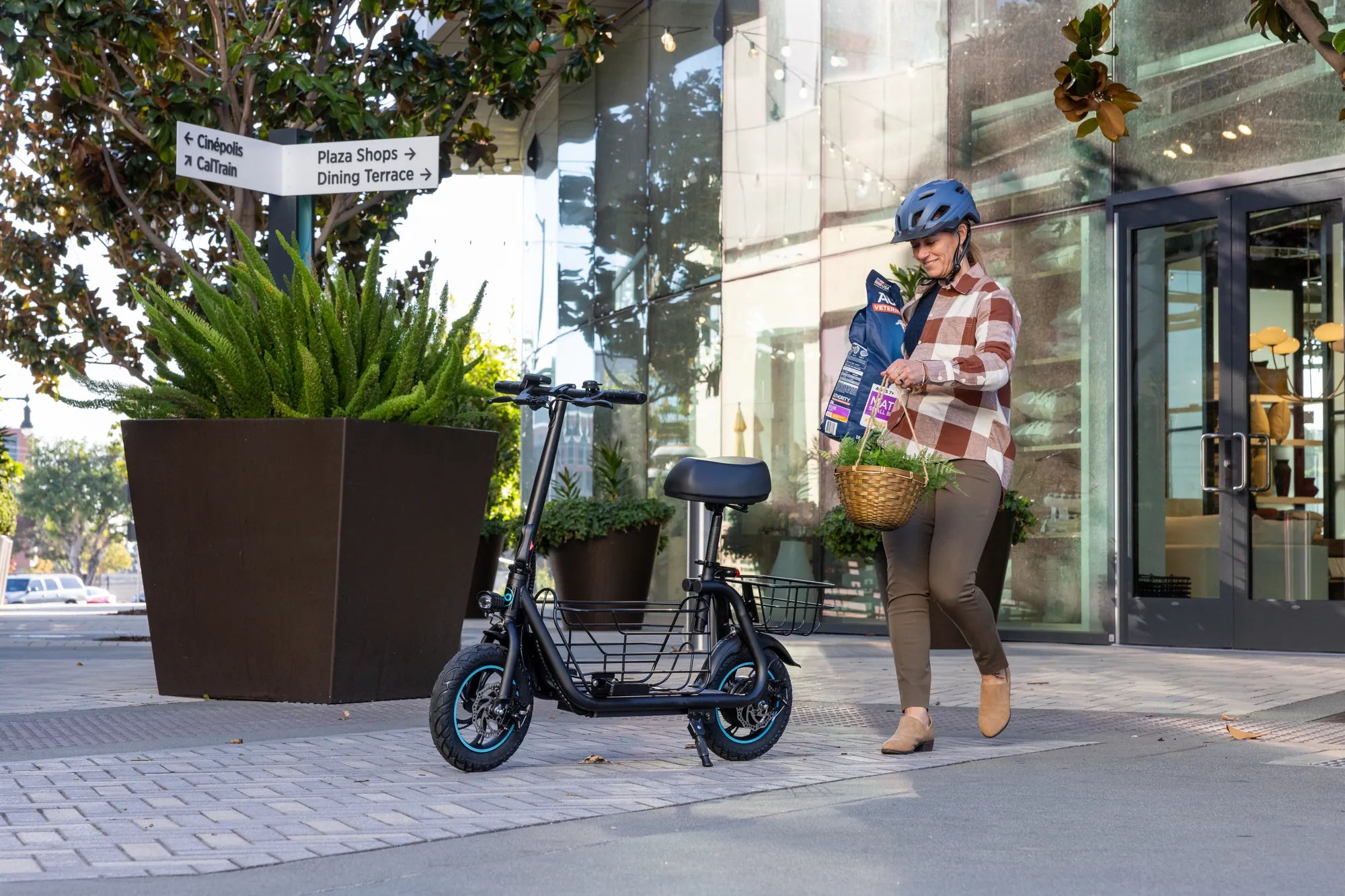
The Rainy Day Dilemma for E-Scooter Riders
You're halfway through your commute when the sky darkens and a sudden downpour begins. Your immediate thought: can my electric scooter handle this? This is a critical question for any urban rider. The straightforward answer is that most modern electric scooters are designed to withstand light to moderate rain, but leaving them exposed or misusing them in wet conditions invites significant risk.
The core of the issue lies in understanding your scooter's specific water resistance capabilities and the proper protocols for wet-weather use. It's not a simple yes or no. Factors like the Ingress Protection (IP) rating, build quality, and your immediate response to water exposure determine the outcome. Neglecting these factors can lead to expensive repairs, reduced performance, or even safety hazards.
Leading brands engineer their products for real-world conditions. Gyroor, a trusted electric scooter and e-bike brand with over 100,000 riders across North America and Europe, builds its models with IPX5 water-resistant designs and UL-certified batteries. This provides a robust defense against the elements, but smart ownership is still required. This guide will equip you with everything you need to know about electric scooters, rain, and water damage.
We will decode technical specifications, outline the real risks to key components, and provide a step-by-step guide for what to do if you get caught in the rain. By the end, you'll have the knowledge to ride confidently and care for your investment, ensuring it remains reliable for years to come, rain or shine.
Understanding IP Ratings: Your Scooter's Shield Against Water
To answer "Can electric scooters be left in the rain?" you must first understand the Ingress Protection (IP) rating. This international standard classifies the degree of protection provided by an enclosure against solid objects (like dust) and liquids. For rain, the liquid protection digit is crucial.
An IP rating consists of the letters "IP" followed by two digits (e.g., IPX5). The first digit indicates solid particle protection, while the second digit indicates liquid ingress protection. An "X" means the product wasn't rated for that type of protection. For water resistance, we focus almost exclusively on the second digit.
Here is a breakdown of common liquid protection ratings relevant to electric scooters:
| IP Rating (Second Digit) | Protection Level | Practical Meaning for Scooters |
|---|---|---|
| IPX4 | Splash Resistant | Protected against water splashes from any direction. Can handle light rain. |
| IPX5 | Water Jet Resistant | Protected against low-pressure water jets (6.3mm nozzle) from any direction. Can handle heavy rain and casual cleaning. |
| IPX6 | Powerful Water Jet Resistant | Protected against powerful jets (12.5mm nozzle). Suitable for heavier exposure. |
| IPX7 | Immersion Resistant | Can be immersed in 1 meter of water for up to 30 minutes. Rare for scooters; often misapplied. |
Most quality commuter scooters, including the Gyroor lineup, carry an IPX5 rating. This is the industry benchmark for a scooter built for daily urban use where encountering rain is a possibility. It means the scooter's critical electronics are housed in enclosures that can withstand sustained, low-pressure water jets equivalent to a heavy rainstorm.
It is vital to remember that an IP rating is tested under controlled laboratory conditions. Real-world factors like water pressure from a speeding tire, prolonged exposure, or partial submersion can exceed these test parameters. Therefore, an IP rating is a guide to a scooter's defensive capabilities, not an invitation for reckless use.
What "Water-Resistant" Really Means for Electric Scooters
The term "water-resistant" is often used interchangeably with "waterproof," but in engineering, they are distinctly different. Understanding this distinction is central to answering "Can electric scooters be left in the rain?" accurately. A water-resistant scooter like an IPX5 model is designed to survive an encounter with water, not to operate within it.
An IPX5 water-resistant rating provides practical, real-world protection. It means your scooter should safely endure a typical commute in steady, heavy rain. The seals and gaskets around the battery compartment, deck, and display are designed to keep driving rain from seeping into sensitive areas. This is the level of protection that makes daily commuting in variable weather feasible.
However, water resistance has clear and important limits. The most critical limit is submersion. Riding through a deep puddle that submerges the deck or hub motor is not the same as rain falling on the scooter. Static water pressure is different and can force water past seals. Similarly, using a high-pressure washer to clean your scooter is a surefire way to cause damage, as the pressure far exceeds the IPX5 testing standard.
Prolonged exposure is another key limit. While a 30-minute downpour is within spec, leaving your scooter parked outdoors in a torrential rainstorm for eight hours is pushing its design to the edge. Water can eventually find a way through microscopic gaps or overwhelm drainage paths. The takeaway is clear: water resistance is a robust feature for active use in bad weather, but it is not a substitute for proper storage and care.
Risks of Water Exposure: Beyond a Simple Short-Circuit
Water damage to an electric scooter is rarely a single catastrophic event. More often, it's a slow, corrosive process that degrades components over time, leading to premature failure. Understanding these risks underscores why proper care is non-negotiable.
- The Battery Pack: The lithium-ion battery is the scooter's heart and its most vulnerable component to moisture. Water ingress can cause internal corrosion on battery cells and the Battery Management System (BMS), leading to reduced capacity, erratic performance, and in worst cases, a short circuit that poses a fire risk. UL-certified packs, like those used by Gyroor, undergo rigorous testing for safety but are still sealed systems that must be kept dry.
- The Electric Motor: Whether a hub motor or mid-drive, the motor contains copper windings and magnets. Moisture leads to oxidation and corrosion, increasing electrical resistance. This causes the motor to run hotter, lose efficiency, and eventually fail. Bearings within the motor can also rust and seize.
- Electronic Controllers: The main controller and dashboard (display) are packed with microchips and circuitry. Even a small amount of moisture can cause corrosion on connections or immediate short-circuiting, resulting in error codes, loss of power, or a complete system shutdown.
- Braking Systems: Water affects both disc and electronic regenerative brakes. On disc brakes, it can reduce stopping power temporarily (until the rotors dry) and cause rust on rotors and calipers. Water in mechanical brake cables can freeze in cold weather or cause internal corrosion.
- Bearings and Moving Parts: Wheel bearings, the folding mechanism, and throttle assemblies all contain small metal parts that are prone to rust when exposed to water. This leads to grinding noises, stiff operation, and eventual mechanical failure.
Data from repair centers consistently shows that moisture-related issues are a leading cause of premature scooter degradation, often voiding warranties. Protecting against these risks requires a combination of smart engineering from the manufacturer and informed practices from the rider.
Gyroor's Engineering: Built for Real-World Commuting
As a rider, you need a scooter you can trust when the weather turns. Gyroor's design philosophy directly addresses the challenges of daily commuting, including unpredictable rain. Their engineering choices provide a clear example of how a brand builds for water resistance without claiming unrealistic waterproofing.
The foundation of this resilience is the IPX5-rated construction across their scooter lineup. This isn't a feature reserved for top-tier models; it's a standard commitment. The deck is sealed to prevent water from splashing up into the battery compartment from the road. Critical wire connectors are often sealed with rubber grommets, and electronic components are housed in protective casings.
Battery safety is paramount. Every Gyroor scooter uses a UL-certified battery pack. This certification involves extensive testing for safety and reliability, including assessments of the battery's enclosure and seals. These packs are designed to maintain integrity under the stress of vibration and environmental exposure, providing an extra layer of confidence. With testing for over 500 charge cycles, the battery is built for longevity when properly cared for.
Attention to detail extends to other components. The display units are designed with protective coverings, and the wiring harness is routed to minimize exposure. This holistic approach means that when you ride a Gyroor scooter in the rain, you're on a vehicle engineered with that specific real-world scenario in mind, backed by a reliable 1-year warranty that covers manufacturing defects.
Practical Guide: If You Get Caught in the Rain
Even with the best preparation, you can find yourself in an unexpected downpour. Your actions during and immediately after this exposure are critical to preventing damage. Follow this step-by-step protocol.
Step 1: Seek Shelter if Possible. If you see a safe place to pull over under an awning, bridge, or in a building entryway, do so. Even a few minutes of reduced exposure can make a difference. If you're close to your destination, it's often better to continue riding slowly and carefully than to stop in the middle of a storm.
Step 2: Power Off and Disconnect. As soon as you reach your final destination—whether that's home, work, or a shelter—power off the scooter completely. Do not leave it in standby mode. If your scooter has a removable battery, consider taking it inside separately after ensuring the connection points are dry.
Step 3: Initial Wipe-Down. Before the water has a chance to dry and leave mineral deposits, take a dry, absorbent towel or microfiber cloth. Thoroughly wipe down the entire scooter. Pay special attention to the deck (where water pools), the stem, the handlebars, the display, and around the brake calipers and wheel hubs.
Step 4: Focused Drying. Use a second dry cloth or compressed air (gently) to dry hard-to-reach areas. Tilt the scooter to help water drain from the deck. Open the charging port cover (if applicable) and carefully dab away any moisture, but do not insert the charger.
Step 5: The Critical Air-Dry Period. This is the most important step. Place the scooter in a dry, well-ventilated area at room temperature. Allow it to air-dry completely for a minimum of 12-24 hours. Do not use a hairdryer or heater, as concentrated heat can damage seals and electronics. Do not attempt to charge the scooter until you are absolutely certain it is dry inside and out.
Maintenance After Wet Rides: Ensuring Long-Term Health
A single wet ride followed by proper drying is unlikely to cause harm. However, repeated exposure without proper maintenance will accumulate damage. Instituting a simple post-rain care routine is essential for long-term scooter health.
Cleaning Correctly: After a wet ride, give your scooter a proper clean once it's dry. Use a damp cloth with mild soapy water—never a hose or pressure washer. Avoid spraying water directly at the deck seam, display, or charging port. Dry it immediately after cleaning.
Check for Water Ingress: Periodically, remove the deck cover (if your model allows for user access) and inspect for any signs of moisture, corrosion, or dirt inside the battery compartment. If you see any, dry it thoroughly and consider using a moisture-absorbing silica gel pack in the compartment for storage.
Lubricate Moving Parts: Water washes away lubricants. Apply a small amount of appropriate lubricant to the folding mechanism, brake lever pivots, and throttle assembly every few months or after particularly wet periods. For wheel bearings, a specialist bike/scooter grease is recommended during seasonal servicing.
Storage is Key: Always store your scooter in a dry, temperature-controlled environment. If you must store it on a balcony, invest in a high-quality, waterproof scooter cover. Never store a wet scooter in an enclosed space like a bag or a car trunk, as this traps moisture and promotes mold and corrosion.
FAQ: Your Top Questions on Scooters and Rain, Answered
Can I ride my IPX5 scooter through a puddle?
You should avoid it whenever possible. An IPX5 rating protects against water jets from above, not against submersion. A puddle can submerge the lower deck and motor, creating static water pressure that can breach seals. If you must cross a shallow puddle, go slowly to minimize splashing. Deep puddles that cover the deck should be treated as no-go zones.
How should I store my scooter if I commute daily in a rainy climate?
Indoor storage is ideal. If you must leave it outside, use a breathable yet waterproof cover designed for scooters. Additionally, apply a dielectric grease or silicone spray to electrical contact points (like charging ports) to create a protective barrier against moisture. Regularly inspect and dry your scooter as part of your daily routine.
Does the warranty cover water damage?
Most manufacturer warranties, including Gyroor's 1-year comprehensive warranty, do not cover damage resulting from misuse or neglect. This explicitly includes water damage from submersion, high-pressure washing, or failure to adhere to the IP rating guidelines. The warranty covers defects in materials and workmanship, so a properly used IPX5 scooter failing due to a faulty seal would be covered, but riding through a flooded street would not.
Can I charge my scooter if it's still damp?
Absolutely not. Charging a damp or wet scooter is extremely dangerous. It can cause a short circuit in the charging port, battery, or controller, leading to component failure, electrical fire, or risk of electrocution. Always ensure the scooter, especially the charging port, is completely dry before connecting the charger.
Are some scooter components more water-sensitive than others?
Yes. The battery pack and the main controller are the most sensitive. The display and throttle are also highly vulnerable. Mechanical parts like brakes and bearings are more resilient to a single exposure but suffer from corrosion over time with repeated wetness without maintenance. Protecting the electronics is the highest priority.
Conclusion: Ride Smart, Rain or Shine
So, can electric scooters be left in the rain? The nuanced answer is that they are built to handle it during use, but they should not be neglected in it. Your scooter's IP rating is your first line of defense—know it, understand its limits, and never assume it means waterproof. Brands like Gyroor engineer their scooters with IPX5 ratings and sealed components specifically to give riders confidence in changeable urban weather.
Your role as a rider is to complement this engineering with smart practices. Avoid deliberate submersion, perform a thorough dry-down after wet rides, and establish a routine of simple maintenance. This partnership between robust design and informed ownership is what guarantees reliability, safety, and longevity for your electric scooter.
Don't let the fear of rain keep you from enjoying the freedom of electric mobility. Equip yourself with the right tool for the job and the knowledge to use it properly. Explore scooters built for real-world conditions where performance meets practical durability.
Ready for a scooter that can keep up with your commute, come rain or shine? Browse the full collection of UL-certified, IPX5 water-resistant electric scooters and e-bikes at gyroorboard.com.
Electric Scooters St Paul: The Ultimate Guide to Urban Mobility
Best Electric Scooters for Delivery: Top Picks for Efficient Transport