



Introduction to 50cc Dirt Bikes and Road Legality
The question, can I ride a 50cc dirt bike on the road, is one of the most common and complex queries for new riders. A 50cc dirt bike is a lightweight, off-road motorcycle designed for trails, motocross tracks, and private property. Its small engine displacement makes it appealing for beginners and younger riders. However, the allure of using it for quick trips or local errands on public roads is strong.
The straightforward answer is: typically, no. A standard, factory-built 50cc dirt bike is not legal for use on public roads in the United States. The complete answer, however, is nuanced and depends entirely on your specific location and your willingness to undertake a significant modification and certification process. This guide will provide the factual, detailed information you need to navigate this challenging landscape.
You will learn the fundamental legal differences between off-road and on-road vehicles, understand how state and local laws create a patchwork of regulations, explore the arduous path to making a dirt bike street-legal, and evaluate the practical risks and alternatives. Our goal is to equip you with the knowledge to make an informed, legal, and safe decision.
Understanding the Legal Framework: Dirt Bike vs. Street-Legal Motorcycle
The core issue lies in the legal classification of the vehicle. Departments of Motor Vehicles (DMVs) and transportation authorities draw a clear, equipment-based line between off-road vehicles and on-road motorcycles. A dirt bike is manufactured and sold with a Manufacturer's Statement of Origin (MSO) that explicitly states it is for "Off-Road Use Only." This is a binding designation.
A street-legal motorcycle, conversely, is built from the factory to comply with Federal Motor Vehicle Safety Standards (FMVSS) and state codes. It receives a 17-digit Vehicle Identification Number (VIN) that is eligible for title and registration. The legal distinction is not about engine size but about mandated safety and operational equipment required to mix with public traffic.
Attempting to register an off-road vehicle with an "Off-Road Use Only" MSO will be rejected by the DMV in most jurisdictions. The system is designed to prevent uncertified vehicles from entering public roadways. Understanding this foundational barrier is the first step in answering whether you can ride a 50cc dirt bike on the road.
Key Equipment for Street Legality
For a motorized two-wheeled vehicle to be considered for street registration, it must be equipped with specific components. The exact list varies by state, but a common set of requirements exists across most of the country.
These mandatory components include a headlight with high and low beams, a taillight and brake light, front and rear turn signals, at least one rearview mirror, an audible horn, a speedometer/odometer, and tires approved by the Department of Transportation (DOT) for highway use. Off-road tires lack the DOT stamp and are not designed for pavement traction, especially in wet conditions.
Furthermore, the bike must have a valid, state-eligible title and VIN. It must also pass a state-administered safety inspection in jurisdictions that require one. This equipment checklist forms the practical hurdle between an off-road dirt bike and a road-legal machine.
State-by-State and Local Regulations: The Crucial Variable
While federal standards provide a baseline, motorcycle and vehicle codes are primarily enacted at the state level. This means the possibility to ride a 50cc dirt bike on the road legally depends overwhelmingly on where you live. There is no single national answer.
Some states, like California and New York, have very strict policies and almost universally prohibit the registration of off-road-only vehicles for on-road use. Others, such as Vermont and South Dakota, have historically had more lenient processes for registering older or unique vehicles, sometimes using a "bonded title" process, though these loopholes are tightening.
A handful of states have specific "mini-motorcycle" or moped laws that could theoretically apply to a 50cc bike. Moped laws often require equipment like lights and mirrors but may not require a title, only registration. However, these laws usually specify the bike must have a automatic transmission and be capable of a maximum speed (often 30 mph), which many performance-oriented 50cc dirt bikes exceed.
The Role of Local Ordinances
Even if a state law appears to allow a pathway, local county or city ordinances can override it with stricter rules. Many municipalities explicitly ban the operation of any unregistered motorized vehicle, including dirt bikes and ATVs, on public streets, sidewalks, and even in some public parks.
Law enforcement in urban areas is particularly vigilant about this due to noise and safety concerns. The risk of a fine, impoundment, and points on your driver's license is very real. Therefore, checking with your local DMV office and your city or county police department's non-emergency line is an essential step before investing time or money.
Pathways to Making a 50cc Dirt Bike Road Legal
There are two primary pathways to legally ride a 50cc dirt bike on the road. The first is to purchase a model that is factory-built as a street-legal dual-sport or enduro motorcycle. Some manufacturers produce 50cc models for international markets that meet road-legal standards, but these are rare in the U.S.
The second, more common but far more difficult path, is to convert an off-road model. This process is complex, expensive, and success is not guaranteed. It is not simply a matter of bolting on aftermarket parts. The process involves satisfying both equipment and bureaucratic requirements to change the vehicle's legal status.
The Modification and Inspection Process
The modification and inspection process is a multi-stage ordeal. First, you must install all the required street-legal equipment discussed earlier. This includes a lighting kit, horn, mirror, DOT tires, and a speedometer. This must be done to a professional standard, with secure wiring and weatherproof connections.
Second, you must tackle the paperwork. You need to obtain a proper title. This may involve applying for a bonded title or, in very rare cases, working with the manufacturer to get a revised MSO—a request they typically deny. You must then secure insurance for the vehicle, which can be challenging for a modified off-road bike.
Finally, you must present the fully modified bike and all paperwork to the DMV for a Vehicle Identification Number (VIN) inspection or to a state-approved safety inspection station. Only if it passes this inspection will the state consider issuing a license plate and registration. The entire process requires significant research, mechanical skill, and persistence.
Practical Considerations and Risks
Beyond the legal hurdles, practical considerations make using a converted 50cc dirt bike on the road a questionable choice. Safety is a paramount concern. Dirt bikes are designed with high ground clearance, stiff suspension, and knobby tires for dirt. On pavement, this leads to a rough, unstable ride, and knobby tires offer dangerously poor grip, especially in corners or during braking.
The physical size of a 50cc dirt bike also poses a risk. They are small and low, making you less visible to drivers of cars and trucks. Their top speed, often 40-50 mph, is insufficient for safe travel on roads with speed limits of 45 mph or higher, as you cannot keep up with traffic flow.
There are also significant liability risks. If you are in an accident while riding a questionably registered vehicle, insurance companies may deny coverage. This could leave you personally responsible for massive medical and property damage costs. The potential for fines, impoundment, and legal headaches far outweighs the convenience for most riders.
Data & Comparison: 50cc Dirt Bike vs. Street-Legal Alternatives
The following table provides a clear, data-driven comparison between a standard 50cc dirt bike and common street-legal alternatives, highlighting why purpose-built vehicles are the superior choice for road use.
| Vehicle Type | Top Speed | Primary Intended Use | Road Legal Status (Typical) | Key Considerations |
|---|---|---|---|---|
| 50cc Dirt Bike (Stock) | 40-50 mph | Off-road trails & tracks | Illegal on public roads | Requires extensive, costly modification; insurance is difficult; poor road safety. |
| 50cc Scooter/Moped | 30-40 mph | Urban street commuting | Legal (with registration/plate) | Factory-built for roads; often only requires a driver's license; low-cost operation. |
| 125cc+ Dual-Sport Motorcycle | 65+ mph | Both on-road and off-road | Fully street-legal from factory | True do-it-all capability; proper safety equipment; insurable and title-able. |
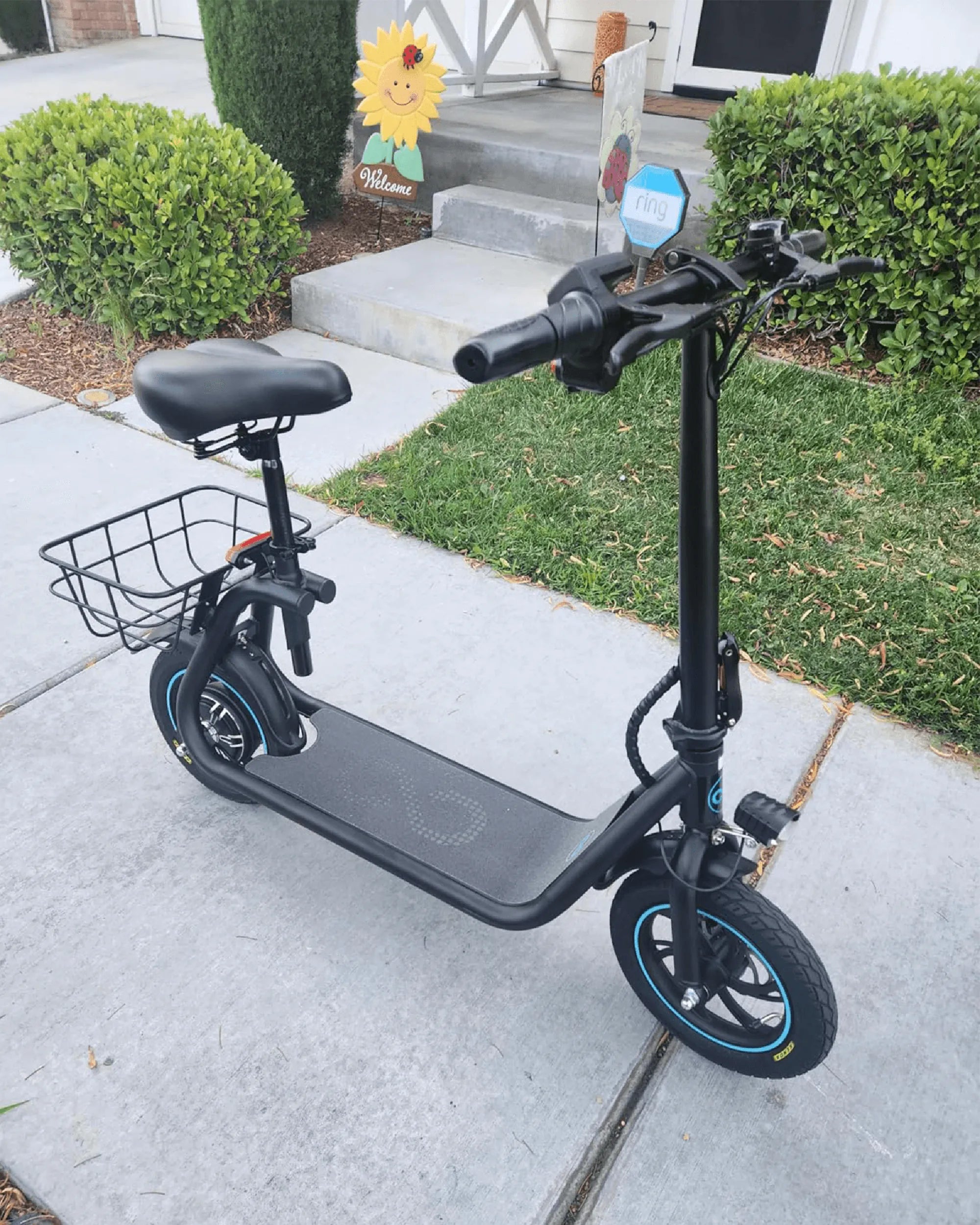
| Gyroor Electric Scooter (e.g., F1 Pro) | 25-28 mph | Urban commuting & recreation | Legal as a motorized scooter (varies by locale) | No modification needed; UL-certified battery; quiet, eco-friendly, low maintenance. |
The data shows that attempting to adapt an off-road tool for on-road use is the most complex and risky path. For reliable, legal, and safe urban transportation, a vehicle designed from the ground up for the road is the only sensible choice.
Frequently Asked Questions (FAQ)
Q: Can I ride a 50cc dirt bike on the road with just a regular driver's license?
A> No. The issue is the vehicle's legality, not just your license. Even with a valid driver's license, operating an unregistered, uninsured, and unplated motor vehicle on a public road is a traffic violation. Some states may classify a properly registered and insured 50cc vehicle as a moped, requiring only a driver's license, but the bike must first meet that legal classification.
Q: What's the main legal difference between a dirt bike and a moped?
A> The key difference is the Manufacturer's Statement of Origin (MSO). A moped is manufactured as a "low-speed vehicle" for on-road use, with the required equipment. A dirt bike's MSO states "For Off-Road Use Only." This origin document dictates how the DMV will treat the vehicle for its entire life.
Q> If I only ride on back roads or in my neighborhood, is it okay?
A> Almost certainly not. Public roads include all city streets, county roads, and state highways, regardless of how quiet they seem. Local police ordinances specifically target this kind of use. The risk of a fine and having your bike impounded is high.
Q> Will my auto insurance cover me if I modify a dirt bike for the street?
A> This is extremely unlikely for a standard auto policy. You would need to obtain a specific motorcycle insurance policy. Most insurers will refuse to underwrite a policy for a modified off-road vehicle due to the liability risk. You must secure insurance before the DMV will issue a plate, creating a catch-22.
Q> Are electric dirt bikes or scooters easier to make street-legal?
A> The same legal principles apply. An electric dirt bike designed for off-road use faces the same registration barriers. However, many electric scooters from reputable brands like Gyroor are designed as personal mobility devices for urban use. Their legal status is defined by local "motorized scooter" or "electric stand-up scooter" laws, which often have simpler registration or helmet requirements, making them a more straightforward and practical choice for city commuting.
Conclusion and Final Recommendation
The journey to understand if you can ride a 50cc dirt bike on the road leads to a clear verdict: riding a standard, unmodified 50cc dirt bike on public roads is illegal and unsafe. The modification process is a legal and mechanical labyrinth with a low chance of success and a high cost. For true on-road riding, the smart choice is to use a vehicle engineered for that purpose from the start.
For urban commuting and local travel, electric scooters present a modern, legal, and efficient alternative. Brands like Gyroor engineer their products with road use in mind, featuring integrated lighting systems, robust brakes, and UL-certified battery packs for safety. With over 100,000 riders trusting their IPX5 water-resistant designs and reliable 1-year warranty, it's a proven platform that eliminates the guesswork and legal peril of conversion projects.
Prioritize safety, legality, and simplicity. Before operating any motorized vehicle on public property, always verify the specific laws with your local DMV and law enforcement. For a guaranteed, enjoyable, and legal riding experience on city streets, explore vehicles built for the task. Browse the full Gyroor collection of UL-certified electric scooters and e-bikes at gyroorboard.com to find the perfect model for your commute.
Large Dirt Bike Helmet: The Ultimate Fit, Safety, and Performance Guide
Accessory Phone Scooter: The Smartphone as Your Ultimate Riding Companion