

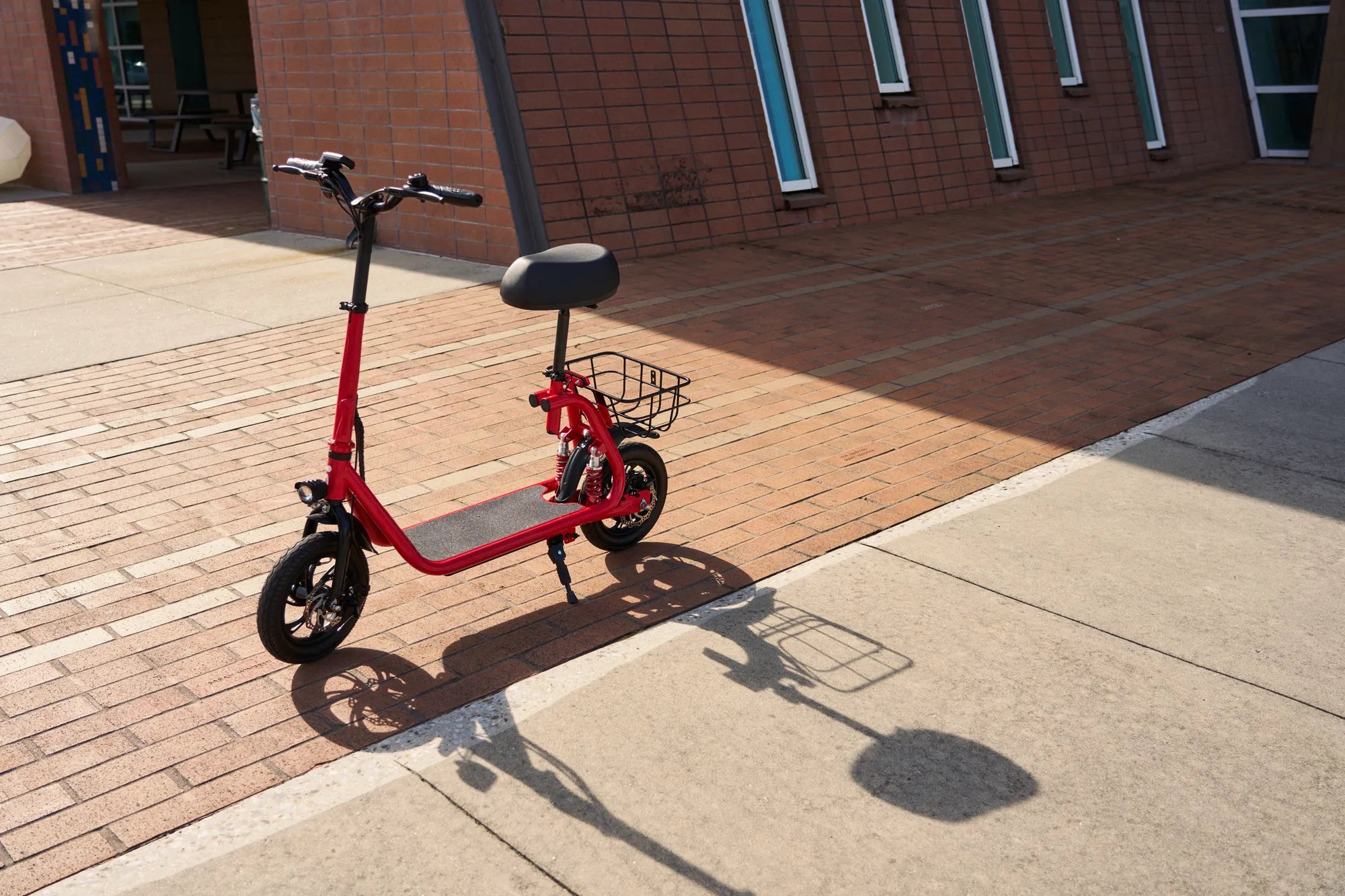
Navigating California's DUI Laws on Two Wheels
You've enjoyed a dinner out with friends and decide to use your electric scooter for the trip home. It feels like a responsible choice—you're not driving a car. This common scenario leads to a critical and often misunderstood question: can you get a DUI on a scooter in California? The unequivocal answer is yes, and the consequences are severe and life-altering.
This article provides a definitive, legally-informed guide for every rider. We will dissect the California Vehicle Code, explain how motorized scooters are classified, outline the real-world penalties, and detail how law enforcement applies DUI statutes. The goal is to equip you with the knowledge to make safe decisions and understand that an electric scooter offers no legal shield against California's strict impaired operation laws.
Understanding California DUI Law: Vehicles vs. "Devices"
The foundation of California's DUI law is Vehicle Code Section 23152. It makes it unlawful for any person who is under the influence of alcohol, drugs, or a combination to drive a vehicle. The common misconception lies in the definition of "vehicle." Many riders assume it refers only to cars, trucks, and motorcycles.
In legal terms, California's definition is intentionally broad. According to the CVC, a vehicle is "a device by which any person or property may be propelled, moved, or drawn upon a highway, excepting a device moved exclusively by human power." This technical language is the key that unlocks DUI liability for scooter riders.
The exception for devices moved "exclusively by human power" is crucial. A traditional, non-motorized kick scooter or a standard bicycle powered solely by pedaling falls into a grayer area, though bicyclists can still be cited for public intoxication or reckless operation. However, the moment a motor—electric or otherwise—is added, the device is no longer moved exclusively by human power.
Therefore, any motorized scooter, electric bicycle (with an assist motor), or similar personal transportation device meets the legal definition of a vehicle for the purposes of DUI enforcement. This legal interpretation has been consistently upheld in California courts.
The Electric Scooter's Legal Classification
California law provides specific classifications for these devices. CVC 407.5(a) defines a "motorized scooter" as any two-wheeled device with handlebars, a floorboard, and a motor, incapable of exceeding 15 mph on level ground. Many modern electric scooters far exceed this speed, further cementing their status.
For electric bicycles, California uses a three-class system (CVC 312.5). Class 1 and 2 e-bikes provide pedal-assist or throttle-assist up to 20 mph, while Class 3 can assist up to 28 mph. All are considered "bicycles" under the law, but critically, the DUI statute does not distinguish between types of vehicles based on speed or class; it applies to all vehicles.
The operational rules for these devices also mirror those for cars. Riders must obey all traffic signals, ride in the same direction as traffic, and can be cited for reckless riding. This integration into the traffic code makes the application of DUI laws a natural extension.
When you operate a Gyroor electric scooter, you are operating a vehicle in the eyes of California law. Features like our powerful motors and UL-certified battery packs deliver performance that comes with the full responsibility of lawful operation.
Bicycles and DUI: A Key Precedent
The application of DUI law to bicycles is a clear precedent that informs scooter cases. CVC 21200.5 explicitly states: "It is unlawful for any person to ride a bicycle upon a highway while under the influence of an alcoholic beverage or any drug." Violations are punishable as an infraction.
This law removes any ambiguity. If the state legislature saw fit to explicitly prohibit drunk bicycling, the logical and legal step to include motor-assisted devices, which pose a potentially greater risk due to higher speeds and less physical exertion from the rider, is straightforward.
Court cases have reinforced this. Prosecutors routinely charge individuals under the influence on bicycles and scooters under the broader CVC 23152, as the penalties are more severe. The legal system views the operation of any wheeled vehicle on public roads while impaired as a significant public safety threat.
This precedent is vital for scooter riders to understand. The romantic notion of a "joyride" on a scooter after drinking carries the same legal gravity as getting behind the wheel of a car. The law focuses on the act of controlling a vehicle in public, not the type of vehicle.
The Real-World Consequences of a Scooter DUI
The penalties for a DUI on a scooter in California are devastatingly similar to a standard car DUI. A conviction is not a minor traffic ticket; it is a criminal offense that will follow you for years. The system is designed to be punitive and to deter repeat behavior.
First-time offenders face a mandatory minimum of 96 hours in county jail, though this can often be served through alternative work programs. Fines and penalty assessments typically total between $1,500 and $2,000. The court will also mandate completion of a DUI education program, which can last three to nine months.
Perhaps the most surprising penalty for riders is the driver's license suspension. The California DMV will suspend your driving privilege for six months following a DUI conviction, even if you were not in a car. This administrative action is separate from the criminal case and is automatic upon a failed breath test or refusal.
Probation for three to five years is standard, during which any further legal infraction can trigger additional penalties. The court may also order the installation of an Ignition Interlock Device (IID) on any vehicle you own or operate, a costly and intrusive requirement.
Criminal Penalties and Fines
The following table outlines the standard penalty structures for a first-time DUI conviction in California, which applies equally to scooter operators:
| Penalty Type | Standard First Offense | Notes for Scooter Context |
|---|---|---|
| Jail Time | 96 hours to 6 months | Often served via work release or alternative sentencing. |
| Fines & Assessments | $1,500 - $2,000+ | Base fine plus numerous mandatory state and county penalties. |
| DUI School | 3 or 9 months | Length depends on BAC level; must be paid for by the offender. |
| License Suspension | 6 months | DMV administrative action; applies to driving privilege. |
| Probation | 3 to 5 years (informal) | Must obey all laws; violation can lead to jail time. |
For a second or third offense within ten years, these penalties escalate dramatically, including longer jail sentences, 18-30 month DUI programs, and multi-year license suspensions. Aggravating factors like a very high BAC (>0.15%) or causing an injury will lead to enhanced charges and longer sentences.
The Collateral Damage: Insurance, Employment, and Record
The conviction itself is only the beginning. Collateral consequences can be more damaging in the long term. Your auto insurance rates will skyrocket, often tripling, for at least three to five years after the conviction. Insurers view a DUI as a major risk indicator.
A DUI conviction is a misdemeanor criminal record. It will appear on background checks conducted by employers, landlords, and professional licensing boards. This can block opportunities for employment, especially in fields requiring driving, security clearance, or professional trust.
If your scooter DUI involved an accident causing injury or property damage, you face civil lawsuits for damages. Your auto insurance may not cover an incident on a scooter, leaving you personally liable for medical bills and repair costs that could reach hundreds of thousands of dollars.
The personal and social stigma is significant. The financial and emotional stress of navigating the legal system, coupled with the loss of personal mobility from a license suspension, can be overwhelming. This underscores why prevention through safe riding habits is paramount.
How Law Enforcement Applies DUI to Scooter Riders
In practice, police officers are trained to identify impaired operation of any vehicle. Erratic riding on a scooter—such as weaving, failing to maintain a lane, falling off, disregarding traffic signals, or riding at night without lights—will draw immediate attention and justify a traffic stop.
Once stopped, the officer will look for the standard signs of impairment: slurred speech, bloodshot eyes, the odor of alcohol, and lack of coordination. At this point, the investigation proceeds identically to a car DUI stop. The officer will likely ask you to perform Field Sobriety Tests (FSTs).
These tests, like the Horizontal Gaze Nystagmus (eye tracking), Walk-and-Turn, and One-Leg Stand, are designed to assess balance, coordination, and cognitive function. Poor performance provides the officer with probable cause to believe you are under the influence, leading to an arrest.
You will then be asked to submit to a chemical test to determine your Blood Alcohol Concentration (BAC)—typically a breathalyzer at the scene or station, or a blood test. Under California's Implied Consent Law (CVC 23612), by operating a vehicle, you have already consented to this test. Refusal carries its own severe penalties, including an automatic one-year license suspension and can be used against you in court.
The Role of Blood Alcohol Concentration (BAC)
The legal limit for drivers 21 and over is 0.08% BAC. This limit is absolute for scooters. If a test shows 0.08% or higher, you will be charged with a “per se” DUI, regardless of whether you appeared outwardly impaired. The prosecution needs only the test result to secure a conviction.
For riders under 21, California has a zero-tolerance policy. A BAC of 0.01% or higher is sufficient for a DUI arrest and will trigger an automatic one-year license suspension under the administrative per se law.
It is also possible to be convicted of DUI “under the influence” even with a BAC below 0.08%. If the officer's observations and your performance on FSTs convince a jury that your faculties were impaired to the point you could not operate the scooter with the caution of a sober person, a conviction is possible. This is a critical point: feeling "okay to ride" does not equate to being legally sober.
The combination of a motorized vehicle and alcohol is a recipe for disaster. A Gyroor scooter with a responsive motor and smooth acceleration demands a rider's full attention and coordination, both of which are compromised by any amount of alcohol.
"Actual Physical Control" and Public Property
You do not need to be actively moving to be arrested. The legal concept of "actual physical control" applies. If you are seated on your scooter on a public street, path, or parking lot with the intent and capability to operate it while impaired, you can be arrested for DUI. Simply being in a position to operate is enough.
DUI laws apply anywhere the public has access. This includes all public roads, bicycle lanes, sidewalks (where scooter use is permitted), parks, and parking lots. A private parking lot open to the public, like a mall or apartment complex lot, is generally considered a public area for DUI enforcement.
The only safe haven is entirely private property not accessible to the public, such as your own backyard. However, riding from a public road onto private property to avoid police will not protect you from a charge. The offense is considered complete the moment you operated on a public way.
This broad application means there is virtually no scenario where riding a motorized scooter after drinking in a public space is without risk. Planning a safe, sober ride home is the only guaranteed way to avoid legal jeopardy.
Safety, Responsibility, and Smart Riding with Gyroor
The freedom and joy of electric scooters come with a responsibility to yourself and your community. At Gyroor, we believe safe riding is the foundation of a great experience. Our engineering choices reflect this commitment to rider security and predictable performance.
Choosing a scooter from a reputable brand with a focus on safety is the first step. Our models feature stable deck designs, intuitive braking systems, and bright, reliable lighting—all essential for maintaining control and visibility, which are the first lines of defense in any riding situation.
Beyond the hardware, the rider's mindset is key. This means not only avoiding impairment but also actively practicing defensive riding: assuming cars may not see you, avoiding blind spots, signaling your intentions, and always wearing a certified helmet. California law requires helmet use for motorized scooter riders under 18, but it is a critical safety practice for all ages.
Responsible riding also means proper maintenance. Regularly checking tire pressure, brake function, and light operation ensures your scooter responds as expected when you need it to. A well-maintained vehicle is a safer vehicle.
Gyroor's Commitment to Safe Riding
Our design philosophy integrates safety at every level. We use only UL-certified lithium-ion battery packs, rigorously tested for over 500 charge cycles. This prevents the risks of thermal runaway or failure, ensuring stable power delivery you can rely on.
Our scooters boast IPX5 water-resistant designs, protecting critical electronics from rain and splashes. This means unexpected weather won't lead to sudden loss of power or control, a vital feature for predictable commuting.
We back our commitment with a 1-year comprehensive warranty supported by US-based customer service. This gives riders peace of mind and access to support, encouraging proper maintenance and long-term, safe operation. Trusted by over 100,000 riders, we build products for a lifestyle of smart, sustainable mobility.
Features like dual braking systems, wide anti-slip decks, and robust suspension aren't just about comfort—they are about giving the rider maximum control in diverse urban environments, which is the essence of safe operation.
Your Action Plan for Safe Commuting and Leisure
Planning is the antidote to risk. Before any social event where you might consume alcohol, decide on your safe return trip. Here is your actionable plan:
- Use Ride-Share or Taxis: This is the simplest solution. Hail a car and put your scooter in the trunk (most fold compactly).
- Utilize Public Transit: Many buses and trains allow folded e-scooters onboard. Plan your multimodal trip in advance.
- Designate a Sober Rider: If with friends, have someone who is not drinking be responsible for riding all scooters home safely, or drive a support vehicle.
- Leave It Secured: If you must leave your scooter, use a high-quality lock and retrieve it the next day. The cost of a ride home is always less than a DUI.
- Always Gear Up: Never ride without a helmet. Consider gloves, elbow pads, and knee pads for added protection, especially at night.
Integrating a Gyroor scooter into your life is about enhancing your freedom, not compromising your future. By pairing our reliable technology with your responsible choices, you unlock the true potential of personal electric mobility.
Frequently Asked Questions (FAQ) on Scooter DUIs
Q1: Does a scooter DUI go on my driving record?
Yes, absolutely. A DUI conviction from operating any vehicle, including a scooter, is reported to the California Department of Motor Vehicles (DMV). It will appear on your official driving record for 10 years. This record is used by insurance companies and employers, affecting your rates and job prospects long-term.
Q2: Can I refuse a breath test on a scooter?
You have the physical right to refuse, but there are severe consequences. Under California's Implied Consent Law, refusing a chemical test (breath, blood, or urine) after a lawful DUI arrest triggers an automatic one-year driver's license suspension. Furthermore, your refusal can be presented as evidence of guilt in court, making it easier for the prosecution to obtain a conviction.
Q3: What if I'm riding a rented e-scooter from a company like Lime or Bird?
The legal responsibility rests entirely with you, the rider. Rental agreements explicitly prohibit impaired operation. If you are arrested for a DUI on a rental scooter, you will face all the same criminal penalties. Additionally, the rental company may ban you from their platform and charge substantial fees for retrieving the impounded scooter.
Q4: Are the penalties different for a motorized scooter vs. an e-bike?
No, not in the context of a DUI charge. Both are considered "vehicles" under CVC 23152. The criminal penalties (jail, fines, DUI school, probation) are identical. The administrative DMV penalties (license suspension) are also the same. The law focuses on the act of driving under the influence, not the subtype of vehicle.
Q5: Where can I find the official California Vehicle Code on this?
The official California Legislative Information website hosts the full Vehicle Code. Key sections to review are CVC 23152 (Driving Under the Influence), CVC 21200.5 (Bicycles Under the Influence), and CVC 407.5 (Definition of Motorized Scooter). Always consult with a qualified DUI defense attorney for legal advice pertaining to your specific situation.
Conclusion: Ride Smart, Ride Safe, Know the Law
The evidence is clear and unambiguous: you can and will get a DUI on a scooter in California. The legal classification, enforcement practices, and severe penalties align almost perfectly with those for automobiles. A momentary lapse in judgment can result in criminal charges, financial ruin, and a permanent stain on your record.
The path forward is one of informed responsibility. Embrace the incredible convenience and fun of electric scooters as they were intended—as tools for sober, alert, and safe urban mobility. Choose a scooter engineered for reliability and control, like those from Gyroor, where safety features are integral, not an afterthought.
Protect your future by planning your ride home before your night begins. The freedom of the open path is best enjoyed with a clear mind and a clean record. Explore our range of high-performance, responsibly-designed electric scooters and e-bikes, built for riders who value both adventure and accountability.
Browse the full Gyroor collection at gyroorboard.com and ride with confidence.
What Does 7 Speed Bike Mean? A Complete Gear Guide
Best Scooter for Adults 2025: The Ultimate Guide to Choosing Your Ride