



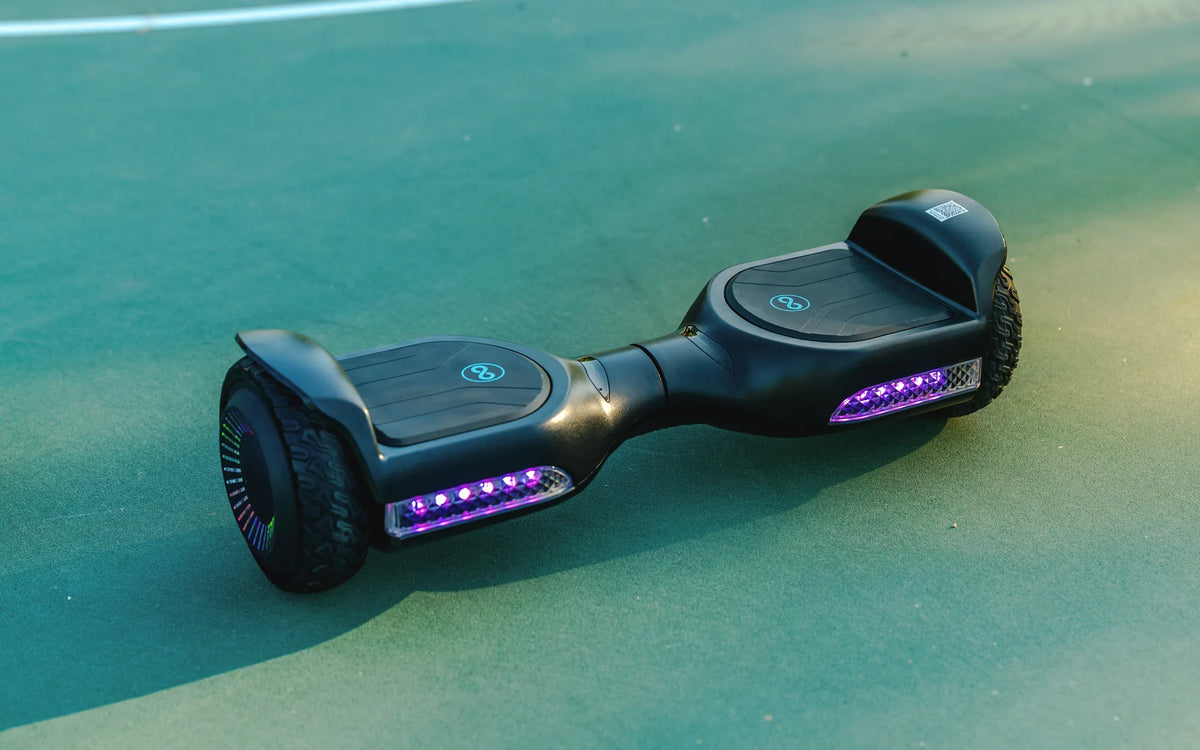
You've mastered the balance, you love the freedom, and now you're eyeing the open road for your next hoverboard adventure. It's a common thought: could this personal transporter be a legitimate way to commute or cruise? The direct answer to the core question—can you ride a hoverboard on the road?—is almost universally no, and for critical legal and safety reasons. This article will provide a definitive, data-driven exploration of the regulations that prohibit road use and the substantial physical risks involved. You'll gain a clear understanding of how hoverboards are classified by law, why their design is ill-suited for traffic, and where you can safely and legally enjoy the ride. As a leader in personal electric mobility, Gyroor designs its products with UL-certified safety and robust performance for the environments where riding is both fun and permitted.
The Allure and Ambiguity of Road Riding
The temptation to take a hoverboard onto the road is understandable. Roads are smooth, expansive, and connect destinations. For commuters or enthusiasts, the idea of bypassing sidewalk cracks and pedestrian traffic is appealing. However, this desire clashes with a complex web of traffic laws and fundamental engineering limitations.
Hoverboards, or self-balancing scooters, exploded in popularity as personal recreation devices, not as road-going vehicles. Their legal status was an afterthought for many early adopters, leading to widespread confusion. This ambiguity ends at the curb. Transportation authorities have since clarified that these devices belong to a category separate from licensed motor vehicles.
The convenience factor is quickly negated by vulnerability. On a road, a hoverboard rider becomes the smallest, slowest, and least-protected entity, sharing space with multi-ton vehicles. Understanding this mismatch is key to safe riding practices. Brands committed to rider safety, like Gyroor, focus on enhancing the experience within the appropriate contexts—smooth pavements, parks, and private property—not by promoting unlawful road use.
Understanding the Legal Landscape: It's More Than Just Balance
The legality of hoverboard use is not governed by a single national law but by a patchwork of state, provincial, and local ordinances. In nearly all jurisdictions across the United States, Canada, and Europe, hoverboards are explicitly banned from public roadways designed for motor vehicle traffic. The enforcement of these laws is becoming increasingly common.
At the federal level, agencies like the U.S. Consumer Product Safety Commission (CPSC) focus on safety standards for the devices themselves, such as battery safety. The classification for where they can be operated is left to local traffic authorities. This decentralized approach means riders must research their specific city or county codes, but the overarching theme is restriction from roads.
Hoverboards: Pedestrian Vehicles or Motorized Transport?
Legally, hoverboards are most commonly classified as "Personal Mobility Devices" (PMDs), "Electric Personal Assistive Mobility Devices" (EPAMDs), or similar terms. This classification is crucial. It groups them with devices like electric skateboards and some e-scooters, defining them for use on sidewalks, bike paths (where explicitly permitted), and private property.
They are distinctly not classified as motor vehicles, bicycles, or mopeds. This means they lack the legal standing to operate on roadways. Key differentiators include the absence of standardized lighting, signaling, braking systems, and a design speed that integrates safely with automotive traffic. A rider on the road is typically considered in violation of traffic codes, akin to a pedestrian walking in a traffic lane.
Key Regulations to Look For: Speed, Power, and Licensing
Three primary legal thresholds effectively bar hoverboards from roads: speed, motor power, and operational requirements. Most traffic laws require any vehicle on the road to be capable of maintaining a minimum speed (often near 25-35 mph) to avoid obstructing traffic. Even the fastest hoverboards, typically capped at 10-12 mph, fall far short.
Furthermore, devices with motors below a certain power rating (e.g., 750W in many areas) are not considered road-worthy. Hoverboard motors, designed for torque and balance rather than speed, usually reside well under these limits. Finally, road vehicles require licensing, registration, and insurance. Hoverboards meet none of these requirements, making their operation on roads illegal by default.
The Inherent Risks of Road Riding on a Hoverboard
Beyond legality lie the compelling safety reasons why riding a hoverboard on the road is a dangerous idea. The design priorities of a hoverboard—compactness, portability, and intuitive balance—are directly at odds with the demands of a roadway environment shared with cars, trucks, and buses.
Data on micromobility injuries consistently shows that interaction with motor vehicles significantly increases the severity of accidents. A rider on a hoverboard has zero physical protection. The risk profile shifts from minor falls on a sidewalk to potentially fatal collisions on the road.
Stability and Control Limitations at Higher Speeds
The physics of a hoverboard work against road safety. The small wheel diameter (usually 6.5 to 10 inches) and short wheelbase make them highly susceptible to road imperfections. A pothole, crack, or piece of debris that a car or bicycle would roll over can be a catastrophic hazard, causing a sudden stop and ejecting the rider.
Gyroscopic stabilization systems are engineered for low-speed maneuverability, not for high-speed stability or emergency evasion. At their maximum speed, even on a smooth surface, the platform becomes less responsive. Performing a sudden swerve to avoid a car door opening or an unexpected obstacle is extremely difficult and likely to result in a loss of balance.
Visibility and Interaction with Traffic
A hoverboard rider presents a low-profile silhouette, often below a car driver's sightline, especially for SUVs and trucks. While many models like those from Gyroor include LED wheel lights for style and some visibility, they frequently lack the bright, focused headlights, brake lights, and turn signals required for road communication.
This creates a "see-and-be-seen" crisis. Drivers may not notice a rider until it's too late. Conversely, a rider cannot signal intentions to turn or stop. The inability to maintain a consistent speed with traffic flow creates a hazardous speed differential, forcing cars to swerve or brake unexpectedly, which increases the risk of rear-end collisions.
How Hoverboards Compare to Other Personal Electric Vehicles
Understanding the legal and safety position of hoverboards is clearer when compared to other devices. The key differentiator is often design intent and capability.
| Device Type | Typical Max Speed | Common Legal Classification | Typical Permitted Areas | Road Use Viability |
|---|---|---|---|---|
| Hoverboard | 10-12 mph | Personal Mobility Device (PMD) | Sidewalks, Private Property | Very Low - Illegal & Unsafe |
| Electric Kick Scooter (e.g., Gyroor C1/C2) | 15-20 mph | PMD or Low-Speed Vehicle* | Bike Lanes, Sidewalks* | Conditional* (Bike Lanes where legal) |
| Electric Bicycle (Class 1/2) (e.g., Gyroor F1) | 20 mph (assist) | Bicycle | Bike Lanes, Roads, Paths | High - Legal on roads/bike lanes |
| Moped / Electric Moped | 25-30+ mph | Motor Vehicle | Roads | Very High - Requires license/registration |
*Local laws vary drastically for e-scooters. Some cities allow them in bike lanes, others restrict them to sidewalks, and some ban them from roads entirely. Always check local ordinances.
Gyroor's Commitment to Safe Riding: Where Our Technology Excels
Gyroor's engineering philosophy centers on maximizing safety and reliability within the intended use environments for each product. For hoverboards, this means building devices that perform flawlessly on smooth, stable surfaces where they are meant to be ridden. Our innovations directly address the primary safety concerns of personal electric mobility.
UL 2272 Certified Batteries: Safety from the Inside Out
The most critical safety component in any electric device is its battery. Gyroor uses only UL 2272 certified battery packs across our entire hoverboard lineup. This rigorous standard, developed after early industry safety issues, tests for electrical, mechanical, and environmental safety, including overcharge, short circuit, and crush tests.
This certification is non-negotiable for safe operation. It ensures the power source is stable and reliable, preventing the fire risks associated with uncertified, knockoff batteries. This gives riders peace of mind, whether they're practicing in a driveway or cruising on a boardwalk.
IPX5 Water Resistance: Built for Real-World Conditions
Riding isn't always under perfect, sunny skies. Gyroor hoverboards feature IPX5 water-resistant construction. This means they are protected against water jets from any direction, allowing them to safely traverse wet pavement, ride through puddles, or handle light rain you might encounter on a permitted path.
This durability feature protects the electrical systems from moisture-related damage and corrosion, extending the product's life and ensuring consistent performance. It's a key part of building a hoverboard that can handle the varied conditions of outdoor recreation safely.
Responsible Alternatives: Maximizing Your Hoverboard Enjoyment
The good news is that there are countless safe and legal ways to enjoy your hoverboard. By choosing the right environment, you can have fun, explore, and commute short distances without legal trouble or undue risk.
Ideal Riding Locations: Paths, Parks, and Permitted Zones
Seek out smooth, open, pedestrian-light areas. Ideal locations include:
- Empty parking lots: Perfect for practice and open cruising.
- Smooth-paved bike paths and greenways: Check local rules first; many allow PMDs.
- College campuses and corporate parks: Often have expansive, smooth walkways.
- Sidewalks in residential areas: Always yield to pedestrians and proceed with caution.
- Indoor arenas or skate parks (when permitted): For trick riding and controlled environments.
Gear Up for Safety: Non-Negotiable Accessories
Safety gear is essential, regardless of location. A fall at 10 mph on concrete can cause serious injury.
- Helmet: A certified multi-impact helmet is the most important piece of safety equipment.
- Wrist Guards: Wrist fractures are the most common hoverboard injury; guards drastically reduce risk.
- Knee and Elbow Pads: Protect your joints during falls.
- Aftermarket Lights & Reflective Gear: If riding near dawn, dusk, or in shaded areas, add bright, USB-rechargeable lights and reflective strips to your clothing and board to maximize visibility.
Frequently Asked Questions (FAQ)
Q: What happens if I get caught riding my hoverboard on the road?
Consequences vary by jurisdiction but can include a substantial fine (often $100-$500), a citation for obstructing traffic or operating an unregistered vehicle, and in some cases, confiscation of your hoverboard by law enforcement. If an accident occurs, you would likely be found at fault and liable for damages and injuries.
Q: Are electric scooters or e-bikes different? Can they go on the road?
Yes, the classification is often different. Many electric scooters and all pedal-assist e-bikes (like Gyroor's models) are increasingly recognized for use in bicycle lanes or on roads, subject to local laws. E-bikes, in particular, are often legally treated as bicycles, making them road-legal. Always verify your local regulations for the specific device.
Q: Does my homeowner's or renter's insurance cover hoverboard accidents?
It might, but you must check your policy. Some insurers have specific exclusions for "motorized personal vehicles" or require a rider to be added. Liability coverage if you cause injury to someone else while riding is a critical consideration. Never assume you're covered.
Q: Can I modify my hoverboard to go faster for road use?
Absolutely not. Modifying a hoverboard to bypass speed limiters is extremely dangerous. It voids the warranty, invalidates safety certifications (like UL 2272), stresses the battery and motor beyond design limits, and dramatically increases the risk of fire or catastrophic failure. It also does not change its legal classification.
Q: Does Gyroor make any products designed for road or bike lane use?
Yes. While our hoverboards are designed for sidewalks and paths, Gyroor's lineup of electric scooters (like the C1/C2 series) and electric bicycles (like the F1 series) are engineered with higher speeds, longer ranges, and features like brighter lighting and suspension for a more stable ride. These products, subject to your local laws, are often suitable for use in bicycle lanes or on roadways, providing a legal and safer alternative for longer commutes or road-based travel.
Ride Smart, Ride Safe, Ride Within the Lines
The evidence is clear: riding a hoverboard on the road is an illegal and high-risk activity. The legal frameworks across North America and Europe are designed to protect riders and the public, recognizing the fundamental mismatch between hoverboard design and roadway demands. The true joy of personal electric mobility comes from responsible use. By choosing safe, legal environments and gearing up appropriately, you ensure countless hours of fun and exploration. Gyroor is proud to power that experience with reliably engineered, safety-certified products that perform where they're meant to. If your goal is longer-distance travel or road-adjacent commuting, explore our range of purpose-built electric scooters and e-bikes designed for those specific use cases. Your safety and compliance are the foundation of a great ride.
Ready to explore personal electric mobility the right way? Browse the full Gyroor collection of UL-certified hoverboards, electric scooters, and e-bikes at gyroorboard.com.
Scooter for Kids 14 Years: The Ultimate Guide to Choosing the Best Ride
Baby Scooter for Kids: The Ultimate Guide to Choosing the Perfect Ride