

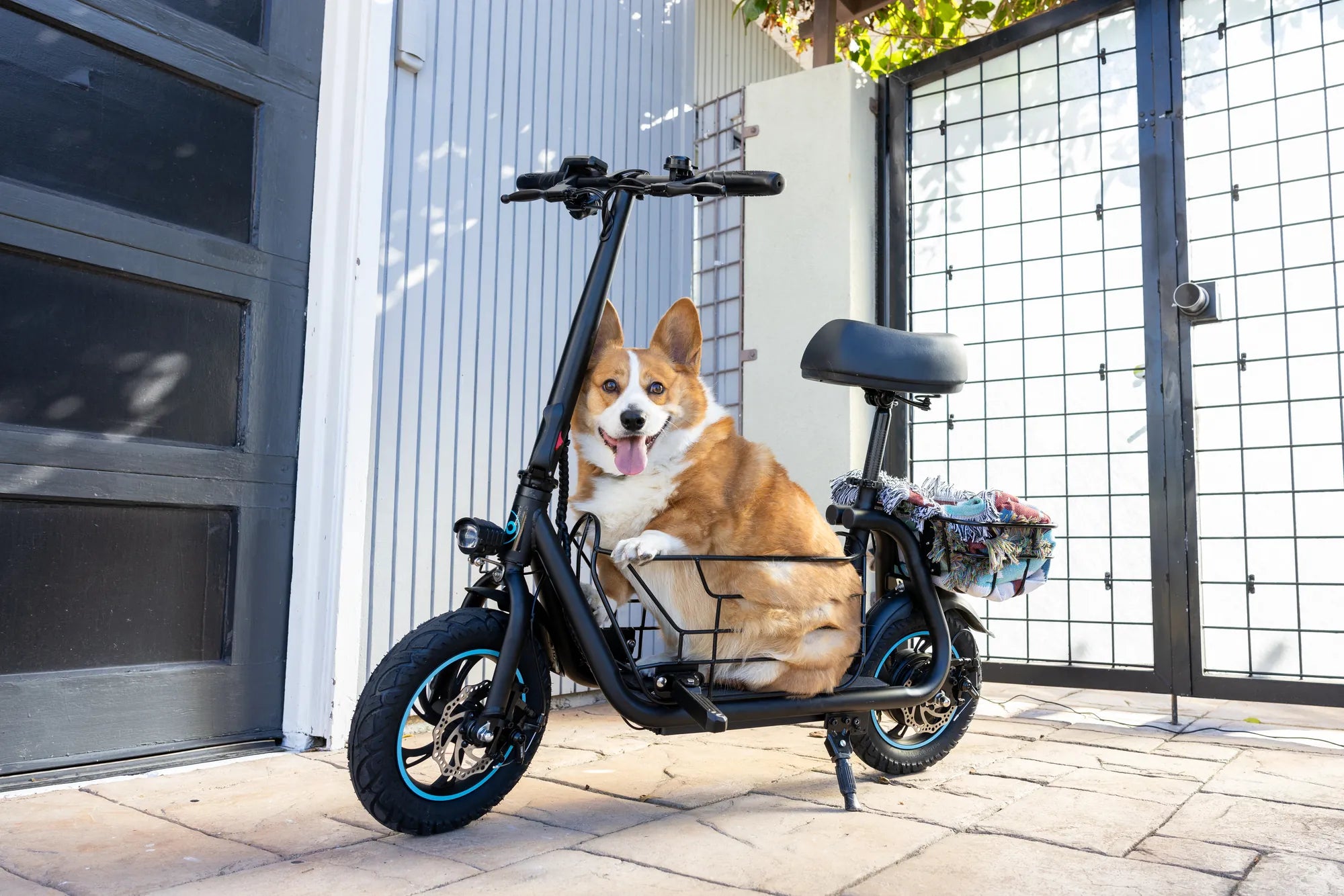
Finding a cheap good quality electric scooter feels like a modern-day treasure hunt. The market is flooded with options, but true value lies where low cost meets certified safety, durable construction, and reliable performance. This guide cuts through the noise, defining 'good quality' beyond the price tag and providing a roadmap to affordable, trustworthy rides. You'll learn the non-negotiable features for safety, how to interpret specifications for real-world use, and where to find scooters that won't compromise your security or budget.
Demystifying "Cheap, Good Quality" Electric Scooters
The phrase 'cheap, good quality' is not an oxymoron in the electric scooter world. It represents a specific value proposition: maximizing essential features and verified safety while minimizing superfluous costs. A truly affordable scooter isn't the absolute cheapest option available. It's the one that offers the best balance of critical performance, durability, and certified components for its price point.
Quality at a lower cost is achieved through smart engineering and direct-to-consumer models, not by cutting corners on safety. Brands that succeed in this space prioritize what matters most for daily commuting: a reliable motor, a certified battery pack, water resistance, and a robust frame. They often forego excessive top speeds or luxury app integrations that inflate price without adding core utility for the average rider.
For over 100,000 riders across North America and Europe, Gyroor has built a reputation on this exact philosophy. By focusing on UL-certified batteries, IPX5 water-resistant designs, and a reliable 1-year warranty, they deliver scooters where affordability is built on a foundation of trust and verified safety, not just a low initial price.
What Makes an Electric Scooter "Good Quality"? (Beyond the Price Tag)
Quality in an electric scooter is defined by a set of tangible, verifiable characteristics that directly impact safety, longevity, and your riding experience. The core components—the battery, motor, frame, and electronic systems—must be designed and manufactured to consistent standards. A low price becomes a liability if it signals the absence of these critical quality markers.
Build material is a primary indicator. A frame constructed from aerospace-grade aluminum alloy is lighter and more durable than cheaper, heavier metals. Welds should be clean and even, and folding mechanisms should feel solid, with no worrisome play or creaking. The deck should offer ample grip, and the overall finish should resist scratches and minor impacts.
Electronic components must be properly sealed and integrated. Loose wiring, poorly fitted connectors, and unsealed control units are hallmarks of low-quality assembly. These flaws lead to early failures and can pose significant safety risks. Good quality means every electrical connection is protected from the elements and physical stress.
Finally, ride quality separates premium builds from budget knockoffs. This includes effective suspension that smooths out bumps, responsive brakes that offer consistent stopping power, and a motor that provides smooth acceleration without jarring jerks. A quality scooter feels stable, predictable, and confidence-inspiring at its intended speed.
The Safety Imperative: UL-Certified Batteries and Why They Matter
The battery is the heart, and potentially the greatest hazard, of any electric scooter. UL certification (specifically UL 2271 for the battery pack and UL 2849 for the entire electrical system) is the single most important quality marker. It is not a mere suggestion; it is a rigorous set of safety standards developed by Underwriters Laboratories.
UL testing subjects battery cells and packs to extreme conditions they might encounter in real life: overcharging, short-circuiting, crushing, and exposure to high temperatures. Certified batteries are built with proper battery management systems (BMS) that prevent overcharging, over-discharging, and thermal runaway—the chain reaction that leads to fires.
Uncertified, generic lithium-ion batteries are a primary cause of scooter-related fires. They use lower-grade cells, lack proper internal fusing, and have inadequate BMS protection. Choosing a scooter with a UL-certified battery, like all models in the Gyroor lineup, is a non-negotiable investment in personal and property safety. It is the definitive line between a responsible purchase and a dangerous gamble.
Built to Last: The Role of IPX5 Water Resistance and Robust Construction
Daily commuting exposes a scooter to puddles, road spray, and unexpected rain. An IPX5 water resistance rating is a minimum standard for a quality commuter scooter. The 'IP' stands for Ingress Protection, with the 'X' indicating no specific dust rating tested, and the '5' meaning the unit can withstand water jets from a nozzle from any direction without harmful effects.
This rating means the scooter's critical electronics—the deck housing the battery and controller, the motor, and the display—are sealed against water ingress from below. You can confidently ride through wet streets and light rain. Scooters without a stated IP rating, or with only IPX4 (splash resistance), risk internal corrosion and electrical shorts from everyday moisture.
Robust construction complements water resistance. This includes sealed bearings in the wheels, waterproof connectors, and gaskets at all panel junctions. The folding mechanism should be made of hardened steel and feel secure when locked. A scooter built to last uses materials and assembly techniques that anticipate real-world wear, ensuring the IP rating isn't compromised after a few months of use.
Navigating the Market: Key Features to Prioritize on a Budget
With a limited budget, strategic prioritization is essential. Allocate your funds to the features that guarantee safety and fulfill your basic commuting needs. The goal is to avoid overspending on non-essentials while never compromising on the fundamentals that protect you and your investment.
Priority one is always battery certification and warranty. Next, consider real-world range and motor power sufficient for your typical route and incline. Build quality and water resistance follow closely. Features like digital displays, app connectivity, customizable ride modes, and ultra-high top speeds are secondary. They enhance the experience but are not foundational to a safe, reliable commute.
It's also wise to consider the total cost of ownership. A slightly higher upfront cost for a scooter with a reputable brand's warranty and customer support can save hundreds in repair costs compared to a no-name model that offers no support after purchase. Reliable brands design their scooters with serviceability in mind, making long-term maintenance more affordable.
Range vs. Reality: Setting Practical Expectations for Affordable Models
Manufacturer range claims are almost always based on ideal laboratory conditions: a lightweight rider on a perfectly flat, smooth surface at a low, constant speed. Real-world range is typically 60-70% of the advertised figure. Factors that drastically reduce range include rider weight, hills, frequent stops and starts, cold weather, and higher speeds.
For a cheap good quality electric scooter, a realistic range of 10-15 miles is often sufficient for most urban commutes. Prioritize models that use reputable battery cell brands (even if not explicitly named) and have a clear amp-hour (Ah) rating. A larger Ah number generally indicates more capacity and potential range. For a budget-conscious buyer, it's better to choose a scooter with a modest but honest range from a reputable brand than one with an inflated claim from an unknown source.
Calculate your daily round-trip distance and add a 30-40% buffer. This is your minimum target real-world range. This buffer accounts for detours, battery degradation over time, and less-than-ideal riding conditions, ensuring you're never stranded.
The Warranty Advantage: Your Safety Net for Peace of Mind
A comprehensive warranty is a direct reflection of a manufacturer's confidence in its product. For affordable scooters, a 1-year warranty covering the battery, motor, and frame is a strong indicator of quality. It acts as your financial and functional safety net, protecting against premature failures in core components.
Scrutinize warranty details. A reputable warranty, like Gyroor's 1-year coverage, is straightforward and honors claims based on workmanship and material defects. Be wary of warranties filled with excessive exclusions or that require you to pay for expensive international shipping for repairs. Good customer service should be accessible and responsive.
The warranty also signals the likelihood of ongoing parts availability. A brand that stands behind its product for a year is more likely to stock replacement parts—like tires, inner tubes, brake pads, and chargers—making long-term ownership viable and affordable.
Gyroor's Value Proposition: Where Affordability Meets Certified Quality
Gyroor operationalizes the 'cheap, good quality' mandate by embedding non-negotiable safety and durability standards into its value-focused models. The brand's commitment starts with UL-certified battery packs, tested for over 500 charge cycles, ensuring every scooter meets rigorous fire safety standards from its inception. This foundational safety is not treated as a premium feature but as a baseline requirement.
Further, an IPX5 water-resistant rating is standard across their commuter-focused scooters. This practical feature acknowledges the realities of daily riding, protecting the investment from common environmental hazards. Combined with frames built from durable aluminum alloys and reliable brushless hub motors, Gyroor scooters are designed for longevity, not disposability.
The 1-year warranty provides the final pillar of the value proposition, offering buyers tangible peace of mind. This combination—certified safety, practical durability, and warrantied reliability—at a competitive price point creates a trustworthy alternative to both overpriced premium brands and risky generic models. It's a formula based on substance over flash.
A Side-by-Side Look: Gyroor vs. Generic "Budget" Scooters
The table below illustrates the stark difference between a value-focused brand with standards and a typical unbranded generic scooter often found at the lowest price points online.
| Feature | Typical Gyroor Commuter Model | Generic "Budget" Scooter |
|---|---|---|
| Battery Certification | UL 2271 Certified Pack | Uncertified, No-Name Cells |
| Water Resistance | IPX5 Rated (Protected from water jets) | Often Unrated or Vague "Water-Resistant" Claim |
| Warranty | Comprehensive 1-Year Warranty | 30-90 Days, or None; Difficult to Claim |
| Customer & Tech Support | Dedicated Support Channels, Online Resources | Minimal to None; Seller May Disappear |
| Build & Safety Standards | Designed to Meet Relevant Safety Standards | Unknown; No Stated Compliance |
| Estimated Lifespan (with care) | 3+ Years | 6-18 Months |
This comparison highlights that the true cost of a generic scooter isn't just its purchase price, but the risk of early failure, lack of support, and potential safety hazards. The Gyroor model represents a higher initial value that translates to lower long-term cost and significantly reduced risk.
Smart Shopping Guide: How to Find Your Ideal Affordable E-Scooter
Start with a clear needs assessment. Map your daily commute: total distance, major hills, road surface quality, and where you'll store the scooter. This determines your minimum required range, motor power, portability, and durability needs. Knowing your needs prevents you from overbuying or choosing an ill-suited model.
Research is your most powerful tool. Seek out detailed video and written reviews from reputable sources that focus on long-term reliability, real-world range tests, and build quality analysis. Pay special attention to mentions of customer service experiences and warranty claims. User forums and communities can provide unfiltered insights into common issues with specific models.
Always verify the seller. Purchasing from the brand's official website or an authorized retailer ensures you receive a genuine product with a valid warranty. Be extremely cautious of third-party marketplace sellers offering prices that seem too good to be true; they often are. Before purchasing, confirm the return policy and warranty registration process.
Finally, budget for essential safety gear. A quality helmet is mandatory. Consider gloves, knee pads, and a bright riding jacket or lights if you'll be riding at dawn, dusk, or night. The true cost of your new ride includes protecting yourself.
Essential Maintenance for Longevity and Safety
Regular maintenance is what transforms a good-quality scooter into a long-lasting one. A simple pre-ride check takes 30 seconds: inspect tire pressure, test brake lever responsiveness, ensure the folding mechanism is securely locked, and verify that lights are functional. This habit catches small issues before they become major problems or safety hazards.
Keep the scooter clean, especially after riding in wet or dirty conditions. Wipe down the frame and deck with a damp cloth. Avoid using a high-pressure hose, as it can force water past seals. Periodically check for loose bolts, particularly on the stem, handlebars, and folding joints. Tighten them to the manufacturer's specified torque if possible.
Battery care is paramount for lifespan. Avoid draining the battery to 0% regularly; try to recharge when it reaches 20-30%. Store the scooter in a cool, dry place, and avoid leaving it at full charge for extended periods (weeks) if not in use. Ideally, store it with a 50-70% charge. Use only the manufacturer-provided charger.
Learn to perform basic repairs. Changing a tire tube, replacing brake pads, and adjusting brake calipers are straightforward tasks with online tutorials. Being able to handle these not only saves money but also deepens your understanding of your scooter's mechanics, helping you identify abnormal sounds or behaviors early.
Frequently Asked Questions (FAQ)
Q: What's the most affordable Gyroor scooter with a UL-certified battery?
A: Gyroor integrates UL-certified batteries across its range as a core safety standard. Their entry-level commuter models, designed for urban travel, offer this critical feature at the most accessible price points, ensuring safety is not a premium upgrade.
Q: Is an IPX5 rating really enough for riding in the rain?
A: Yes, for typical commuter use. IPX5 protection means the scooter can handle water jets from any direction, which covers riding in light to moderate rain and through urban puddles. It is not designed for submersion or torrential downpours, but it provides robust protection for everyday wet conditions.
Q: How does the warranty process work if something goes wrong?
A: Reputable brands like Gyroor have a structured process. You typically contact customer support via email or a portal on their website to describe the issue. They may troubleshoot remotely. If a part needs replacement, they often ship the part to you with instructions, or, for larger issues, provide a return label for service. Always retain your proof of purchase.
Q: Can I get a good quality scooter that goes 20+ MPH on a budget?
A> While possible, prioritize carefully. Higher speeds require more powerful motors, larger batteries, and crucially, enhanced braking systems and frame stability. On a tight budget, a scooter rated for 15-18 MPH is often a safer, more reliable choice that still significantly outpaces walking. Ensure any faster model still has the essential safety certifications.
Q: How important is the weight limit, and what if I exceed it?
A> The weight limit is a critical engineering specification. Exceeding it stresses the frame, motor, battery, and brakes beyond their design parameters. This leads to accelerated wear, reduced range, potential frame damage, and compromised braking performance. Always choose a scooter with a weight limit that exceeds your body weight plus anything you carry.
Conclusion: Investing in Value, Not Just a Low Price
The journey to a cheap good quality electric scooter ends with a simple realization: the best affordable ride is an investment in certified safety and deliberate design, not just a low sticker price. By prioritizing UL-certified batteries, verifiable water resistance, robust construction, and a meaningful warranty, you secure not just transportation, but peace of mind. Brands that build to these standards, like Gyroor, prove that true value is delivering essential reliability without unnecessary cost.
Your decision shapes your daily commute for years. Choose a scooter that stands up to real-world use, backed by a brand that stands behind its product. This approach transforms your purchase from a disposable gadget into a dependable tool for urban mobility. Ready to explore a range of electric scooters where quality and affordability are engineered together? Browse the full Gyroor collection at gyroorboard.com to find your perfect ride.
Are Electric Scooters Allowed on Buses NYC? What You Need to Know for a Seamless Commute
Electric Scooters and Powerchairs: The Future of Personal Mobility