


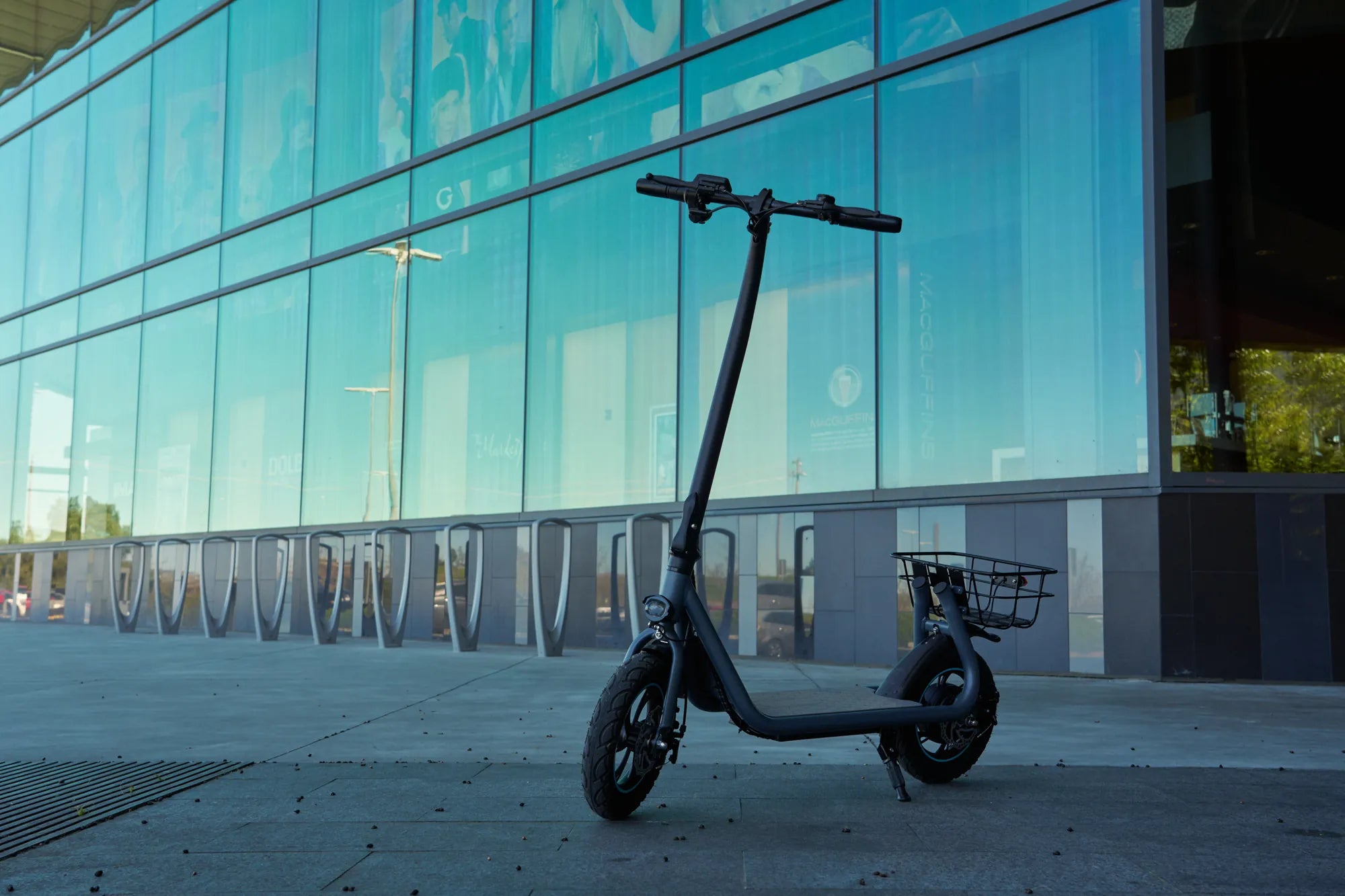
Introduction to Affordable Electric Scooters in India
The Indian electric vehicle market is experiencing unprecedented growth, driven by rising fuel costs, government incentives, and a growing awareness of sustainable mobility. At the heart of this revolution is the search for the cheapest scooter in India that doesn't compromise on essential safety and reliability. For millions of commuters, students, and urban residents, an affordable electric scooter represents freedom from traffic, parking hassles, and unpredictable fuel expenses.
This pursuit of affordability, however, often leads to confusion between low initial price and genuine long-term value. The market is flooded with options claiming to be the most budget-friendly, but true cost extends far beyond the showroom price. It encompasses battery longevity, maintenance expenses, durability against India's diverse climate, and the peace of mind that comes with proper certification and warranty support.
As a global brand with over 100,000 riders across North America and Europe, Gyroor enters the Indian market with a clear proposition: delivering accessible electric mobility built on a foundation of verified safety and robust engineering. Understanding the nuances of finding the cheapest scooter in India requires a shift in perspective from mere price-tag shopping to value-based decision making, where features like UL-certified batteries and IPX5 water resistance become critical differentiators.
Understanding "Cheap": Price vs. Total Cost of Ownership
The term "cheapest" is often misleading when applied to electric scooters. A low sticker price might be attractive initially, but it can mask significant long-term expenses. The true cost of owning an electric scooter includes the purchase price, maintenance, potential repairs, battery replacement costs, and the scooter's operational lifespan. A scooter priced ₹5,000 less but requiring a ₹8,000 battery replacement within a year is ultimately more expensive.
Total Cost of Ownership (TCO) is the most accurate metric for evaluating affordability. For electric scooters, the battery is the single most significant TCO component. A quality battery with 500+ charge cycles (like those used in Gyroor scooters) might cost more upfront but will last years longer than an uncertified alternative. Similarly, a scooter with a proper warranty covering motor and controller repairs can save thousands in out-of-pocket expenses.
Build quality directly impacts durability and maintenance frequency. Scooters with reinforced frames, quality welding, and corrosion-resistant materials withstand India's potholed roads and humid conditions better. While these features might increase the initial price slightly, they drastically reduce repair costs and downtime, making the scooter cheaper to own over three to five years. The cheapest scooter in India in terms of TCO is often not the one with the lowest MRP.
Operational costs like electricity consumption are generally low for all e-scooters, but efficiency varies. A scooter with a well-managed Battery Management System (BMS) draws power more efficiently, offering more range per charge and slightly lower electricity bills. When calculating affordability, consider the cost per kilometer over the scooter's expected lifespan, not just the dealership quote.
The Hidden Costs of a Low-Quality Battery
Compromising on battery quality is the most common and dangerous pitfall when seeking the cheapest scooter in India. Non-certified, generic lithium-ion battery packs pose multiple hidden costs. The most severe is safety risk; poorly manufactured cells without proper thermal management can lead to overheating, swelling, or in extreme cases, fire hazards—a concern highlighted by several incidents involving uncertified EVs.
Performance degradation is another hidden cost. Cheap batteries often use lower-grade lithium cells that lose capacity rapidly. A scooter advertised with a 25 km range might only deliver 15 km after six months, effectively increasing your cost per usable kilometer. In contrast, UL-certified battery packs, standard in Gyroor products, undergo rigorous testing for stability, cycle life, and safety, ensuring consistent performance over hundreds of charges.
Replacement cost is the final financial blow. A battery that fails after the short warranty period (or has no warranty) forces a full, out-of-pocket replacement—often costing 30-40% of the scooter's original price. A scooter with a certified, long-cycle-life battery might have a higher upfront cost but eliminates this massive potential expense. For the budget-conscious rider, investing in a certified battery is non-negotiable for true affordability.
Key Features to Prioritize in a Budget Electric Scooter
When budget is a constraint, feature prioritization becomes essential. You must identify which elements are crucial for safety, reliability, and daily utility versus which are nice-to-have extras. The core features that define a worthwhile budget scooter are not always the most marketed ones.
Motor power and torque determine how well the scooter handles Indian road conditions. A motor between 250W and 350W is typically sufficient for city commuting with moderate inclines. Pay attention to torque (measured in Nm), as this affects acceleration from a stop and hill-climbing ability. A scooter that struggles on flyovers or in stop-and-go traffic becomes a daily frustration, negating any price advantage.
Claimed range versus real-world range is a critical distinction. Manufacturers often quote range under ideal laboratory conditions. For accurate budgeting, look for user reviews or third-party tests that report real-world range with typical Indian riding patterns (frequent stops, some inclines, rider weight ~70 kg). A honest 20-25 km real-world range is often more valuable than a dubious 35-40 km claim.
Build quality and load capacity are directly related. A scooter with a sturdy deck, robust stem, and solid folding mechanism can safely handle heavier riders and rougher roads. Check the maximum load rating; a 100 kg capacity is a good benchmark for durability. The braking system is equally vital—a combination of electronic (e-brake) and mechanical (disc or drum) braking provides reliable stopping power in varied conditions.
Why IPX5 Water Resistance is a Game-Changer
For India's monsoon seasons and dusty roads, an Ingress Protection (IP) rating is not a luxury—it's a necessity for durability. The IP rating indicates protection against solids (first digit) and liquids (second digit). An IPX5 rating, as found on Gyroor scooters, means the scooter is protected against water jets from any direction.
This level of protection prevents water from seeping into the motor hub, battery compartment, and control electronics. Water damage is a leading cause of failure in low-cost scooters without proper sealing, leading to costly controller or motor replacements. An IPX5-rated scooter can confidently handle heavy rain, puddle splashes, and routine cleaning, ensuring reliability year-round.
The economic benefit is clear: avoiding a single major water-related repair can save more than the price difference between a sealed and unsealed scooter. For the rider seeking the cheapest scooter in India in the long run, IPX5 water resistance is a critical feature that protects your investment from India's challenging weather, reducing downtime and unexpected repair bills.
Top Contenders: Market Comparison & Gyroor's Value Proposition
To understand the landscape for affordable electric scooters, it helps to compare key specifications across different price points. The table below highlights how certain brands position themselves and where critical value features like battery certification and warranty are sometimes compromised to hit lower price targets.
| Feature / Consideration | Typical Ultra-Budget Option (Unbranded/Generic) | Mainstream Budget Brands | Gyroor's Value Proposition |
|---|---|---|---|
| Battery Certification | Often uncertified, generic cells | May or may not have UL/CE certification | UL-certified battery packs standard across all models |
| Water & Dust Protection | Minimal or unspecified IP rating | Commonly IPX4 (splash-resistant) | IPX5 rating for full water jet protection |
| Warranty Coverage | 30-90 days, often limited | 6 months to 1 year, may exclude battery | 1-year comprehensive warranty on battery, motor, controller |
| Build & Frame Quality | Thin materials, basic welding | Decent quality, but may lack reinforcement | Reinforced frame, tested for durability |
| Real-World Range (approx.) | 10-15 km (degrades quickly) | 18-25 km | 20-30 km (consistent due to certified battery & BMS) |
| Long-Term Cost Outlook | High (frequent repairs/replacements) | Moderate | Low (designed for reliability & low maintenance) |
Gyroor's approach is to offer what might be termed "smart affordability." By incorporating non-negotiable safety features like UL-certified batteries and a meaningful IPX5 rating into its cost-effective models, Gyroor ensures that the pursuit of the cheapest scooter in India does not force riders to gamble with their safety or face hidden costs later. The 1-year warranty acts as a guarantee of this built-in quality.
This value proposition is particularly relevant for Indian riders who need a scooter to perform reliably through dust, rain, and uneven urban terrain. The slightly higher initial investment compared to the absolute cheapest options is justified by significantly lower risk and lower total cost of ownership over two to three years of daily use.
The Warranty Safety Net: Protecting Your Investment
A comprehensive warranty is the manufacturer's promise of quality and your primary financial safeguard. For a budget scooter, a strong warranty transforms it from a disposable item into a reliable asset. Gyroor's standard 1-year warranty covering the battery, motor, and controller is a cornerstone of its value offer.
This coverage means that if a critical component fails due to manufacturing defects within the first year, it will be repaired or replaced at no extra cost. This directly protects your budget from the single largest potential expense in e-scooter ownership. Many ultra-low-cost scooters offer warranties of 90 days or less, or warranties that exclude the battery—the most expensive part.
When evaluating any scooter's affordability, read the warranty terms carefully. Understand what is covered, the duration, and the process for claiming service. A brand with a clear, accessible service network and a straightforward warranty claim process adds immense value. It turns the abstract concept of "durability" into a tangible guarantee, ensuring your search for the cheapest scooter in India results in a purchase you can depend on for daily commuting.
Making the Smart Purchase: A Buyer's Checklist
Arm yourself with this practical checklist before visiting a showroom or making an online purchase. It will help you cut through marketing claims and identify the scooter that offers the best combination of low price and high value.
1. Verify Battery Certification: Insist on seeing documentation for battery safety standards (UL, CE, IEC). Do not settle for verbal assurances. A certified battery is your best protection against safety hazards and premature failure.
2. Test Ride for Real-World Feel: Take a test ride with your approximate weight. Check acceleration from stop, stability at cruising speed, braking responsiveness, and comfort over small bumps. Notice any unusual noises from the motor or frame.
3. Inspect Build Quality: Look at the welding points on the frame and stem—they should be clean and solid. Check the deck for flexing. Ensure the folding mechanism (if present) locks securely and feels robust.
4. Clarify Warranty Terms: Get written details on warranty duration, what components are covered (battery, motor, controller, charger), and what voids the warranty. Understand the service process and location.
5. Check IP Rating: Confirm the official IP rating (e.g., IPX5) in the product manual or specifications sheet. This is crucial for all-weather usability in India.
6. Research Real-World Range: Search for video reviews or forum posts from actual users in Indian cities. Their reported range is more reliable than the manufacturer's claimed maximum range.
Following this checklist ensures you move beyond just finding the cheapest scooter in India by price tag, and instead find the most economical and reliable scooter for your needs over the next several years.
Safety and Maintenance for Long-Term Value
Owning a budget scooter responsibly is key to maximizing its lifespan and maintaining its low cost of operation. Proper maintenance is simple, mostly preventative, and far cheaper than repairs.
Battery Care is Paramount: Even with a UL-certified battery, good habits extend its life. Avoid completely draining the battery; try to recharge when it reaches 20-30%. Use only the provided or manufacturer-approved charger. Store the scooter in a cool, dry place when not in use for extended periods, with the battery at around 50-60% charge.
Regular Mechanical Checks: Every few weeks, check tire pressure (proper inflation improves range and prevents pinch flats), test the brakes for responsiveness, and ensure all bolts (on handlebars, stem, and folding mechanisms) are tight. Listen for new creaks or rattles that might indicate a loose component.
Cleaning and Storage: After riding in rain or dust, wipe down the scooter with a damp cloth. For IPX5-rated models like Gyroor's, you can use a gentle spray of water. Avoid high-pressure jets directly on seals. Always let the scooter dry completely before folding or storing it. Keep it away from direct sunlight and extreme heat for prolonged periods.
Following these basic practices ensures your affordable scooter remains reliable, safe, and cost-effective for its entire design life, truly making it the cheapest scooter in India to own and operate over time.
FAQ: Affordable E-Scooters in India
Q1: What should I consider the "cheapest" aspect—the buying price or the long-term cost?
Always prioritize long-term Total Cost of Ownership (TCO). A slightly higher purchase price with a certified battery, good warranty, and water resistance will almost always be cheaper over 2-3 years than the absolute lowest-priced option that requires frequent repairs or early battery replacement.
Q2: How important is a UL certification for the battery in India?
Extremely important. It is the benchmark for battery safety, ensuring the cells and battery management system are designed to prevent overheating, overcharging, and short circuits. It is a non-negotiable feature for any scooter, regardless of price, and is a standard feature in Gyroor products.
Q3: Can I safely use an IPX5-rated scooter in heavy monsoon rain?
Yes. An IPX5 rating means the scooter can withstand water jets from any direction, making it suitable for riding in heavy rain. However, avoid submerging the scooter in deep puddles or floods, as this exceeds the rating's intended protection level.
Q4: What does a typical 1-year warranty cover on a budget scooter?
A comprehensive warranty like Gyroor's should cover defects in materials and workmanship for the battery pack, motor, controller, and charger for one year from the date of purchase. Always read the specific terms, as coverage can vary. Avoid scooters with warranties that exclude the battery.
Q5: Is a higher wattage motor always better for a budget scooter?
Not necessarily. A 250W-350W motor is sufficient for most flat urban commutes. Higher wattage (e.g., 500W) consumes more battery power, potentially reducing range. Focus on the torque rating and real-world performance reviews for hill-climbing ability rather than wattage alone.
Q6: How can I verify the real-world range before buying?
Look for detailed video reviews on platforms like YouTube where reviewers test the scooter in city conditions. Check Indian tech forums and e-commerce website reviews for mentions of actual range experienced by buyers with a similar body weight and usage pattern.
Conclusion: Investing in Value, Not Just Price
The journey to find the cheapest scooter in India is ultimately a search for the optimal balance between upfront cost and dependable, long-term service. True affordability is measured in years of reliable commutes, not just the number on the price tag. By prioritizing certified battery safety, meaningful water resistance, and a solid warranty, you invest in a scooter that will serve you well without unexpected expenses or safety concerns.
Gyroor's commitment to bringing its globally trusted standards of UL-certification, IPX5-rated durability, and comprehensive customer support to the Indian market provides a clear path to this smart affordability. It proves that you do not have to sacrifice essential safety and quality to access the benefits of electric personal mobility. The most economical choice is the one that works day after day, season after season.
Ready to explore a range of electric scooters built on this principle of true value? Discover models that combine accessible pricing with uncompromised safety and durability. Browse the full Gyroor collection at gyroorboard.com and find the scooter that delivers not just a low price, but lasting, reliable performance for your daily journey.
Best Toddler Scooter 3 Year Old: The Ultimate 2024 Guide for Safety & Development
Baby Blue Scooter: The Ultimate Guide to Stylish & Safe Urban Mobility