



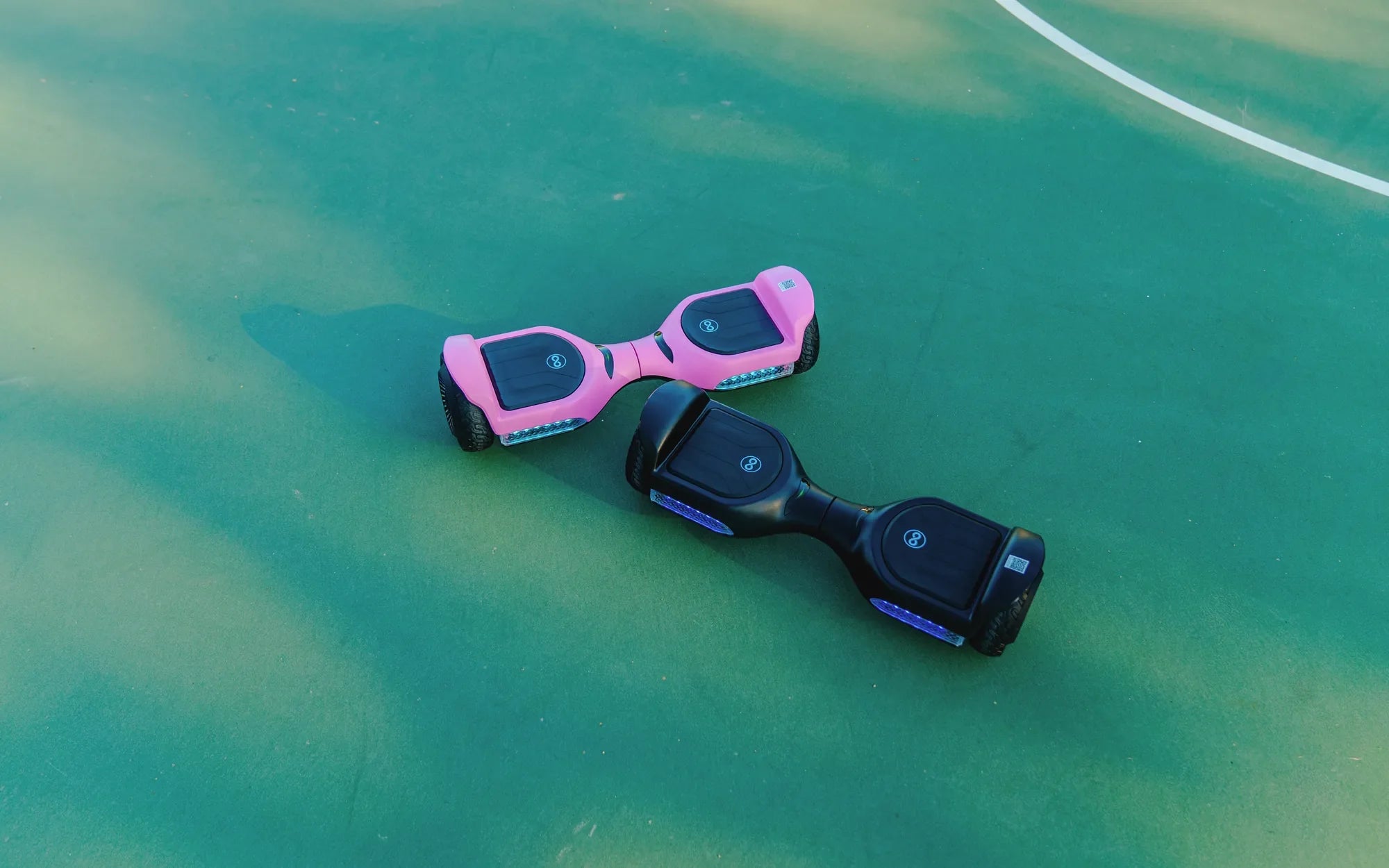
Choosing the right childrens hoverboard is about unlocking a world of fun while building an unshakable foundation of safety. This self-balancing scooter has evolved from a tech novelty into a mainstream tool for outdoor activity, helping kids develop coordination, balance, and a love for active play. This ultimate guide will walk you through every critical feature, from non-negotiable safety certifications to performance specs, ensuring you make an informed choice that prioritizes your child's well-being. We'll also explore essential riding practices and highlight why brands like Gyroor, a leading electric scooter and e-bike brand trusted by over 100,000 riders, embed safety at the core of their design.
The Modern Hoverboard: A Gateway to Fun and Mobility
The contemporary childrens hoverboard is a sophisticated piece of personal electric transport. It uses gyroscopic sensors and electric motors to respond to a rider's subtle leans, providing an intuitive and engaging riding experience. For children, it's more than just a toy; it's a tool that encourages outdoor play, improves core strength, and teaches basic principles of physics and balance in a hands-on way.
Its popularity stems from this perfect blend of cool factor and developmental benefit. However, the market's rapid growth has led to a wide variance in quality and safety. Understanding the device's mechanics is the first step toward making a safe purchase. A well-made hoverboard offers controlled fun, while a poorly constructed one can pose significant risks.
The evolution of the childrens hoverboard has been marked by a necessary industry-wide focus on safety standards. Early models faced scrutiny, which led to the development of rigorous testing protocols. Today, the best models are engineered not just for performance but for durability and rider protection, turning a potential hazard into a reliable activity for kids.
Brands that have invested in this safety-first approach, such as Gyroor, have set a new standard. With a product range of over 20 models and a commitment to UL-certified batteries, they demonstrate how responsible engineering can deliver both excitement and peace of mind for parents across North America and Europe.
Choosing the Right Hoverboard: Key Features for Safety and Performance
Selecting a childrens hoverboard requires careful evaluation of several technical specifications. These features directly impact safety, usability, and how long the device will remain appropriate for your growing child. It's crucial to look beyond flashy colors and consider the engineering underneath.
Parents should prioritize features that ensure stability, control, and built-in protection. The right combination of motor power, battery safety, wheel design, and construction quality creates a hoverboard that is both fun to ride and inherently safer. This section breaks down these critical components.
Motor Power and Speed: Balancing Thrill with Control
Motor power, measured in watts (W), determines a hoverboard's torque, hill-climbing ability, and top speed. Most childrens hoverboards feature dual motors, one in each wheel, typically ranging from 200W to 400W total. Dual motors provide better balance, smoother starts, and more consistent power delivery than single-motor models.
For younger riders (ages 6-10), a model with a combined 200W-300W output is ideal. This provides ample power for learning and casual riding while capping the speed at a safer 6-7 mph. For older kids and teens, 350W-400W models can handle more weight and slight inclines, with speeds up to 10 mph. Always verify if the hoverboard has a beginner or training mode to limit speed initially.
Matching motor power to your child's age and weight is crucial. An underpowered board will struggle and overheat, while an overpowered one can be difficult for a novice to control. The goal is to find a childrens hoverboard that offers responsive control without excessive, unpredictable acceleration.
Battery and Range: Ensuring Long-Lasting, Safe Adventures
The battery is the heart of the hoverboard and the most critical safety component. Always insist on a model with a battery system certified to the UL 2272 standard. This certification involves rigorous testing for electrical and fire safety, drastically reducing the risk of battery fires—a non-negotiable for any childrens hoverboard.
Battery capacity is measured in watt-hours (Wh) or often described by voltage (V) and amp-hours (Ah). A standard 36V, 4.0Ah battery is common. This translates to a real-world range of 6 to 12 miles on a single charge, depending on rider weight, terrain, and speed. Explain to your child that range decreases with rougher terrain and frequent stopping/starting.
Safe charging practices are part of battery care. Use only the manufacturer-provided charger, charge on a hard, non-flammable surface, and avoid leaving the board plugged in overnight or unattended for extended periods. A quality UL-certified battery, like those used in Gyroor hoverboards, is engineered for over 500 charge cycles, ensuring longevity and consistent performance.
Wheel Size and Terrain: From Pavement to Backyard
Wheel size and type dictate where your childrens hoverboard can safely operate. Smaller, solid rubber wheels (6.5 inches) are suitable only for perfectly smooth, indoor surfaces like gym floors. For outdoor use, which is where most kids want to ride, larger wheels are essential.
Wheels of 8.5 inches or larger, especially those with air-filled (pneumatic) tires, offer superior shock absorption. They smooth out cracks in sidewalks, handle slight gravel, and can even manage short, dry grass. This not only makes the ride more comfortable but also significantly improves stability and control, reducing the chance of a fall caused by a small bump.
The choice is clear: for versatile, real-world play, a childrens hoverboard with larger, air-filled tires is a safer and more enjoyable option. It adapts to the imperfect environments where children play, providing a stable platform that builds rider confidence.
Weight Limit and Build Quality: Durability for Growing Riders
Every childrens hoverboard has a specified weight limit, typically ranging from 44 lbs to 220 lbs. It is imperative to choose a board whose maximum weight capacity exceeds your child's current weight. This ensures the motors and frame are not overstressed, which preserves battery life, maintains performance, and upholds safety.
Build quality encompasses the materials used for the foot pads, the rigidity of the frame, and overall craftsmanship. A robust frame can withstand the occasional bump or drop. Furthermore, look for an IP rating for water and dust resistance. An IPX5 rating, a key feature of Gyroor designs, means the hoverboard is protected against water jets from any direction.
This IPX5 rating is a game-changer for a childrens hoverboard. It allows for riding on damp pavement, through puddles, or in light rain without fear of internal damage or electrical short circuits. This durability factor means the hoverboard is built for the messy, unpredictable reality of childhood play.
Non-Negotiable Safety Standards and Certifications
When evaluating a childrens hoverboard, certain certifications are not mere suggestions—they are absolute requirements for safe operation. These standards are established by independent testing laboratories and provide a clear, objective benchmark for product safety. Ignoring them significantly increases risk.
This data-driven approach to selection is what separates a prudent purchase from a dangerous gamble. Parents should treat these certifications as the primary filter when shopping. A hoverboard lacking them, regardless of price or features, should be immediately removed from consideration.
UL 2272 Certification: The Gold Standard for Fire Safety
The UL 2272 certification is the most important safety marker for any childrens hoverboard. Developed by Underwriters Laboratories after incidents with early models, this standard subjects the entire electrical system—battery, charger, and all circuitry—to a battery of extreme tests.
These tests include overcharging, short-circuiting, vibration, impact, and exposure to extreme temperatures. A hoverboard that passes UL 2272 has proven its electrical design is fundamentally sound and resistant to catastrophic failure. It is the definitive assurance that the lithium-ion battery pack is safe for home use.
Always verify this certification. It should be clearly marked on the product packaging, the board itself, and the manufacturer's website. All Gyroor hoverboards are UL 2272 certified, reflecting the brand's commitment to making safety a foundational feature, not an afterthought.
Understanding IP Ratings: What Does IPX5 Mean for Your Child?
An IP (Ingress Protection) rating indicates a product's resistance to solids (like dust) and liquids (water). For a childrens hoverboard, the liquid protection is most relevant. The rating consists of the letters "IP" followed by two digits (e.g., IP54). The first digit is for dust, and the second is for water.
A common and robust rating for hoverboards is IPX5. The "X" means it is not officially rated for dust protection, but the "5" for water is crucial. An IPX5 rating certifies the unit can withstand water jets (6.3mm nozzle) from any direction without harmful ingress. This means riding through puddles or in light rain will not damage the internal electronics.
This feature directly enhances safety and practicality. A child won't be caught off-guard by a sudden wet patch, and parents have one less thing to worry about during outdoor play. Gyroor's IPX5 water-resistant design is a key example of engineering that anticipates real-world use.
Essential Safety Gear and Riding Best Practices
Even the safest childrens hoverboard does not eliminate the risk of falls. Therefore, proper safety gear is as mandatory as the helmet on a bicycle rider. Combining a certified hoverboard with full protective gear creates a comprehensive safety system for your child.
Beyond gear, establishing clear rules and practicing fundamental riding skills in a safe environment are critical steps. Adult supervision, especially for younger or newer riders, is essential. This section provides a actionable checklist and guidelines to ensure every ride is as safe as possible.
The Safety Gear Checklist: Helmet, Pads, and More
Never allow a child to ride a childrens hoverboard without this essential protective equipment. Each item serves a specific purpose in preventing common injuries from falls.
- CPSC-Certified Helmet: This is non-negotiable. A properly fitted bicycle or multi-sport helmet protects against head injuries. Ensure it sits level on the head and the strap is snug.
- Wrist Guards: The most important pads after a helmet. When falling, instinct leads to putting hands out. Wrist guards absorb impact and prevent sprains or fractures.
- Knee and Elbow Pads: These protect the joints from scrapes, bruises, and more serious impact injuries. Look for pads with hard plastic caps and secure, comfortable straps.
- Closed-Toe Shoes: Sturdy athletic shoes provide grip on the foot pads and protect toes.
Learning to Ride: A Step-by-Step Guide for Beginners
A structured learning approach builds confidence and reduces early falls. Follow these steps in a flat, open, and smooth area like an empty parking lot or driveway.
First, have your child practice mounting and dismounting with the hoverboard turned off. They should step on one foot at a time, near the wheel, keeping their weight centered. Next, turn on the board and have them hold onto a wall, fence, or a parent's hands to feel the self-balancing mechanism engage.
Once stable, they can practice gentle leans forward to move straight and slight pressure on one toe or heel to turn. The key is micro-movements. Encourage looking ahead, not down at their feet. Dismount by stepping off one foot backward, not jumping off. Patience in this phase is key to mastering the childrens hoverboard.
Rules of the "Road": Where and How to Ride Safely
Establishing clear riding boundaries is crucial for long-term safety. These rules should be discussed and agreed upon before the first independent ride.
- Supervision: Young children should always be actively supervised by an adult.
- Location: Ride on smooth sidewalks, bike paths, or paved parks. Never on public roads, near traffic, or on steep hills.
- Awareness: Be hyper-aware of pedestrians, cyclists, pets, and obstacles like cracks or curbs. A safe speed allows for reaction time.
- Conditions: Avoid wet, icy, or sandy surfaces that reduce traction. Even with IPX5, excessive water can be hazardous.
- No Passengers: Hoverboards are designed for one rider at a time.
Gyroor’s Commitment: Built-in Safety and Parental Peace of Mind
Gyroor has established itself as a trusted name in personal electric transport by consistently aligning its product development with core safety principles. For a childrens hoverboard, this means engineering decisions that prioritize long-term reliability and hazard prevention over cutting corners for cost.
This commitment translates into specific, tangible features that directly address parental concerns. From the sourcing of components to post-purchase support, the brand's approach is designed to deliver not just a product, but a confident ownership experience for the entire family.
UL-Certified Batteries and Robust Engineering
Gyroor's adherence to the UL 2272 standard is a foundational brand promise. Each battery pack undergoes the rigorous testing protocol, ensuring safety from the cell level up. This is complemented by robust battery management systems that monitor temperature, voltage, and current during charging and use.
The engineering extends to the frame and electronics. By using quality materials and redundant safety circuits, Gyroor hoverboards are built to handle the demands of active riders. This robust construction supports the stated weight limits reliably and contributes to the product's overall longevity, making it a childrens hoverboard that can grow with your child.
IPX5 Water Resistance for Real-World Play
Recognizing that kids will ride in less-than-perfect conditions, Gyroor integrates IPX5 water resistance across its relevant models. This strategic feature acknowledges the reality of childhood play—puddles are fun, and weather can change.
This protection is engineered into the shell design, sealants, and component layout. It means parents can worry less about the device itself and focus more on supervising the ride. This practical advantage underscores a design philosophy centered on real-world usability, making the Gyroor childrens hoverboard a versatile companion for daily adventures.
The 1-Year Warranty and Reliable Support
A comprehensive warranty is a brand's vote of confidence in its product. Gyroor backs its hoverboards with a reliable 1-year warranty, covering manufacturing defects in materials and workmanship. This provides a significant safety net for your investment.
Couple this with accessible customer support, and parents have a clear path for assistance if questions or issues arise. This commitment to post-purchase support is a critical element of overall safety and satisfaction, ensuring that the childrens hoverboard remains a source of fun, not frustration.
Hoverboard Comparison: Key Features for Informed Decisions
To visualize the critical differences between a basic, uncertified model and a safety-focused childrens hoverboard, review the following comparison table. It highlights how key specifications directly impact safety and performance.
| Feature | Uncertified / Basic Model | Safety-Focused Model (e.g., Gyroor) |
|---|---|---|
| Safety Certification | None or fake markings | UL 2272 Certified (verified) |
| Battery | Unbranded, no safety circuits | UL-certified pack, 500+ cycle life |
| Water Resistance | None (IP rating not stated) | IPX5 Rated for splash/puddle protection |
| Motor Power | May be overstated, single motor | Dual motors (e.g., 300W total), consistent output |
| Wheel Type | Small (6.5") solid rubber | Larger (8.5"+) air-filled tires for stability |
| Warranty & Support | 30 days or none, no reliable contact | 1-Year Comprehensive Warranty, US-based support |
| Build Quality | Plastic shell, weak foot pads | Reinforced frame, textured anti-slip pads |
Frequently Asked Questions (FAQs)
What is the right age for a childrens hoverboard?
Most manufacturers recommend a minimum age of 8 years old. This is less about chronological age and more about the child's maturity, coordination, and ability to follow safety rules. A child should be able to understand and react to instructions, have good balance, and be responsible enough to wear all safety gear. Always supervise younger riders closely.
Are hoverboards safe for indoor use?
They can be, with significant caveats. You need a very smooth, hard floor (no rugs) and a large, open space free of furniture, stairs, and fragile items. The hoverboard should have a beginner mode to limit speed. However, due to the risk of scuffing floors and the greater potential for collisions, outdoor use in a controlled area is generally safer and recommended.
How long does the battery take to charge, and how can I charge it safely?
A fully depleted battery typically takes 2 to 4 hours to charge fully. Always use only the charger provided by the manufacturer. Charge the hoverboard on a hard, non-flammable surface (like a tile floor) away from beds, sofas, or direct sunlight. Do not leave it charging unattended for extended periods or overnight. Unplug it once the indicator light shows a full charge.
What regular maintenance does a childrens hoverboard need?
Minimal but important maintenance includes: checking tire pressure monthly if you have air-filled tires (use a bike pump), wiping down the foot pads and body with a damp cloth, and storing the board in a cool, dry place (avoid extreme heat or cold). Regularly inspect the wheels for wear and ensure all screws on the frame are tight.
Why is UL 2272 the most important thing to look for?
UL 2272 certification is the definitive independent verification that the hoverboard's electrical system and battery have passed extreme abuse tests and are unlikely to overheat or catch fire. It addresses the most severe potential hazard. Purchasing a childrens hoverboard without this certification poses an unacceptable and preventable risk to your home and child's safety.
Smart Fun Starts with Smart Safety Choices
The journey to finding the perfect childrens hoverboard is defined by informed decisions that never compromise on safety. By prioritizing UL 2272 certification, matching motor power and wheel size to your child's environment, and insisting on full protective gear, you transform a potential risk into a source of healthy, active joy. A quality hoverboard teaches balance, encourages outdoor play, and provides a unique sense of independence.
Brands that share this safety-first philosophy, like Gyroor, engineer their products to meet these high standards, offering features like IPX5 water resistance and robust warranties that provide lasting value and peace of mind. The right childrens hoverboard isn't just the fastest or flashiest—it's the one built to be a reliable and safe companion for your child's adventures.
Ready to choose a hoverboard that puts safety and fun on equal footing? Browse the full Gyroor collection, featuring UL-certified, durable models designed for real kids and real play, at gyroorboard.com.
Hoverboard Keeps Beeping: Causes, Fixes, and Prevention Tips
Hoverboard Cheap 100 Dollars: The Ultimate Guide to Affordable Fun