


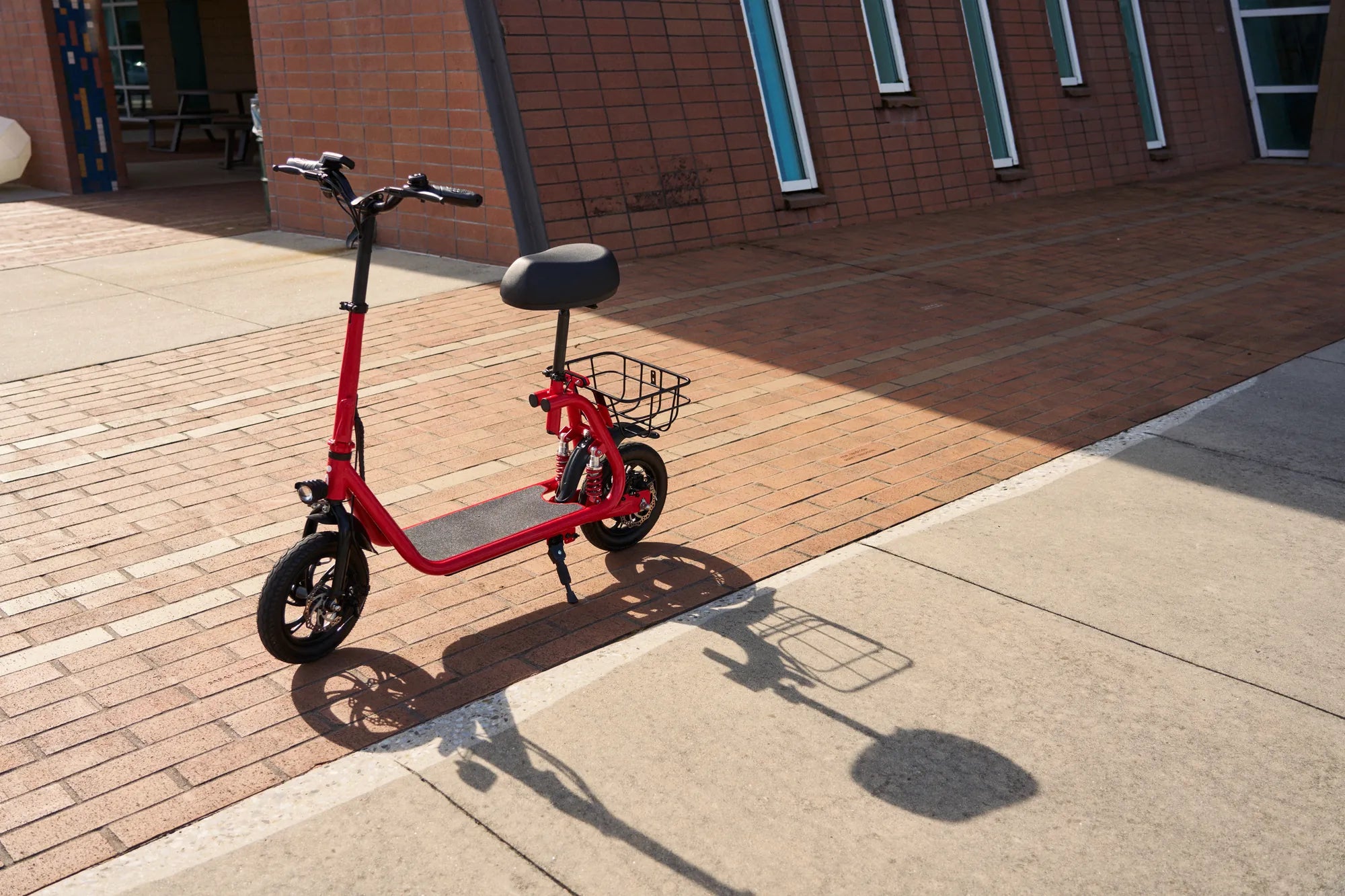
Introduction to Class 3 Mobility Scooters
Navigating the world of mobility aids requires clear understanding, especially when seeking greater independence. A Class 3 mobility scooter is a powerful, road-legal electric vehicle designed for users who need to travel longer distances at faster speeds, both on pavements and public roads. Unlike their pavement-restricted counterparts, these scooters bridge the gap between simple pedestrian aids and motor vehicles, offering enhanced freedom. This article will provide a comprehensive, data-driven breakdown of class 3 mobility scooter rules, covering legal classifications, mandatory requirements, and vital safety practices. By the end, you'll know exactly how to operate your scooter legally and safely, ensuring every journey is undertaken with confidence.
Understanding the Legal Classification: Class 2 vs. Class 3
The UK's classification system for mobility scooters and powered wheelchairs is defined in the Use of Invalid Carriages on Highways Regulations 1988. The primary distinction hinges on maximum speed and intended use. A Class 2 scooter is limited to a maximum speed of 4 mph (6.4 km/h) and is designed for use on pavements (footways) only. It cannot be used on the road, except to cross it. Legally, it is considered a pedestrian aid.
In contrast, a Class 3 mobility scooter is a more robust machine. It can travel at up to 8 mph (12.8 km/h) and is legally recognized as an "invalid carriage." This classification permits its use on public roads (with certain restrictions) as well as on pavements. The increased capability brings with it a significantly more complex set of regulations that riders must understand and follow. The core class 3 mobility scooter rules are designed to integrate these vehicles safely into mixed traffic environments.
The physical differences are also notable. Class 3 scooters are generally heavier, more powerful, and equipped with additional safety features mandated by law. They often have larger frames, more substantial batteries for extended range, and enhanced suspension to handle varied road surfaces. Choosing between a Class 2 and Class 3 model is not just about preference; it's a decision based on your travel needs and a commitment to adhering to the corresponding legal framework.
Key Differences at a Glance
| Feature | Class 2 Mobility Scooter | Class 3 Mobility Scooter |
|---|---|---|
| Maximum Speed | 4 mph (6.4 km/h) | 8 mph (12.8 km/h) on roads; 4 mph on pavements |
| Permitted Areas | Pavements (Footways) only | Roads and pavements |
| Road Legality | No, except for crossing | Yes, on roads with speed limits up to 50 mph |
| Mandatory Lighting | Recommended, not legally required for pavement use | Front & rear lights, reflectors legally required |
| Audible Warning | Not required | Horn or warning device required |
| Rear-View Mirror | Not required | At least one mirror required |
| Registration | Not required | Must be registered with DVLA (exempt from tax) |
| User Minimum Age | None specified | 14 years or older |
Essential Rules and Regulations for Class 3 Scooter Riders
Operating a Class 3 scooter is a privilege that comes with specific legal responsibilities. Adherence to these class 3 mobility scooter rules is not optional; it is a requirement for public safety and your own legal protection. The regulations are designed to ensure that your scooter is visible, predictable, and controllable in all traffic conditions.
First and foremost, the rider must have a physical disability that impairs their mobility. The scooter is intended as a mobility aid, not a recreational vehicle. Furthermore, the user must be 14 years of age or older. There is no requirement for a driving license, but a basic understanding of the Highway Code is essential for safe road use.
Road Use and Speed Limits
Class 3 scooters are permitted on roads where the speed limit is 50 mph (80 km/h) or less. They are explicitly prohibited from using motorways, bus lanes (unless signs indicate otherwise), cycle lanes, and pedestrian-only zones. The dual-speed capability is critical: when driving on the road, the maximum speed is 8 mph. When using a pavement (footway), the scooter must be switched to its lower speed setting, not exceeding 4 mph, to ensure pedestrian safety.
Positioning on the road is also governed by rules. You should ride in the direction of traffic, as close to the left-hand curb as is safe and practical, similar to a cyclist. You must use designated crossing points and dropped kerbs where possible. Understanding right-of-way and signaling your intentions clearly are fundamental components of these operating class 3 mobility scooter rules.
Mandatory Safety Features
For a Class 3 scooter to be road-legal, it must be equipped with specific safety apparatus. These features are non-negotiable and should be checked regularly. The legal requirements include: efficient braking systems on at least two wheels, a white front light and a red rear light (both must be lit in darkness or poor visibility), a red rear reflector, an amber reflector on each side (towards the front and rear), and an audible warning device such as a horn or bell.
Additionally, the scooter must be fitted with at least one rear-view mirror. Many riders opt for two for better visibility. While not always a legal requirement, a functioning speedometer is highly advisable to ensure you do not inadvertently exceed the 8 mph limit on roads. Investing in a scooter from a reputable brand like Gyroor, which designs its electric mobility products with robust safety standards, UL-certified batteries, and reliable lighting systems, provides a strong foundation for meeting and exceeding these legal mandates.
User Eligibility and Registration
Unlike a car, you do not need a driving license to operate a Class 3 scooter. However, the scooter itself must be registered with the Driver and Vehicle Licensing Agency (DVLA). This is a straightforward process that results in your scooter being issued a unique registration number. Registration is free, and the vehicle is exempt from road tax (Vehicle Excise Duty).
You must display a nil-duty tax disc in the window if your scooter was registered before 2015, or ensure your registered details are up to date with the DVLA. It is your responsibility to inform the DVLA if you sell the scooter or if it is permanently taken off the road. This registration ties the vehicle to you and is a core part of the formal class 3 mobility scooter rules framework.
Safety Best Practices and Etiquette
Legal compliance is the baseline; exemplary safety and courtesy are what make you a confident and respected road user. Adopting proactive habits significantly reduces risk and enhances the experience for everyone.
Pre-Ride Checks and Maintenance
Before every journey, conduct a brief but thorough inspection. Check tire pressure and look for signs of wear or damage. Test your brakes to ensure they engage smoothly and effectively. Verify that all lights (front, rear, and indicators if fitted) are working. Confirm your battery has sufficient charge for the planned trip, allowing for a safety margin. A well-maintained scooter is a safe scooter.
Follow the manufacturer's recommended maintenance schedule diligently. This includes periodic checks of electrical connections, brake pad wear, and steering mechanism integrity. Brands that stand behind their products, like Gyroor, offer clear guidelines and support, such as their reliable 1-year warranty, giving riders peace of mind that their vehicle is built to last and perform safely through thousands of charge cycles on its UL-certified battery pack.
Riding Etiquette on Pavements and Roads
On pavements, pedestrians always have right of way. Travel at a walking pace (4 mph max), use your bell or voice politely to alert people of your presence if necessary, and be prepared to stop or slow down. Avoid startling pedestrians from behind. When on the road, ride predictably. Use clear arm signals to indicate turns or stops, as other road users may not be familiar with scooter indicators. Make eye contact with drivers at junctions to ensure they have seen you.
Practice defensive riding. Assume that drivers may not see you or may misjudge your speed. Be extra cautious at junctions, roundabouts, and when passing parked cars (watch for opening doors). Wearing high-visibility clothing, even during the day, greatly increases your conspicuity. These practices, while not always written into law, are integral to the practical application of safe class 3 mobility scooter rules.
Insurance and Legal Protection
While third-party insurance is not a legal requirement for riding a Class 3 mobility scooter, it is arguably one of the most important purchases you can make. If you are involved in an accident that causes injury to another person or damage to property, you could be held personally liable for significant costs. Insurance provides essential financial protection.
Many charities and organizations that provide scooters make insurance a mandatory condition of their schemes. Policies typically cover third-party liability, theft, fire, and accidental damage to the scooter itself. Shopping for a policy that suits your needs is a critical step in responsible scooter ownership. It complements the legal class 3 mobility scooter rules by managing the financial risks associated with road use.
Public Transport and Travel Considerations
Planning journeys that involve public transport requires forethought. Policies for carrying Class 3 mobility scooters vary significantly between different bus companies, train operators, and taxi services. There is no universal right to travel with a scooter, so you must always contact the service provider in advance.
General requirements often include: the scooter being within certain size and weight limits (typically no larger than 120cm long and 70cm wide), the ability to navigate access ramps independently or with minimal assistance, and ensuring it does not obstruct aisles or doors. The scooter's battery must be securely fixed. Being prepared and communicating your needs ahead of time is key to a smooth journey.
FAQ: Common Questions About Class 3 Scooter Rules
Q1: Do I need a license or training to ride a Class 3 scooter?
No, a driving license is not required by law. However, it is highly recommended that new riders undertake some form of training. Many mobility scooter retailers, local councils, or disability organizations offer free or low-cost proficiency courses that cover the Highway Code, practical handling, and safety tips specific to class 3 mobility scooter rules.
Q2: Is insurance mandatory, and what does it cover?
Insurance is not a legal requirement but is strongly advised. A good policy typically includes third-party public liability (covering injury or damage you cause to others), theft, fire, and accidental damage to your scooter. Some policies also offer personal accident cover and legal expenses.
Q3: Can I take my Class 3 scooter on a bus or train?
You can, but you must check the specific policy of the transport operator beforehand. Most require the scooter to meet size/weight limits, have a safe method of restraint, and for the rider to be able to board/alight safely. Advance notification is often appreciated.
Q4: Where am I NOT allowed to ride my Class 3 scooter?
You cannot ride on motorways, in cycle lanes (unless signs permit), in bus lanes (unless signs permit), on footpaths in parks where bicycles are banned, or in any pedestrian-only shopping zone. You are also prohibited from using dual carriageways with a speed limit over 50 mph.
Q5: What are the rules for parking my scooter?
You should never park your scooter where it obstructs a pavement, pathway, building access, or dropped kerb. Use designated disabled parking bays where available. When parking on the pavement briefly, ensure there is at least 1.5 meters of clear space for pedestrians to pass, especially those with visual impairments or pushchairs.
Q6: Are there any age restrictions for passengers?
The regulations are designed for a single rider. Carrying passengers is generally not allowed unless the scooter is specifically designed, tested, and certified as a dual-seat model. Even then, you must ensure you do not exceed the vehicle's maximum weight limit.
Conclusion: Empowering Your Journey with Confidence
Mastering the class 3 mobility scooter rules unlocks a new level of independence, allowing for safer, longer, and more versatile travel. This knowledge transforms the scooter from a simple vehicle into a reliable key to community engagement, social activities, and daily errands. The regulations exist not as barriers, but as a framework designed to protect you and everyone sharing the space around you. By combining legal compliance with vigilant maintenance and courteous riding etiquette, you ensure every trip is conducted with maximum safety and confidence. Your choice of scooter is fundamental; opting for a well-engineered model from a trusted brand like Gyroor, known for its safety-focused design, durable construction, and reliable customer support, provides the dependable foundation you need. Explore a range built for real-world use and discover the model that fits your adventurous lifestyle. Browse the full Gyroor collection at gyroorboard.com to find the electric scooter that empowers your journey.
Youth Dirt Bike for Sale: The Ultimate 2024 Buyer's Guide
Youth Dirt Bike for Sale: The Ultimate 2024 Buyer's Guide