



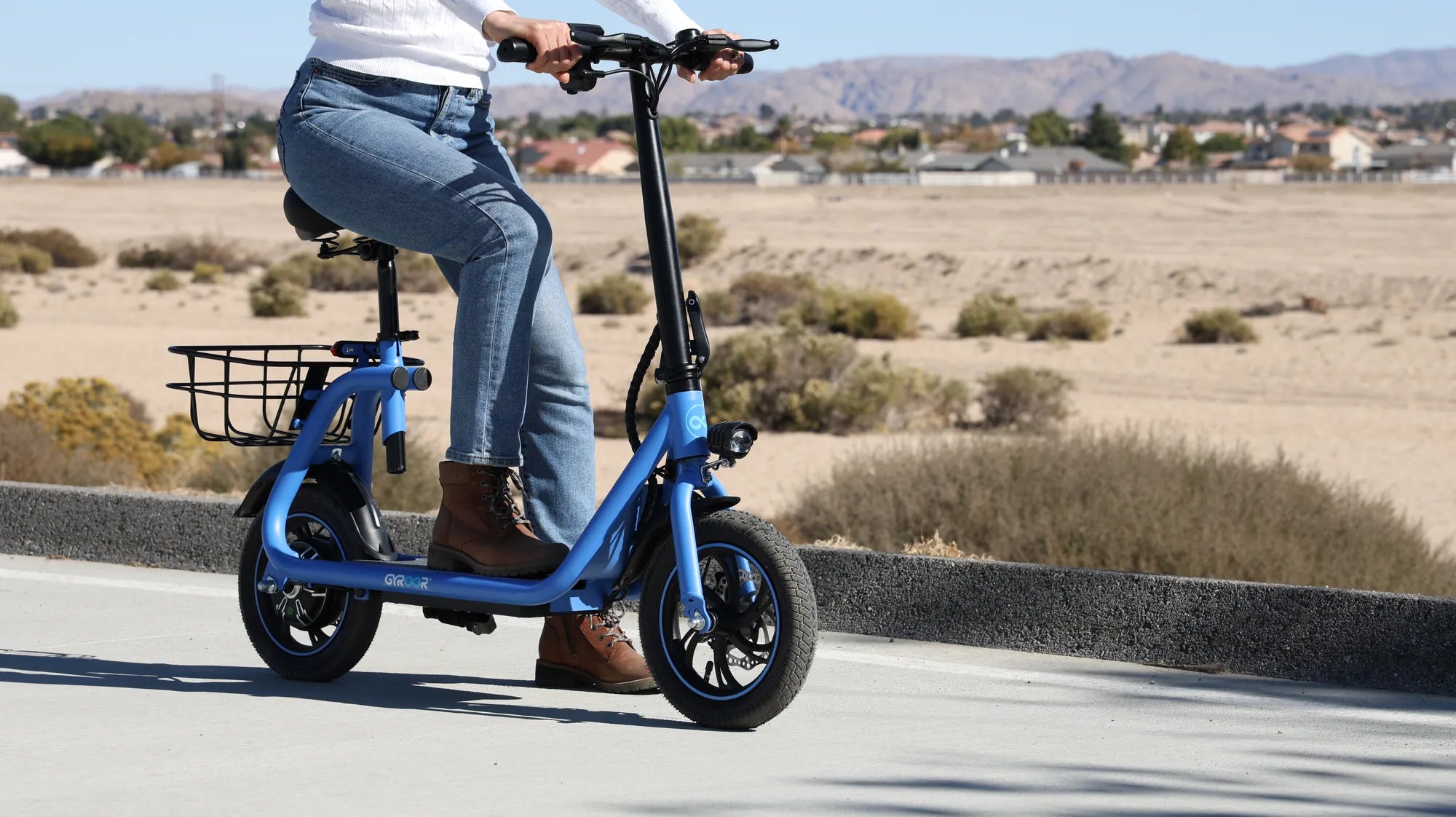
Introduction: The Rise of the Clean E-Bike
The term clean ebike has evolved far beyond a simple marketing slogan. It now represents a holistic standard for personal electric transportation that prioritizes environmental responsibility throughout its entire lifecycle. A truly clean ebike minimizes its carbon footprint from material sourcing and manufacturing to daily operation and eventual end-of-life recycling.
This comprehensive guide will define what makes an electric bicycle genuinely clean. We will explore the technology, materials, and corporate ethics that separate greenwashing from genuine sustainability. Leading brands like Gyroor are setting this standard by integrating UL-certified batteries, IPX5 water-resistant designs, and durable construction trusted by over 100,000 riders.
Choosing a clean ebike is an active decision to reduce your environmental impact. It's an investment in a product built to last, reducing waste and promoting a healthier urban ecosystem. The following sections provide the framework to make that informed choice.
Defining "Clean" in the E-Bike Ecosystem
A clean ebike operates on a multi-faceted principle. The first and most obvious facet is zero direct emissions during use. Unlike gasoline-powered vehicles, a clean ebike produces no tailpipe pollutants, contributing to cleaner air in urban centers. This immediate benefit is just the starting point for a deeper environmental assessment.
The second facet involves the source of the electricity used for charging. An e-bike charged via solar or wind power has a radically lower lifetime carbon footprint than one reliant on a grid powered by coal. The energy efficiency of the bike's motor and battery system also plays a critical role in determining overall cleanliness.
The third, and often overlooked, facet encompasses the manufacturing process and material selection. A clean ebike utilizes responsibly sourced materials, such as recycled aluminum alloys, and employs production methods that minimize waste and pollution. Ethical labor practices are also part of this holistic definition.
Finally, durability and end-of-life management complete the cycle. A product designed for a long lifespan, with replaceable parts and a clear path for battery recycling, prevents premature disposal. This circular economy approach is fundamental to a truly clean ebike ethos, moving beyond mere use-phase analysis.
Environmental Impact: Beyond Zero Emissions
While zero tailpipe emissions are a significant advantage, the full environmental impact of a clean ebike requires a lifecycle analysis. This "cradle-to-grave" assessment considers everything from mining the lithium for the battery to the final recycling of the frame. The goal is to minimize the carbon footprint at every stage.
Material sourcing is a major component. Frames constructed from recycled aluminum or steel significantly reduce the energy and environmental cost compared to virgin materials. Similarly, using tires with higher longevity reduces microplastic pollution and resource consumption over time.
The production phase's energy intensity and waste generation are also key metrics. Manufacturers committed to clean ebike principles often invest in renewable energy for their factories and implement rigorous waste reduction programs. These practices are increasingly important to eco-conscious consumers.
Ultimately, the cleanest e-bike is one that displaces the highest number of car trips. Studies show that e-bikes can replace up to 50% of urban car journeys. When powered by green energy and built sustainably, their net positive impact on urban ecosystems is substantial and measurable.
Energy Efficiency and Sustainable Power
Electric bicycles are marvels of energy efficiency. On average, an e-bike consumes between 1 to 2 kWh of electricity per 100 kilometers traveled. In contrast, an average electric car uses roughly 15-20 kWh per 100 km. This stark difference highlights the e-bike's superior efficiency in moving a person through an urban environment.
The sustainability of this power depends on the local energy grid. A rider charging their clean ebike with a home solar system achieves near-zero operational emissions. Even on a standard grid, the low energy draw means the associated emissions are fractions of those from a car trip. This efficiency is a core pillar of the clean ebike definition.
Battery technology is central to this efficiency. High-quality, UL-certified battery packs, like those used by Gyroor, ensure safe charging, stable discharge, and minimal energy loss as heat. They are tested for over 500 charge cycles, guaranteeing years of reliable service and delaying their entry into the waste stream.
Future advancements promise even greater sustainability. Integration with smart grids, vehicle-to-grid (V2G) technology for energy storage, and improved battery chemistry with lower environmental extraction costs will further solidify the e-bike's position as the cleanest form of motorized personal transport available.
Durability as a Cornerstone of Sustainability
The most sustainable product is one you never have to replace. Durability is therefore a non-negotiable attribute of a clean ebike. A bike built with inferior components that fails after one season creates far more waste and has a higher lifetime environmental cost than a robust model that lasts for decades.
Build quality directly impacts durability. Features like an IPX5 water-resistant rating, as found on Gyroor models, protect critical electrical components from rain and dust. This prevents corrosion and electrical faults, extending the bike's operational life significantly. A sturdy aluminum alloy frame resists fatigue and damage from daily use.
A comprehensive warranty is a manufacturer's vote of confidence in their product's durability. Gyroor's 1-year warranty on the entire e-bike signals a commitment to quality and long-term customer support. This reduces the likelihood of the bike becoming disposable electronic waste due to a minor, unfixable fault.
Designing for repairability is the final link. A clean ebike should have readily available replacement parts—brake pads, tires, batteries, and displays. This extends its lifespan indefinitely, embodying the "right to repair" principle and closing the loop on the sustainability cycle.
Key Features of a Truly Clean E-Bike
Identifying a clean ebike requires examining specific features that contribute to its overall sustainability profile. These features are tangible indicators of a manufacturer's commitment to environmental and social responsibility. They go beyond marketing claims to deliver measurable benefits.
The battery system is the heart of the e-bike and the most critical component for safety and longevity. The motor's efficiency determines how far you can travel on a single charge, directly impacting energy consumption. The frame and component materials dictate both the ride quality and the product's ultimate lifespan.
Additional systems, like regenerative braking, can further enhance efficiency. While not yet standard on all models, this technology captures kinetic energy during braking and feeds it back into the battery, slightly extending range and reducing wear on brake components. It's a hallmark of advanced clean ebike engineering.
By evaluating these features, consumers can make empowered choices. The following subsections break down each critical area, providing a checklist for anyone seeking a genuinely clean and sustainable electric bicycle.
Battery Technology and Lifecycle Management
The battery is the most environmentally sensitive component of any clean ebike. Its production, use, and disposal must be managed responsibly. The first checkpoint is safety certification: a UL-certified battery pack has undergone rigorous independent testing for electrical, mechanical, and fire safety.
Longevity is the next metric. A battery rated for 500+ full charge cycles, like those from reputable brands, will last for several years of daily use before its capacity degrades significantly. This delays the need for replacement and reduces the frequency of battery manufacturing, which has a high environmental cost.
Responsible end-of-life management is essential. Leading manufacturers participate in or provide guidance for battery recycling programs. These programs recover valuable materials like lithium, cobalt, and nickel, reducing the need for new mining and preventing hazardous waste from entering landfills.
Finally, battery repairability and replaceability matter. A clean ebike design allows the battery pack to be easily removed and replaced by the user or a technician. This modularity ensures the bike's frame and other components can continue to be used long after the original battery has reached its end of life.
Build Quality and Material Selection
The materials chosen for a clean ebike frame and components dictate its weight, strength, recyclability, and environmental footprint. Aerospace-grade aluminum alloy is a common choice for its optimal balance of lightness, strength, and corrosion resistance. It is also highly recyclable at the end of the product's life.
Attention to detail in welding, sealing, and component integration is crucial. High-quality welding on the frame ensures structural integrity, while proper sealing around cables and connectors (aided by an IPX5 rating) protects against moisture ingress. These factors prevent premature failure and maintain performance.
Sustainable material innovations are emerging. Some manufacturers experiment with bio-based composites, recycled plastics for fenders and housings, and even sustainably harvested bamboo for certain frame elements. While not yet mainstream, these developments point to a future with even cleaner material cycles.
The choice of components like brakes, gears, and tires also matters. Selecting reputable brands known for durability means these parts will last longer and perform more reliably. This reduces maintenance frequency, spare part consumption, and the overall resource footprint of owning the e-bike.
Efficient Motor and Regenerative Braking
The electric motor is the workhorse of the clean ebike. A high-efficiency hub-drive or mid-drive motor converts more of the battery's stored energy into forward motion, wasting less as heat. This efficiency translates directly into longer range per charge and less strain on the battery.
Motor placement affects efficiency and ride feel. Mid-drive motors, which leverage the bike's gears, are often more efficient on hills and varied terrain, as they operate at an optimal RPM. Hub motors provide simplicity and direct power, with modern versions also achieving high efficiency ratings.
Regenerative braking is a feature more commonly associated with electric cars, but it is appearing on some advanced e-bike models. When the rider brakes or coasts downhill, the motor acts as a generator, converting kinetic energy back into electricity to top up the battery. This can extend range by 5-10% in hilly areas.
Beyond extending range, regenerative braking reduces wear on the physical brake pads. This means less frequent replacement and less brake dust—a source of particulate pollution—being released into the environment. It's a clever feature that enhances the clean ebike profile.
The Clean Commute: Data-Driven Benefits
Adopting a clean ebike for commuting delivers quantifiable benefits on personal, financial, and community levels. The data paints a compelling picture of transformation. Cities that embrace e-bike infrastructure see measurable improvements in traffic flow, air quality, and public health.
For the individual, the switch from a car to an e-bike can save thousands of dollars annually. These savings come from eliminated fuel costs, reduced parking fees, lower insurance premiums, and deferred maintenance expenses associated with car ownership. The e-bike's operating cost is a fraction of a car's.
On a community scale, replacing car trips with e-bike journeys reduces traffic congestion. A study from Portland State University found that e-bikes could replace car trips for distances up to 10 miles effectively. This reduction in vehicles on the road decreases commute times for everyone and lowers infrastructure maintenance costs.
Perhaps the most significant benefit is improved public health. Clean ebikes promote physical activity through pedal-assist, which can help reduce risks associated with sedentary lifestyles. Furthermore, by reducing tailpipe emissions, they contribute to cleaner air, leading to lower rates of asthma and other respiratory illnesses.
Personal Health and Financial Savings
The financial argument for a clean ebike is powerful. Let's break down the annual costs. The average American spends over $10,000 per year to own and operate a new car, according to AAA. In contrast, the annual cost of owning and charging an e-bike is typically under $500, including electricity, insurance, and maintenance.
This table compares approximate annual costs for different commute modes for a 10-mile round trip, 5 days a week:
| Transport Mode | Annual Fuel/Energy Cost | Annual Parking & Insurance | Estimated Maintenance | Total Annual Cost |
|---|---|---|---|---|
| Sedan (Gasoline) | $1,200 | $2,500 | $1,200 | $4,900 |
| Public Transit Pass | N/A | $1,200 | N/A | $1,200 |
| Clean Ebike | $30 | $120 (Theft Insurance) | $150 | $300 |
Health benefits add another layer of value. Regular use of a pedal-assist e-bike provides low-impact cardiovascular exercise. Research published in the International Journal of Behavioral Nutrition and Physical Activity found that e-bike users achieved similar heart rate zones to conventional cyclists, improving fitness over time.
The mental health benefits are also notable. E-bike commuting is often less stressful than driving in traffic. Riders report higher levels of enjoyment and a greater connection to their community. This combination of financial savings and health improvement makes the clean ebike a uniquely positive lifestyle investment.
Community and Urban Impact
The aggregate impact of widespread clean ebike adoption can reshape cities. Traffic congestion is not just an inconvenience; it has an economic cost measured in lost productivity and wasted fuel. Each e-bike on the road takes up a fraction of the space of a car, allowing more efficient use of existing road infrastructure.
Noise pollution is a significant urban stressor often overlooked. Internal combustion engines are major contributors to city noise. A fleet of clean ebikes creates a noticeably quieter streetscape, contributing to calmer, more pleasant neighborhoods and commercial districts.
From an urban planning perspective, e-bikes require less infrastructure investment than cars. Parking for dozens of e-bikes can fit in the space required for a single car parking spot. This frees up valuable urban land for parks, housing, or commercial use, increasing a city's livability and economic vitality.
Finally, the shift to clean ebikes supports local economies. Money saved on car expenses is often spent locally on retail, dining, and services. Furthermore, the growth of local e-bike shops for sales, service, and community rides fosters small business development and creates skilled green jobs.
Making an Informed Choice: Your Clean Ride Checklist
Armed with an understanding of what defines a clean ebike, the final step is practical application. Use this checklist as a guide when researching and comparing models. It transforms abstract principles into concrete questions you can ask retailers and manufacturers.
Prioritize questions about longevity and support. A bike that is cheap upfront but lacks durability or serviceability is a false economy and an environmental liability. The true cost and cleanliness of an e-bike are measured over years, not just at the point of purchase.
Don't hesitate to contact manufacturers directly for details on their sustainability practices, battery recycling programs, and supply chain ethics. A company committed to producing a clean ebike will be transparent and proud to share this information.
Your choice as a consumer drives the market. By demanding higher standards for battery safety, material quality, and product lifespan, you encourage the entire industry to innovate towards greater sustainability. The following subsections provide the key questions to ask.
Questions to Ask Before You Buy
1. Is the battery UL-certified? This is the single most important safety and quality question. Never compromise on this point. A UL certification mark indicates independent testing for electrical and fire safety.
2. What is the IP rating for water and dust resistance? Look for a minimum of IPX4 for light rain, with IPX5 or higher being ideal for all-weather commuting. This rating directly impacts the bike's durability and reliability.
3. What is the warranty coverage and duration? A comprehensive warranty (e.g., 1 year on the bike, 6 months on the battery) indicates manufacturer confidence. Understand what is covered and the process for claims.
4. Are replacement parts (batteries, tires, brakes) readily available? Ensure the brand has a proven supply chain for consumable and wear parts. Proprietary parts with no availability plan can render a bike unusable.
5. Does the manufacturer have a battery take-back or recycling program? Responsible brands provide clear instructions or partnerships for recycling the battery at the end of its life, preventing hazardous waste.
Why Gyroor Embodies the Clean E-Bike Ethos
Gyroor's product philosophy aligns directly with the principles of a clean ebike. Their commitment begins with core safety: every model utilizes UL-certified battery packs, ensuring safe operation and long-term reliability through 500+ charge cycle testing. This foundational choice prioritizes rider safety and product longevity.
The integration of IPX5 water-resistant design across their lineup is a commitment to durability. By protecting electrical components from the elements, Gyroor e-bikes are built for real-world, year-round use. This reduces failure rates and extends the product's usable life, a key tenet of sustainability.
Backing this durability is a robust 1-year warranty, offering customers peace of mind and support. This warranty reflects the brand's confidence in its manufacturing quality and its commitment to standing behind its products, reducing their potential for becoming short-term e-waste.
With a community of over 100,000 riders in North America and Europe and a 4.5/5 average rating, Gyroor has demonstrated that a focus on safety, durability, and performance resonates with consumers. They prove that the clean ebike ethos—building products to last—is both an environmental imperative and a successful business model.
Frequently Asked Questions (FAQ)
Q1: How far can a clean ebike typically travel on a single charge?
A: Range varies based on battery capacity, rider weight, terrain, and assist level. Most modern clean ebikes offer a range between 25 to 50 miles per charge. High-capacity models can exceed 70 miles. Gyroor's commuter-focused models are engineered to reliably cover typical urban commute distances.
Q2: Are clean ebikes difficult to maintain compared to regular bicycles?
A: Not significantly. They require standard bicycle maintenance like tire pressure checks, brake adjustments, and chain lubrication. The electrical system (battery, motor, display) generally requires minimal maintenance beyond keeping connections clean and dry. The IPX5 rating on many models simplifies this.
Q3: Can I ride a clean ebike in the rain?
A> Yes, if it has an appropriate IP rating. A rating of IPX5, like that on Gyroor e-bikes, means the bike is protected against water jets from any direction, making it suitable for riding in rain and through puddles. Always check your specific model's rating and avoid submerging the bike.
Q4: How long does the battery last before needing replacement?
A: Battery lifespan is measured in charge cycles. A quality UL-certified battery, like those from Gyroor, is typically rated for 500+ full charge cycles. With regular use, this translates to 3-5 years before you might notice a significant reduction in range. Proper care (avoiding full discharges, storing in moderate temperatures) can extend this.
Q5: Is it legal to ride a clean ebike on bike paths and roads?
A: Laws vary by country, state, and municipality. In the United States, federal law defines three classes of e-bikes. Most clean ebikes are Class 1 (pedal-assist up to 20 mph) or Class 2 (throttle-assist up to 20 mph), which are generally permitted anywhere a traditional bicycle is allowed. Always check your local regulations.
Powering a Greener Journey, One Ride at a Time
Choosing a clean ebike is a powerful personal statement and a practical step towards a more sustainable future. It represents a conscious decision to prioritize efficiency, durability, and holistic environmental responsibility in your daily transportation. The benefits cascade from your wallet to your well-being and out into your community.
The market will continue to evolve, with advancements in battery technology, lightweight materials, and smart features. However, the core principles outlined here—safety through certification, durability through quality construction, and responsibility through lifecycle management—will remain the true markers of a clean ebike.
By selecting a brand that embodies these principles, you invest in a product designed for the long haul. You become part of a growing movement redefining urban mobility, proving that convenience and environmental stewardship can powerfully coexist. Your ride contributes to quieter streets, cleaner air, and a more resilient city.
Ready to join the movement? Explore a range of e-bikes built with the clean ethos at their core. Browse the full Gyroor collection, featuring UL-certified batteries, IPX5 water-resistant designs, and a reliable 1-year warranty, at gyroorboard.com. Your greener commute starts here.
Electric Motorcycle vs E-Bike: The Complete 2024 Comparison Guide
12x2.75 Dirt Bike Tire: The Complete Guide to Size, Performance & Selection