

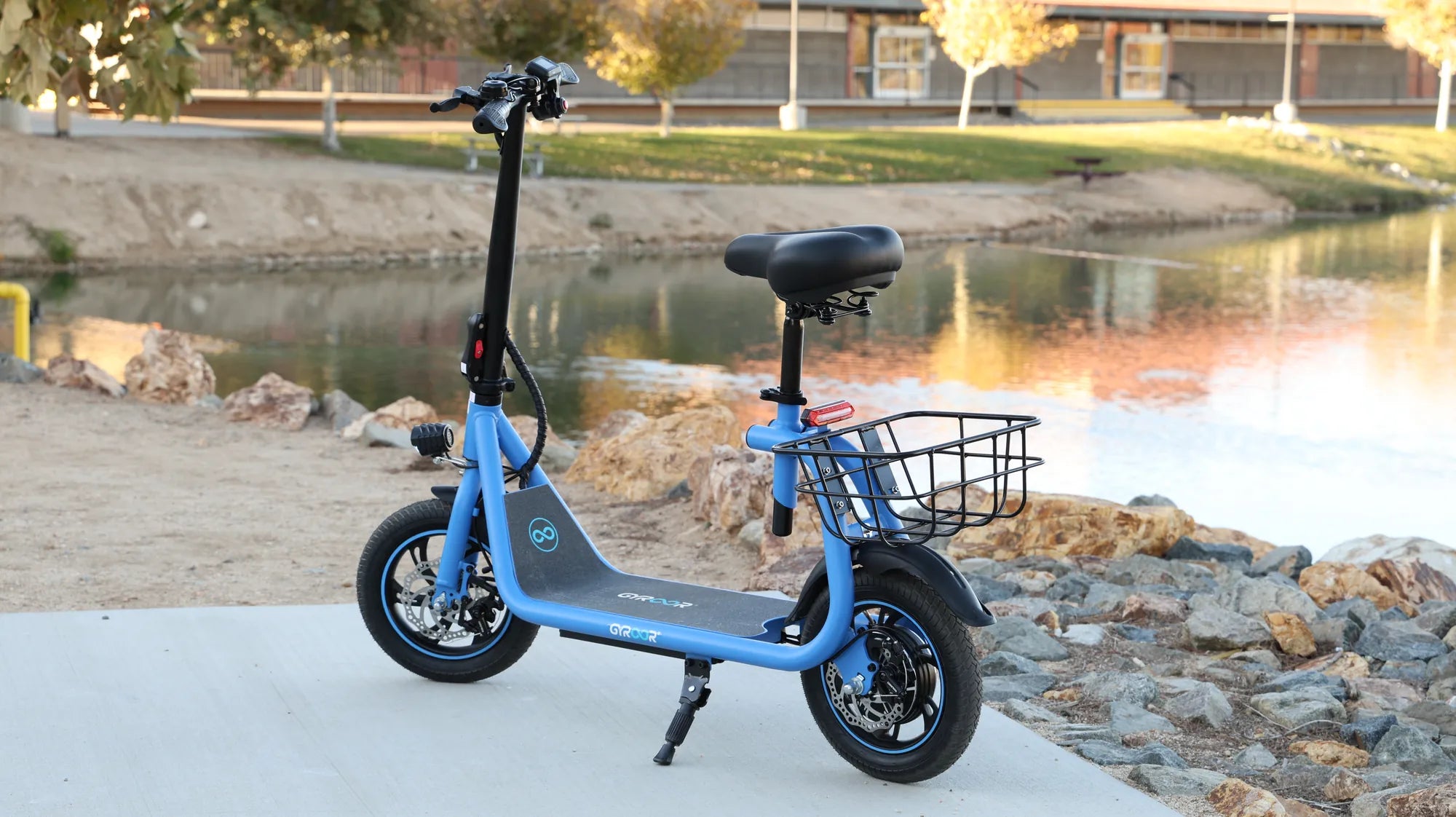
Introduction to the Colored Display E-Bike Revolution
Forget the simple, monochrome LED panel. The modern colored display ebike represents a fundamental shift in how riders interact with their electric bicycles. This vibrant screen serves as the central command hub, transforming raw data into an intuitive, glanceable interface that enhances every aspect of the journey. It's a leap from basic instrumentation to an integrated digital cockpit.
The evolution from basic black-and-white readouts to full-color displays mirrors the advancement of e-bikes themselves. Early models focused solely on propulsion, while today's riders demand connectivity, customization, and clarity. A colored display meets these demands by presenting critical information—speed, battery level, assist mode—with superior visibility and intuitive design.
Leading brands like Gyroor have integrated this technology into user-centric designs, recognizing that the interface is as important as the motor. A well-implemented colored display doesn't just show data; it creates a safer, more informed, and more enjoyable riding experience. This guide will explore why this component is a game-changer and what to look for when choosing your next e-bike.
Understanding this technology is key to making an informed purchase. The colored display is the primary point of interaction, affecting usability, safety, and overall satisfaction. We'll dissect its benefits, technical specifications, and practical applications across various riding disciplines.
Why a Colored Display is a Game-Changer for Riders
The advantages of a colored display ebike extend far beyond simple aesthetics. This technology delivers tangible improvements in safety, usability, and the overall riding experience. By presenting information in a more digestible format, it allows riders to make faster, better decisions on the road or trail.
Color coding is a powerful tool for instant recognition. A battery icon that transitions from green to amber to red communicates remaining range more effectively than a series of diminishing bars. Similarly, speed can be color-coded relative to a preset limit, providing an immediate visual cue without requiring focused reading of numbers.
This enhanced interface reduces cognitive load. Riders spend less time deciphering a cryptic readout and more time focusing on their surroundings. The result is a significant boost to situational awareness, which is crucial for navigating busy urban streets or technical off-road terrain. The display works for you, not against you.
Furthermore, a color screen enables richer data presentation. It can show multiple metrics simultaneously—like current speed, average speed, trip distance, and battery percentage—in a well-organized layout. This comprehensive view empowers riders to manage their ride efficiency and monitor performance in real-time.
Enhanced Readability and Safety
Superior readability is the cornerstone of safety for a colored display ebike. High-contrast color schemes remain legible in a wide range of lighting conditions, from bright midday sun to dusk. This consistency ensures vital information is always accessible when a quick glance is all you can afford.
Advanced displays often feature adjustable brightness or auto-dimming functions. These prevent the screen from becoming washed out in direct sunlight or blindingly bright at night. This adaptability is critical for maintaining visibility without causing eye strain or temporary blindness in low-light conditions.
The use of distinct colors for warnings (like low battery or system error) creates an immediate, unambiguous alert. A flashing red warning is impossible to ignore, prompting the rider to take action before a minor issue becomes a roadside problem. This proactive alert system is a key safety feature.
By presenting data clearly, the display minimizes the time your eyes are off the path ahead. Studies on driver distraction apply similarly to cyclists; reducing glance time for information retrieval directly correlates with increased reaction time and a lower risk of accidents.
Intuitive Navigation and Control
Modern colored displays transform complex e-bike settings into user-friendly menus. Instead of memorizing button-press sequences, riders navigate through intuitive, icon-driven interfaces. Adjusting pedal assist levels, toggling headlights, or checking trip statistics becomes a simple, menu-driven process.
This accessibility demystifies advanced features. Riders are more likely to utilize their e-bike's full capabilities—such as walk-assist mode, regenerative braking settings, or custom power profiles—when they can be easily located and adjusted. It puts control literally at the rider's fingertips.
The layout of information follows logical design principles. Primary data (speed, battery) is prominent and always visible. Secondary data (odometer, trip time) and settings menus are accessible without cluttering the main screen. This hierarchical design prevents information overload during critical moments.
For brands focused on user experience like Gyroor, this intuitive control is a priority. Their interfaces are designed for quick learning, ensuring riders of all tech-savviness levels can master their e-bike's functions within the first ride, enhancing confidence and enjoyment.
The "Smart" Connection: Displays as a Tech Hub
The most advanced colored display ebike models act as a true tech hub, connecting the physical bike to a digital ecosystem. Bluetooth connectivity allows the display to pair with a smartphone app, unlocking a suite of smart features that redefine the riding experience.
Once paired, riders can access turn-by-turn GPS navigation directly on their handlebar display. This eliminates the need for a separate phone mount and allows for safe, glanceable directions without stopping. It's a transformative feature for urban commuters and explorers in unfamiliar areas.
Smart integration enables detailed ride analytics. Apps can log routes, elevation gain, calories burned, and power output, syncing this data to the cloud for later review. This turns every ride into a trackable activity, appealing to fitness-oriented riders and those who love data.
Additional smart features include firmware-over-the-air (FOTA) updates, which allow the e-bike's software to improve over time, and integrated anti-theft systems. Some systems can disable the motor via the app if the bike is moved without authorization, sending an alert directly to the owner's phone.
Key Features to Look for in a Colored Display E-Bike
Not all colored displays are created equal. When evaluating a colored display ebike, specific technical features determine the quality, durability, and usefulness of the interface. A checklist of these features ensures you invest in a system that will perform reliably for years.
The display should be considered a critical component, akin to the motor or battery. Its construction, readability, and integration are non-negotiable for a premium experience. Compromising on the display often leads to frustration, regardless of the underlying bike's quality.
Key evaluation points include screen technology, the breadth and accuracy of data presented, environmental durability, and depth of system integration. Each factor contributes to the display's performance in real-world conditions, from a rainy commute to a sunny weekend adventure.
Brands that prioritize quality, like Gyroor, ensure their displays meet high standards across these categories. Their commitment is reflected in features like IP-rated water resistance and seamless integration with proprietary motor controllers, providing a cohesive and reliable user experience.
Screen Technology: TFT vs. LCD
The underlying screen technology dictates image quality. Standard Color LCD (Liquid Crystal Display) screens are common but can suffer from limited viewing angles and slower response times. For a dynamic activity like cycling, where the screen is viewed from various angles, this can be a drawback.
TFT (Thin-Film Transistor) LCD displays represent a significant upgrade. Each pixel is controlled by its own transistor, resulting in brighter colors, higher contrast ratios, and vastly improved viewing angles. A TFT screen remains readable even when viewed from the side, which is essential for a handlebar-mounted device.
High brightness, measured in nits, is crucial for outdoor use. A quality display for a colored display ebike should have a brightness rating of at least 500 nits to combat glare from direct sunlight. Some premium models offer 1000+ nits, ensuring perfect visibility in all conditions.
An anti-glare and anti-scratch coating is a vital but often overlooked feature. This hard coating protects the screen from the abrasions of daily use and reduces reflections from the sun or streetlights, further enhancing readability and long-term durability.
Display Metrics and Data Presented
The value of a display is in the data it provides. A comprehensive colored display ebike screen should present a core set of metrics clearly and accurately. This data empowers the rider to manage the ride effectively.
Essential real-time metrics include:
- Speed: Current speed (MPH/KPH) is paramount.
- Battery Charge: A precise percentage is far more useful than vague battery bars.
- Assist Level: Clearly indicate the current pedal assist setting (e.g., Eco, Tour, Sport, Turbo).
- Motor Power Output: Showing watts being delivered by the motor helps understand effort and efficiency.
Valuable trip and system data includes:
- Trip Distance/Odometer: Track single ride and total lifetime distance.
- Range Estimation: A dynamic estimate of remaining range based on current assist level and riding style.
- Error Codes: The ability to display specific error messages aids in troubleshooting.
The best displays allow some level of customization, letting the rider choose which data points are most prominent on the main screen, tailoring the interface to their personal preferences and riding style.
Durability and Environmental Resistance
An e-bike display lives a tough life, exposed to vibrations, weather, and physical impacts. Durability is not a luxury; it's a requirement. The display assembly must be built to withstand the rigors of daily commuting and recreational riding.
Ingress Protection (IP) ratings are the standard for environmental sealing. A display rated at IPX5 or higher (like the overall build on Gyroor e-bikes) is protected against low-pressure water jets from any direction. This means it can handle heavy rain, puddle splashes, and routine cleaning without failure.
The mounting system must be robust and secure, using sturdy clamps or integrated mounts that prevent the display from shaking loose on rough terrain. The connection port to the bike's wiring should be a sealed, waterproof connector to prevent corrosion and electrical faults.
Finally, the screen material itself must be resilient. Tempered glass or high-hardness polycarbonate with an anti-scratch coating will resist the scrapes and bumps of everyday use, maintaining a clear, unmarred view for the life of the bike.
Integration with Bike Systems
A display is only as good as its connection to the e-bike's core systems. Deep integration with the motor controller and Battery Management System (BMS) is what separates a simple readout from an intelligent control center.
Proper integration ensures data accuracy. The battery percentage should be calculated by the BMS and communicated precisely, not estimated by the display based on voltage alone. Similarly, motor output and error codes must come directly from the controller for reliable feedback.
This integration enables advanced features like regenerative braking control, system diagnostics, and customized performance profiles. The display becomes the interface for the bike's brain, not just a separate accessory. This cohesive design is a hallmark of well-engineered e-bikes from established brands.
When systems are fully integrated, updates and troubleshooting become more straightforward. A single, unified system is more reliable than a patchwork of components from different manufacturers, leading to greater long-term satisfaction and fewer technical issues.
Colored Display E-Bikes in Action: Use Cases
The benefits of a colored display ebike manifest differently depending on the rider's primary use case. From the daily commuter to the weekend explorer, this technology provides tailored advantages that enhance the specific riding experience.
Understanding these applications helps contextualize the value of the investment. It's not a one-size-fits-all feature; its utility is maximized when aligned with the rider's goals, environment, and frequency of use. Each user profile leverages the display's capabilities in unique ways.
The common thread across all use cases is enhanced control and awareness. Whether navigating traffic, managing battery on a long trail, or optimizing efficiency, the colored display provides the information necessary to ride smarter, safer, and with greater confidence.
Brands like Gyroor design their e-bikes with these diverse riders in mind, ensuring that the display and overall bike performance are suited to the demands of urban commuting, recreational trail riding, and everything in between.
The Urban Commuter
For the urban commuter, the colored display ebike is a mission-control dashboard for the city jungle. The primary concerns are navigation, time management, and battery range for a reliable round trip. The color screen addresses each directly.
With integrated GPS, the commuter can follow a route without fumbling with a phone. Glancing at the handlebars to see the next turn is safer than looking down at a device. Real-time speed and traffic-aware routing (via a connected app) can help optimize the commute for time.
Battery management is critical. Watching the battery percentage drop predictably provides confidence that the e-bike will make it to the office and back. The commuter can adjust assist levels strategically—using higher power for a steep hill and lower power on flats—to conserve energy.
The display also adds a layer of security. An integrated system can provide passcode protection or connect to an anti-theft alarm, offering peace of mind when the bike is locked up at a transit station or outside a café.
The Weekend Adventurer
The weekend adventurer, whether on forest trails or country roads, uses the colored display ebike as a navigation and performance tool. For long rides where charging opportunities are nonexistent, intelligent battery and distance management is paramount.
The display's trip computer functions come to the fore. Tracking total distance, elevation gained, and average speed allows the rider to pace themselves and plan the return leg. Seeing motor power output helps understand how much assist is being used on challenging climbs.
For explorers, the mapping capabilities are invaluable. Loading a pre-planned route and following it on the display prevents getting lost in unfamiliar territory. The ability to see remaining range in relation to the planned route can be the difference between a successful adventure and a long walk home.
The durability of the display is tested in this environment. Resistance to dust, mud, and vibration ensures it remains functional when the ride gets rough, providing reliable data no matter where the path leads.
The Eco-Conscious Daily User
For the rider who chose an e-bike for sustainability, the colored display ebike is an efficiency coach. It provides the feedback needed to maximize range and understand energy consumption, turning every ride into an exercise in optimized electric assist.
By monitoring real-time power output (in watts) and battery consumption, the rider can learn which assist levels and pedaling cadences yield the greatest efficiency. The display might show a "miles per kilowatt-hour" metric, similar to an electric car, quantifying the bike's eco-performance.
This data encourages a smoother, more efficient riding style. The rider can see the immediate impact of aggressive acceleration or high assist levels on remaining range, incentivizing a more moderate and energy-conscious approach.
The display makes the benefits of sustainable transportation tangible. By tracking total miles ridden, the rider can calculate their reduced carbon footprint, gasoline savings, and contribution to cleaner air—powerful motivators that reinforce the choice to ride electric.
Making the Right Choice: Considerations Beyond the Screen
While the colored display is a critical feature, it must be evaluated as part of a complete system. The most beautiful and functional display is worthless if mounted on a poorly engineered e-bike with a weak motor or unsafe battery. The core components must be the foundation of your decision.
Prioritize the fundamentals: motor torque and responsiveness, battery capacity and safety certifications, brake quality, and frame integrity. The display is the interface to these systems, but it cannot compensate for their deficiencies. A great display enhances a great bike; it cannot save a bad one.
Consider the ecosystem and support. Advanced electronics require reliable customer service and warranty coverage. A brand that stands behind its entire product, including the display and electrical systems, is essential for long-term ownership satisfaction.
This holistic approach is why brands like Gyroor emphasize total package quality. Their UL-certified battery packs, IPX5 water-resistant designs, and robust motors provide a reliable foundation that their colored displays then elevate into a superior user experience.
Prioritizing Core E-Bike Performance
Before falling for a brilliant screen, scrutinize the e-bike's core specifications. The motor should provide adequate power and smooth pedal assist for your typical terrain (e.g., a 500W motor for hills). The battery should have a reputable cell brand and a UL, CE, or equivalent safety certification.
The braking system—whether disc or drum—must be powerful and reliable, with motor cut-off sensors for safety. The frame should be made from quality aluminum or steel, with good welding and finish. These elements determine the bike's safety, longevity, and basic ride quality.
The display should be connected to these quality components. Ask: Does the display accurately reflect the battery state from a high-quality BMS? Does it interface seamlessly with a responsive motor controller? The integration point is where quality throughout the system becomes apparent.
An e-bike from a trusted manufacturer ensures this synergy. Their engineering teams design the display, motor, and battery to work in concert, resulting in accurate data, smooth operation, and consistent performance that aftermarket additions can rarely achieve.
The Importance of Warranty and Support
The warranty terms specifically for the display and electrical system are a key differentiator. A comprehensive warranty (like Gyroor's 1-year coverage) that includes the display, controller, and battery indicates confidence in the product's reliability and a commitment to customer support.
Assess the accessibility of support. Are there clear channels for troubleshooting? Can the display or its internal components be serviced or replaced if needed? A proprietary display with no available spare parts becomes a single point of failure for the entire bike.
Brand reputation matters. A company with over 100,000 riders, like Gyroor, has a proven track record of product durability and customer service. This history suggests that the colored display technology has been refined through real-world use and is backed by a support system you can rely on.
Ultimately, peace of mind is invaluable. Knowing that a malfunctioning display or electrical issue will be promptly addressed under warranty allows you to enjoy the technology's benefits without anxiety about potential repair costs or downtime.
Frequently Asked Questions (FAQ)
Q: Does a colored display drain the e-bike's battery much faster than a simple monochrome one?
A: The impact on range is minimal with modern, efficient displays. A quality colored TFT display typically consumes between 0.5 to 2 watts of power. Compared to a 500-watt-hour battery pack, this represents a reduction in range of less than 1% in most real-world scenarios. The benefits in safety and usability far outweigh this negligible power draw.
Q: Are colored displays difficult to see in direct sunlight?
A: High-quality displays are designed for outdoor use. Look for models with high brightness (500+ nits) and an anti-glare coating. These features combat washing out from sunlight effectively. While no screen is perfectly visible in every extreme angle of direct sun, a well-made colored display ebike screen will remain readable in the vast majority of daytime conditions.
Q: Can I upgrade my existing e-bike with an aftermarket colored display?
A> It is possible but often complicated. Compatibility with your specific motor controller and battery system is not guaranteed. Even if it physically connects, communication protocols may differ, leading to inaccurate data or lost functionality. It's generally more reliable to choose an e-bike with the display you want from the start, ensuring full integration and warranty coverage.
Q: Is a touchscreen better than button controls on a handlebar display?
A> Each has pros and cons. Touchscreens offer intuitive, smartphone-like menu navigation and can support more complex interfaces. However, they can be difficult to use with gloves, in wet conditions, or while moving over bumps. Tactile buttons provide reliable, gloved operation and easier use while riding but may limit menu complexity. The best choice depends on your primary riding conditions and personal preference.
Q: How durable are these displays in rain and off-road conditions?
A> Durability is defined by the IP rating. A display rated IPX5 or higher (a standard for many quality e-bikes, including Gyroor models) is protected against sustained, low-pressure water jets from any direction. This means it is fully rainproof and can handle splashes from puddles or mud. For off-road use, ensure the mount is also robust to handle vibrations. Always check the manufacturer's specified IP rating for the display unit itself.
Comparison of Display Types and Features
| Feature / Specification | Basic Monochrome LCD | Standard Color LCD | Advanced TFT Color Display |
|---|---|---|---|
| Readability (Sunlight) | Poor to Fair | Fair to Good | Excellent (with high brightness & anti-glare) |
| Information Density | Low (Limited by segments) | Medium | High (Full graphical interface) |
| User Interface | Button-only, simple menus | Buttons, basic icon menus | Touchscreen or buttons, rich graphical menus |
| Smart Features (GPS, Apps) | None | Rare | Common via Bluetooth connectivity |
| Typical Cost Impact | Low | Moderate | Higher (but adds significant value) |
| Best For | Budget riders, simple utility | Casual riders wanting basic clarity | Commuters, enthusiasts, tech-savvy riders |
Conclusion: The Clear Choice for Modern Riding
The colored display ebike is no longer a mere accessory; it is a fundamental component that defines the modern riding experience. It bridges the gap between human and machine, transforming complex data into intuitive, actionable information that enhances safety, control, and enjoyment on every journey.
From the urban commuter navigating traffic with glanceable GPS to the weekend adventurer managing battery range on a remote trail, the benefits are universal and significant. The investment in this technology pays dividends in confidence, efficiency, and connectivity, making every ride smarter and more engaging.
This technology shines brightest when integrated into a well-engineered e-bike from a reputable brand. A quality foundation—encompassing a reliable motor, a safe UL-certified battery, durable construction, and strong warranty support—allows the colored display to fulfill its potential as a true command center.
For riders ready to upgrade their experience, the choice is clear. Explore the fusion of advanced interface technology and proven e-bike engineering. Browse the full Gyroor collection, featuring integrated colored display ebike models built for performance and backed by trusted support, at gyroorboard.com.
How Many Miles Per Gallon Does a Scooter Get: Gas vs. Electric MPG Explained
Dirt Bike Things: The Ultimate Guide to Gear, Riding, and Community