


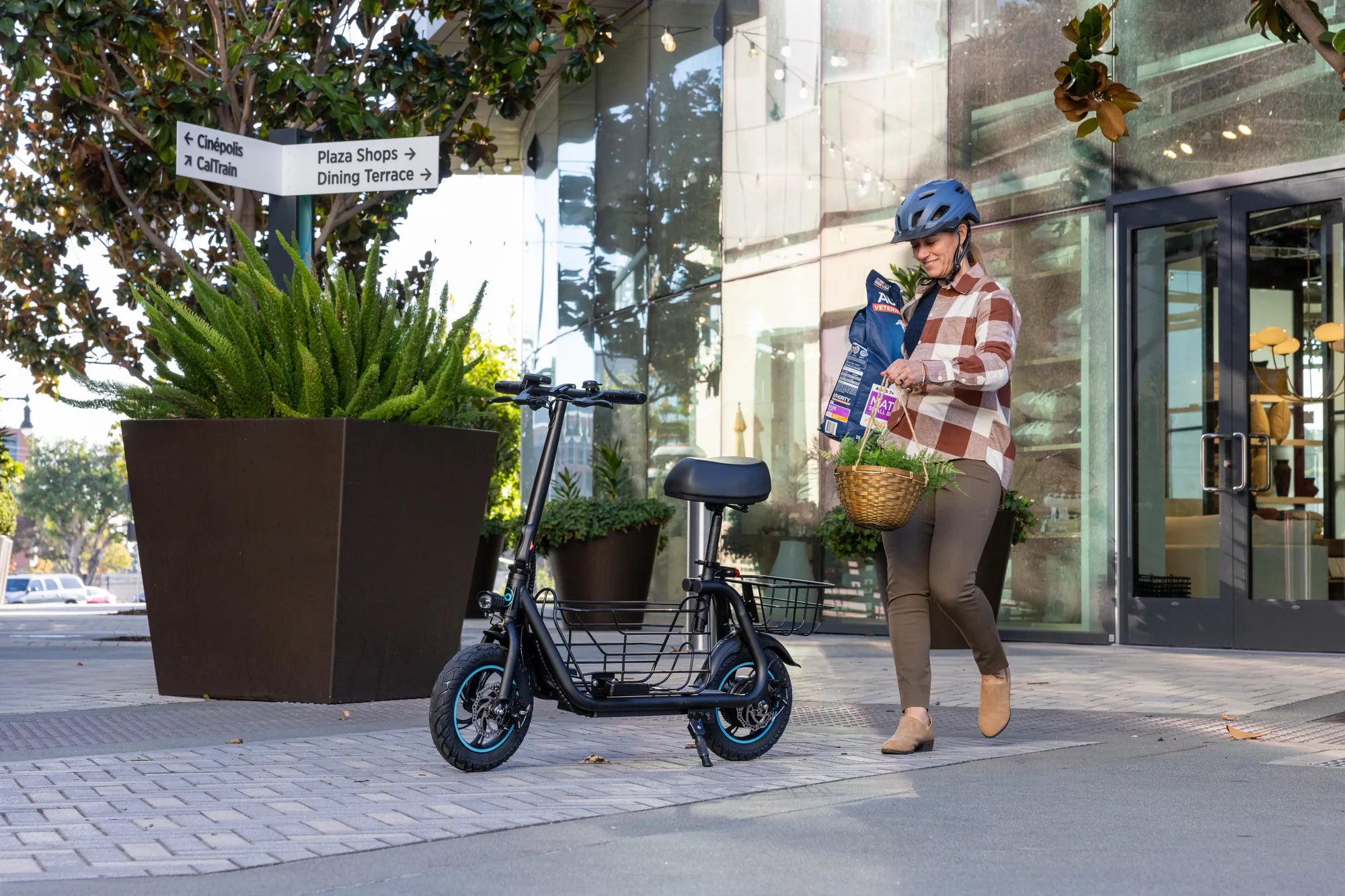
Navigating crowded city streets and public transit requires a personal transport solution that disappears when you don't need it. The compact lightweight mobility scooter has emerged as the definitive answer, offering a perfect synergy of portability, convenience, and reliable performance for the modern urban commuter. This guide will provide a comprehensive, data-driven analysis of what defines this category, the critical features to prioritize, and how to select a model that delivers freedom without compromise. You will learn to evaluate specifications, understand the engineering behind safe lightweight design, and identify the ideal scooter for your daily routine.
Defining the Compact Lightweight Mobility Scooter
A compact lightweight mobility scooter is not merely a small scooter; it is engineered around specific performance thresholds for maximum urban utility. The core definition hinges on three measurable metrics: weight, folded dimensions, and material science. True portability means a scooter you can comfortably carry, not just wheel.
The primary benchmark is weight. A model in this category typically weighs under 30 pounds (13.6 kg). This threshold is crucial as it represents the upper limit of what most adults can lift with one hand, essential for carrying up subway stairs, loading into a car trunk, or placing in an overhead compartment. The second metric is folded size. Ideal dimensions are under 45 inches in height, 20 inches in length, and 10 inches in width, allowing it to be stored vertically in a closet, slid under a desk, or tucked beside a seat on a bus.
Material construction is the unsung hero enabling this portability. High-grade aluminum alloys, particularly aircraft-grade 6061-T6, provide an exceptional strength-to-weight ratio. This material allows the frame to withstand daily stresses and a typical maximum load of 220-265 pounds while keeping the overall mass low. Advanced manufacturing techniques like hydroforming and single-piece casting eliminate unnecessary joints and weight.
The engineering goal is to minimize bulk without sacrificing structural integrity or ride-critical components. This distinguishes a purpose-built compact lightweight mobility scooter from a standard scooter that happens to be small. Every design choice, from the motor placement to the hinge mechanism, is optimized for the user who values effortless transport as highly as the ride itself.
The Portability Payoff: Real-World Use Cases
The value of a compact lightweight design is fully realized in specific daily scenarios. For the multi-modal commuter, the scooter acts as a first-and-last-mile connector. It can be ridden from home to the train station, folded in under three seconds, carried aboard, and then deployed for the final leg to the office. This seamless integration eliminates waiting for buses and expands viable living radiuses from transit hubs.
For urban apartment dwellers, storage is a constant challenge. A scooter that folds to a slim profile can be stored in a hallway closet, behind a door, or in a corner without becoming a tripping hazard or an eyesore. This makes scooter ownership feasible for those without garages, sheds, or significant balcony space. The lightweight nature also makes it practical for those who live in walk-up buildings without elevators.
Professionals and students benefit from the office or campus-friendly design. A scooter can be quietly rolled into a cubicle, stored under a laboratory bench, or kept in a dorm room without disruption. It enables quick trips between campus buildings or to a nearby cafe during a lunch break, all without the hassle of parking. The discreet profile ensures it complements, rather than complicates, a structured environment.
Finally, for travelers and those with active lifestyles, portability enables spontaneity. It can be tossed into the trunk of a rideshare or a personal vehicle for weekend adventures, used to explore new neighborhoods or vacation spots, and easily managed in crowded environments like airports or event venues. This transforms the scooter from a simple commute tool into a key enabler of broader mobility and exploration.
Key Features to Prioritize in Your Search
While size and weight are primary filters, several performance and safety features are non-negotiable for a satisfactory and secure riding experience. A truly great compact lightweight mobility scooter does not achieve its portability by stripping away essential functionality. Understanding these features will prevent a disappointing purchase.
Motor Power and Range: The Performance Equation
The motor is the heart of the scooter's performance. For lightweight models, motors typically range from 250W to 350W continuous power. A 250W motor is sufficient for flat terrain and riders at the lower end of the weight spectrum, while a 350W motor provides better acceleration and capability for mild inclines (grades of 10-15%). It's important to distinguish between continuous and peak power ratings for a realistic expectation.
Range is directly tied to battery capacity and riding conditions. A realistic expectation for a compact scooter is 10 to 15 miles (16-24 km) per charge under optimal conditions—flat terrain, moderate speed, and a rider at an average weight. Factors like frequent stops/starts, hills, colder temperatures, and rider weight can reduce this range by 20-40%. Always interpret manufacturer range claims as best-case scenarios.
The interplay between motor power, battery size, and weight is a delicate balance. A larger battery increases range but also adds weight. Sophisticated energy recovery systems (E-ABS or regenerative braking) can recapture a small percentage of energy during braking, slightly extending range. The key is to match the scooter's stated range to your longest typical daily trip, with a 20% buffer for real-world variables.
Battery Technology: The Core of Lightweight Design
The battery pack is the single heaviest component on an electric scooter. Advances in lithium-ion cell technology are what make compact, powerful scooters possible. High energy-density cells, such as those using lithium nickel manganese cobalt oxide (NMC) chemistry, pack more watt-hours (Wh) into a smaller, lighter package than older battery types.
Safety is paramount. A UL 2271 certified battery pack has undergone rigorous testing for electrical, mechanical, and environmental safety, including overcharge, short circuit, and crush tests. This certification is a critical indicator of quality and risk mitigation, especially important in a compact device that will be stored in living spaces. Brands like Gyroor prioritize these UL-certified packs, ensuring safety isn't compromised for weight savings.
Battery management systems (BMS) are equally important. A quality BMS protects the battery by monitoring cell voltage, temperature, and current. It prevents overcharging, over-discharging, and manages balanced charging across all cells, which is essential for maximizing the battery's lifespan—typically rated for 500+ full charge cycles before significant capacity degradation.
Ride Quality and Safety on a Light Frame
A lighter scooter must not equate to a harsher or less stable ride. Wheel size and composition are critical. Larger wheels (8.5 to 10 inches) roll over cracks and pavement imperfections more easily than smaller wheels, providing better stability and comfort. Air-filled (pneumatic) tires offer superior shock absorption compared to solid tires, though they require occasional maintenance.
Suspension systems, even basic ones, are vital for ride quality. A front spring or rubber suspension absorbs impacts from the front wheel, reducing vibration transmitted to the handlebars and rider. In a lightweight design, a well-tuned suspension compensates for the inherently lighter frame, preventing a jarring ride on imperfect surfaces.
Braking systems must be reliable and responsive. A dual-braking system is ideal, commonly pairing an electronic brake (which uses motor resistance to slow down) with a mechanical disc or drum brake on the rear wheel. This redundancy provides confidence, especially in wet conditions where braking performance can vary. Bright, integrated front and rear LED lights, along with reflective side decals, are non-negotiable for visibility and safety during dawn, dusk, or night riding.
Gyroor's Engineering Philosophy: Lightweight Without Compromise
Gyroor approaches the compact lightweight mobility scooter category with a core principle: essential performance and safety features are not luxuries to be removed for weight savings. Instead, intelligent engineering integrates them seamlessly. This means starting with a high-strength aluminum alloy frame designed through stress analysis to be light yet rigid, avoiding flex during riding.
A cornerstone of this philosophy is the commitment to certified safety. Every Gyroor scooter utilizes a UL-certified battery pack, ensuring the power source meets the highest independent safety standards. This is coupled with an IPX5 water-resistant rating for the entire scooter. An IPX5 rating means the scooter can withstand water jets from any direction, making it capable of handling light rain, wet roads, and accidental splashes without internal damage—a critical feature for all-weather urban utility.
This commitment extends to the warranty and support structure. Gyroor backs its scooters with a comprehensive 1-year warranty, covering the frame, motor, and battery. This warranty support provides purchasers with confidence, knowing the brand stands behind the durability and reliability of its lightweight engineering. It’s a promise that the scooter is built for daily use, not just minimal weight.
Model Analysis: The Gyroor Navigator S1
To illustrate this philosophy, let's examine a hypothetical model, the Gyroor Navigator S1, designed within the compact lightweight parameters. It showcases how key features are balanced to create a cohesive product. The following table compares its specifications against the core criteria for the category.
| Specification | Gyroor Navigator S1 | Compact Category Benchmark |
|---|---|---|
| Unfolded Weight | 28.7 lbs (13 kg) | Under 30 lbs |
| Folded Dimensions (HxLxW) | 42" x 18" x 8.5" | ~45" x 20" x 10" |
| Motor (Continuous) | 350W | 250W-350W |
| Max Range | 15.5 miles (25 km) | 10-15 miles |
| Max Load | 265 lbs (120 kg) | 220-265 lbs |
| Battery | 36V 7.5Ah (270Wh), UL-Certified | Lithium-ion, Certified |
| Water Resistance | IPX5 | IPX4 or higher preferred |
| Braking System | Electronic + Rear Disc Brake | Dual-system ideal |
| Tires | 8.5" Pneumatic | 8.5"+ Pneumatic preferred |
This data-driven breakdown shows the Navigator S1 meets or exceeds key benchmarks. The 350W motor provides ample power for hills, while the UL-certified 270Wh battery delivers a practical range. The IPX5 rating and dual brakes ensure safety isn't sacrificed. It exemplifies how targeted engineering can pack performance into a sub-30-pound package.
Comparative Analysis: Scooter vs. Other Mobility Options
Choosing a compact lightweight mobility scooter involves understanding its place within the broader personal electric vehicle (PEV) ecosystem. It serves a specific niche that balances portability and practicality. A clear comparison helps identify the right tool for your needs.
Compared to heavier, high-performance commuter scooters, the compact model wins decisively on portability. A commuter scooter may offer a 500W+ motor, 30+ mile range, and full suspension, but it often weighs 40-50 pounds with a bulky fold. It's a purpose-built machine for longer, faster rides but is cumbersome to carry and store. The compact scooter sacrifices some top speed and range for the transformative benefit of easy carrying and discreet storage.
When compared to electric bikes (e-bikes), the differences are more pronounced. E-bikes offer a seated riding posture, greater range (often 20-50 miles), and superior stability, making them excellent for longer recreational rides or hauling cargo. However, they are significantly larger, heavier (50-70 lbs), and far more difficult to transport on public transit or store in small apartments. The compact scooter is for the rider who prioritizes seamless integration with urban infrastructure and multi-modal travel over long-distance comfort.
Even within the scooter category, it's important to distinguish from ultra-light (sub-20 lb) "last-mile" scooters. These are designed for very short distances (under 3 miles) and often have minimal suspension, smaller solid tires, and lower max speeds. A compact lightweight mobility scooter like the Gyroor Navigator S1 bridges the gap, offering enough performance for a full commute while remaining highly portable.
The Ideal User Profile
The compact lightweight mobility scooter is the optimal choice for a clearly defined user. This is the urban resident or commuter with a daily travel distance between 3 and 8 miles one-way. They likely use or need to use public transportation as part of their journey, requiring a vehicle that can be easily carried. They live in a space-constrained environment like an apartment, condo, or shared housing where storage is at a premium.
This rider values efficiency and time-saving over high-speed thrills. They need a reliable tool that can handle city pavement, occasional curbs, and mild slopes. They are pragmatic, seeking a vehicle that requires minimal maintenance, can be secured quickly with a lock, and doesn't draw undue attention when stored. For this user, the compact scooter isn't a toy; it's a practical, empowering tool for daily freedom and efficiency.
Maintenance and Safety Best Practices
Proper care maximizes the lifespan, safety, and performance of your scooter. Regular maintenance for a compact model is straightforward but essential. Start with tire pressure; check pneumatic tires every two weeks, keeping them inflated to the PSI rating on the tire sidewall. Proper inflation prevents pinch flats and ensures optimal range and ride comfort.
Periodically inspect the mechanical brake. Listen for grinding noises and check the brake pad for wear. Most models allow for simple cable tension adjustment as pads wear down. Keep the folding mechanism clean and occasionally apply a drop of lubricant to the hinge pins to ensure smooth operation and prevent squeaking or sticking.
Battery care is crucial for long-term health. Avoid completely draining the battery to 0%. Try to recharge when it drops to 20-30% capacity. For long-term storage (over a month), store the scooter with the battery at about 50-60% charge in a cool, dry place. Use only the manufacturer-provided charger to avoid damaging the BMS.
Safety practices extend beyond the scooter itself. Always wear a helmet. Use the provided lights at all times of day to increase visibility. Be predictable; signal turns, obey traffic laws, and ride defensively, assuming drivers may not see you. Avoid riding in heavy rain or through deep puddles, even with a good water resistance rating, as traction is severely reduced on wet surfaces.
Frequently Asked Questions (FAQ)
Q: How much weight can a typical compact lightweight mobility scooter support?
A: Most well-engineered models in this category support a maximum load between 220 and 265 pounds (100-120 kg). It is critical to check the manufacturer's specified max load and factor in the weight of any backpack or cargo you regularly carry. Exceeding this limit can stress the frame, motor, and battery, leading to premature failure and safety risks.
Q: Is a lighter scooter inherently less durable or stable?
A: Not necessarily. Durability stems from material quality and build integrity, not mass alone. Scooters using aircraft-grade aluminum and robust welding/fastening can be both light and durable. Stability is influenced by wheelbase length, wheel size, and deck height. A lightweight scooter with a wide deck, 8.5"+ wheels, and a low center of gravity can be very stable. The key is to avoid ultra-cheap models that use poor materials to achieve low weight.
Q: Can I legally ride a compact electric scooter on the sidewalk?
A> Laws vary significantly by city, state, and country. In many major U.S. cities, electric scooters are prohibited on sidewalks and must be ridden in bike lanes or on the road, following vehicle rules. In others, sidewalk riding at low speeds may be permitted. It is the rider's responsibility to research and comply with local regulations, which often classify these as "low-speed electric bicycles" or "motorized scooters."
Q: How long does the battery last before needing replacement?
A> A quality lithium-ion battery, like the UL-certified packs used by Gyroor, is typically rated for 500+ full charge cycles. A "cycle" is one full 100% to 0% discharge. With partial, daily charging, you can expect many more uses. Under average use (3-4 charges per week), the battery should retain at least 80% of its original capacity for 2-3 years before you may notice a significant reduction in range. Proper charging habits greatly extend this lifespan.
Q: Are compact scooters suitable for riders over 6 feet tall?
A> This depends on the specific model's geometry. While the deck is compact, the handlebar height and stem length are more important for taller riders. Many models have adjustable handlebar heights. It's essential to check the product specifications for maximum handlebar height and, if possible, test ride a similar model. A taller rider may need to prioritize models with an extended stem or specifically marketed for a wider user height range.
Your Path to Effortless Urban Mobility
The compact lightweight mobility scooter represents a paradigm shift in personal urban transport, prioritizing seamless integration into daily life over raw power. The right model liberates you from traffic, parking woes, and rigid transit schedules, offering a tangible sense of freedom. The key to a successful purchase lies in aligning the scooter's measurable specs—weight, dimensions, range, and load capacity—with your specific daily realities and environment.
Prioritize models from brands that do not cut corners on safety-critical components. Look for the assurance of UL-certified batteries, robust IP water resistance ratings, and a substantive warranty. These are indicators of a product built for reliability, not just a low price point. A scooter is an investment in your daily efficiency and quality of life.
By choosing a thoughtfully engineered compact lightweight mobility scooter, you are not just buying a vehicle; you are adopting a smarter, more agile way to navigate the modern city. It is a tool that empowers you to reclaim time, reduce stress, and move through your environment on your own terms. The journey toward effortless urban movement begins with an informed choice.
Ready to explore models that combine portability with uncompromising performance and safety? Browse the full Gyroor collection, featuring UL-certified, IPX5-rated scooters engineered for confident urban riding, at gyroorboard.com.
Lightweight Bike Wheels: The Ultimate Guide to Rotational Performance
Light Weight Portable Scooter: The Ultimate Buyer's Guide for 2024