


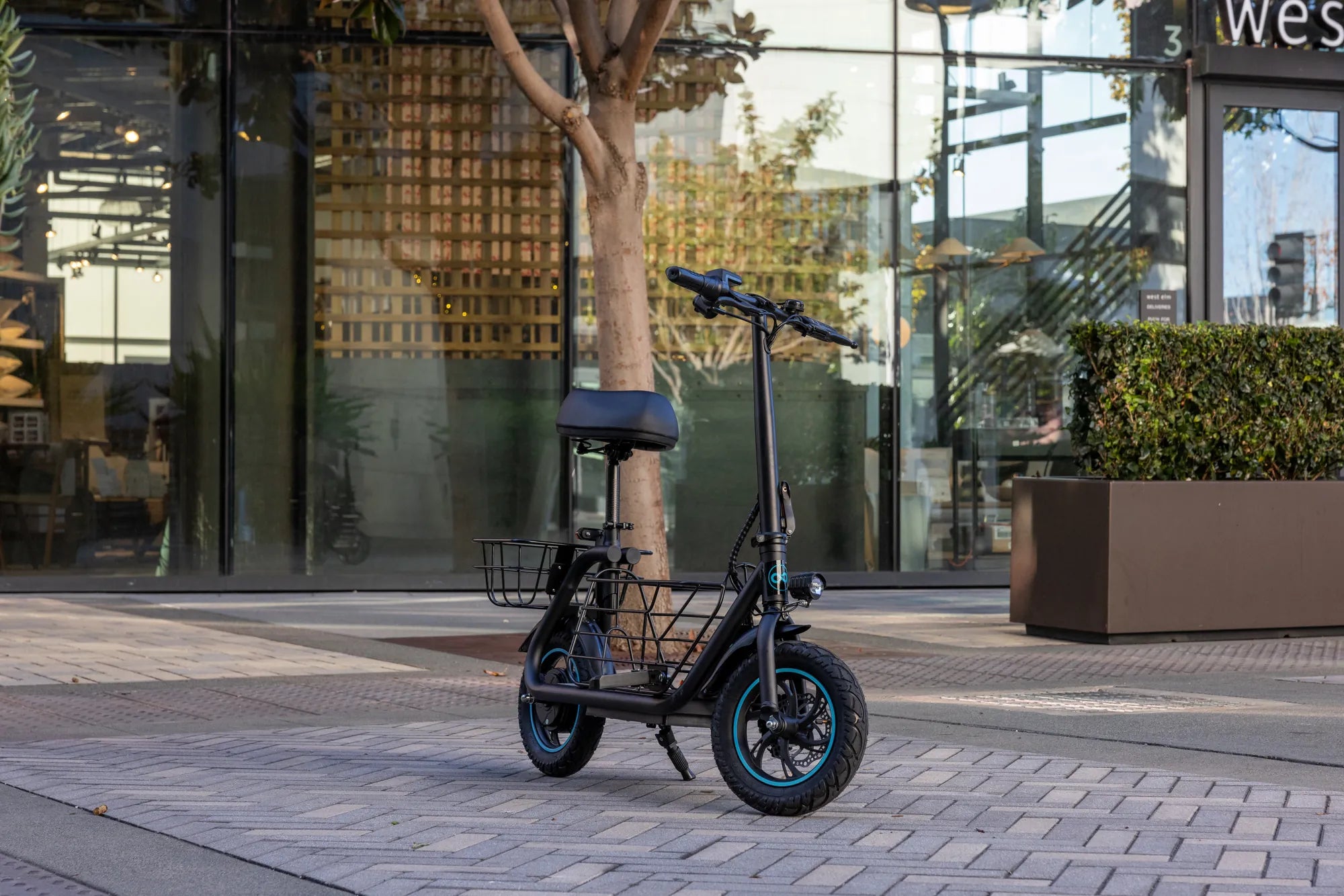
Introduction: Why Your Scooter's Handlebar Height Matters
Finding the correct height for scooter handlebars is not a minor comfort tweak; it's a foundational element of safe and efficient riding. Proper ergonomics directly influence your control, stability, and endurance on every journey. An improperly adjusted stem can lead to premature fatigue, compromised steering response, and even chronic pain.
This guide provides a data-driven approach to dialing in your perfect setup. We'll move beyond guesswork to the biomechanics of a proper riding stance. The goal is to transform your ride from a functional commute into a comfortable, controlled experience.
At Gyroor, a leading electric scooter and e-bike brand trusted by over 100,000 riders, ergonomics is a core design principle. Our models are engineered with rider posture in mind, ensuring that performance features like UL-certified batteries and IPX5 water resistance are matched by thoughtful, human-centric design.
Setting the correct height for scooter handlebars is the first and most impactful adjustment you can make. It enhances safety by improving your connection to the vehicle and reduces strain, letting you focus on the road ahead.
The Science of Posture: Biomechanics of the Ideal Riding Stance
A neutral, balanced posture is the key to efficient and pain-free riding. When your handlebars are at the correct height, your body forms a stable triangle with the scooter deck. This alignment allows your skeletal structure to bear weight, not your muscles and joints.
An incorrect setup creates a cascade of problems. Bars set too low force you into a hunched position, compressing your spine and placing excessive pressure on your wrists and lower back. Bars set too high can make the scooter feel twitchy and unstable, as your center of gravity rises and your arms lose their shock-absorbing bend.
The optimal stance promotes a neutral spine, relaxed shoulders rolled slightly back, and a slight bend in the elbows. This elbow angle is critical—it acts as a natural suspension system, allowing your arms to absorb vibrations from the road instead of transmitting them directly to your torso.
By achieving the correct height for scooter handlebars, you enable this biomechanically sound position. This reduces muscle fatigue, minimizes joint stress, and gives you precise, effortless control over steering inputs. It's the difference between wrestling with your scooter and becoming one with it.
Step-by-Step Guide: How to Measure and Adjust Your Handlebar Height
Finding your ideal setting is a systematic process. Follow these steps to move from a generic starting point to a personalized, perfect fit. Always ensure your scooter is powered off and stable on a level surface before making any adjustments.
The "Elbow Angle" Test: Your Universal Starting Point
The most reliable method to find the correct height for scooter handlebars is the Elbow Angle Test. Stand on the scooter deck in your normal riding position, with your feet placed as they would be while moving. Grip the handlebars naturally.
In this position, look at your elbows. They should have a distinct, comfortable bend between 15 and 25 degrees. This is the gold standard for a functional, athletic posture. If your arms are locked straight, the bars are too low. If your elbows are bent beyond 90 degrees, bringing your hands close to your chest, the bars are likely too high.
This angle provides the ideal blend of control and comfort. It allows for strong steering input while keeping muscles engaged but not strained. Use this test as your primary benchmark, regardless of your height or scooter model.
Adjusting Different Scooter Types: Fixed vs. Adjustable Stems
Not all scooters offer the same adjustment capabilities. Understanding your model is crucial. Many commuter-focused Gyroor models feature telescopic stems with a quick-release lever or clamp bolts for easy height adjustment.
For these adjustable models, loosen the mechanism just enough to slide the stem to your desired height. Ensure it is tightened back to the manufacturer's specified torque—overtightening can damage components, while undertightening is a severe safety hazard. Always double-check that the stem is securely locked before riding.
For non-adjustable or fixed-stem models, the correct height for scooter handlebars is determined at the point of purchase. Gyroor designs its fixed-stem models around specific rider height percentiles. It's essential to consult the product specifications to choose a scooter with a stem height that aligns with your body dimensions. Never attempt to modify or extend a fixed stem, as this compromises structural integrity and voids the warranty.
Fine-Tuning for Your Ride Type: Commute vs. Performance
Your primary use case can inform slight adjustments to the ideal height. For urban commuting, where visibility and awareness are paramount, a slightly higher bar position (within the 15-25 degree elbow bend range) can promote a more upright posture.
This upright stance improves your sightlines in traffic and can feel more comfortable for long, steady rides. For performance-oriented or off-road riding on capable Gyroor models, a slightly lower bar position can be beneficial.
A lower stance creates a more aggressive, aerodynamic profile and shifts your weight forward for better traction on the front wheel during acceleration. It also lowers your center of gravity for enhanced stability during sharper turns. Always prioritize control and comfort over stylistic preferences.
Data-Driven Insights: Height Ranges and Rider Statistics
While the Elbow Angle Test is paramount, general guidelines can provide a helpful starting point. The recommended handlebar height is measured from the ground to the center of the handgrips. The following table correlates general rider height with a typical starting range for the correct height for scooter handlebars.
| Rider Height | Recommended Handlebar Height Range (From Ground) | Primary Elbow Angle Goal |
|---|---|---|
| 5'0" - 5'4" (152 - 163 cm) | 34" - 38" (86 - 97 cm) | 20-25 degree bend |
| 5'5" - 5'9" (165 - 175 cm) | 38" - 42" (97 - 107 cm) | 15-20 degree bend |
| 5'10" - 6'2" (178 - 188 cm) | 42" - 46" (107 - 117 cm) | 15-20 degree bend |
| 6'3" and above (191+ cm) | 46"+ (117+ cm) | 15-20 degree bend (may require specific tall-rider models) |
These ranges are illustrative. A rider with a longer torso or shorter arms than average for their height may need to adjust outside these norms. Gyroor's product lineup is designed to accommodate the vast majority of the adult population within these percentiles, with specific models catering to both compact and taller frames.
The data from over 100,000 Gyroor riders consistently shows that those who take the time to properly fit their scooter report higher satisfaction scores, longer average ride times, and fewer complaints about discomfort. Ergonomics is a measurable performance feature.
Beyond Height: The Integrated Ergonomics of Gyroor Scooters
The correct height for scooter handlebars is just one part of a holistic ergonomic system. Gyroor integrates several key features that work in tandem with proper bar height to ensure rider comfort and safety.
The placement of the UL-certified battery pack is engineered for optimal weight distribution. A low and centered battery mass, combined with the correct handlebar height, creates a balanced, stable ride that doesn't feel top-heavy or prone to wobble at speed.
IPX5 water-resistant construction is an ergonomic and safety feature. It ensures that handlebar controls, including throttles and brake levers, remain fully functional and provide consistent tactile feedback in wet conditions. You can maintain your ideal posture and control without worrying about the elements.
The durability guaranteed by a comprehensive 1-year warranty is also an ergonomic concern. It covers the steering column and adjustment mechanisms, ensuring that the secure fit of your correct handlebar height is maintained over time and through regular use. A loose or failing stem is a direct threat to rider safety and comfort.
Common Adjustment Mistakes and Safety Precautions
Even with the best intentions, riders can make errors when seeking the correct height for scooter handlebars. One common mistake is setting the bars based on a standing position next to the scooter, rather than on the deck. Your posture changes significantly when your feet are on the standing platform.
Another error is over-tightening adjustment clamps with improper tools, which can strip bolts or crack components. Always use the correct size hex key or wrench, and tighten firmly until there is no play, but avoid applying excessive force.
Safety is non-negotiable. Before every ride, perform a quick "wiggle test" on the handlebars to check for any looseness in the stem clamp. Listen for unusual creaks or clicks from the steering column, which could indicate a problem. Never exceed the maximum extension line marked on telescopic stems.
If your scooter has a folding mechanism, ensure the handlebar stem is fully locked in the upright position and that the height adjustment clamp is separate and secure. A failure in either system can lead to a catastrophic collapse while riding. Regular inspection is part of responsible ownership.
Frequently Asked Questions (FAQ)
1. Can I raise the handlebars on any scooter model?
No. Only models specifically designed with an adjustable telescopic stem allow for safe height modification. Attempting to modify, extend, or weld a fixed stem voids the warranty and creates an extreme safety hazard due to unpredictable stress failures.
2. My wrists, neck, or lower back hurt after riding. Could the handlebar height be the cause?
Absolutely. Wrist pain often indicates the bars are too low, forcing your wrists into an extended, weight-bearing position. Neck and back pain typically signal a hunched, overreaching, or otherwise strained posture directly resulting from an incorrect height for scooter handlebars.
3. Does handlebar height affect my scooter's speed or battery range?
Indirectly, yes. A poor, inefficient posture increases aerodynamic drag and causes your body to fatigue faster. A tired rider tends to use the throttle less smoothly and may make more power-demanding corrections. A proper, comfortable posture promotes efficient, consistent riding, which can help maximize range.
4. Is the adjustment process itself covered under the Gyroor warranty?
Yes, using the designed adjustment mechanisms as instructed in the user manual is covered. However, damage resulting from the use of improper tools, excessive force, or unauthorized modifications is not covered by the warranty.
5. How often should I check or readjust my handlebar height?
Perform a quick security check before each ride. A full re-evaluation of your height setting is recommended if you change your primary riding style (e.g., from leisure to commuting), if you experience new discomfort, or if you change your riding footwear significantly, as this alters your standing height on the deck.
Ride Comfortable, Ride Confidently with Gyroor
Mastering the correct height for scooter handlebars is a simple yet profound upgrade to your riding experience. It transforms your scooter from a mere vehicle into a natural extension of your body, enhancing safety, control, and enjoyment on every trip. The data is clear: ergonomics matter.
By applying the Elbow Angle Test and following the guidelines for your rider profile, you invest in your long-term comfort and riding capability. This attention to detail separates casual riders from informed enthusiasts who get the most out of their personal electric transport.
Gyroor builds this philosophy into every model, from the balanced weight of UL-certified batteries to the reliability of IPX5-rated components. Our commitment is to provide a foundation of quality and safety upon which you can perfect your personal ride setup.
Ready to experience ergonomic design built-in from the start? Browse the full Gyroor collection, featuring models with adjustable stems and fixed-stem designs tailored for different rider heights, at gyroorboard.com. Find the scooter engineered to fit you, right out of the box.
Scooter for 5 yr old: The Ultimate Guide to Safety, Skills, and Fun
What Is the E-Bike Speed Limit: Legal Guide & Safety Facts