


Getting your dirt bike rear tire pressure right isn't just a detail; it's the difference between floating over terrain and fighting for control. This single setting directly commands traction, handling, suspension performance, and safety. Whether you're navigating slick roots on a forest trail or attacking berms on a motocross track, the air in your rear tire is a fundamental tuning variable. This guide will provide you with the data-driven knowledge and practical steps to move from guessing to knowing, transforming how your bike connects with the ground.
The Critical Role of Rear Tire Pressure in Dirt Biking
The rear tire is your primary drive and braking contact patch. Its pressure dictates how that patch conforms to the earth. Think of it as the first, and most adjustable, part of your suspension. An incorrect pressure setting undermines every other component on your bike, from your shock absorber to your handlebars.
For the casual trail rider, proper pressure prevents exhausting struggles with a loose or unpredictable rear end. For the competitive racer, it's a key to shaving seconds by maximizing drive out of corners and stability under hard braking. The effects are immediate and profound. Running just 2-3 PSI too high or low can completely alter the character of your motorcycle.
Beyond performance, safety is paramount. Incorrect dirt bike rear tire pressure significantly increases the risk of pinch flats, rim damage, and loss of control in critical situations. It's a foundational element of bike setup that demands as much attention as choosing the right tire model itself.
The Physics of Grip: How Pressure Governs Traction
Traction is generated by the interaction between the tire's knobs and the ground. Lower pressure allows the tire carcass to flex and deform, enabling more knobs to make contact over a larger area—the contact patch expands. This increased footprint provides more grip for acceleration, braking, and cornering.
Conversely, higher pressure makes the tire rounder and stiffer. The contact patch shrinks, and the knobs cannot dig in as effectively. The primary benefit here is reduced rolling resistance and a sharper steering feel, as the tire is less prone to squirm under load. There is always a trade-off: maximum grip versus precision and protection.
The ideal dirt bike rear tire pressure finds a compromise. It must be low enough to deform and grip over irregular surfaces but high enough to support the bike and rider's weight without excessive sidewall flex or risk of bottoming the rim on obstacles. This "sweet spot" is dynamic, changing with every variable on and off the bike.
Finding the Terrain-Specific Pressure Sweet Spot
There is no universal perfect PSI. The optimal dirt bike rear tire pressure is a function of your terrain. The following table provides a data-informed starting point for common off-road conditions, assuming an average rider on a full-size dirt bike.
| Terrain Type | Recommended Rear PSI Range | Rationale & Effect |
|---|---|---|
| Hard-Packed / Blue Groove | 13 - 15 PSI | Higher pressure prevents excessive knob squirm and provides precise steering. Too low can feel vague and unstable. |
| Intermediate Loam / Soft Soil | 11 - 13 PSI | The lower range increases the contact patch to claw into the softer ground, improving drive and braking. |
| Deep Sand or Mud | 10 - 12 PSI (or lower) | Minimal pressure allows the tire to "float" on top and paddle through. Knobs can flex to self-clean in mud. |
| Rocky, Technical Terrain | 12 - 14 PSI (Tubliss/UHD) | Balance is key: enough pressure to protect the rim from sharp impacts, but enough flex to conform and grip rocks. |
| Motocross Track (Hard Pack) | 12.5 - 14.5 PSI | Focus on support for high-speed landings and cornering loads while maintaining some grip on hard surfaces. |
These ranges are starting points. Rider weight, bike power, tire construction, and even altitude will require fine-tuning from these baselines.
Beyond Traction: Handling, Suspension, and Tire Wear
The influence of dirt bike rear tire pressure extends far beyond simple grip. It is integral to the overall chassis balance and feedback loop between you and the bike. A change in the rear directly affects how the front end behaves.
Higher rear pressure can make the bike want to stand up in corners, requiring more counter-steering effort. It can also cause the rear to skate or step out unpredictably under power. Lower pressure generally increases stability and helps the rear "plant" but can introduce a sluggish or wallowing steering feel if too low.
Your suspension is designed to work in concert with your tires. The tire is the first spring in the system. If the tire is too hard, it cannot absorb small bumps, passing that harshness directly to the suspension, potentially overwhelming it. If it's too soft, the tire itself absorbs too much, leading to excessive carcass flex and a mushy feel that masks suspension performance.
Tire wear is another critical factor. Incorrect pressure accelerates wear dramatically. Over-inflation causes the center knobs to wear down quickly, as the rounded profile puts all the force on a narrow strip. Under-inflation leads to excessive side knob wear and can cause knob tearing from extreme flexing. Proper pressure ensures even wear across the tread, maximizing the life of your investment.
The Pinch Flat vs. Rim Damage Dilemma
This is the core safety trade-off in dirt bike rear tire pressure management. A pinch flat (or "snake bite") occurs when the tire compresses so much on a sharp impact (like a rock or log) that the tube gets pinched between the obstacle and the rim, puncturing it. This is the primary risk of running pressure too low.
The opposite risk is rim damage. Excessively high pressure makes the tire too rigid. On a hard impact, the force cannot be absorbed by tire flex, so it transfers directly to the rim, potentially bending or cracking it. The tire itself may also sustain casing damage.
The solution is using the correct pressure for your speed and terrain, and considering advanced systems for extreme conditions. For very rocky or high-impact riding, using an Ultra Heavy-Duty (UHD) tube or a Tubeless system like Tubliss allows you to safely run much lower pressures (e.g., 5-8 PSI) for incredible grip without the pinch flat risk, as there is no traditional tube to pinch.
A Step-by-Step Guide to Dialing In Your Perfect Pressure
Follow this methodical approach to move from a generic recommendation to your personalized optimal dirt bike rear tire pressure.
Step 1: Establish a Baseline. Start with your motorcycle manufacturer's recommendation (often found in the manual or on a sticker), typically around 12-14 PSI. If unavailable, use the terrain table above as your baseline for your most common riding condition.
Step 2: Adjust for Rider and Bike Variables. Add 1 PSI for every 20-25 lbs over an average rider weight (180 lbs). Consider bike power; high-torque bikes may need 0.5-1 PSI more to control wheelspin. If carrying a heavy backpack or gear, add 1-2 PSI.
Step 3: The Test and Feel Session. Go to a familiar riding area. Start at your adjusted baseline. Ride a loop, focusing on acceleration grip, braking stability, and cornering feel. Then, drop the pressure by 1 PSI. Ride the same loop. Note the differences. Repeat by adding 1 PSI from baseline. The goal is to feel the spectrum from vague/grippy to harsh/slippery.
Step 4: Fine-Tune for Conditions. Once you find your ideal general pressure, learn to adjust on the fly. Carry a small, accurate gauge and a portable pump. Before a sandy section, you might drop 2 PSI. Before a long, rocky road, you might add 1-2 PSI for rim protection.
Essential Tools and Pro Measurement Tips
Guessing is not an option. You need the right tools. Invest in a high-quality, low-pressure tire gauge that reads in 0.5 PSI increments. A standard garage gauge is not accurate enough in the 10-15 PSI range. A compact, high-volume hand pump or a CO2 inflator is essential for trailside adjustments.
Pro Tips: Always check and set pressure when the tire is cold. Heat from riding or sun exposure increases PSI significantly. Check pressure consistently before every ride. Remember that altitude affects pressure; you may need to add PSI at high elevation. For ultimate performance in extreme enduro or rocky terrain, explore mousse bibs or the Tubliss system, which eliminate pressure variables entirely.
Dirt Bike Tire Pressure FAQ: Your Top Questions Answered
Q: What is a good starting rear tire pressure for a 250cc four-stroke dirt bike?
A: For a modern 250F on intermediate terrain, a starting point of 12.5 PSI is excellent. For a 250 two-stroke, which often has a more aggressive power hit, starting at 13 PSI can help manage traction. Always adjust from there based on feel and the guidelines in this article.
Q: How much should I increase pressure for a heavy rider or loaded gear?
A: As a rule, add 1 PSI for every 20-25 lbs over an average weight. For gear, if your backpack and tools add a significant load (e.g., 30+ lbs), add 1-2 PSI to prevent the tire from over-flexing and overheating.
Q: Can I run the same pressure in the front and rear tires?
A> Almost never. The rear tire supports more weight and handles drive forces, while the front is for steering and braking. Rear pressure is typically 1-4 PSI lower than the front. For example, if you run 13 PSI in the rear, you might run 14 PSI in the front for balanced handling.
Q: How does temperature affect my tire pressure off-road?
A> Significantly. For every 10°F change in ambient temperature, tire pressure changes by about 1%. Riding itself heats the tire and air inside, increasing PSI by 2-4 pounds. This is why you must set pressure on cold tires. A tire set to 13 PSI in a 70°F garage could read 16+ PSI after a hard moto.
Q: What are the immediate signs my rear tire pressure is wrong while riding?
A> Too Low: Vague steering, excessive rear end squat under acceleration, the tire feeling like it's "rolling" in corners, and increased susceptibility to pinch flats on impacts.
Too High: Harsh ride, loss of traction (especially on hard pack), the rear wheel skipping or skating under braking, and excessive vibration or harshness transmitted to the chassis.
Advanced Considerations: Tubeless, Mousses, and Tire Balls
For riders seeking the ultimate in performance or flat protection, traditional tubes are not the only option. Tubeless conversion systems, like the popular Tubliss system, use a high-pressure inner bladder to lock the tire bead and a low-pressure chamber for the main volume. This allows running pressures as low as 0-5 PSI for unbelievable grip with virtually zero pinch flat risk.
Foam mousses are rubber foam inserts that replace the air entirely. Used extensively in extreme enduro and hard enduro, they provide a consistent, non-pneumatic feel that never goes flat. However, they have a finite lifespan (often 20-40 hours), generate more heat, and require maintenance. Tire balls are individual foam balls packed inside the tire, offering a similar airless benefit with potentially better heat dissipation but a more complex installation.
Each system represents a trade-off in cost, complexity, maintenance, and feel. For most recreational and even competitive motocross riders, mastering air pressure with quality tubes remains the most practical and high-performance approach.
Connecting the Dots: Pressure Philosophy for E-Mobility
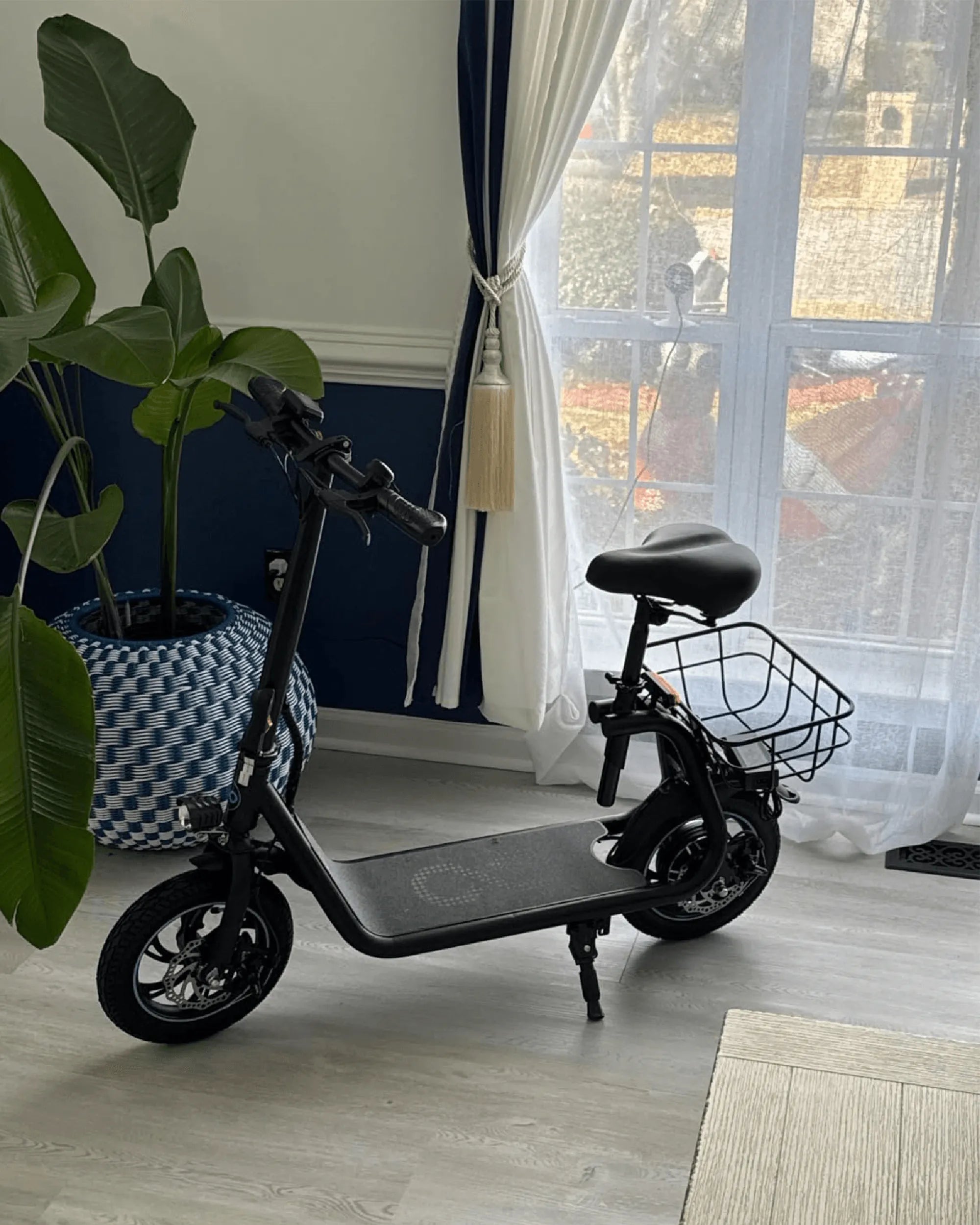
The principles of tire pressure management translate directly to other powered rideables. Just as a motocross racer fine-tunes PSI for a prepped track, an electric scooter or e-bike rider must consider pressure for pavement conditions, rider weight, and load. Brands that prioritize performance, like Gyroor, engineer their electric scooters and e-bikes with this in mind.
Gyroor's lineup of UL-certified electric scooters, for instance, specifies optimal tire pressures to balance comfort, range, and grip. Their IPX5 water-resistant designs mean you can confidently ride in varied conditions, but proper tire pressure remains the rider's responsibility to ensure safety and battery efficiency. A under-inflated scooter tire increases rolling resistance, draining the battery faster—just as a under-inflated dirt bike tire robs engine power.
The core lesson is universal: tire pressure is a primary tuning interface between your vehicle and the ground. Whether you're on a 250cc two-stroke or a Gyroor electric scooter, taking a data-driven, thoughtful approach to this simple setting unlocks better control, longer component life, and a safer, more enjoyable ride.
Pressure as Performance: Your Key to Off-Road Confidence
Mastering your dirt bike rear tire pressure is the most effective, zero-cost performance modification available. It requires no special tools, just knowledge, a quality gauge, and a willingness to experiment. The payoff is immediate: a bike that feels more planted, predictable, and capable. It transforms riding from a battle for control into a harmonious interaction with the terrain.
Make checking and adjusting your tire pressure a non-negotiable part of your pre-ride ritual. Treat it with the same importance as putting on your helmet. The confidence that comes from knowing your bike is optimally connected to the ground allows you to focus on the ride ahead, push your skills safely, and extract the maximum fun from every trail and track. Start with the data, refine by feel, and let the correct PSI unlock your bike's true potential.
For riders who appreciate the importance of precision engineering and reliable performance in all their gear, explore the full range of UL-certified, rider-tested electric mobility solutions. Browse the full Gyroor collection at gyroorboard.com, where innovation meets the road, trail, and everything in between.
What's the Average Bike Speed? A Data-Driven Guide for Every Rider
Fastest Scooter Ever: Engineering, Records & the Reality of Extreme Speed