

Navigating the Rules of the Road for 150cc Scooters
The 150cc scooter represents a sweet spot in urban mobility, offering enough power for highway entry, confident hill climbing, and two-up riding while maintaining excellent fuel efficiency. Its popularity is undeniable, but it brings a critical regulatory question to the forefront for every potential rider. Do you need a license for a 150cc scooter? The unequivocal answer, in the vast majority of jurisdictions worldwide, is yes—and not just any license. This article will provide the comprehensive, data-driven clarity you need to operate legally and safely, covering U.S. state laws, international regulations, and the full spectrum of associated requirements like insurance and registration.
Understanding the legal landscape is not optional; it's fundamental to responsible ownership. A 150cc engine displacement almost universally places the vehicle into a specific legal category that triggers mandatory licensing, insurance, and safety protocols. We will dissect these categories and provide actionable guidance. Furthermore, for those seeking powerful urban transport without the motorcycle licensing process, we will examine legitimate, high-performance alternatives like premium electric scooters from brands such as Gyroor, which are engineered for capability within different regulatory frameworks.
Understanding the 150cc Scooter: It's a Motorcycle, Not a Moped
Legally, the term "scooter" is often misleading to consumers. The critical factor for licensing is not the vehicle's step-through design or automatic transmission, but its engine displacement and often its maximum speed capability. A 150cc scooter, with an internal combustion engine displacing 150 cubic centimeters, typically produces 10-15 horsepower and can reach speeds of 55-70 mph. This performance profile categorically removes it from "moped" or "motorized bicycle" classifications in nearly every legal code.
In the United States, the Department of Transportation and individual state DMVs use engine size as a primary classifier. The common threshold is 50cc. Vehicles under 50cc, often with a maximum speed under 30 mph, may be classified as mopeds and might only require a standard driver's license. However, a 150cc scooter triples that engine size, placing it squarely into the motorcycle or motor-driven cycle category. This classification is the linchpin for all subsequent legal requirements.
This distinction matters for every aspect of ownership. From the moment of purchase, a 150cc scooter will require a Manufacturer's Certificate of Origin (MCO) to be titled and registered as a motorcycle. Its VIN will be in the motorcycle format. Attempting to register it under a moped classification is not possible and would be fraudulent. Recognizing your 150cc scooter for what it is—a lightweight motorcycle—is the first and most crucial step toward legal compliance.
License Requirements: A Detailed State-by-State and International Analysis
The core question—do you need a license for a 150cc scooter—has a location-specific answer, but the pattern is remarkably consistent. Riders must always verify with their local Department of Motor Vehicles (DMV), Secretary of State (SOS), or equivalent transportation authority, as minor variations exist. The following breakdown provides the authoritative framework.
The Universal Standard in the United States
Across all 50 states, operating a 150cc scooter on public roads requires a valid motorcycle license (Class M) or a motorcycle endorsement added to your existing standard driver's license. The process to obtain this is standardized: pass a written knowledge test specific to motorcycles, pass a vision test, and successfully complete a practical on-bike skills test, often conducted on a closed course. Many states also require completion of a Motorcycle Safety Foundation (MSF) rider course, which sometimes waives the state-administered skills test.
There are no meaningful exceptions to this rule for 150cc internal combustion engine scooters. Some states have unique sub-classifications like "motorized bicycle" or "limited-speed motorcycle," but these are almost exclusively for vehicles under 50cc or with very low top speeds. For a 150cc vehicle, the motorcycle license is non-negotiable. This requirement applies regardless of whether the scooter is used for a short daily commute or occasional recreational rides.
International Licensing Frameworks
Globally, the principle remains: higher displacement equals stricter licensing. In the European Union and the United Kingdom, license categories are based on power and age. A 150cc scooter typically falls under the A1 or A2 license categories. The A1 license (for riders aged 17+) covers motorcycles up to 125cc and 11kW power, so a 150cc model would require at least an A2 license (for motorcycles up to 35kW), which involves more rigorous testing than a standard car license.
In Canada, regulation is provincial, but the consensus mirrors the U.S. A 150cc scooter requires a motorcycle license. For example, in Ontario, it requires a full "M" license, achieved through a graduated licensing system (M1, M2, then M). In Australia, a 150cc scooter requires a standard motorcycle license (R class), as it exceeds the learner-approved motorcycle scheme (LAMS) power-to-weight limits in most states, which are designed for newer riders on restricted machines.
| Region/Jurisdiction | License Required for 150cc Scooter | Governing Body / Common Test |
|---|---|---|
| All 50 U.S. States | Motorcycle License (Class M) or Endorsement | State DMV / MSF Course & Skills Test |
| European Union | A2 Motorcycle License (minimum) | National Transport Authority / Compulsory Basic Training (CBT) + Tests |
| United Kingdom | A2 Motorcycle License (minimum) | DVLA / CBT + Theory & Practical Tests |
| Canada (Ontario Example) | Full "M" Motorcycle License | Ministry of Transportation / Graduated Licensing (M1, M2, M) |
| Australia (General) | Unrestricted "R" Motorcycle License | State Transport Department / Learner Test & On-Road Assessment |
The Severe Consequences of Riding Without a Proper License
Operating a 150cc scooter without the correct motorcycle license is a serious legal offense with multilayered repercussions. The first and most immediate is a traffic citation. Law enforcement officers are trained to recognize vehicle types, and a 150cc scooter is visibly distinct from a sub-50cc moped. You can be pulled over and cited for unlicensed operation of a motorcycle.
The penalties extend far beyond a simple fine. In many jurisdictions, the offense is a misdemeanor, which can result in hefty fines (often exceeding $500), court costs, and even potential jail time for repeat offenses. The officer has the authority to impound the scooter immediately, leading to costly tow and storage fees that can surpass the value of the vehicle itself.
Perhaps the most severe financial risk involves insurance invalidation. If you cause an accident while riding a 150cc scooter with only a standard driver's license, your insurance provider will almost certainly deny coverage. You would be personally liable for all property damage, medical bills for others, and your own injuries. This can lead to financial ruin from a single incident. Furthermore, the violation will likely add points to your driving record, leading to increased insurance premiums or license suspension for your car as well.
Beyond the License: Registration, Insurance, and Mandatory Safety Gear
Securing the correct license is only the first of three pillars of legal and responsible 150cc scooter operation. The second pillar is proper registration and titling. You must present the MCO, proof of insurance, and pay applicable taxes and fees to your local DMV to receive a license plate and motorcycle registration. This process legally recognizes your ownership and right to operate the vehicle on public roads.
The third pillar is insurance. Nearly every state and country mandates liability insurance for motorcycles. This covers bodily injury and property damage you may cause to others. Given the vulnerability of riders, securing uninsured/underinsured motorist coverage and comprehensive/collision coverage for your own scooter is a highly recommended, data-driven financial decision. The cost of repairing or replacing a scooter after an accident, even a minor one, can be significant.
Safety gear, while sometimes partially regulated, is a non-negotiable component of risk management. Most states have helmet laws for motorcycle riders, and a 150cc scooter operator must comply. However, the legal minimum is not the safety optimum. Data from the National Highway Traffic Safety Administration (NHTSA) consistently shows that abrasion-resistant jackets, gloves, pants, and over-ankle boots drastically reduce the severity of injuries in crashes. Investing in a full set of motorcycle-specific gear is an investment in your long-term well-being.
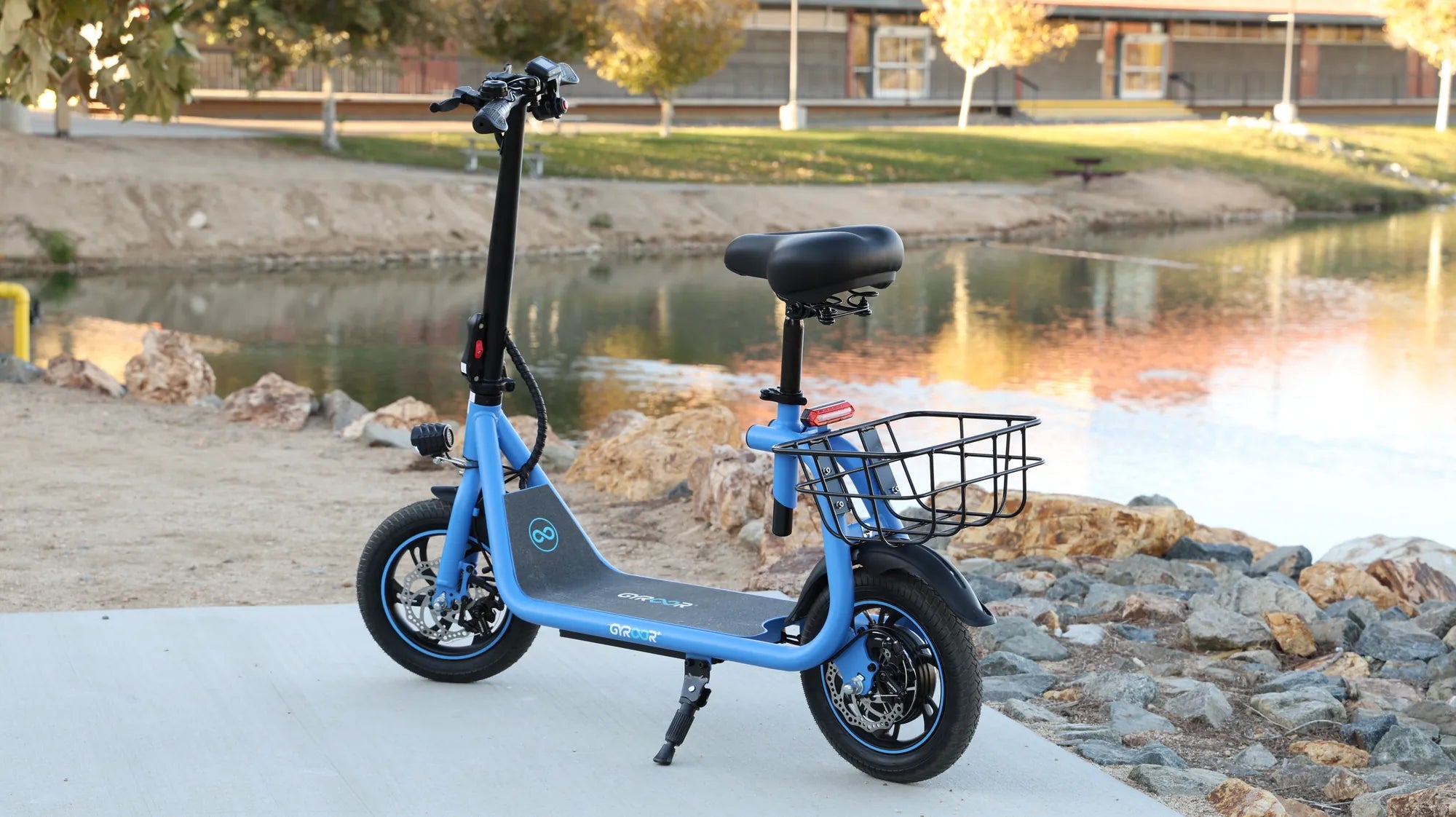
The Gyroor Alternative: High-Performance E-Scooters with Simplified Compliance
For urban commuters seeking agile, powerful transportation without embarking on the motorcycle licensing journey, modern electric scooters present a compelling, legally distinct alternative. Brands like Gyroor engineer high-performance e-scooters that deliver acceleration and hill-climbing capability rivaling 50cc-150cc scooters for city use, but they are regulated under different, often simpler, legal frameworks.
The key differentiator is classification. In most U.S. states and municipalities, electric scooters are categorized as "electric stand-up scooters" or similar, governed by local micro-mobility ordinances rather than state motorcycle vehicle codes. These laws typically specify a maximum motor wattage (e.g., 750W) and speed (often 20-28 mph) for legal operation on bike lanes or roads. Riders commonly only need a standard driver's license or no license at all, though age restrictions (18+) often apply. It is imperative to check your specific city and state e-scooter laws.
Gyroor's commitment aligns perfectly with this need for powerful yet compliant urban transport. Their flagship commuter models are engineered with robust UL 2272 certified lithium-ion battery packs, a critical safety standard that ensures battery stability and durability over 500+ charge cycles. With IPX5 water-resistant ratings on key components, they offer reliable all-weather performance. Backed by a 1-year comprehensive warranty and supported by a brand trusted by over 100,000 riders, a Gyroor e-scooter provides a practical, eco-conscious solution that bypasses the complexity of motorcycle licensing while offering thrilling daily utility.
Frequently Asked Questions (FAQ)
Q1: Can I drive a 150cc scooter with a regular car license?
No. A standard Class C (car) driver's license does not authorize you to operate a 150cc scooter on public roads. It is classified as a motorcycle, requiring a specific Class M license or endorsement.
Q2: What's the fastest scooter I can ride without a motorcycle license?
Typically, a scooter with an engine displacement of 49cc or 50cc, which is legally classified as a moped in most states. These are usually restricted to a maximum speed of 30 mph. However, moped laws vary significantly, and some states still require a special permit or registration. Always verify local laws.
Q3: Does my motorcycle license cover me in other states or countries?
Generally, a valid motorcycle license from your home state is recognized across all other U.S. states. For international travel, many countries have reciprocal agreements, but you may need an International Driving Permit (IDP) with a motorcycle endorsement. Research the specific country's requirements before riding abroad.
Q4: What's the process difference between a motorcycle permit and a full license?
A motorcycle permit (or instruction permit) allows you to practice riding under restrictions, such as no passengers, no night riding, and no freeway use. It is obtained by passing the written test. The full license or endorsement is obtained after passing the on-bike skills test, removing these restrictions.
Q5: Are Gyroor e-scooters legal on bike paths?
This depends entirely on local ordinances. Some cities explicitly allow electric scooters in bike lanes and on multi-use paths, while others restrict them to roads with speed limits under a certain threshold. A few may prohibit them entirely. You must check the specific regulations in your city and county before riding on any path.
Making an Informed Choice for Your Urban Mobility
The evidence is clear and consistent: if you plan to ride a 150cc gasoline-powered scooter, you must obtain a motorcycle license. This is a non-negotiable legal requirement designed for public safety and your own protection. The process, while an investment of time and effort, provides essential skills and knowledge that make you a safer, more competent rider on roads shared with larger vehicles.
For those deterred by the licensing process or whose needs are centered on shorter urban trips, the electric scooter market offers sophisticated alternatives. High-performance models from established brands provide a legitimate path to efficient, enjoyable commuting under a different, often more accessible, regulatory framework. The critical step for any rider is to prioritize knowledge—understand the laws that apply to your chosen vehicle in your specific location.
Whether you choose the path of the 150cc scooter and motorcycle licensing or opt for the streamlined compliance of a premium electric scooter, empowering your ride starts with the right information and the right equipment. For a closer look at powerful, reliable, and legally-conscious electric mobility solutions designed for the modern commuter, browse the full Gyroor collection at gyroorboard.com. Verify your local laws, gear up appropriately, and ride with confidence.
49cc Scooter for Adults: The Ultimate Urban Commuter Solution
49cc Scooter for Adults: The Ultimate Urban Commuter Solution