



Navigating the Rules of the Road on a Motor Scooter
Motor scooters offer an unbeatable blend of efficiency, affordability, and fun for urban commuting. Yet, the joy of the open road comes with a critical question: do you need a license to drive a motor scooter? The answer is not a simple yes or no. It depends entirely on a complex web of factors: your location, the exact type of scooter you're riding, its engine size or power, and your age.
This guide provides a clear, structured roadmap to licensing requirements across the United States and key international markets. We'll dissect the legal classifications that dictate the rules, from low-speed electric scooters to powerful maxi-scooters. You will learn exactly what is required to ride legally, safely, and with complete peace of mind.
Defining Your Ride: How Scooter Classification Dictates the Law
The single most important factor determining license requirements is how your local transportation or motor vehicle department legally classifies your two-wheeled vehicle. Misunderstanding this classification is the most common legal pitfall for new riders. The law doesn't see "scooters" as one category; it sees distinct classes with different rules.
Broadly, scooters fall into three primary legal categories. First, Electric Kick Scooters: typically low-speed, stand-up devices with a small electric motor. Second, Mopeds: defined by a small engine, usually 50 cubic centimeters (cc) or less, and an automatic transmission. They often have pedals, but not always. Third, Motor Scooters or Motorcycles: these have engines larger than 50cc and require full motorcycle licensing.
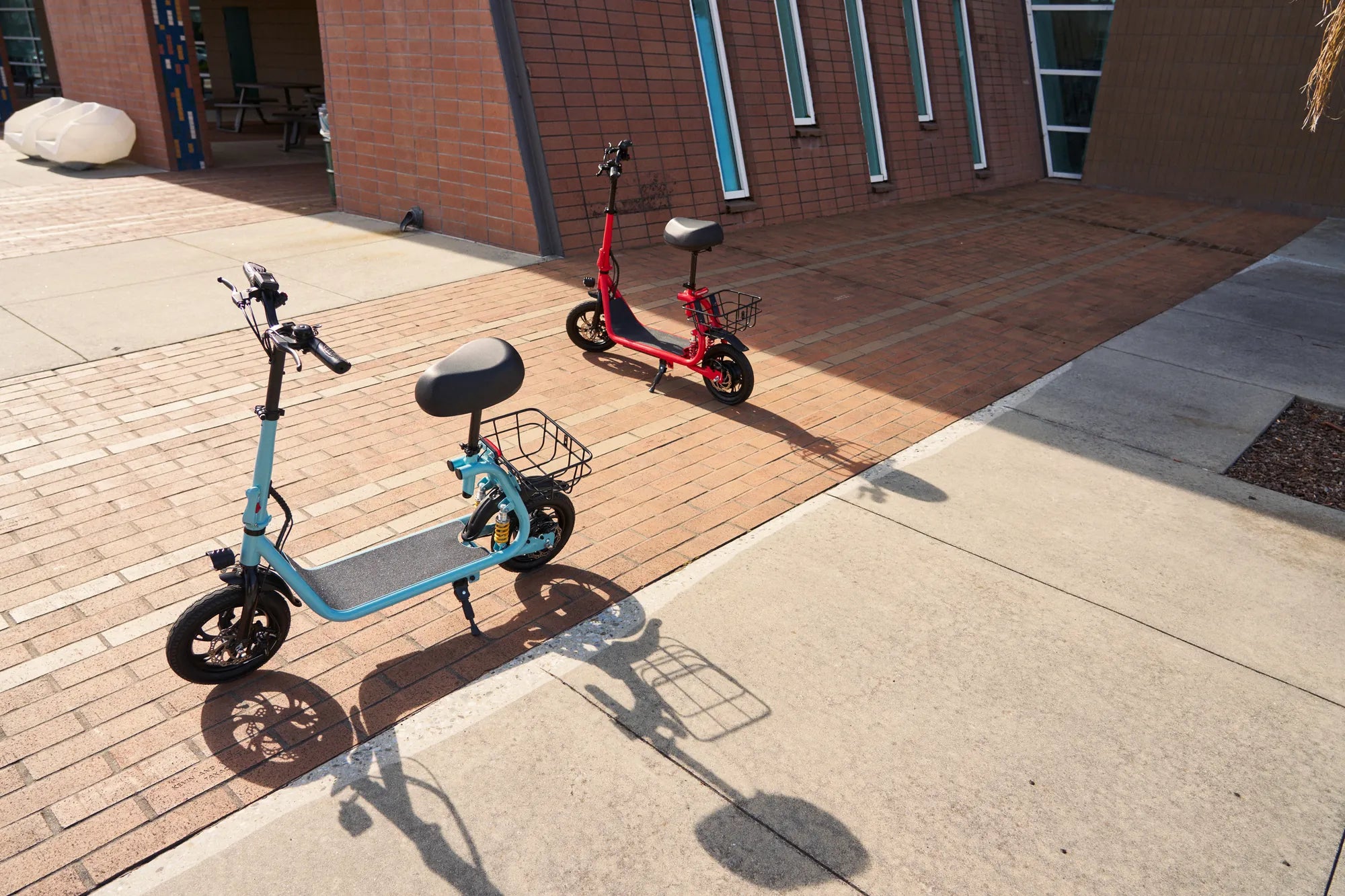
For example, many models from leading brands like Gyroor are engineered to fall into the electric bicycle or low-speed electric scooter classification. This is achieved by limiting motor power and top speed, which can significantly reduce or even eliminate licensing requirements, making them accessible to a much wider range of riders seeking a convenient, eco-friendly commute.
License Requirements in the United States: A State-by-State Primer
In the U.S., scooter laws are dictated at the state level, creating a patchwork of regulations. There is no single federal rule. This means the requirements to operate a 50cc scooter in California are different from those in Florida or New York. Always verify with your state's Department of Motor Vehicles (DMV) or equivalent agency.
For Mopeds (50cc or Less)
For a traditional gas-powered moped (50cc or under), most states require at least a standard automobile driver's license (Class C). Some states issue a specific "Moped License" or require a motorcycle endorsement ("M" endorsement) on your regular license. Age restrictions are common, often setting a minimum age of 16.
Beyond the license, operating a moped usually triggers other legal obligations. Registration with the state DMV and the display of a license plate is frequently mandatory. Many states also require minimum liability insurance, similar to a car. Helmet laws vary, but wearing a DOT-approved helmet is a critical safety practice regardless of the legal minimum.
For Motor Scooters & Motorcycles (Over 50cc)
If your scooter has an engine larger than 50cc, it is almost universally classified as a motorcycle. This means you must obtain a motorcycle license (Class M) or add a motorcycle endorsement to your existing driver's license. The process is more involved than for a car.
Typically, you must pass a written knowledge test specific to motorcycles, a vision test, and an on-bike skills test that evaluates your ability to control the vehicle. Most states offer—and some require—completion of a Motorcycle Safety Foundation (MSF) rider course, which often waives the skills test at the DMV. Registration, insurance, and helmet use are non-negotiable legal requirements for this class.
The Gyroor Advantage: Where E-Scooters and E-Bikes Fit In
This is where the landscape becomes more accessible. Many modern electric scooters and e-bikes, including numerous models from Gyroor, are designed to comply with federal and state definitions for "low-speed electric bicycles." Under U.S. federal law (CPSC), an electric bicycle is defined as a two- or three-wheeled vehicle with fully operable pedals and an electric motor of less than 750 watts (1 horsepower), whose maximum speed on a paved level surface is less than 20 mph when powered solely by the motor.
When a product like a Gyroor e-bike or certain seated e-scooters meets these criteria, most states treat them as bicycles, not motor vehicles. The significant legal implication is that no driver's license, vehicle registration, or insurance is required by state law. This classification offers tremendous freedom, but riders must still obey all local traffic laws for bicycles. Helmet use, while not always legally required for adults, is a cornerstone of safe riding that we strongly advocate.
Global Perspectives: Licensing Rules in Key International Markets
International regulations share similarities with the U.S. system, using vehicle power and speed to determine licensing tiers. However, the specific categories and requirements differ.
European Union & United Kingdom
In the EU and UK, electric two-wheelers are categorized precisely. Standard pedal-assist e-bikes (pedelecs) that assist only up to 25 km/h (15.5 mph) and have a motor under 250 watts are treated as regular bicycles—no license, tax, or insurance required. The rules change for faster models.
Speed Pedelecs (S-Pedelecs) that assist up to 45 km/h (28 mph) fall into the L1e-A vehicle category. These require at least a category AM moped license (often obtainable at age 16), registration, a license plate, and mandatory third-party insurance. Electric scooters and mopeds with a throttle (categorized as L1e-B) have similar requirements, though the specific license needed can depend on their power output and top speed.
Canada
Like the U.S., Canada regulates scooters at the provincial level. The principles are very similar. Low-speed e-bikes (typically with a 500-watt limit and 32 km/h speed governor) often do not require a driver's license, but riders must be a minimum age (often 14-16). They may require a specific e-bike license or permit in some provinces.
Gas-powered mopeds (50cc or less) generally require a class-specific license (e.g., a "Class 6M" or "M" endorsement), registration, and insurance. Any scooter over 50cc is classified as a motorcycle and requires a full motorcycle license. Helmet use is universally mandatory across all provinces for all types of motorized scooters and e-bikes.
Beyond the License: Essential Legal and Safety Obligations
Securing the correct license is only the first step in legal compliance. Responsible riding involves adhering to a broader set of rules designed for your safety and the safety of others on the road.
Insurance, Registration, and Helmets
For any vehicle requiring a license (mopeds and motorcycles), liability insurance is almost always a legal mandate. This protects you financially if you are at fault in an accident. Registration ties the vehicle to you as the owner and is required for these licensed classes. Even for e-bikes where it's not required, considering personal liability insurance is a wise precaution.
Helmet laws vary, but your head does not. A DOT, ECE, or Snell-certified helmet is the most critical piece of safety gear. It is a non-negotiable investment for any rider, regardless of the vehicle's classification or local law. Gyroor promotes a safety-first culture, encouraging all riders to gear up with helmets, gloves, and visible clothing.
Age Restrictions and Local Ordinances
Even for license-free vehicles like e-bikes, age restrictions frequently apply. Many states and provinces set a minimum age, commonly between 14 and 16, to operate an e-bike on public roads. Furthermore, city and county ordinances can override state laws in specific areas.
These local rules often govern where you can and cannot ride. They may prohibit e-scooters on sidewalks, restrict them to bike lanes, or ban them from certain parks or pedestrian zones. Always check your local municipal codes before riding to avoid fines and ensure you're sharing public spaces respectfully.
Comparison of Scooter Types and Typical Licensing Requirements
| Vehicle Type | Engine/Power | Max Speed | Typical U.S. License Required | Registration & Insurance |
|---|---|---|---|---|
| Electric Kick Scooter (Stand-up) | Under 750W | Under 20 mph | None (Often treated as bicycle) | Not Required |
| Electric Bicycle (Class 1/2/3) | Under 750W | 20-28 mph* | None (in most states) | Not Required |
| Moped | 50cc or less | 25-30 mph | Standard Driver's License or Moped License | Usually Required |
| Motor Scooter / Motorcycle | Over 50cc | 30+ mph | Motorcycle License (Class M) | Required |
| Gyroor Commuter E-Bike | 750W Motor | 20 mph (PAS) | None (in most states)** | Not Required |
*Class 3 e-bikes may have local restrictions. **Always verify state and local laws.
Frequently Asked Questions (FAQ)
Q: Do I need a license for a 50cc scooter in California, Florida, and Texas?
A: Requirements differ. In California, you need a standard Class C driver's license (or an M1/M2) and must register the moped with the DMV. In Florida, a 50cc scooter requires at least a Class E driver's license, registration, and insurance. In Texas, you need a Class C license or a Class M license, and the vehicle must be registered and titled. Always check the current DMV website for your state.
Q: Is a helmet legally required for an electric scooter?
A: Helmet laws for low-speed electric scooters and e-bikes vary by state and age. For minors, it is almost universally required. For adults, many states do not mandate helmets for e-bikes, but nearly all do for mopeds and motorcycles. Regardless of the law, wearing a certified helmet is the single most effective action you can take to prevent serious injury.
Q: What's the difference between a moped license and a motorcycle license?
A: A moped license or endorsement typically allows you to operate only low-powered vehicles (usually 50cc or less, with a top speed under 30-35 mph). The testing is often simpler. A full motorcycle license (Class M) permits you to operate any motorcycle or scooter of any engine size. Obtaining it requires passing more comprehensive written and on-road skills tests.
Q: If my Gyroor e-bike has a throttle, does that change the classification?
A: It can. In the U.S., e-bikes with a throttle are typically classified as "Class 2" (throttle-assisted up to 20 mph). In most states, Class 2 e-bikes are still treated as bicycles and do not require a license. However, a handful of states or localities may have specific restrictions on throttle use. It is crucial to confirm your state's specific definition of an electric bicycle.
Q: Can I ride my electric scooter on the sidewalk?
A: This is almost always governed by local city or county ordinance, not state law. Most municipalities prohibit riding motorized vehicles, including e-scooters and e-bikes, on sidewalks for pedestrian safety. They are generally intended for use in bike lanes or on roads. Always check your local rules before riding.
Ride Informed, Ride Safely, Ride Free
The freedom of scooter ownership begins with understanding and following the law. The core question—do you need a license to drive a motor scooter—has a clear answer once you identify your vehicle's legal classification. For many, the path to hassle-free riding lies in choosing a vehicle designed for accessibility, like a UL-certified electric bicycle or e-scooter from a trusted brand.
By selecting a model engineered to comply with "bicycle" statutes, you can often enjoy daily commuting without the burdens of licensing, registration, and insurance. This practical advantage, combined with the environmental and economic benefits, makes e-mobility an intelligent choice for modern life. Prioritize your safety with proper gear, respect local traffic laws, and you'll unlock a truly rewarding riding experience.
Ready to explore a world of electric mobility designed for simplicity and reliability? Browse the full Gyroor collection of electric scooters and e-bikes, trusted by over 100,000 riders, at gyroorboard.com. Find your perfect ride and start your journey informed, equipped, and free.
How Fast Does a 300cc Dirt Bike Go? A Data-Driven Analysis
3 Wheel Scooter for 4 Year Old: The Ultimate Safety & Development Guide