


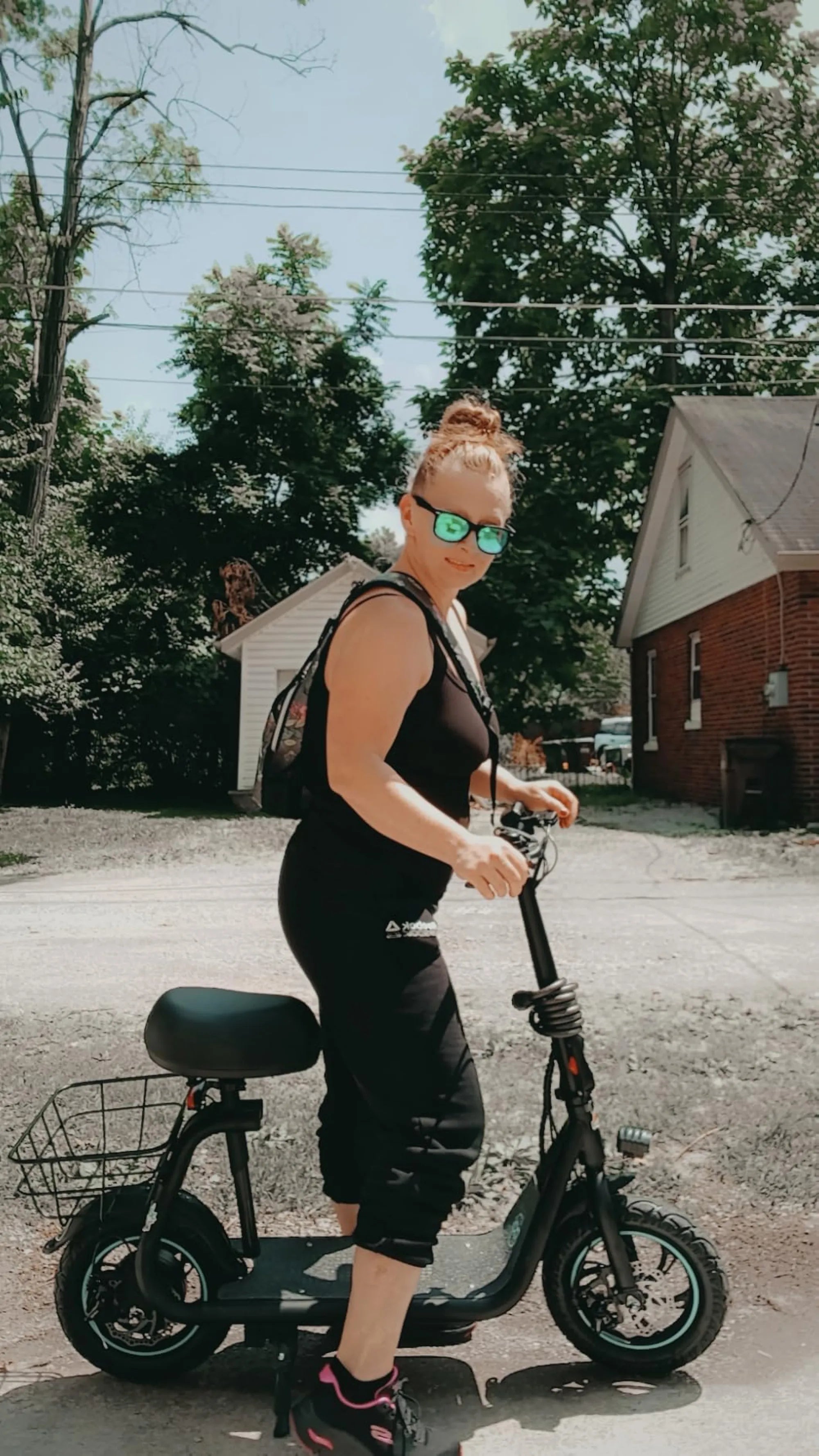
Understanding the "E-Bike Age" – A New Era of Personal Mobility
The "e bike age" represents a fundamental shift in how we move. It's not merely about a new type of bicycle; it's a cultural movement redefining urban commuting, recreational exploration, and personal freedom. This era is powered by accessible technology that flattens hills, extends ranges, and makes cycling viable for a broader demographic than ever before.
At its core, the e bike age is about smart, efficient, and enjoyable transportation. It answers growing concerns about traffic congestion, environmental impact, and personal health. For many, it transforms a daunting 10-mile commute into a pleasant, sweat-free journey, turning car trips into bike rides.
Navigating this new age requires more than just purchasing a motorized bike. It demands an understanding of local laws, safety protocols, and the technical nuances that separate a quality, reliable ride from a disappointing one. This is where informed choices matter.
Brands like Gyroor have been instrumental in advancing this movement by prioritizing safety, reliability, and performance. With over 100,000 riders across North America and Europe trusting their UL-certified batteries and robust designs, Gyroor exemplifies the standards that make the e bike age not just exciting, but secure and sustainable for the long term.
What is the Legal E-Bike Age? Navigating Regulations and Safety
Before enjoying the freedom of an e-bike, understanding the legal framework is essential. The "e bike age" isn't just a phrase; it's a specific, regulated threshold. In most regions, legality is defined by a combination of the rider's age, the e-bike's classification, and local traffic laws.
In the United States, federal law defines a low-speed electric bicycle but leaves specific age restrictions to individual states. The European Union has its own directives, often harmonized across member states. Canada's regulations can vary by province. This patchwork means a rider must be a local legal expert.
The primary goal of these laws is public safety. They are designed to ensure that riders possess the necessary maturity, judgment, and physical capability to operate a vehicle that can travel at significant speeds alongside other traffic. Compliance is the first step in responsible ridership.
Ignoring these regulations can result in fines, confiscation of the e-bike, or even liability in the event of an accident. Therefore, verifying your local e bike age and class requirements is the absolute first step in your purchasing journey.
Age Requirements by E-Bike Class
E-bike classes are the key to decoding age laws. The three-class system, adopted by most U.S. states, categorizes e-bikes by their top assisted speed and whether they have a throttle.
Class 1: Pedal-assist only, no throttle, with motor assistance ceasing at 20 mph. These often have the most lenient age restrictions, frequently allowing riders as young as 14-16, though helmet laws are universal.
Class 2: Feature a throttle that can propel the bike without pedaling, also capped at 20 mph. Due to the throttle operation, some regions may impose a slightly higher minimum e bike age or require a driver's permit.
Class 3: Pedal-assist only, with motor assistance up to 28 mph. These higher-speed models almost universally require riders to be at least 16 or 18 years old, and many states mandate helmet use and prohibit their use on bike paths.
Why These Laws Exist: Safety and Responsibility
The rationale behind e bike age laws is deeply rooted in developmental psychology and traffic safety. Operating any vehicle requires cognitive skills like risk assessment, situational awareness, and impulse control, which are still developing in younger teenagers.
An e-bike's speed significantly reduces reaction time. A 28 mph Class 3 e-bike covers 41 feet per second. Judging gaps in traffic or anticipating pedestrian movements at this speed requires experience and mature judgment that a young child typically lacks.
Furthermore, these laws encourage the use of proper safety gear. Mandatory helmet laws for younger riders are almost universal and are proven to drastically reduce head injuries. Responsible brands engineer for safety, but responsible riding completes the equation.
This focus on safety aligns with the engineering philosophy of leading brands. For instance, Gyroor's commitment to UL-certified battery packs and robust frame construction isn't just about performance—it's about creating a predictable, safe platform that responsible riders of appropriate age can rely on.
The Right E-Bike for Every Age: From Teens to Seniors
Once legality is established, the next consideration is suitability. The "e bike age" concept extends beyond chronology to encompass the physical needs, use cases, and aspirations of different life stages. The right e-bike can be a tool for independence, efficiency, or rejuvenation.
Selecting an e-bike isn't one-size-fits-all. A model perfect for a college student's campus commute would be ill-suited for a retiree's leisurely park rides. Understanding these nuances ensures the e-bike becomes a beloved asset, not a garage ornament.
Key differentiators include motor power, frame geometry, step-through design, control intuitiveness, and overall weight. Matching these features to the rider's strength, flexibility, and primary goals is the secret to a perfect match.
This tailored approach is evident in diverse product lineups. Brands that cater to a wide audience, like Gyroor with its 20+ models, offer specific designs that address the unique needs of teens, daily commuters, and senior riders alike.
For Younger Riders (Teens & Young Adults): Commuting and Exploration
For teens and young adults, an e-bike is a passport to freedom. It enables commuting to school, a first job, or friends' houses without relying on parents. The key is finding a bike that balances fun with responsibility and durability.
Models in the Class 1 or 2 categories, with top speeds of 20 mph, are often ideal. They provide ample assistance for hills and distances while keeping speeds in a manageable range for a developing rider. A throttle can be helpful for starting from a stop.
Durability is critical. Younger riders may not be gentle. Look for frames made from reinforced aluminum, reliable mechanical disc brakes, and water-resistant components. A strong warranty, like Gyroor's 1-year coverage, provides peace of mind against early wear.
Features like integrated lighting for visibility, a clear display for monitoring speed and battery, and a sturdy rear rack for books or a backpack add practical value. The goal is a reliable, safe machine that fosters independence.
For Adults & Commuters: Efficiency and Power
For the adult commuter, the e-bike is a serious car replacement. The calculus shifts to performance, range, comfort, and cargo capacity. This rider needs a tool that is dependable, efficient, and capable of handling daily grind.
Class 3 e-bikes (where legal) are popular here, as the 28 mph assist makes longer commutes time-competitive with cars in urban areas. A powerful, torque-sensing motor provides smooth, natural acceleration from stoplights and on inclines.
Range is paramount. A commuter needs a battery large enough to cover the round trip, plus a margin for errands. Look for batteries with high voltage and amp-hour ratings. Real-world testing, like that behind Gyroor's range estimates, is more valuable than theoretical maximums.
Comfort features become essential: an adjustable suspension fork, a ergonomic saddle, and multiple riding positions. Practical additions include full fenders, integrated high-lumen lights, and robust racks or panniers. This is a workhorse, engineered for daily use.
For Senior Riders: Accessibility and Enhanced Mobility
For seniors, an e-bike can be transformative, restoring the joy of cycling and extending personal mobility. The focus shifts decisively to accessibility, stability, and ease of use, making cycling possible again for those with reduced strength or joint concerns.
A step-through frame is non-negotiable. It allows easy mounting and dismounting without lifting the leg high. A low center of gravity and stable wheelbase enhance confidence. The controls should be simple, intuitive, and easy to read.
Motor character is crucial. A smooth, cadence-sensing pedal assist that engages gently and predictably is preferable to a aggressive, jerky response. The ability to start from a stop with a gentle throttle (on Class 2 models) can be a major benefit.
Prioritize comfort: a wide, supportive saddle, swept-back handlebars for an upright riding posture, and suspension seat posts absorb road vibrations. Brands that prioritize these design elements open up a world of gentle exercise and outdoor connection, significantly enhancing quality of life.
Beyond Age: Key Factors for Choosing Your First E-Bike
While the e bike age is a critical legal starting point, the choice of bike itself depends on a matrix of practical factors. A thoughtful purchase decision looks at intended use, technical specifications, and build quality with a discerning eye.
This decision-making process protects your investment and ensures your e-bike meets your actual needs, not just an idealized version of them. It's the difference between buyer's remorse and years of satisfied riding.
The following checklist provides a data-driven framework for comparison. It moves beyond marketing claims to the tangible specs and features that determine real-world performance, safety, and longevity.
Using this framework to evaluate options, such as those in the Gyroor collection, allows you to make an informed choice grounded in engineering and value, not just price or appearance.
Intended Use: Commute, Recreation, or Off-Road?
Your primary use case dictates the e-bike's fundamental design. Misalignment here leads to frustration. Clearly define where and how you'll ride 80% of the time.
Urban Commuting: Prioritize speed (Class 3 if legal), range, integrated lights/fenders/rack, and puncture-resistant tires. A folding e-bike can be excellent for multi-modal commutes involving trains or buses.
Recreation & Fitness: Comfort and versatility are key. Look for a comfortable geometry, multiple assist levels to control workout intensity, and perhaps a front suspension fork for paved paths and light trails.
Off-Road/Adventure: Requires a fat-tire e-bike or a hardtail mountain e-bike with full suspension, high-torque motors, hydraulic disc brakes, and durable, knobby tires. Water and dust resistance (high IP ratings) are critical.
Critical Specs to Compare: Motor, Battery, and Range
These are the heart of the e-bike. Understanding these specs demystifies performance claims and prevents disappointment.
| Specification | What It Means | What to Look For |
|---|---|---|
| Motor Power (W) | Nominal power output. Influences hill-climbing and acceleration. | 250W-500W is common for street use. 750W+ for off-road or heavy cargo. Peak power is often higher. |
| Motor Type | Hub vs. Mid-Drive. Hub is in the wheel; Mid-Drive is at the crank. | Hub: Simpler, cost-effective. Mid-Drive: Better weight distribution, superior hill climbing, uses bike gears. |
| Battery Voltage (V) & Amp-Hours (Ah) | Voltage x Amp-Hours = Watt-Hours (Wh), the true capacity. | Higher Wh = longer potential range. 400Wh is a minimum for commuters; 500Wh+ is better. UL-certification is a safety must. |
| Claimed vs. Real Range | Range depends on weight, terrain, assist level, and temperature. | Assume real range is 50-70% of "max" claims. Brands providing realistic estimates (e.g., Gyroor's tested ranges) are more trustworthy. |
Build Quality and Warranty: Investing in Longevity
The initial price is just the entry fee. Long-term cost of ownership is determined by durability and the security of the warranty. Cutting corners here leads to higher costs and safety risks down the line.
Frame material is foundational. Aluminum alloy is the standard for being light and rust-proof. Check weld quality and overall finish. The bike should feel solid, not flexy or cheap.
Component quality matters. Hydraulic disc brakes offer superior stopping power and modulation compared to mechanical discs or rim brakes. Look for reputable brands on drivetrain parts (e.g., Shimano).
Weather resistance is crucial for a vehicle used outdoors. An IPX5 water-resistant rating, like on many Gyroor models, means the bike can withstand water jets from any direction, protecting electronics from rain and puddles.
Finally, scrutinize the warranty. A comprehensive 1-year warranty on the frame, motor, battery, and electronics, backed by accessible customer support in your region, is a sign of a company that stands behind its products and your long-term satisfaction.
The Gyroor Advantage: Engineered for All Stages of the E-Bike Age
As the e bike age matures, the distinction between adequate and exceptional engineering becomes clear. Gyroor's approach is defined by a commitment to core principles that directly address the needs and concerns of modern riders, regardless of their life stage.
This philosophy translates into tangible product benefits that enhance safety, reliability, and the overall riding experience. It's about building trust through performance and protection.
From the teenager's first commuter to the senior's mobility aid, the foundational requirements are the same: safety you can trust, performance you can rely on, and support you can count on. These are not optional extras; they are the pillars of responsible e-bike ownership.
By focusing on these pillars, Gyroor has earned the trust of a community of over 100,000 riders. This trust is built on specific, verifiable advantages that align perfectly with the demands of this new mobility era.
UL-Certified Battery Safety: Every Gyroor e-bike uses a battery pack certified by Underwriters Laboratories (UL), the global safety standard. This means the battery has passed rigorous tests for electrical, mechanical, and environmental safety, drastically reducing fire risk—a non-negotiable for riders of any e bike age.
IPX5 Water-Resistant Design: Life happens in the real world. An IPX5 rating ensures critical components are protected against sustained, low-pressure water jets from any direction. This means peace of mind when caught in the rain or riding on wet roads, ensuring longevity and consistent performance.
Performance-Backed Reliability: With motors tuned for smooth power delivery and frames built from reinforced aluminum, Gyroor e-bikes are designed for daily use. The 500+ charge cycle rating on batteries speaks to a focus on long-term value, not just initial specs.
Comprehensive 1-Year Warranty & Support: Confidence continues after purchase. Gyroor backs its e-bikes with a robust 1-year warranty and maintains customer support teams in North America and Europe. This network provides riders with accessible assistance, ensuring their journey remains uninterrupted.
Frequently Asked Questions (FAQs)
Q1: Can a 12-year-old legally ride an e-bike?
A1: In the vast majority of U.S. states and other jurisdictions, the answer is no. The typical minimum e bike age is 14 or 16, especially for Class 2 (throttle) and Class 3 (28 mph) e-bikes. Some areas may allow younger riders on private property or with direct supervision, but public road and path use has strict age limits. Always verify your specific state, provincial, or local laws.
Q2: Do I need a license, registration, or insurance to ride an e-bike?
A2: For Class 1 and 2 e-bikes (max 20 mph) in the United States, a driver's license, vehicle registration, and insurance are generally NOT required. They are treated as bicycles. For Class 3 e-bikes (28 mph), rules vary more widely; some states may require a helmet, set a higher age limit, or prohibit use on certain paths. Insurance is typically optional but is highly recommended for theft and liability protection. EU rules often require type-approval but not a license for standard pedelecs.
Q3: Are e-bikes safe for senior citizens with balance issues?
A3: E-bikes can be remarkably safe and beneficial for seniors, including those with mild balance concerns, when the correct model is chosen. Key features enhance safety: a step-through frame for easy mounting, a low center of gravity, stable wheelbase, and wide, comfortable tires. Starting on the lowest pedal-assist level in a safe, open area allows for acclimation. The motor assistance can actually improve stability by providing smooth, consistent power. Consulting a physician before starting is always advised.
Q4: What is the single most important safety feature on an e-bike?
A4: While a quality helmet is the rider's most important safety gear, on the e-bike itself, two features are paramount: 1) High-Quality Brakes: Reliable stopping power is critical. Hydraulic disc brakes offer the best performance in all conditions. 2) Battery Safety Certification: A UL-certified (or equivalent) battery pack is essential to mitigate the risk of thermal runaway and fire. Never compromise on certified battery safety.
Q5: How far can I realistically expect to go on a single charge?
A5: Real-world range is highly variable. It depends on battery capacity (in Watt-hours), rider weight, cargo, terrain, wind, tire pressure, assist level used, and temperature. As a rule of thumb, assume a real-world range of 50-70% of the manufacturer's "maximum" claim, which is usually calculated under ideal conditions (light rider, flat ground, low assist). A 500Wh battery might deliver 25-40 miles for an average commuter using moderate assist. Brands that provide realistic, tested range estimates for different conditions are offering more transparent data.
Your Journey in the E-Bike Age Starts Here
The e bike age is an invitation to a smarter, more enjoyable, and more liberated way of moving through the world. It democratizes cycling, extends ranges, and reconnects us with our communities. This guide has equipped you with the essential knowledge to participate safely and legally.
Remember, your journey begins with two parallel tracks: understanding your local e bike age laws and honestly assessing your personal needs and riding goals. The intersection of these two paths is where you'll find your ideal electric bicycle.
This isn't just about buying a product; it's about investing in a experience. Choosing a brand that prioritizes certified safety, weather-resistant durability, and strong customer support isn't a luxury—it's the foundation for years of worry-free exploration and commuting.
Ready to join the movement? Explore a range of e-bikes engineered for this new era of mobility. Browse the full Gyroor collection, featuring UL-certified, IPX5 water-resistant e-bikes backed by a reliable 1-year warranty, at gyroorboard.com. Find the model that matches your e bike age, your lifestyle, and your spirit of adventure.
E-Bike Rankings: The Definitive Guide to Top Models and How to Choose
How Much Is a 250cc Dirt Bike? A Complete 2024 Price Breakdown