



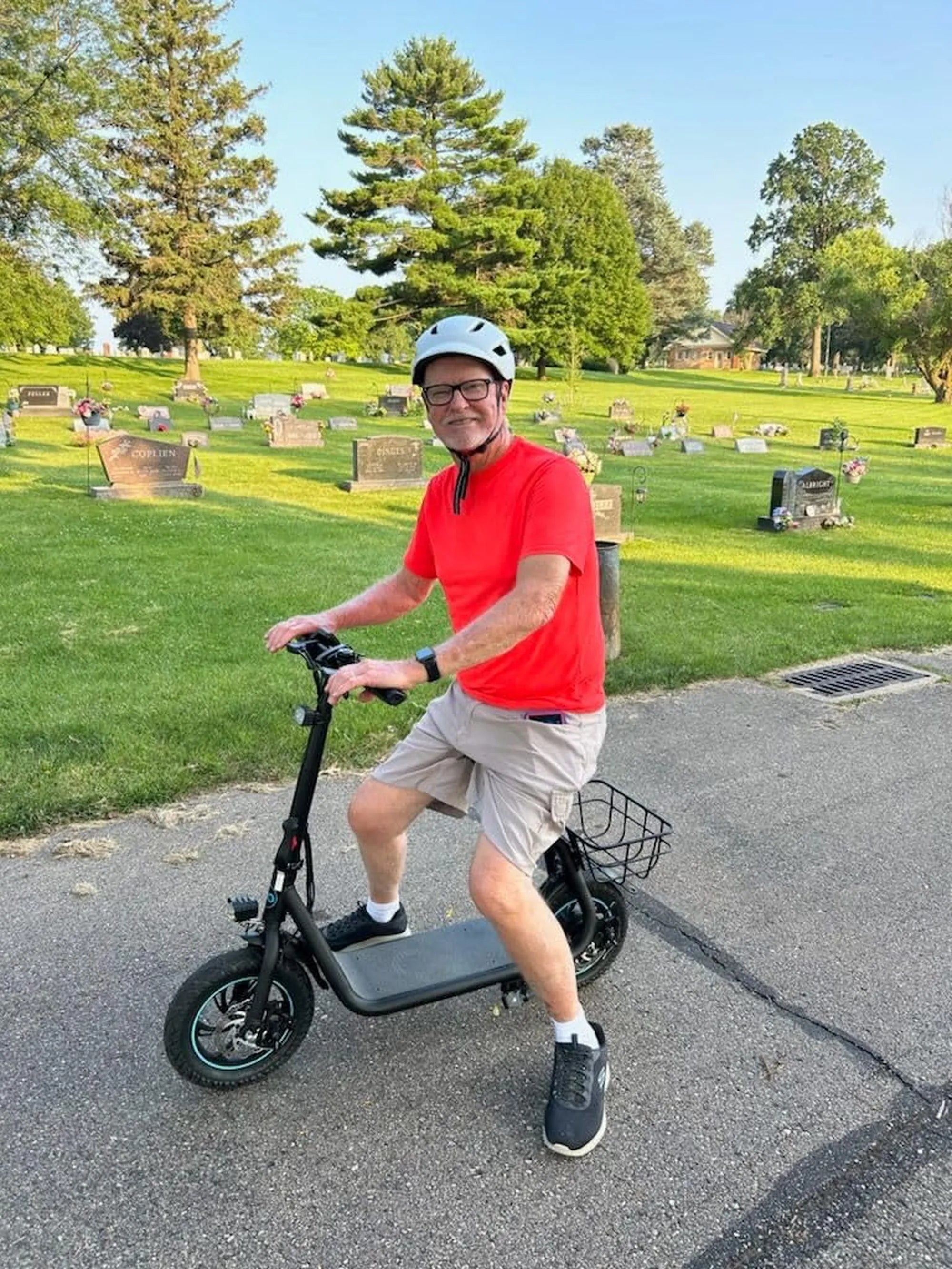
Introduction to E-Bike Charging: More Than Just Finding an Outlet
Searching for an e bike charger nearby is a modern rite of passage for urban commuters and adventure riders alike. It's a query that transcends simple convenience, directly impacting your mobility, planning, and freedom on two wheels. This guide moves beyond a basic directory to provide a layered, strategic approach to e-bike power management.
We will explore the full spectrum of solutions, from your primary home charger to public infrastructure and emergency backups. For over 100,000 riders across North America and Europe, brands like Gyroor have made e-mobility accessible, but understanding how to keep your bike powered is the key to unlocking its full potential. Let's transform that search for an outlet from a moment of anxiety into a planned part of your journey.
Your Primary Charger: Understanding and Maintaining Your Gyroor E-Bike's Power Source
Your journey to reliable power begins at home with the charger provided in the box. This isn't just a generic accessory; it's a precision-engineered component designed for a specific battery system. For Gyroor e-bikes, this means a UL-certified charger matched to the voltage and amperage of their UL-certified battery packs, ensuring safety across 500+ charge cycles.
Proper maintenance of this primary charging setup is non-negotiable for long-term battery health. Always store the charger in a dry, temperate place, coiling the cable loosely to prevent internal wire damage. Before each use, perform a quick visual inspection of the charger body, cable, and the bike's charging port for any signs of wear, corrosion, or debris.
The charging environment matters immensely. Avoid charging in direct sunlight, in freezing temperatures, or in excessively humid conditions. The ideal scenario is to charge the battery at room temperature, either on the bike in a dry garage or, preferably, removed from the frame if the design allows it. This practice helps manage heat dissipation during the charge cycle.
Establishing a consistent charging routine prolongs battery life. It's generally better to top up your battery after shorter rides rather than consistently draining it to zero. For long-term storage, such as over the winter, follow the manufacturer's guidelines, which typically recommend storing the battery at a 50-80% charge level in a cool, dry place.
Why Your Gyroor Charger is Your Best Bet
The technical harmony between a Gyroor e-bike battery and its dedicated charger is critical. These chargers deliver a precise voltage (e.g., 48V or 52V) and a controlled amperage (e.g., 2A or 3A) tailored to the battery's management system (BMS). The BMS communicates with the charger to regulate the flow of electricity, ensuring a safe transition from constant current to trickle charging at full capacity.
Using a generic or third-party e bike charger nearby in a pinch poses significant risks. An incorrect voltage can damage battery cells instantly, while an amperage that's too high can cause excessive heat, leading to reduced lifespan or, in extreme cases, thermal runaway. This misuse directly voids the robust 1-year warranty offered by Gyroor, leaving you liable for any subsequent battery or motor issues.
So-called "fast chargers" marketed for e-bikes are a particular point of caution. While they may reduce charge time, they often do so by pushing higher amperage, which increases stress on the battery chemistry. For daily use, the slower, steady charge from the OEM charger is the undisputed best practice for maximizing the number of cycles your battery will deliver.
Locating Public E-Bike Charging Stations and Compatible Outlets
Public charging infrastructure for micro-mobility is expanding, though it's less ubiquitous than EV networks. Finding a dedicated e bike charger nearby requires knowing where to look and which tools to use. This infrastructure exists on two levels: purpose-built charging hubs and opportunistic public outlets you can use with your own charger.
The growth of this network is driven by cities promoting sustainable transport, universities supporting student mobility, and forward-thinking businesses attracting eco-conscious commuters. Identifying these locations turns your e-bike from a last-mile solution into a viable primary vehicle for longer urban and suburban trips.
When utilizing any public charging point, etiquette is paramount. Never block walkways, accessibility ramps, or building entrances with your bike and cable. Use a cable lock to secure both your bike and the charger if left unattended for a short period, and always plan to return well before your battery is full to free up the space for others.
Dedicated Micro-Mobility Charging Hubs
Dedicated hubs are becoming more common in urban cores. You can often find them integrated into public bike repair stations, at major transit interchanges like train or bus stations, and on university campuses. Some progressive office buildings and corporate parks now include them as an employee amenity, similar to EV charging for cars.
The best way to locate these stations is through specialized apps. PlugShare, while popular for EVs, has a growing filter for "Light Vehicle" charging. ChargeFinder and ChargeMap also list micro-mobility points in many regions. Don't overlook local city transit or bike-share apps, which sometimes map their supporting infrastructure, including charging docks that may be compatible.
These dedicated stations typically offer secure, lockable compartments for your battery or provide a standard AC outlet in a sheltered box. They may be free, coin-operated, or use a digital payment system. Always check the connector type or outlet standard before relying on one for a critical charge during your commute.
The "Opportunity Charge": Finding Public Outlets
When a dedicated hub isn't available, the "opportunity charge" using public AC outlets is a valuable skill. Common locations include public libraries, parks with pavilions, shopping malls (particularly in food courts or seating areas), and some cafes. The key is to always seek explicit permission from the property owner or manager.
Simply plugging in without asking is considered theft of service in many jurisdictions and can damage community relations for all e-bikers. A polite inquiry—"I'm on an electric bike, would you mind if I used that outlet for 30 minutes while I have a coffee?"—is usually well-received, especially if you're a paying customer.
Safety is your responsibility. Carry a small outlet tester to check that the public outlet is properly grounded and wired before plugging in your expensive charger. Use your own high-quality, heavy-gauge extension cord if needed, but keep the run as short as possible to reduce voltage drop and trip hazards. Never daisy-chain multiple extension cords.
Alternative and Emergency Charging Solutions for E-Bikes
For longer tours, remote adventures, or simply peace of mind, having an emergency charging plan is essential. When the search for a standard e bike charger nearby comes up empty, these alternative solutions can be a lifeline, turning a stranded situation into a minor delay.
Planning for contingencies involves understanding the weight, cost, and practicality of each option. The goal isn't to replace your primary charging method but to have a verified backup that aligns with your riding style. Whether you're a daily commuter or a weekend explorer, one of these solutions will fit your needs.
Integrating an emergency charge source into your gear requires forethought. Consider the added weight on your bike and the space it will occupy in a bag or on a rack. Practice using the system at home before you need it in the field to ensure you have all necessary cables and adapters and understand the charge time involved.
Portable Power Banks and Solar Chargers
The market for high-capacity portable power stations has exploded, with brands like Jackery, EcoFlow, and Bluetti offering units from 300Wh to over 1000Wh. To charge a typical e-bike battery (e.g., 48V 10Ah = ~480Wh), you would need a power station rated at least 600Wh to account for conversion efficiency losses.
Pros: These stations are incredibly versatile, often recharging from a car outlet or wall socket and then providing a clean AC output for your e-bike charger. They can also power lights, phones, and other devices on camping trips. Cons: They are a significant investment ($400-$1000+), and the larger units are heavy (15-30 lbs), making them suitable for support vehicles or base camps, not for carrying on the bike itself.
Portable solar panels pair with these power stations for off-grid recharging. A 100W-200W folding solar panel can slowly replenish a power station during a day hike or rest stop. However, solar charging is highly dependent on weather, time of day, and orientation to the sun, making it a slow, auxiliary option best for multi-day adventures, not quick urban top-ups.
The Bike Shop & Retailer Lifeline
Your local bike shop, especially one that sells e-bikes or is an authorized dealer for brands like Gyroor, is one of the most reliable emergency resources available. These businesses understand the technology and often have compatible chargers on hand for their floor models and service department.
Building a relationship with a shop before you're in distress is wise. Introduce yourself, show your Gyroor e-bike, and ask if they would be willing to allow a courtesy charge in an emergency. Many will agree, particularly if you offer to pay a small fee or purchase a tube, a drink, or accessories as a thank you.
This option is perfect for the commuter who discovers a forgotten charger or the tourer passing through a small town. It provides a safe, monitored environment to charge, and you can often get a quick safety check or tire inflation while you wait. Always call ahead if possible, as shop policies and available outlets may vary.
Planning Your Route with Charging in Mind: A Data-Driven Approach
Proactive planning eliminates the reactive scramble for an e bike charger nearby. By integrating charging stops into your route using your bike's known performance data, you transform range from a guessing game into a calculated metric. This is the difference between hoping you'll make it and knowing you will.
This process starts with an honest assessment of your e-bike's real-world range, which is always less than the maximum theoretical range advertised. Factors like rider weight, cargo, tire pressure, wind, terrain, and your chosen level of pedal assist (PAS) have dramatic effects. A bike rated for 40 miles on PAS 1 might only achieve 20 miles on PAS 5 over hilly terrain.
Use your first few rides to establish a personal baseline. Note your distance traveled and battery percentage used under different conditions. This empirical data is far more valuable than any generic chart. Modern e-bikes with display screens often provide a remaining range estimate, but these are dynamic calculations that adjust based on recent power consumption.
Calculating Range and Identifying "Charge Zones"
To calculate a safe range, take your established real-world range (e.g., 25 miles) and apply a conservative buffer. A good rule is to plan your next charge when you hit 30-40% battery remaining, not 0%. This means your effective planning range is 60-70% of your total, or about 15-18 miles in this example.
Plot this radius on your route map. Your goal is to identify "Charge Zones"—clusters of potential charging options—within or just beyond this radius. These zones are the cafes, libraries, parks, or bike shops you researched earlier. Tools like Google Maps (saving locations with labels) or dedicated cycling apps like Komoot or Ride with GPS are perfect for this.
For a 30-mile round-trip commute, you might plan a top-up at a coffee shop near your midpoint or destination. For a 50-mile weekend tour, you would identify a primary charge zone at your turnaround point and a secondary emergency option a few miles before. This layered planning ensures you're never more than a short walk or a phone call away from a solution.
Comparison of E-Bike Charging Solutions
The table below provides a clear, data-driven comparison of the primary methods for finding an e bike charger nearby, helping you choose the right tool for different scenarios.
| Charging Method | Best For | Relative Cost | Speed & Convenience | Key Considerations |
|---|---|---|---|---|
| OEM Home Charger | Daily charging, battery health | Included with bike | Slow/Moderate (4-8 hrs); High convenience at home | Mandatory for warranty; Safest option |
| Public Dedicated Station | Commuting, urban errands | Free to Low fee | Varies; Location-dependent | Requires app/search; May be occupied |
| Opportunity Outlet (with permission) | Mid-ride top-ups, extended trips | Free (often with purchase) | Slow; Requires planning and etiquette | Must ask permission; Carry your own charger/cord |
| Portable Power Station | Touring, camping, emergency backup | High ($400+) | Slow; On-demand but heavy | Significant upfront cost and weight; Versatile |
| Bike Shop Courtesy Charge | Emergency situations, forgotten charger | Free to Low fee | Moderate; Reliable but not always nearby | Build relationships first; Call ahead |
Frequently Asked Questions (FAQ)
Q: Can I use an electric vehicle (EV) fast charger for my Gyroor e-bike?
A: Absolutely not. EV chargers (Level 2 J1772 or DC Fast Charge CCS/CHAdeMO) operate at dangerously high voltages (240V AC or 400-800V DC) and currents completely incompatible with e-bike systems. The physical connectors are different, and attempting an adapter could cause catastrophic failure, fire, and void all warranties.
Q: Is it safe to charge my IPX5 water-resistant Gyroor e-bike in the rain?
A: The IPX5 rating on Gyroor frames protects against water jets from any direction, but it is not designed for submerged electrical connections. Charging should always be done in a dry environment. Water can ingress into the charging port or charger plug, causing a short circuit. Always charge the battery indoors or in a fully sheltered location.
Q: How long does a full charge typically take on a Gyroor e-bike, and can I leave it plugged in overnight?
A> A standard Gyroor e-bike with a 48V 10Ah battery takes approximately 4-6 hours for a full charge from empty using the included 2A charger. While the charger has safety cut-offs, it is not recommended to make overnight charging a regular habit. The best practice is to charge during the day when you can monitor it and disconnect shortly after it reaches full charge to preserve long-term battery health.
Q: What should I do if I lose or damage my original Gyroor charger?
A: Contact Gyroor's official US-based customer support directly to purchase an exact replacement. Provide your e-bike model and battery specifications. Using a third-party charger, even with similar-looking voltage and amperage ratings, risks damaging the battery's BMS and will void your 1-year warranty. Authenticity guarantees safety.
Q: Are there universal public e-bike charging stations, and how do I pay for them?
A> Truly universal stations with built-in cables are rare. Most "stations" are simply secure lockers with standard AC outlets inside, requiring you to use your own charger. Payment, if required, is typically via a mobile app associated with the station network (e.g., ChargePoint, SWTCH) or a QR code that triggers a digital payment portal. Some older systems may use coin operation.
Conclusion: Empowerment Through Preparedness
Mastering the search for an e bike charger nearby is the final step in becoming a truly confident and independent e-bike rider. It's a skill built on layers: unwavering reliance on your high-quality Gyroor OEM charger for daily health, strategic use of growing public infrastructure, vetted emergency backups for peace of mind, and the foresight of data-driven route planning. This comprehensive approach doesn't just solve a logistical problem; it eliminates range anxiety, expands your riding horizons, and fully unlocks the freedom that a well-engineered e-bike is designed to provide.
Your e-bike is a gateway to exploration, a practical commuter, and a statement of sustainable choice. Ensuring it has reliable power is how you honor that investment. Start by knowing your equipment, mapping your local charge zones, and considering a backup plan that fits your lifestyle. The open road—or the urban jungle—awaits, fully charged and ready for your next adventure.
Ready to ride with confidence? Explore the full range of reliable, UL-certified Gyroor e-bikes and accessories designed for real-world riding. Browse the full Gyroor collection at gyroorboard.com and find the perfect partner for your powered journeys.
Scooter for 400 Pound Person: The Complete 2024 Buyer's Guide
Can I Ride My Ebike in the Winter? A Complete Guide for Cold-Weather Riding