

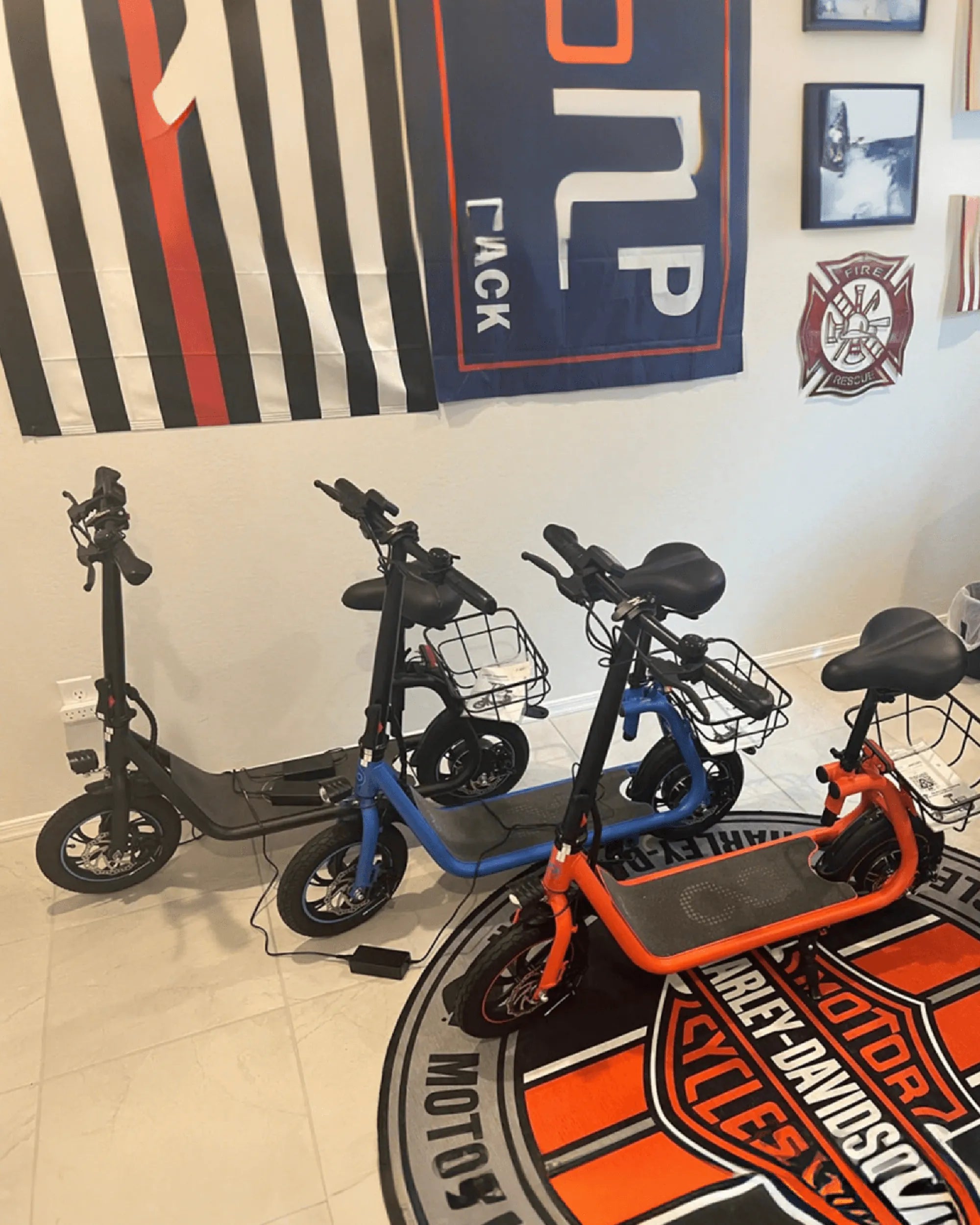
Understanding your e-bike's power settings is the key to unlocking its full potential. E bike levels, or Pedal Assist System (PAS) settings, determine how much help you get from the motor and directly control your ride experience, battery range, and fitness output. This guide will demystify every level, from Eco to Turbo, and provide a data-driven strategy for using them effectively on any terrain. You'll learn how assist technology works, how to maximize your battery, and how to tailor your e-bike's power to your personal riding goals.
How E-Bike Pedal Assist Systems (PAS) Work
At its core, a Pedal Assist System is an electronic partnership between you and the motor. It's not a traditional gear; it's a power amplifier. When you pedal, a sensor detects your input and signals a controller, which then delivers a predetermined amount of electrical assistance from the battery to the motor. The selected e bike level dictates the proportion of that assistance.
There are two primary types of sensors that enable this system: cadence sensors and torque sensors. A cadence sensor is a simpler mechanism that detects whether the pedals are moving and how fast. It then provides a consistent level of motor power based on the selected PAS setting, regardless of how hard you're pushing. This can feel like an on/off boost.
A torque sensor, found in more advanced systems like those in many Gyroor e-bikes, measures the actual force you apply to the pedals. It provides motor power that is proportional and responsive to your effort. This creates a more intuitive, bicycle-like feel where the motor amplifies your natural pedaling force, making the different e bike levels feel seamless and natural.
The controller acts as the brain, interpreting sensor data and managing power flow. The higher the e bike level you select, the more aggressive the controller's response, delivering a greater percentage of the motor's available power to assist your ride.
Decoding the Levels: From Eco to Turbo
Most e-bikes offer between 3 and 9 distinct pedal assist levels. While the naming can vary by manufacturer, the progression from minimal to maximum assistance follows a standard pattern. Understanding each level's purpose is crucial for efficient riding.
Level 1 (Eco or Low): This is the most energy-efficient setting. The motor provides minimal assistance, typically 30-50% of its total power. It's designed for maximizing range, providing just enough help to flatten slight inclines and reduce wind resistance, while ensuring the rider is still doing the majority of the work. It's ideal for long, flat bike paths or riders seeking a significant workout.
Level 2-3 (Normal, Tour, or Mid): These are the most commonly used e bike levels for daily commuting and recreational riding. Assistance ranges from approximately 60% to 120% of your pedaling effort. This setting offers a balanced blend of good power for maintaining comfortable speeds (15-20 mph) with reasonable battery consumption. It helps you tackle moderate hills and keep pace in urban traffic without feeling like you're barely trying.
Level 4-5 (Sport, High, or Turbo): This is high-power mode. The motor delivers 150% to over 300% assistance, depending on the system. It's for conquering steep hills, accelerating quickly from stops, battling strong headwinds, or simply enjoying a thrilling, high-speed ride with minimal leg fatigue. Using these top e bike levels dramatically increases power consumption and reduces overall range.
Some advanced displays show a percentage or a bar graph representing motor power output. The key takeaway is that each step up in e bike levels represents a significant increase in the motor's contribution, changing the fundamental character of the ride from a fitness-focused journey to a powerful, effortless cruise.
Assist Levels vs. Throttle: Understanding the Modes of Power
It's critical to distinguish between pedal assist and a throttle, as they represent two fundamentally different methods of engaging the motor, often with legal implications. Pedal assist, governed by e bike levels, requires you to pedal to receive motor help. The motor only engages when you are turning the cranks.
A throttle, usually a twist-grip or thumb lever on the handlebar, provides on-demand power independent of pedaling. You can use it to start from a stop without pedaling or to add a boost mid-hill. Many e-bikes, including several Gyroor models, feature both a throttle and a multi-level PAS system, offering maximum versatility.
This distinction is central to e-bike classification laws in North America and Europe. In the U.S., Class 1 e-bikes are limited to pedal-assist only (with no throttle) and assist up to 20 mph. Class 2 e-bikes include a throttle and are also capped at 20 mph. Class 3 e-bikes are pedal-assist only but can assist up to 28 mph. Understanding which class your bike falls into, and how your e bike levels function within that class, is essential for legal and safe riding.
From a strategic standpoint, using the throttle sparingly can help with tricky starts or short, steep sections, while relying on the appropriate pedal assist level provides a more efficient and controlled riding experience for the majority of your journey.
Choosing the Right Level: Strategy for Range, Terrain, and Fitness
Selecting the optimal e bike level is a dynamic process that should change with your route, goals, and remaining battery. A strategic approach can double your potential range and tailor your workout intensity.
For maximizing battery range, Level 1 (Eco) is your primary tool. On flat terrain, using Eco can extend your range by 50-100% compared to constant use of higher levels. The strategy is to use only enough assist to maintain a comfortable cadence, letting your legs do most of the work. Reserve higher e bike levels for hills or acceleration phases, then drop back down.
When dealing with varied terrain, anticipate changes. Shift to a higher level (Sport or Turbo) *before* you hit a steep hill to maintain momentum. On the descent or subsequent flat, downshift to Eco or Normal to recover and recharge the battery through regenerative braking if your bike offers it. This proactive level management is more efficient than reacting once you've already slowed down.
If your goal is fitness, use the lower e bike levels as an amplifier, not a replacement. Set the assist to Normal or even Eco to ensure your heart rate stays elevated. The motor helps you maintain a higher average speed and tackle longer routes, increasing your total calorie burn compared to a conventional bike where you might tire out sooner. You control the workout intensity by adjusting the level.
| Riding Scenario | Recommended E-Bike Level | Motor Assist Intensity | Primary Goal | Estimated Range Impact* |
|---|---|---|---|---|
| Long-Distance Touring (Flat) | Eco (Level 1) | Low (30-50%) | Maximum Range | 100% (Baseline) |
| Urban Commute with Stops | Normal (Level 2-3) | Medium (80-120%) | Balance of Speed & Efficiency | 65-75% of Max |
| Hilly Terrain or Headwind | Sport/Turbo (Level 4-5) | High (150%+) | Power & Hill Climbing | 40-50% of Max |
| Focused Exercise Ride | Eco/Normal (Level 1-3) | Low to Medium | Controlled Cardio & Endurance | 70-90% of Max |
*Range impact is relative to a baseline of using only Eco mode on flat ground. Actual results depend on battery capacity, rider weight, and terrain.
Advanced Considerations: Torque Sensing vs. Cadence Sensing
The type of sensor your e-bike uses profoundly affects the feel and responsiveness of each e bike level. This is a key differentiator between entry-level and premium riding experiences.
Cadence-Sensing Systems: These provide assistance based purely on pedal rotation. When you start pedaling, there's a slight delay before the motor engages, and then it delivers a fixed amount of power for the selected level. The sensation can be jerky or "binary"—like an on/off switch. Changing between e bike levels feels like shifting between distinct power plateaus. It's functional but less refined.
Torque-Sensing Systems: As used in advanced Gyroor e-bike models, these measure the newton-meters of force you apply. The motor assistance is instantly proportional. Push gently on the pedals, get a gentle boost. Push hard, get a powerful surge. This makes the e bike levels feel like a smooth, continuous spectrum of support. The bike feels more like a natural extension of your body, offering superior control on technical terrain and a more efficient power delivery that can actually extend range by matching output precisely to need.
The choice impacts efficiency and control. A torque sensor encourages a more active riding style and rewards proper pedaling technique. It also allows for finer control at low speeds and on steep, technical climbs where a cadence sensor might provide too much or too little power unpredictably. When evaluating e bike levels, the quality of the sensor determines how usable and enjoyable each level truly is.
The Impact of Assist Levels on Speed and Legal Classifications
A common misconception is that higher e bike levels make the bicycle go faster. In reality, for most street-legal e-bikes, the levels control how quickly you *reach* the governed top speed, not the speed limit itself.
E-bikes in North America and the EU are electronically limited to a maximum assisted speed. For Class 1 and 2, this is typically 20 mph (32 km/h). For Class 3, it's 28 mph (45 km/h). When you select a higher e bike level, the motor applies more power to help you accelerate up to that limit and to maintain it against resistance like hills or wind. In Eco mode, you may only reach 15 mph on the flat, as the motor provides less help. In Turbo, you'll hit the 20 or 28 mph limit rapidly and stay there with ease.
This speed governing is a critical safety and legal feature. It's what distinguishes an e-bike from an electric motorcycle. The different e bike levels exist within this speed ceiling. Understanding this helps manage expectations: Turbo mode isn't for going 35 mph; it's for reaching 28 mph effortlessly and staying there on an incline.
Riders should always know their local laws regarding which e-bike classes are allowed on specific trails (e.g., many natural surface trails prohibit Class 2 and 3 bikes) and ensure their e bike levels are used appropriately for the environment, respecting shared-use paths and pedestrian safety.
Optimizing Battery Health and Performance Across Levels
Your usage of e bike levels directly impacts the long-term health of your battery, a significant investment. Modern lithium-ion batteries, like the UL-certified packs in Gyroor products, are robust but benefit from informed care.
Consistently riding at the highest levels (Turbo) not only shortens your per-charge range but also subjects the battery to higher continuous discharge rates and heat generation. While designed to handle this, frequent high-stress use can accelerate capacity degradation over hundreds of cycles. Mixing in lower e bike levels promotes more moderate discharge, which is gentler on the battery chemistry.
For battery longevity, follow the 80/20 rule for storage: avoid leaving the battery fully charged (100%) or fully depleted (0%) for extended periods. Store it around 50-80% charge. After a ride where you used high power levels extensively, allow the battery to cool to room temperature before charging.
Furthermore, a well-maintained battery performs more consistently across all e bike levels. You'll get more predictable power delivery in Turbo and more reliable range in Eco. Adhering to the manufacturer's charging guidelines and avoiding extreme temperatures ensures that the performance difference between Level 1 and Level 5 remains distinct and powerful for the life of the battery, which is typically rated for 500+ full charge cycles.
FAQ: Common Questions About E-Bike Assist Levels
Do higher assist levels mean the bike goes faster?
Not beyond its legal limit. Higher e bike levels provide more motor power to help you reach the bike's maximum assisted speed (usually 20 or 28 mph) more quickly and maintain it against hills or wind. The top speed itself is electronically capped.
Can I switch levels while riding?
Yes, and you should. It is perfectly safe and encouraged to change e bike levels on the fly. Use the up/down buttons on your handlebar display to adapt to changing terrain, conserve battery, or adjust your workout intensity without stopping.
What level is best for getting exercise?
Lower levels are best for exercise. Using Eco (Level 1) or Normal (Level 2-3) ensures your cardiovascular system and muscles are engaged significantly. The assist helps you ride farther and faster than you could on a regular bike, leading to greater total calorie burn and endurance building.
Does using the throttle affect my assist level?
Typically, no. They are separate systems. You can be in any pedal assist level and engage the throttle for an extra boost. The throttle usually provides maximum motor power regardless of the current PAS setting. However, on some bikes, the throttle's power output may be limited if a very low assist level is selected.
Will I damage the motor by using Turbo all the time?
No, the motor is designed for sustained use at high power. However, constant use of Turbo will drastically reduce your per-charge range and may generate more heat. For the motor's and battery's long-term health, it's best practice to use the level appropriate for the terrain rather than defaulting to the maximum setting on flat ground.
Mastering Your Ride with Intelligent Assist Technology
E bike levels are your interface for customizing every journey, transforming a simple commute into an efficient glide or a challenging hill into an achievable adventure. By strategically moving between Eco, Normal, and Sport modes, you become an efficient rider who can extend range, manage fitness goals, and conquer diverse landscapes with confidence. The technology, especially when paired with a responsive torque sensor, creates a symbiotic relationship between human effort and electric power.
Brands that prioritize quality engineering, like Gyroor, ensure this relationship is reliable and safe. With features like UL-certified battery systems tested over 500+ cycles, IPX5 water-resistant designs for all-weather riding, and efficient motor controllers, the performance across each e bike level is predictable and durable. This engineering excellence, backed by a 1-year comprehensive warranty, allows you to experiment with and trust in every setting from gentle assist to full power.
The true mastery of e bike levels comes from experience. Start your next ride in Eco mode and feel the subtle boost. Crank it up to Turbo on a hill and feel the surge. Notice how your battery indicator responds. This hands-on learning is the best way to understand how to make your e-bike an extension of your own capabilities. Whether your priority is adventure, fitness, or simple daily transportation, intelligent use of pedal assist is the key to a superior ride.
Ready to experience intuitive pedal assist and find your perfect level of adventure? Explore the full range of feature-packed, reliably engineered e-bikes designed for every rider. Browse the full Gyroor collection at gyroorboard.com to find your match.
Mobility Scooter Top Speed: A Complete Guide to Limits, Safety & Performance
Can I Ride My E-Bike on the Sidewalk? The Complete Legal & Safety Guide