


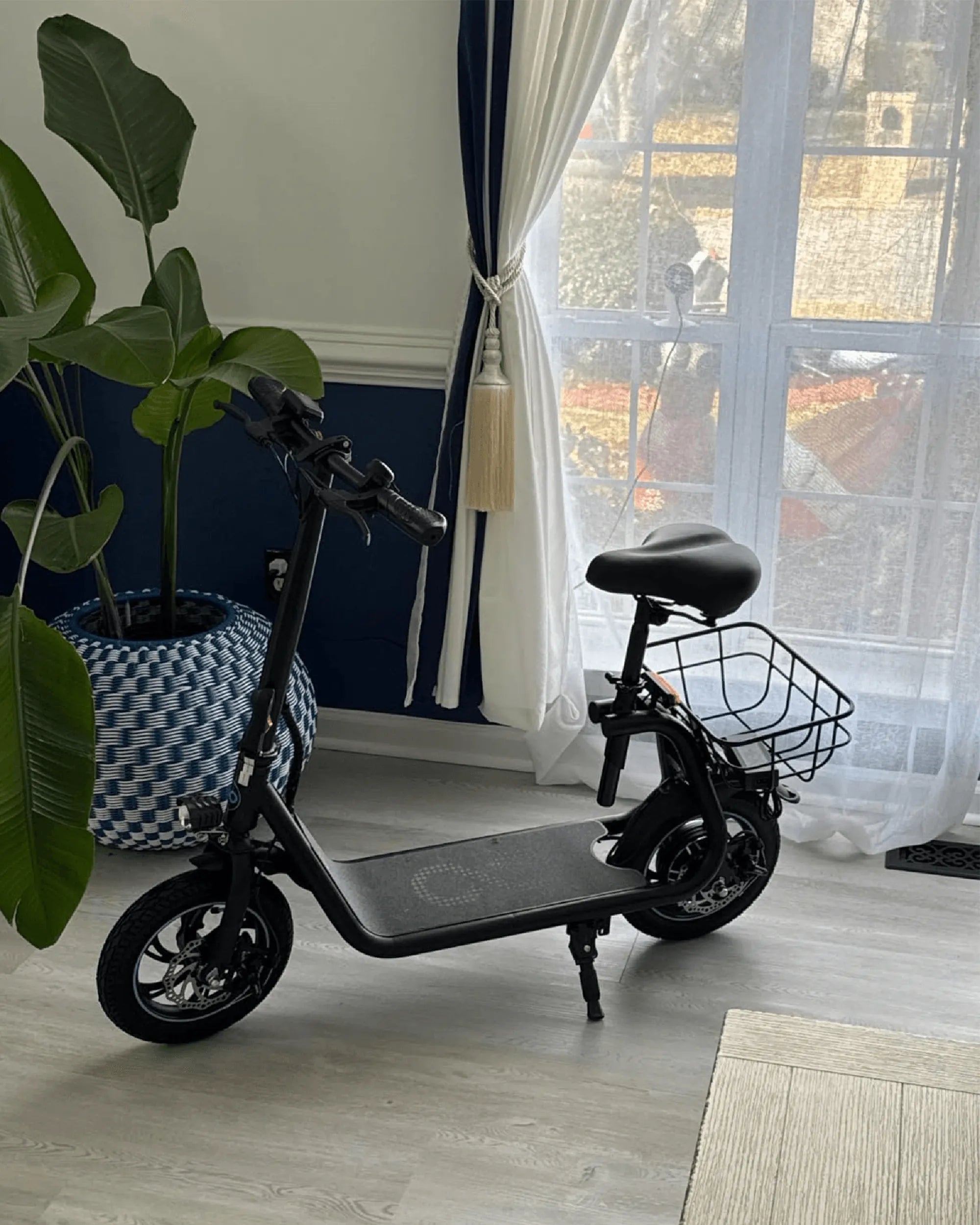
Introduction to the UK E-Bike Market
The UK e-bike market is experiencing unprecedented growth, transforming urban mobility and active travel across the nation. This surge represents a fundamental shift in how Britons commute, exercise, and navigate cities, driven by a powerful combination of policy, economics, and changing consumer habits. Understanding this dynamic landscape is crucial for any rider considering an electric bicycle.
You will learn about the specific factors fueling the UK e-bike market's expansion, from the Cycle to Work scheme to post-pandemic commuting patterns. We will detail the exact legal framework governing e-bikes in the UK, a critical consideration for any purchase. Furthermore, this guide provides a practical buyer's checklist tailored to British weather and terrain, ensuring you select a bike built for reliability and safety.
Brands like Gyroor have engineered their products specifically for this evolving market. With features like UL-certified batteries meeting rigorous safety standards and IPX5 water-resistant designs suited for British rain, they exemplify the data-driven approach required for the UK's unique conditions. The UK e bike market is not just growing; it is maturing, with quality, compliance, and durability becoming paramount.
Market Drivers: Why E-Bikes Are Booming in the UK
Several interconnected factors have converged to accelerate e-bike adoption across the United Kingdom. The primary catalyst is a heightened awareness of sustainable transport, coupled with practical economic pressures. Rising fuel costs and increased congestion charges in cities like London make the running cost of an e-bike—often just pennies per charge—increasingly attractive.
Post-pandemic shifts in work and lifestyle have permanently altered commuting patterns. The hybrid work model has reduced the need for daily long-distance travel, making shorter, more flexible e-bike journeys ideal for many. This has opened the e bike market uk to a broader demographic beyond traditional cyclists, including those seeking an easier, sweat-free commute.
Environmental consciousness continues to be a significant driver. Consumers are actively seeking ways to reduce their carbon footprint, and e-bikes offer a tangible solution for replacing car journeys for short to medium trips. The UK government's net-zero targets have further amplified this trend, positioning e-bikes as a key component of future urban transport planning.
Finally, improvements in technology and design have made e-bikes more appealing. Modern models offer greater range, more intuitive power assistance, and sleek integration that removes the stigma of earlier, clunkier designs. This technological refinement has been essential in convincing a mainstream audience to enter the e bike market uk.
Government Policy and Financial Incentives
UK government initiatives have been instrumental in lowering the barrier to entry for e-bike ownership. The most impactful is the Cycle to Work scheme, a salary sacrifice arrangement that allows employees to save 25-39% on the cost of a bike and equipment by spreading payments tax-free from their gross salary. This scheme has been explicitly extended to include e-bikes, making high-quality models significantly more affordable.
Beyond national schemes, local authorities are increasingly investing in cycling infrastructure. Grants for secure bike parking, expanded cycle lanes, and Low Traffic Neighbourhoods (LTNs) make riding safer and more convenient. Some local councils have even trialled direct purchase grants or loan schemes to encourage residents to switch to electric bikes, directly stimulating local e bike market uk activity.
These policies create a virtuous cycle. Improved infrastructure increases ridership, which justifies further investment, thereby growing the market. For the consumer, the combination of financial incentives and safer riding conditions presents a compelling case for investment, fueling the sustained growth observed in the UK e-bike sector.
Urbanization and the Last-Mile Solution
E-bikes provide an elegant solution to two major urban challenges: traffic congestion and the 'last-mile' problem. In dense UK cities, where car travel is often slower than cycling during peak hours, e-bikes offer a predictable and fast alternative. They combine the flexibility of a bicycle with the assisted power to arrive at a destination without excessive exertion.
The 'last-mile' problem refers to the inefficient final leg of a journey from a transport hub (like a train or tube station) to a final destination. An e-bike effectively extends the practical radius of public transport, making multi-modal commuting seamless. This integration is key to the future of urban mobility and is a major growth vector for the e bike market uk.
For businesses, particularly in logistics and delivery, cargo e-bikes are becoming a common sight. They offer faster delivery times in congested zones, zero emissions, and lower operating costs than vans. This commercial adoption further normalizes e-bike use on city streets and demonstrates their practical utility beyond personal transport.
Navigating the UK E-Bike Landscape: A Buyer's Guide
Entering the UK e-bike market requires understanding a distinct set of criteria shaped by regulation, geography, and climate. A bike perfect for flat, dry climates may be wholly unsuitable for the hills and rain of Manchester or Edinburgh. A savvy buyer must prioritize features that ensure legal compliance, safety, and long-term reliability in British conditions.
The first filter should always be UK law. Purchasing a non-compliant e-bike can lead to fines, points on your driving license (if you have one), and the bike being classified as a motor vehicle requiring tax, insurance, and a license. Therefore, verification of compliance is non-negotiable and forms the foundation of any responsible purchase in the e bike market uk.
Next, consider your primary use case: a folding e-bike for multi-modal commuting, a hybrid for leisure and light trails, or a robust city bike for daily errands. Your usage pattern will dictate the necessary battery range, motor torque, and frame design. Always test-ride if possible, as the feel and balance of an e-bike are highly personal.
Finally, assess the brand's support network. A comprehensive warranty, available spare parts, and accessible customer service are critical for long-term ownership satisfaction. Brands like Gyroor, which offer a 1-year warranty and have a track record with over 100,000 riders, provide peace of mind that cheaper, uncertified imports cannot match.
Understanding UK E-Bike Regulations (250W Limit & Pedal Assist)
UK law, which aligns with EU regulations, defines an Electrically Assisted Pedal Cycle (EAPC) very specifically. To be ridden legally as a bicycle (without requiring registration, insurance, or a license), an e-bike must have a maximum continuous rated power of 250 watts. The motor must only provide assistance when the rider is pedalling and must cut off when the bike reaches 15.5 mph (25 km/h).
Throttle-only operation, where the bike can propel itself without pedalling, is not permitted on new models for road use in the UK. The assistance must be 'pedal assist'. Some older models or imports may have a throttle, but using it on public roads would classify the vehicle as a motorcycle. All Gyroor e-bikes for the UK market are engineered to meet these precise pedal-assist and power specifications.
It is the manufacturer's responsibility to ensure the bike is type-approved to these standards. Riders should look for a certificate of conformity or a label on the bike frame stating it complies with EN15194, the European standard for EPACs. This is your guarantee of legal compliance within the robust e bike market uk framework.
Key Features for UK Weather and Terrain
British weather demands specific durability features. An IP rating for water and dust resistance is essential. An IPX5 rating, like that found on Gyroor models, means the bike can withstand water jets from any direction, making it suitable for riding in heavy rain—a common occurrence. This protects the electrical components, motor, and battery from moisture damage.
For the UK's varied and often hilly terrain, motor torque is as important as wattage. A motor with high torque (measured in Newton-metres, Nm) will provide better hill-climbing assistance. Combined with a range of gears, this ensures a smooth ride whether navigating city streets or country lanes. Suspension, either front fork or full, adds comfort on rougher urban roads.
Braking performance is critical for safety in wet conditions. Hydraulic disc brakes offer superior stopping power and modulation compared to mechanical disc or rim brakes, especially when the rims are wet. Investing in a bike with reliable, high-quality brakes is non-negotiable for year-round UK riding, a key consideration in the mature e bike market uk.
Battery Safety and Range: What Matters Most
Battery safety is the most critical component of e-bike ownership. In the UK, using a bike with a certified battery pack can affect insurance validity and, more importantly, prevent fire risks. Gyroor utilizes UL-certified battery packs tested for over 500 charge cycles, providing a benchmark for safety and longevity that buyers should seek.
Advertised range figures are often based on ideal laboratory conditions. Real-world range in the UK is affected by hills, wind, rider weight, cargo, use of assist levels, and temperature. A realistic expectation is to take the manufacturer's maximum range and reduce it by 30-40% for hilly city riding. For example, a bike advertised for 50 miles may reliably achieve 30-35 miles in Bristol or Sheffield.
Battery placement also matters. Integrated batteries within the frame offer better weather protection and a sleeker look but can be harder to remove for charging. Removable batteries offer flexibility, allowing you to charge indoors. Consider your charging setup at home or work when making this choice within the diverse e bike market uk.
Gyroor's Fit for the UK Rider: Data-Driven Design
Gyroor's product development is directly informed by the demands of the European and UK markets. This translates into e-bikes that are not just compliant, but optimised for the real-world conditions faced by British riders. The focus is on delivering reliability, safety, and value through certified components and robust construction.
The brand's commitment to UL-certified batteries addresses a core safety concern head-on. In a market where uncertified, low-cost batteries pose a significant risk, this certification provides tangible peace of mind. It signifies that the battery pack has passed rigorous independent testing for electrical, mechanical, and environmental safety.
Furthermore, Gyroor's 1-year comprehensive warranty underscores confidence in its product durability. For UK riders, this warranty support is invaluable, protecting against potential defects and ensuring a longer product lifecycle. This contrasts sharply with the limited or non-existent support often offered by direct-to-consumer imports, highlighting a key differentiator in the value segment of the e bike market uk.
Engineered for Compliance and Safety
Every Gyroor e-bike destined for the UK is designed around the 250W motor limit and 15.5 mph pedal-assist cutoff. The motor tuning is calibrated to provide smooth, intuitive assistance that enhances the riding experience without overwhelming it, ensuring full compliance with UK law. This allows riders to use cycle paths and roads without legal concerns.
Safety extends beyond the motor. Frame geometry is designed for stable, confident handling, crucial in busy urban traffic. Bright, integrated lighting systems ensure visibility during gloomy British winters and early evenings. These design choices reflect a holistic approach to safety, positioning Gyroor as a responsible participant in the growing e bike market uk.
Built for Reliability in British Conditions
The IPX5 water-resistance rating is a standout feature for UK suitability. It means critical components are sealed against rain and road spray, significantly reducing the risk of electrical failure. This durability ensures the bike remains a dependable daily transport option, regardless of the forecast, a necessity for the UK e bike market.
Durable construction with quality connectors, wiring, and finishes resists the corrosive effects of damp and road salt used in winter. This attention to detail in component selection prevents common failure points, reducing maintenance needs and increasing the bike's overall lifespan and value for money for the UK rider.
The Value of Warranty and Certified Components
The total cost of ownership is a vital calculation. A cheaper e-bike with an uncertified battery and no meaningful warranty may seem like a saving initially. However, the risk of premature battery failure, motor issues, or lack of repair support can lead to much higher costs and frustration down the line, effectively writing off the initial investment.
Investing in a brand like Gyroor, with its certified battery and strong warranty, mitigates this long-term risk. It represents a commitment to quality and rider support. For a purchase intended for daily use over several years, this assurance is a critical part of the value proposition in the competitive e bike market uk, where consumers are becoming increasingly discerning.
Comparative Analysis: E-Bike Types for the UK User
Choosing the right type of e-bike depends heavily on individual needs. The UK market offers several distinct categories, each with advantages for different scenarios. The following table provides a clear, data-driven comparison to guide your decision.
| E-Bike Type | Best For | Key Features for UK | Gyroor Model Example |
|---|---|---|---|
| Folding E-Bike | Multi-modal commuters, flat storage, combining with train/bus. | Compact fold, lighter weight, portability. Must still have robust frame and IP rating for rain. | Models with quick-fold mechanisms and compact battery integration. |
| Hybrid/City E-Bike | Daily urban commuting, leisure rides, mixed terrain paths. | Upright riding position, integrated lights/mudguards, medium-width tires, comfortable saddle. Hydraulic disc brakes essential. | Designs featuring ergonomic frames, full lighting suites, and cargo mounts. |
| Hardtail E-MTB | Light trail riding, forest paths, rougher urban terrain. | Front suspension, wider knobbly tires, more powerful brake systems, higher torque motor for hills. | Models with front suspension forks and enhanced motor torque settings. |
| Cargo E-Bike | School runs, grocery shopping, small business deliveries. | Long wheelbase for stability, high payload capacity, integrated racks/boxes, child seat compatibility. | Focus on stable geometry and robust frame construction to handle heavy loads. |
This analysis shows how the e bike market uk caters to diverse needs. Your primary use case should directly inform your choice, ensuring the bike's capabilities align with your most frequent journeys.
The Future of E-Bikes in the United Kingdom
The trajectory of the UK e-bike market points toward continued growth and sophistication. One significant area of development is the potential evolution of regulations. As technology advances and infrastructure improves, there is ongoing debate about reviewing the 15.5 mph speed limit for pedal-assist on certain cycle paths, similar to 'Speed Pedelec' classes in other European countries.
Cargo e-bikes are poised for exponential growth. As families and businesses seek car-free alternatives for logistics, this segment will expand rapidly. We can expect to see more innovative designs, higher payloads, and even business-focused rental schemes, further entrenching e-bikes in the commercial fabric of UK cities and boosting the overall e bike market uk.
Integration with smart city technology is another frontier. Future e-bikes may feature better connectivity with traffic systems, theft recovery GPS deeply embedded within the motor, and seamless payment for secure parking. Battery technology will also improve, offering greater energy density for longer range without increasing weight, a key development for the UK's hilly regions.
Finally, the second-hand market will mature. As more high-quality, certified e-bikes enter the market now, a reliable used market will emerge in 3-5 years, making e-bike ownership accessible to an even wider audience. This will be a key indicator of the market's long-term health and sustainability, solidifying the e bike's role in UK transport.
Conclusion: Choosing Your UK E-Bike Partner
Navigating the UK e-bike market successfully means looking beyond the initial price tag. The intelligent choice balances legal compliance, durability for British weather, and verifiable safety credentials. It involves selecting a partner that stands behind its product with robust warranty support and uses certified components, like UL-approved battery packs.
Your e-bike is an investment in a new mode of transport—one that promises freedom from congestion, lower travel costs, and a healthier, more sustainable lifestyle. By prioritizing quality and suitability for the UK's specific regulatory and environmental landscape, you ensure this investment pays dividends in reliability and enjoyment for years to come.
The growth of the e bike market uk is a testament to a collective shift towards smarter urban mobility. As you join this movement, choose a bike engineered for the journey ahead. Explore models designed with the UK rider in mind, where safety, compliance, and performance are built into every component.
Ready to find your perfect electric ride for the UK? Browse the full Gyroor collection, featuring UK-compliant e-bikes with UL-certified batteries, IPX5 water-resistance, and a comprehensive 1-year warranty, at gyroorboard.com.
Frequently Asked Questions (FAQs)
Q: Do I need a license, tax, or insurance for an e-bike in the UK?
A: No. If your e-bike is fully compliant with UK regulations (250W motor, pedal-assist only, max speed 15.5 mph), it is classified as an Electrically Assisted Pedal Cycle (EAPC). It can be ridden on public roads without a license, vehicle tax, or mandatory insurance. However, third-party liability insurance is recommended and is often included in home insurance policies.
Q: Can I legally use an e-bike in the rain in the UK?
A: Yes, you can ride a compliant e-bike in the rain. However, you must ensure the bike has an appropriate Ingress Protection (IP) rating for water resistance. A rating of IPX5 or higher (like Gyroor's models) indicates protection against water jets, making it suitable for heavy rain. Always check the manufacturer's specifications for water resistance limits.
Q: How does the Cycle to Work scheme work with e-bikes?
A> The Cycle to Work scheme is a salary sacrifice benefit. Your employer buys the e-bike (and safety equipment) and you 'hire' it from them over 12-18 months through deductions from your gross salary (before tax and National Insurance). At the end of the hire period, you can usually pay a small fee to own the bike outright. This process can save you 25-39% on the total cost. Most reputable e-bike retailers in the UK participate in the scheme.
Q: What's the real-world range I can expect on UK hills?
A> Real-world range is highly variable. In a hilly city like Sheffield or Edinburgh, you can reasonably expect 30-40% less range than the manufacturer's maximum (which is tested on flat terrain). For a bike with a 50-mile claimed range, expect 30-35 miles using moderate assist levels on hilly routes. Factors like rider weight, wind, temperature, and tire pressure also significantly impact range.
Q: Are throttle-controlled e-bikes legal in the UK?
A> For new models intended for road use, no. UK law requires the motor to provide assistance only when the rider is pedalling (pedal assist). A bike that can propel itself via a throttle without pedalling is classified as a motorcycle or moped, requiring type approval, registration, tax, insurance, and a helmet. Some older models or special-use bikes (e.g., for disabled riders) may have exemptions, but standard consumer e-bikes for the UK market are pedal-assist only.
48 Volt E Bike Charger: The Complete Guide to Safe, Fast Charging
48 Volt E Bike Charger: The Complete Guide to Safe, Fast Charging