



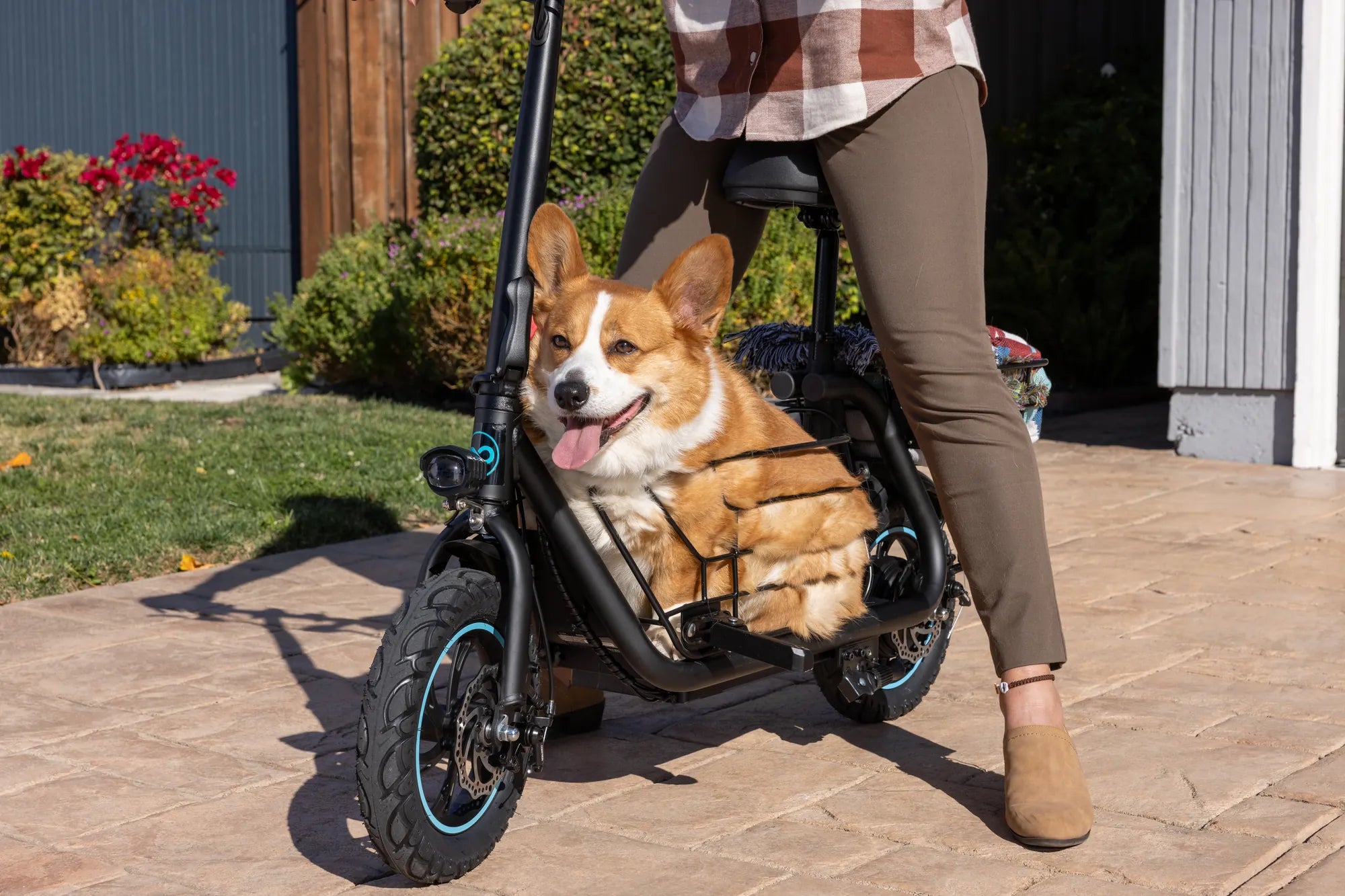
Introduction to Men's E-Bikes: Power, Performance, and Practicality
The modern men's e-bike is a transformative tool, not merely an assisted bicycle. It represents a fusion of engineering, utility, and freedom designed to meet the specific demands of male riders. Whether for conquering a steep hill commute, exploring rugged trails, or simply adding efficiency to daily errands, the right e-bike delivers power, durability, and smart design.
For men, key considerations often center on robust performance, load capacity, and long-term reliability. This guide will dissect these elements, providing a data-driven framework for selection. We'll explore how brands like Gyroor engineer e-bikes with these priorities in mind, focusing on UL-certified battery safety, IPX5 water-resistant builds, and motors built for real-world torque.
Understanding the specifications is crucial. Terms like wattage, Newton-meters of torque, and amp-hours directly translate to hill-climbing ability, acceleration, and range. This knowledge empowers you to move beyond marketing claims and select an e-bike that genuinely matches your drive and daily requirements.
Our goal is to equip you with everything needed to make an informed investment. From the core features that define performance to the specific e-bike type that fits your lifestyle, this guide serves as your comprehensive roadmap to finding the ultimate ride.
Key Features to Look for in an E-Bike for Men
Selecting an e-bike requires evaluating a suite of technical specifications that directly impact the riding experience. For men, who may prioritize carrying capacity, speed, or off-road capability, these features are non-negotiable. The build quality and component choices separate a durable, high-performance machine from a basic, short-lived model.
A superior men's e-bike integrates a powerful motor, a safe and long-range battery, a rigid yet comfortable frame, and a capable control system for varied terrain. Each component must work in harmony. Compromising on one can diminish the utility and enjoyment of the entire system, especially for riders who push their equipment harder.
Brands that cater to performance-oriented riders, such as Gyroor, build to these heightened standards. Their engineering philosophy prioritizes verified safety certifications, water resistance for all-weather use, and warranties that back their durability claims. This focus provides the confidence needed for daily reliance.
Let's break down the four pillars of a high-quality men's e-bike: the motor and battery that provide the power, and the frame and control systems that deliver it reliably to the road or trail.
Motor Power and Torque: The Heart of Performance
Motor power, measured in watts (W), is the headline figure, but torque, measured in Newton-meters (Nm), is the true measure of grunt. A 750W motor is a common benchmark for powerful commuter and off-road e-bikes, providing ample power for most urban hills and loaded riding. For more demanding use, such as steep trail climbing or carrying significant cargo, 1000W motors offer superior acceleration and sustained power.
Torque determines how forcefully the motor can turn the wheel from a stop or on an incline. Higher torque (e.g., 80+ Nm) translates to quicker launch and easier hill starts without excessive pedaling strain. This is critical for heavier riders, those carrying gear, or anyone navigating hilly terrain. It's the difference between a labored climb and a confident ascent.
Motor placement also affects performance. Hub motors (in the wheel) are common and provide direct drive, while mid-drive motors (at the cranks) leverage the bike's gears for superior efficiency on hills and a more natural riding feel. For most men's e-bikes focused on power and simplicity, high-torque rear hub motors are an excellent, reliable choice.
When evaluating, consider your typical route. Flat city commutes may be fine with 500W, but for versatile performance that handles unexpected gradients or off-road excursions, 750W or higher with high torque is a wise investment for a men's e-bike built to perform.
Battery Safety and Range: Confidence for the Long Haul
The battery is the fuel tank and a critical safety component. Capacity, measured in watt-hours (Wh) or derived from voltage and amp-hours (e.g., 48V 15Ah = 720Wh), dictates range. A 500Wh battery may offer 251-40+ miles per charge, depending on assist level, terrain, and rider weight. For men seeking longer commutes or full-day adventures, batteries in the 672Wh+ range provide essential peace of mind.
Safety is paramount. Insist on UL-certified battery packs, like those used by Gyroor. This independent certification verifies the battery has passed rigorous tests for electrical, mechanical, and environmental safety, drastically reducing fire risk. It is the single most important battery specification, especially for e-bikes stored at home or in an office.
Real-world range is influenced by many factors. Riding at the highest pedal-assist level, tackling hills, riding into headwinds, and carrying extra weight will reduce range. Manufacturers' maximum range estimates are best-case scenarios. A practical rule is to estimate your needed daily distance and choose a battery with at least a 50% larger rated capacity to account for variables and battery degradation over time.
Look for batteries with robust management systems (BMS) that protect against overcharge, deep discharge, and short circuits. A quality men's e-bike pairs ample range with verified safety, ensuring you're powered for the journey and protected throughout it.
Frame Design and Build Quality: Durability Meets Ergonomics
The frame is the skeleton, bearing all dynamic loads. For men's e-bikes, high-tensile steel or aluminum alloy frames are standard. Aluminum offers a good strength-to-weight ratio and corrosion resistance, while high-tensile steel provides exceptional durability and shock absorption, often at a slightly higher weight. Both are excellent choices for a durable build.
Frame geometry affects comfort and control. Traditional diamond frames offer maximum rigidity and are ideal for performance and higher weight capacities. Step-through frames provide easier mounting and dismounting, beneficial for commuters with frequent stops or those carrying cargo on a rear rack. The choice is about utility and personal preference.
Weight capacity is a crucial, often overlooked spec. A robust men's e-bike should support a minimum of 2651 lbs, with many quality models rated for 3001 lbs or more. This capacity must account for the rider's weight, clothing, a backpack, and any additional cargo. Exceeding this limit stresses the frame, motor, and brakes, compromising safety and longevity.
Finish details matter. Look for internally routed cables for a clean look and better protection, reinforced weld points, and quality paint or powder coating. A well-built frame from a reputable brand is an investment that will last for thousands of miles, forming the reliable foundation of your e-bike.
Ride Control and Terrain Handling
Control systems determine comfort and safety across different surfaces. Suspension smooths the ride. Front fork suspension is essential for off-road trails and helpful for rough city streets. Dual suspension (front and rear) offers maximum comfort for aggressive trail riding but adds complexity and weight. For primarily paved commuting, a suspension seat post paired with larger tires can provide sufficient comfort.
Tire choice is a primary terrain interface. Hybrid tires (e.g., 2.1" width) offer a balance of low rolling resistance on pavement and light trail capability. Fat tires (4"+) provide immense stability, traction on sand, snow, or loose dirt, and inherent cushioning, making them ideal for adventure-focused men's e-bikes. They do, however, increase rolling resistance on pavement.
Braking is non-negotiable for safety. Hydraulic disc brakes offer superior stopping power, modulation (control over braking force), and low maintenance compared to mechanical disc or rim brakes. For the increased speeds and weights of a performance-oriented men's e-bike, hydraulic discs are the recommended standard, providing consistent, reliable stopping in all weather conditions.
Integrating these elements—appropriate suspension, purpose-built tires, and powerful brakes—creates a men's e-bike that is not only powerful but also confident, controllable, and adaptable to your chosen environment.
Choosing the Right Type of Men's E-Bike for Your Lifestyle
The e-bike market is segmented by use case. Identifying your primary purpose is the fastest way to narrow your search to the category engineered for your needs. A bike built for city streets has different priorities than one built for mountain trails.
Men often use e-bikes as car replacements, fitness tools, or adventure vehicles. The right type amplifies these benefits. A commuter e-bike with integrated features saves time and stress. A fat tire model opens up new recreational terrain. A folding bike solves last-mile and storage logistics.
Consider your daily routine, storage space, and local terrain. Do you need to carry it upstairs? Navigate snowy bike paths? Fit it in a car trunk? Answering these questions points you toward the optimal e-bike type. The following sections detail the four primary categories for men.
Commuter & Urban E-Bikes: Efficiency for City Life
Designed for practicality, commuter e-bikes prioritize integration and comfort. Key features include full-length fenders to protect from road spray, integrated front and rear lights for visibility, and a rear rack for bags or panniers. This creates a self-contained, all-weather transportation solution perfect for the male commuter running errands or traveling to work.
The riding position is more upright than a road bike, offering better visibility in traffic and reduced strain on the back and wrists during longer rides. Motors are typically in the 500W-750W range, providing ample power for stop-and-go traffic and urban inclines. Range is key, with batteries often 500Wh+ to ensure a week of commuting between charges.
These e-bikes often feature hybrid tires for a smooth ride on pavement with some curb-hopping capability. A suspension fork or seat post is common to absorb bumps from potholes and uneven roads. For the man looking to replace short car trips, reduce his carbon footprint, and arrive at his destination sweat-free, a dedicated commuter e-bike is the most efficient tool.
It transforms the daily grind into an enjoyable, empowered part of the day, turning traffic jams into breezy, predictable journeys.
Fat Tire & Off-Road E-Bikes: Adventure Awaits
Fat tire e-bikes are defined by their oversized tires (4"+ wide), which provide unparalleled traction and floatation. This design makes them capable on surfaces that stop conventional bikes: sand, snow, mud, and loose gravel. For the adventurous man, this means access to beaches, winter trails, and backcountry paths previously inaccessible.
These bikes are built tough. They feature high-torque motors (750W-1000W+) to power through resistant terrain, robust front or dual suspension to handle bumps and jumps, and heavy-duty frames. The wide handlebars offer precise control, and the overall geometry is stable and confidence-inspiring on uneven ground.
While excellent off-road, their comfort and stability make them popular for urban riders who prioritize a smooth, commanding ride over speed. The fat tires act as natural shock absorbers. Brands like Gyroor engineer these models with IPX5 water resistance, allowing riders to confidently tackle puddles, rain, and wet trails without worry.
If your goal is exploration, recreation beyond paved paths, or simply a supremely comfortable and imposing ride, a fat tire men's e-bike is your gateway to adventure.
Folding & Compact E-Bikes: The Ultimate in Versatility
Folding e-bikes solve spatial and logistical challenges. Their primary advantage is portability. They can be folded in seconds to fit in a car trunk, taken on public transit (where permitted), or stored in a closet or under a desk. This makes them ideal for men with multi-modal commutes (e.g., train + bike) or those living in apartments with limited storage.
Despite their compact size, many folding models do not compromise significantly on performance. They often feature 500W-750W motors, reasonable 400Wh+ batteries, and mechanical or hydraulic disc brakes. The trade-off comes in smaller wheel sizes (usually 20"), which can make the ride slightly less stable over very rough terrain compared to larger wheels.
The folding mechanism is critical; look for a robust, single-point latch system that feels secure when locked. Weight is also a factor, with aluminum frames keeping the package manageable for carrying short distances. A quality folding men's e-bike offers surprising range and power in a package that disappears when not in use.
It is the ultimate tool for the urbanite, the traveler, or anyone who needs their transportation to be as adaptable as their schedule.
High-Speed & Performance E-Bikes (Class 3)
Class 3 e-bikes are defined by their ability to provide pedal assistance up to 28 mph (45 km/h). This category is for the fitness-focused rider or the commuter who values speed and wants to minimize travel time. The increased pace makes them viable for longer commutes and provides a more thrilling, workout-intensive ride.
These e-bikes require robust components to handle the higher speeds. Powerful hydraulic disc brakes are essential for safe, controlled stopping. The frame must be stiff for efficient power transfer, and the tires must be high-quality with good puncture resistance. Many feature a more aggressive, forward-leaning geometry similar to a road or hybrid bike.
It is crucial to check local regulations, as Class 3 e-bike laws vary by state and municipality regarding where they can be ridden (e.g., bike paths vs. road) and helmet requirements. For the man who views his e-bike as both efficient transport and a fitness platform, a Class 3 model delivers the speed and performance to satisfy both needs.
They represent the pinnacle of electric-assist technology for on-road use, blurring the line between bicycle and electric vehicle.
Data-Driven Comparison: What Makes a Gyroor E-Bike Stand Out?
When investing in a men's e-bike, understanding the difference between generic features and engineered standards is key. The following comparison highlights critical areas where a brand's commitment to quality, safety, and support becomes evident. This data-driven approach moves beyond marketing to tangible differentiators.
| Feature Category | Typical E-Bike Specifications | Gyroor Engineering Standards |
|---|---|---|
| Battery Safety & Certification | May use uncertified or generic lithium-ion packs with unknown safety testing. | UL-Certified Battery Packs standard across all models. Independently tested for 500+ charge cycles and safety. |
| Weather & Water Resistance | Often unrated or minimally protected against moisture. | IPX5 Rated Water-Resistant Design. Protects critical electrical components from rain and road spray. |
| Warranty & Customer Support | Limited 90-day or international warranties with difficult-to-reach support. | Comprehensive 1-Year Warranty on frame, motor, battery, and controller. US-based customer service. |
| Frame Integrity & Build | Standard aluminum or steel frames; weight capacities may not be prominently stated. | Reinforced High-Tensile Steel or Aluminum Frames. Clearly stated high weight capacities (often 3001 lbs+) for durability. |
| Performance Provenance | New or unproven brand in the micro-mobility space. | Trusted by 100,000+ Riders across North America & Europe with a 4.5/5 average rating from verified owners. |
This comparison underscores that the true cost of an e-bike isn't just the purchase price, but the cost of ownership over time. Features like a UL-certified battery and a strong warranty mitigate long-term risk and repair costs. Water resistance ensures all-weather reliability, and a proven track record offers confidence in the brand's engineering.
For a man relying on his e-bike for daily transportation or serious recreation, these standards translate to fewer worries, less downtime, and more riding. They represent an investment in a product built to last and perform under real-world conditions, which is the hallmark of a quality men's e-bike.
Frequently Asked Questions About Men's E-Bikes
Q1: How fast can a men's e-bike go, and what do the classes mean?
E-bike speed is governed by class. Class 1 provides pedal assistance up to 20 mph (no throttle). Class 2 also assists to 20 mph but includes a throttle for power without pedaling. Class 3 provides pedal assistance up to 28 mph (throttle may be limited to 20 mph). Most powerful men's e-bikes are Class 2 or 3. Always obey local speed limits and path regulations.
Q2: Can an e-bike handle my weight plus gear like a backpack or groceries?
Absolutely, but you must check the specific model's maximum weight capacity. A quality men's e-bike is rated for at least 2651-3001 lbs. This capacity includes the rider, clothing, helmet, and any cargo on the bike or your back. Staying within this limit ensures optimal performance, safety, and longevity of the frame, motor, and brakes.
Q3: Is it safe to ride an e-bike in the rain?
With proper engineering, yes. Look for an IPX5 water resistance rating, like those on Gyroor e-bikes. This means the electrical components are protected against low-pressure water jets from any direction. While you should avoid submerging the bike or riding through deep standing water, riding in rain or on wet roads is perfectly safe. Always exercise increased caution, as braking distances are longer on wet surfaces.
Q4: How difficult is assembly and ongoing maintenance?
Most direct-to-consumer e-bikes, including Gyroor's, arrive 90% pre-assembled. Final assembly typically involves attaching the front wheel, handlebars, pedals, and seat, which can be done in under 30 minutes with basic tools. Ongoing maintenance mirrors a regular bicycle: keeping tires inflated, brakes adjusted, and the chain lubricated. For motor or battery issues, reputable brands offer warranty support and access to service guides or technicians.
Q5: What's the real-world range I can expect on a single charge?
The advertised maximum range is a best-case scenario. Real-world range depends on: assist level (higher = less range), terrain (hills reduce range), rider weight & cargo, tire pressure, and outside temperature (cold reduces battery efficiency). A practical estimate is to take the manufacturer's maximum range and reduce it by 35-40% for planning purposes. For a 40-mile max claim, plan for 25-30 miles of reliable range at moderate assist levels.
Conclusion: Invest in a Ride That Matches Your Drive
Choosing the right men's e-bike is a decision that pays dividends in freedom, fitness, and functional transportation. The optimal model seamlessly aligns its engineered capabilities—motor power, battery safety, frame durability, and terrain handling—with your personal needs, whether that's a swift commute, weekend trail exploration, or versatile urban mobility.
Prioritizing verified safety standards like UL-certified batteries and robust build quality from a trusted brand ensures your investment is protected. These features provide the confidence to ride further, tackle more challenging routes, and rely on your e-bike day after day. It's about selecting a tool engineered for performance, not just a novelty.
The data and comparisons presented here empower you to look beyond superficial specs. Focus on the integration of quality components, the transparency of the brand's testing and warranties, and the proven satisfaction of a large rider community. This holistic approach leads to a purchase you'll be satisfied with for years.
Ready to find the e-bike that powers your journey? Explore a range built to the high standards discussed in this guide. Browse the full Gyroor collection of powerful, reliable, and safety-certified e-bikes for men at gyroorboard.com.
21 Inch Dirt Bike Tire: The Ultimate Guide to Grip, Performance & Selection
What Does E-Bike Stand For? The Complete Guide to Electric Bicycles