



Navigating the Personal E-Mobility Revolution
The daily grind of traffic jams, soaring fuel costs, and parking fees is pushing commuters toward smarter solutions. Personal electric vehicles (PEVs) have emerged as a legitimate, efficient, and enjoyable answer to urban congestion and environmental concerns. For anyone considering ditching their car for shorter trips or enhancing their commute, a fundamental question arises: E-Bikes vs Electric Scooters: Which Eco-Friendly Ride is Right for You? This isn't a question of which is universally better, but which is better for you.
Your choice hinges on a matrix of personal factors: daily distance, terrain, storage options, budget, and local laws. This guide cuts through the marketing hype to deliver a factual, data-driven comparison. We'll dissect performance specs, real-world usability, total cost of ownership, and critical safety standards. By the end, you'll have a clear framework to decide whether an e-bike's pedal-assisted range or an electric scooter's compact agility best fits your lifestyle.
Defining the Contenders: E-Bikes and Electric Scooters Explained
Understanding the core mechanics of each vehicle is the first step. While both are battery-powered, their design philosophy, operation, and intended use differ significantly. This fundamental distinction shapes every aspect of the riding experience, from how you start moving to where you can legally go.
What is an E-Bike? Pedal-Assist and Throttle Power
An electric bicycle, or e-bike, is fundamentally a bicycle augmented with an electric motor and battery. The key differentiator is that it retains functional pedals. E-bikes primarily operate in two modes: pedal-assist (PAS) and throttle-on-demand. In PAS mode, the motor provides power only when you pedal, amplifying your effort. Throttle mode, often a button or twist-grip, propels the bike without pedaling.
Motors are typically hub-mounted (in the wheel) or mid-drive (at the cranks). Mid-drive systems offer better weight distribution and more efficient hill climbing by leveraging the bike's gears. Legally, in most North American and European jurisdictions, e-bikes are classified similarly to traditional bicycles, provided their motor power is limited (often 750W in the US, 250W in the EU) and top assisted speed is capped (commonly 20mph or 28mph for different classes). This allows access to bike lanes and paths without requiring a license, registration, or insurance in most areas.
What is an Electric Scooter? Compact and Stand-Up Mobility
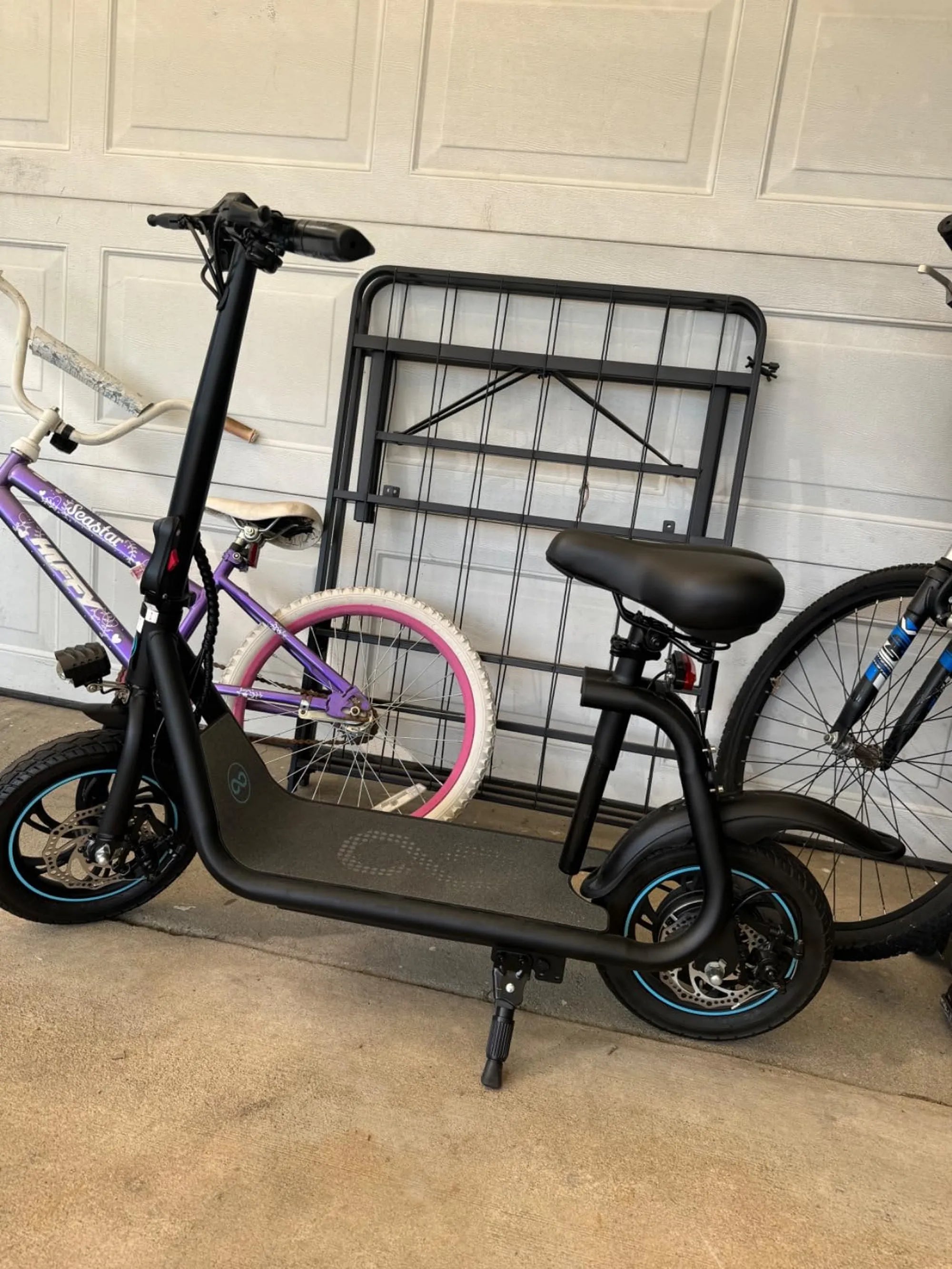
An electric scooter is a motorized version of a traditional kick scooter. It features a narrow deck for standing, handlebars for steering, and a compact, often foldable frame. Propulsion is exclusively via a hand-operated throttle, and braking is handled by levers on the handlebars. There is no pedal-assist function; it's a purely motor-driven vehicle.
Their design prioritizes ultra-portability and simplicity. Most quality models fold in seconds, making them easy to carry onto public transit or store under a desk. Regulations for e-scooters are more varied and evolving rapidly. They are often prohibited on sidewalks, restricted to bike lanes or roads, and may have specific age requirements. Some cities have geofencing to limit speeds in crowded areas. Unlike e-bikes, they are rarely treated as bicycles under the law, occupying a newer, specific vehicle category.
Head-to-Head Comparison: The Core Decision Matrix
To move beyond generalizations, we must compare specific attributes side-by-side. The following table and detailed breakdown provide a concrete foundation for your decision.
| Factor | Electric Scooter | E-Bike |
|---|---|---|
| Primary Riding Position | Standing | Seated |
| Typical Weight | 30-50 lbs | 45-70 lbs |
| Portability (Folding) | Excellent, core feature | Moderate (some models) |
| Real-World Range | 15-30 miles | 25-60+ miles |
| Hill Climbing Ability | Moderate (varies by motor) | Excellent (especially mid-drive) |
| Cargo Capacity | Minimal (backpack) | High (racks, panniers, baskets) |
| Entry-Level Cost | Lower ($500 - $900) | Higher ($1,200 - $2,000) |
| Terrain Handling | Paved surfaces only | Pavement, gravel, light trails |
| Legal Clarity | Evolving, often restrictive | Well-established, bike-like |
Commute & Practicality: Daily Use and Convenience
For daily use, practicality is king. Electric scooters excel in "last-mile" scenarios and ultra-dense urban environments. Their lightweight, foldable design makes them ideal for combining with bus or train trips—you can fold and carry them aboard effortlessly. Storage at home or in a small apartment is also simpler. However, the standing position and smaller wheels can become fatiguing on commutes over 3-4 miles, and carrying anything requires a backpack.
E-bikes are full-trip solutions. They replace a car or traditional bike for journeys of 5 to 20 miles comfortably. The seated position is far less taxing, and the ability to add racks, panniers, or a basket transforms them into practical errand-runners. You can easily carry groceries, a work bag, or a child seat. The trade-off is portability; even folding e-bikes are heavy and cumbersome to lift regularly. Secure parking at your destination is a more critical consideration.
Performance & Terrain: Speed, Range, and Handling
Top speeds for both are often legally similar (20-28 mph), but the experience of achieving that speed differs. E-scooters accelerate quickly but can feel unstable at higher speeds, especially on uneven pavement. Their small wheels (8-10 inches) transmit every crack and bump directly to the rider, requiring constant vigilance. Range is heavily impacted by rider weight, hills, and speed; the advertised maximum is often a best-case scenario.
E-bikes, with their larger wheels (26-29 inches) and stable geometry, offer a smoother, more confident ride. They maintain speed more efficiently, especially with pedal assist. The major performance differentiator is hill climbing. A mid-drive e-bike, using its gears, can conquer steep inclines with relative ease, while many scooters will slow dramatically and drain their battery quickly. For anything beyond smooth pavement—like packed gravel, park paths, or cobblestones—an e-bike (particularly a fat-tire model) is the unequivocal choice.
Cost Analysis: Upfront Investment and Ongoing Expenses
The initial purchase price is a clear differentiator. You can find a reliable, feature-rich electric scooter from a reputable brand for under $1,000. A quality entry-level e-bike typically starts around $1,500, with mainstream commuter models ranging from $2,000 to $3,500. This makes scooters a lower-barrier entry into electric mobility.
Long-term costs tell a more nuanced story. E-bikes have more mechanical components: a drivetrain (chain, cassette, derailleur) and more complex braking systems that require periodic maintenance, similar to a regular bike. However, their larger battery packs, if treated well, may degrade more slowly relative to total miles traveled. E-scooters have fewer moving parts but are more susceptible to wear from vibration and impacts on small tires and solid suspensions. Battery replacement is a significant future cost for both. Insurance, while not always mandatory, is strongly recommended for both, with e-bike policies becoming increasingly common.
Safety, Regulations, and Riding Experience
Safety is multifaceted. E-bikes offer greater stability due to their wheelbase, seated position, and lower center of gravity. They are also more visible to motorists. E-scooters demand more core engagement and balance, and a pothole that a bike wheel rolls over can be a crash hazard on a scooter. For both, a proper helmet is non-negotiable; for higher-speed e-bikes, a cycling helmet or even a moped-style helmet is advisable.
Regulations are a critical deciding factor. E-bike laws are generally stable, allowing access to bike infrastructure. E-scooter laws are a patchwork. Before buying a scooter, you must check local ordinances: Are they legal on roads? Mandated to use bike lanes? Banned from sidewalks? What are the age and helmet laws? This legal uncertainty is a significant disadvantage for scooter owners in many regions.
The Gyroor Advantage: Engineering Confidence into Your Choice
Whether you lean towards an e-bike or an electric scooter, prioritizing build quality and safety features from the outset ensures a better experience and protects your investment. Leading brands like Gyroor, trusted by over 100,000 riders across North America and Europe, build their vehicles to address these core concerns directly, setting a benchmark for what to look for.
UL-Certified Battery Safety: The Foundation of Trust
The battery is the heart and most critical safety component of any PEV. A UL 2271 certification (for the battery pack) or UL 2849 (for the entire e-bike system) is not just a marketing bullet point; it's evidence of rigorous third-party testing for electrical, mechanical, and fire safety. Gyroor utilizes UL-certified battery packs tested for 500+ charge cycles, ensuring not just longevity but a dramatically reduced risk of thermal events. When comparing models, this certification should be a non-negotiable filter, far more important than a slightly higher claimed watt-hour rating.
Built to Last: Water Resistance and Warranty Peace of Mind
Commuting means encountering weather. An IPX5 water-resistant rating, like that found on Gyroor scooters, means the unit can withstand sustained low-pressure water jets from any direction. This protects the electronics from rain, puddles, and street spray. For e-bikes, look for similar ingress protection ratings on the motor, battery, and display.
A comprehensive warranty is your safety net. A reputable 1-year warranty covering the frame, motor, and battery, backed by accessible customer support (like Gyroor's US-based team), indicates a manufacturer that stands behind its product. It transforms a purchase from a gamble into a confident investment in sustainable transport.
Making Your Decision: Which Rider Profile Fits You?
Synthesizing the data into personas can help you self-identify. Your primary use case is the ultimate guide.
The Urban Commuter: Last-Mile Specialist vs. Full-Trip Solution
Choose an electric scooter if: Your one-way commute is under 4 miles, your route is mostly flat, you need to fold and carry it on public transit daily, and you have secure storage at both ends. It's the ultimate tool for dense, multimodal urban travel.
Choose an e-bike if: Your commute is 5-15 miles, involves hills, you want to arrive without sweating (using pedal assist), or you need to carry a laptop, change of clothes, or groceries. It's a car replacement for the urban or suburban dweller.
The Weekend Adventurer: Exploring Beyond the Pavement
For this rider, the e-bike is the only serious contender. A fat-tire or mountain e-bike unlocks rail-trails, forest paths, beach rides, and park exploration with power-assisted ease. The range allows for half-day or full-day excursions. An electric scooter simply lacks the stability, comfort, and off-road capability for anything beyond smooth city sightseeing.
The Eco-Conscious & Cost-Sensitive Consumer
Both options are eco-friendly compared to a car, but the calculus involves scale. An e-bike has a higher potential to replace a car for more trips, leading to greater long-term carbon and financial savings, offsetting its higher upfront cost. An electric scooter offers a lower initial outlay to immediately reduce your reliance on rideshares or short car trips. Consider the total cost per mile over the vehicle's lifespan, including maintenance and eventual battery replacement.
Frequently Asked Questions (FAQ)
Q: Can I ride an e-bike or scooter in the rain?
A: It depends on the IP rating. A model with an IPX5 rating (like many from Gyroor) is built to handle rain and wet roads. However, avoid deep puddles and submerging any part of the vehicle. Always dry it off after a wet ride and exercise caution, as braking distances increase on wet surfaces.
Q: Which requires more maintenance?
A: E-bikes generally require more frequent maintenance due to their drivetrain (chain, gears) and more complex brake systems, similar to a bicycle. Electric scooters need less frequent but still important maintenance: checking tire pressure (or solid tire condition), bolt tightness, and brake pad wear.
Q: Do I need a license, registration, or insurance?
A>For e-bikes classified as Class 1, 2, or 3 in the US, typically no license or registration is required. Insurance is optional but recommended. For e-scooters, laws vary wildly by city and state; most don't require a license, but some have age restrictions. Always check your local regulations. Personal liability insurance is a very good idea for both.
Q: How long does the battery last before needing replacement?
A>Quality lithium-ion batteries are rated for a certain number of charge cycles (e.g., 500-1000). With typical use, you can expect 3-5 years before noticing significant range degradation. Factors like extreme temperatures, consistent full discharges, and using non-OEM chargers shorten lifespan.
Q: Are test rides available before buying?
A>This varies. Many local bike shops that carry e-bikes offer test rides. For electric scooters, it's less common at retailers, but some brands have demo programs or you may be able to try a shared scooter model to get a feel for the standing ride. Brands with strong return policies (like a 15-30 day window) offer a risk-free way to test at home.
Your Perfect Eco-Friendly Ride Awaits
The journey to choosing between an e-bike and an electric scooter is ultimately about honest self-assessment. Map your most common trip. Weigh the importance of portability against comfort. Calculate the true distance and terrain you'll face. Scrutinize local laws, especially for scooters. Most importantly, set a budget that includes the safety essentials: a UL-certified battery, robust water resistance, and a legitimate warranty from an established brand like Gyroor.
There is no single winner in the debate of E-Bikes vs Electric Scooters: Which Eco-Friendly Ride is Right for You? There is only the vehicle that best aligns with your personal mobility puzzle. Whether it's the scooter's agile simplicity for a short hop from the train station or the e-bike's versatile power for conquering hills and hauling cargo, your choice represents a step toward a cleaner, more efficient, and more enjoyable way to move. The road to sustainable personal transport is open.
Ready to explore specific models built with safety and performance as priorities? Browse the full Gyroor collection, featuring UL-certified electric scooters and e-bikes designed for real-world commuting and adventure, at gyroorboard.com.
Cheapest Place to Buy Electric Scooters: Where to Find the Best Deals
Electric Scooters in Korea: The Future of Urban Mobility