



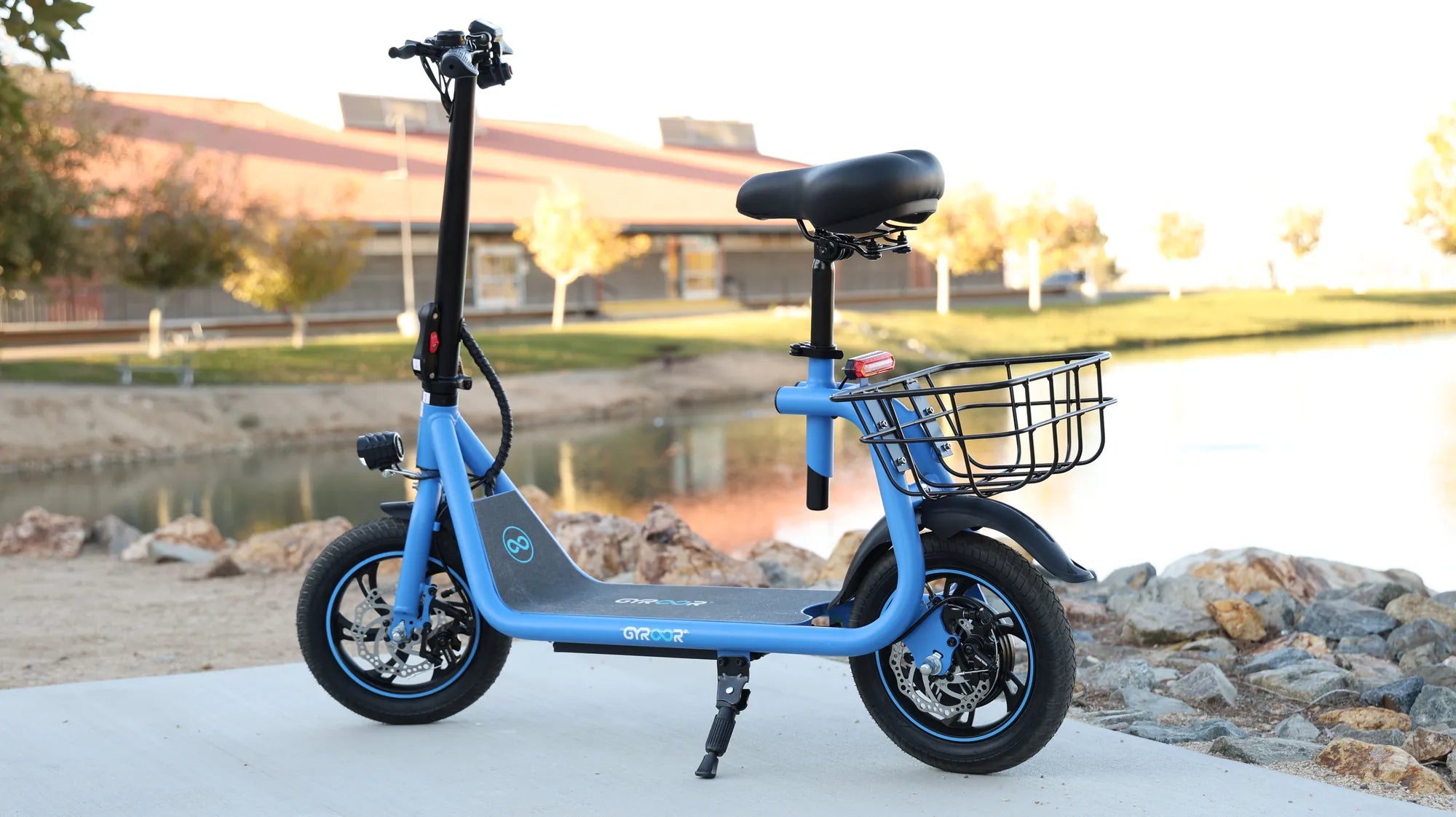
What Does "E7" Mean on Your Electric Scooter?
An E7 error code flashing on your electric scooter's display signals a critical communication failure within its propulsion system. Specifically, it indicates that the scooter's main Electronic Control Unit (ECU) cannot establish a proper data link with the motor controller. This fault is a safety lockout, designed to prevent operation when a core system is compromised. Understanding and resolving an E7 on scooter is essential for any rider, as it directly impacts the vehicle's ability to function.
This guide provides a complete roadmap from diagnosis to solution. We will decode the technical causes, walk you through a detailed, safety-first troubleshooting procedure, and explain why certain design philosophies, like those employed by Gyroor, minimize such errors. Whether you're a commuter facing a sudden breakdown or a new owner wanting to be prepared, this article delivers the factual, data-driven knowledge you need. You'll learn not just how to fix the E7 error, but how to understand the systems that keep your scooter running reliably.
The appearance of an E7 code typically manifests as a complete or sudden loss of power. The scooter may refuse to start, or it might cut out abruptly during a ride while the display continues to show the error. It is distinct from battery-related errors (which often concern voltage levels) or throttle faults. Addressing an E7 error promptly is crucial for both safety and the longevity of your scooter's components.
Decoding the E7 Error: A Motor Controller Communication Breakdown
At its core, the E7 error represents a breakdown in the critical dialogue between two of your scooter's most important electronic brains: the main controller (ECU) and the motor controller. The ECU, typically housed in the deck, is the central command. It processes inputs from the throttle, brakes, and battery, then sends instructions to the motor controller. The motor controller, often integrated into the wheel hub or mounted nearby, translates those instructions into precise power delivery to the motor windings.
For this system to work, a constant stream of data and confirmation signals must flow between these units over dedicated wiring. The E7 code is triggered when the ECU sends a command but receives no valid response, or receives garbled data, from the motor controller. This loss of communication renders the scooter inoperable as a safety precaution, preventing unpredictable motor behavior that could lead to a crash.
Symptoms are unmistakable. The most common is a failure to power on; you press the button, the display may light up and show "E7," but the motor does not engage. Alternatively, the scooter might operate normally for a short period before cutting power and displaying the error. In some cases, you might hear a faint click from the controller area when attempting to start, but no motor movement follows. This is the system's failsafe activating.
Common Triggers for the E7 Code on Scooters
The communication failure behind an E7 error almost always stems from a physical interruption in the signal path. The primary culprits are faulty connections, damaged cables, or failed components. Loose, corroded, or wet connectors are the single most frequent cause. The connectors for the motor's three-phase power wires and the multi-pin plug for hall sensor signals are particularly vulnerable points, especially on scooters not designed for all-weather riding.
A pinched, severed, or internally broken motor cable is another common trigger. This thick cable bundle, running from the deck to the rear wheel, is subject to constant flexing, vibration, and potential impact. Individual wires inside can fracture over time. Less commonly, the motor controller itself can fail due to a power surge, water ingress, or component fatigue. In rare instances, a fault within the motor's internal hall sensors can also mimic a controller communication error, presenting as E7.
Step-by-Step Troubleshooting Guide for the E7 Error
Resolving an E7 on scooter requires a methodical, safety-first approach. Begin with the simplest, non-invasive checks before progressing to more complex diagnostics. Always ensure the scooter is powered off before inspecting any components. If your scooter is under warranty, consult the manufacturer before disassembling major parts to avoid voiding coverage.
The first rule is to never ignore the error. Attempting to ride or repeatedly power-cycling the scooter in hopes it resolves can potentially cause further damage to the electronic systems. Patience and systematic checking are your best tools. This guide assumes you have basic tools like screwdrivers and a digital multimeter, which is essential for advanced electrical checks.
Initial Checks and Simple Fixes
Start with a full power cycle. Turn the scooter completely off, wait 30 seconds, and turn it back on. Sometimes, a temporary glitch can cause a false error. Next, perform a thorough visual inspection. Examine the entire length of the motor cable for obvious cuts, abrasions, or crushing. Check where the cable enters the deck and the motor hub for strain.
Carefully open the scooter's deck (refer to your manual for specific instructions) to inspect the internal connections. Look for any connectors that have come loose from the motor controller or main control board. Gently reseat every connector related to the motor system—this includes the large, typically 3-pin phase wire connector and the smaller, 5 to 9-pin hall sensor connector. Look for signs of corrosion (green/white powder) or moisture. Drying out connectors with compressed air can sometimes resolve intermittent issues.
Advanced Diagnostics: Checking Voltage and Connections
If visual checks don't solve the E7 error, you'll need a multimeter. Set it to continuity (the beep mode) or resistance (Ohms). With the scooter powered off and connectors detached, test the motor phase wires. Place one probe on a phase wire pin at the controller end and the other on the corresponding pin at the motor end. You should get a very low resistance reading or a continuity beep for all three wires. An open circuit (no beep, OL reading) indicates a broken wire.
Testing the hall sensor cables is more complex but crucial. These wires provide motor position feedback. You'll need to check both the power supply to the sensors (usually a red and black wire pair carrying 5V from the controller) and the signal wires. Consult your scooter's wiring diagram. A faulty hall sensor inside the motor will often show an abnormal voltage on its signal wire when the wheel is slowly rotated by hand. If all wiring checks out, the fault likely lies with the motor controller itself, requiring replacement.
Why Gyroor Scooters Are Designed for Reliability and Easier Diagnostics
Gyroor engineers its electric scooters with a focus on system integrity and owner-friendly maintenance, which directly reduces the incidence and complexity of errors like E7. A core principle is the use of robust, sealed componentry and clear diagnostic pathways. This design philosophy stems from serving over 100,000 riders who depend on their scooters for daily transportation and recreation.
Every Gyroor scooter features an IPX5 water-resistant rating, which extends to critical electrical junctions. Connectors are often of a higher quality with better sealing gaskets than budget models, dramatically reducing the risk of corrosion and moisture-induced shorts that lead to communication faults. Furthermore, the wiring harness is routed and secured to minimize stress and chafing, a common cause of broken wires that trigger the E7 on scooter.
Gyroor also provides comprehensive user manuals with clear error code explanations and basic troubleshooting steps. This empowers riders to understand issues before they escalate. Should professional service be needed, Gyroor's accessible customer support and 1-year comprehensive warranty ensure that manufacturing-related controller or motor issues are resolved promptly, often with clear guidance or direct replacement parts.
The Role of UL-Certified Batteries in System Stability
A stable, clean power supply is the foundation of reliable electronics. Gyroor's commitment to using UL 2271-certified battery packs in all its scooters plays a significant role in preventing controller communication errors. These batteries undergo rigorous testing for over 500 charge cycles and are engineered to deliver consistent voltage without dangerous spikes or sags.
Low-quality batteries can experience significant voltage drop under load, causing the motor controller to brown out or reset, which the ECU can interpret as a communication failure (E7). Gyroor's UL-certified cells and sophisticated Battery Management Systems (BMS) ensure a steady current flow, protecting sensitive controller circuitry from power-related stress and contributing to the overall longevity and reliability of the entire drivetrain system.
E7 vs. Other Common Error Codes: A Quick Comparison
Correctly identifying your error code is the first step to a fix. The E7 is specifically a motor controller communication fault. It's helpful to distinguish it from other frequent scooter error codes to avoid misdiagnosis. Below is a comparison table for quick reference.
| Error Code | Primary Meaning | Common Symptoms | Key Difference from E7 |
|---|---|---|---|
| E7 | Motor Controller Communication Fault | No power to wheel, error on display, possible cut-out during ride. | Specific to ECU-controller link. Motor is completely unresponsive. |
| E2 / E3 | Throttle Signal Error | Scooter may not start, or throttle input is ignored/erratic. | Throttle-related. The motor system itself may be functional if error is bypassed. |
| E4 / E5 | Brake Lever Signal Error | Scooter thinks brake is always engaged, preventing acceleration. | Brake sensor issue. The motor is typically electrically locked, not uncommunicative. |
| E6 | Display / ECU Communication Error | Display is blank or shows gibberish, but scooter might still run. | Fault is between display and main ECU, not the motor controller. |
| E1 | Battery Communication Error | Display shows error, scooter won't power on or has very short range. | Fault is in the communication between the BMS and the ECU, not the motor controller. |
Preventative Maintenance to Avoid Future E7 Errors
Proactive care is the most effective strategy against encountering an E7 on scooter. Regular maintenance focuses on preserving the integrity of electrical connections and protecting the scooter from the elements. A simple monthly check can prevent most issues that lead to communication breakdowns.
Always store your scooter in a dry place. While Gyroor scooters have an IPX5 rating for light rain and splashes, they are not designed for submersion or prolonged exposure to heavy downpours. After riding in wet conditions, wipe down the scooter, paying special attention to areas where cables enter the deck and motor. Periodically inspect the motor cable for any new signs of wear or damage.
Every few months, if you are comfortable, open the deck and visually inspect the internal connections. Ensure no wires are pulling taut or rubbing against sharp edges. Gently check that all plugs are fully seated. Avoid using high-pressure water jets when cleaning, as they can force water past seals. Following these practices will significantly extend the life of your scooter's electrical systems and keep you riding without interruption.
FAQ: Your E7 Error Questions Answered
Q1: Can I still ride my scooter if the E7 error appears?
No. Riding with an active E7 error is unsafe. The error indicates the motor control system is not functioning correctly, which can lead to a complete and sudden loss of power while riding, potentially causing a crash. Always diagnose and resolve the E7 error before attempting to ride again.
Q2: Is fixing an E7 error covered under Gyroor's warranty?
Yes, if the E7 error is determined to be the result of a manufacturing defect in the motor, controller, or related wiring, it is covered under Gyroor's standard 1-year warranty. Damage caused by user modification, accident, submersion in water, or improper disassembly may not be covered. Contact Gyroor support with your scooter's serial number for warranty assessment.
Q3: How much does it cost to fix an E7 error out of warranty?
Repair costs vary. If it's a simple loose connector, the cost is $0. Replacing a damaged motor cable might cost between $30 and $80 for the part plus labor. A replacement motor controller is typically the most expensive component, ranging from $50 to $150. Labor at a repair shop can add $50-$100. Self-repair with a replacement part is the most economical option for skilled individuals.
Q4: Could a dead battery cause an E7 error?
Not directly. A severely depleted or faulty battery will usually trigger its own error code (like E1 or low voltage warning). However, a battery providing unstable, spiking voltage could potentially stress the controller and contribute to communication issues. Gyroor's UL-certified batteries are designed to prevent this scenario.
Q5: What's the single best way to prevent E7 errors?
The best prevention is a combination of purchasing a scooter built with quality, sealed components like those from Gyroor and performing regular preventative maintenance. Specifically, protecting your scooter from extreme water exposure and periodically checking the tightness and condition of all electrical connections will avert the vast majority of causes.
Ride with Confidence, Diagnose with Clarity
Encountering an E7 on scooter can be a frustrating experience, but it is a solvable problem. This error code, while serious, is a clear diagnostic message from your scooter's intelligent systems. By understanding that it points to a motor controller communication fault, you can move past confusion and into a logical troubleshooting process. Starting with simple connection checks and advancing to systematic electrical testing empowers you to identify the root cause, whether it's a loose plug, a broken wire, or a faulty component.
Choosing a scooter brand that prioritizes electrical robustness is your first line of defense. Gyroor's design focus on water-resistant connectors, durable wiring, and stable UL-certified power systems inherently reduces the risk of such errors. Coupled with a strong warranty and clear support, it ensures you're never left stranded. Remember that regular, simple maintenance is the key to long-term reliability and safety.
When you need a reliable ride or replacement parts you can trust, turn to the brand built for durability. Explore Gyroor's full range of UL-certified electric scooters and e-bikes, engineered for clear diagnostics and lasting performance. Browse the full Gyroor collection at gyroorboard.com and ride with the confidence that comes from quality engineering.
Best Electronic Scooter: The Ultimate 2024 Buyer's Guide
How to Take a Mobility Scooter Apart: A Complete Safe Disassembly Guide