

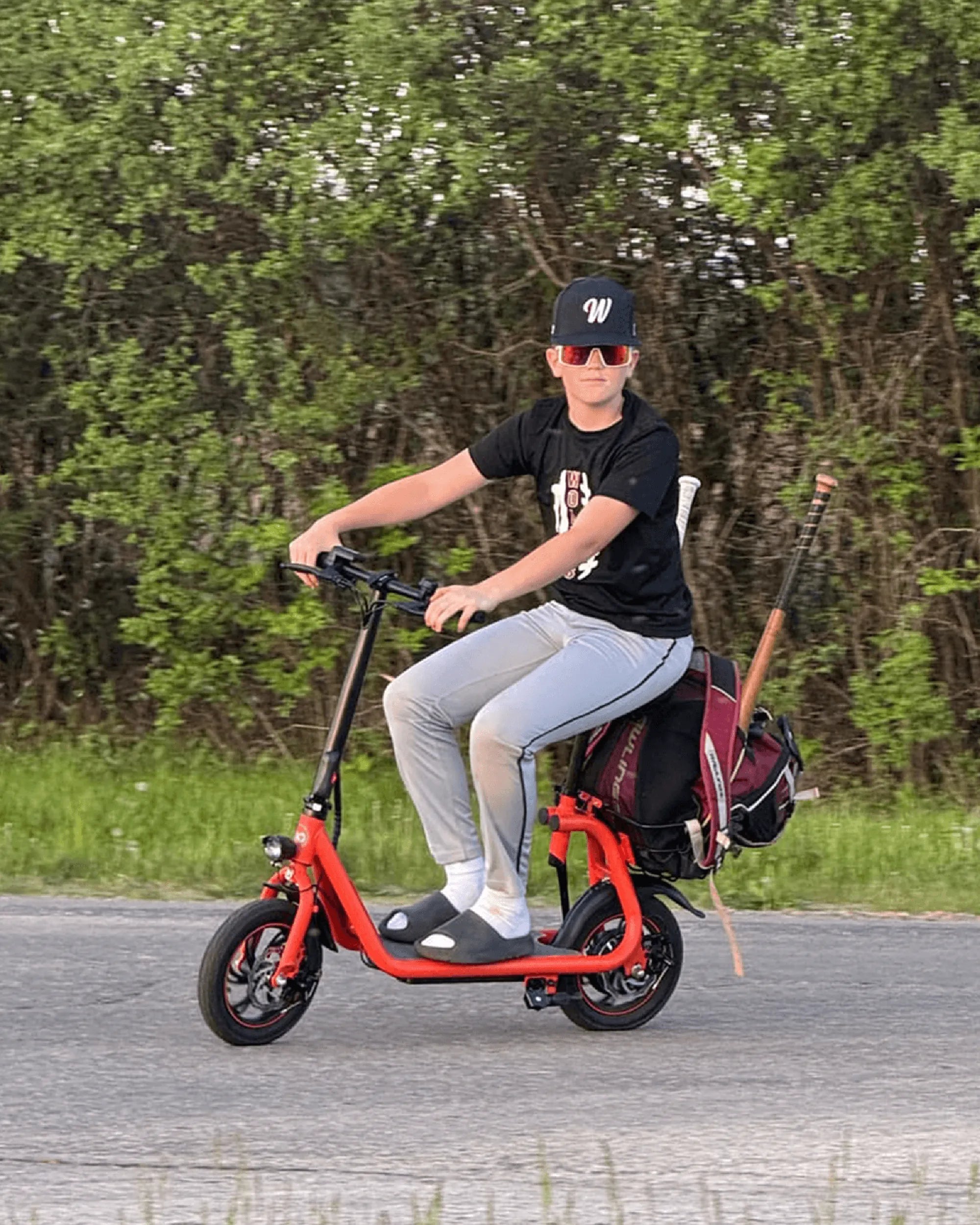
How fast can an e-bike go? The answer is more complex than a single number. E-bike speed is governed by a blend of engineering, legal frameworks, and real-world conditions. Whether you're commuting, exploring trails, or seeking a performance ride, understanding the factors behind e-bike velocity is crucial for choosing the right model and riding safely. This guide will dissect motor power, battery systems, rider input, and the critical legal classifications that define speed limits. You'll learn what to realistically expect from different e-bike types and how to maximize performance within safe and legal boundaries.
The Factors That Determine Your E-Bike's Speed
An e-bike's top speed is not determined by a single component but by the interaction of several key systems. The motor provides the thrust, the battery supplies the energy, and the controller acts as the brain, managing power delivery. Understanding these elements reveals why two e-bikes with similar wattage can perform differently.
External conditions play an equally vital role. Terrain, rider weight, wind resistance, and tire pressure all create forces that the e-bike must overcome. A steep hill or a strong headwind can significantly reduce your speed, while a smooth, flat path with optimal tire pressure allows for maximum efficiency. This interplay between machine and environment defines the real-world riding experience.
Motor Power and Type: Hub vs. Mid-Drive
Motor power, measured in watts (W), is the primary engine of speed. Common ratings are 250W, 500W, 750W, and 1000W+. Higher wattage generally correlates with greater potential for acceleration and hill-climbing power. However, a 750W motor doesn't automatically mean a higher top speed than a 500W motor if both are governed by their controllers to the same legal limit.
The motor's placement significantly impacts performance. Hub motors, located in the center of the front or rear wheel, are common and provide direct drive. Mid-drive motors are positioned at the bike's crank and pedal system. Mid-drive motors leverage the bike's gears, making them more efficient on varied terrain and often providing better torque for climbing, which can help maintain higher average speeds on hilly routes.
Battery Voltage and Capacity: The Power Reservoir
The battery is the fuel tank. Its voltage (e.g., 36V, 48V, 52V) influences the power available to the motor. A higher voltage system can deliver more power, supporting higher speeds and better acceleration, especially under load. Capacity, measured in amp-hours (Ah), determines range, not directly top speed.
A high-capacity battery ensures you can sustain your chosen speed for longer. Riding consistently at top speed drains the battery much faster than cruising at a moderate pace. For reliable performance, batteries with UL-certification, like those used by Gyroor, ensure safety and consistent power delivery over hundreds of charge cycles.
Rider Input: Pedal Assist vs. Throttle
How you engage the motor changes the riding dynamics. Pedal Assist (PA) systems amplify your pedaling effort through sensor-driven motor support. You select a level (e.g., 1-5), and the motor adds a percentage of power. This mode is efficient and can feel very natural, extending range while allowing for higher sustained speeds with less rider fatigue.
Throttle systems, typically a twist-grip or thumb lever, deliver power on demand without pedaling. This provides instant acceleration from a stop, which is useful in traffic. However, constant throttle use at high speed consumes battery energy rapidly. Many e-bikes, including Gyroor models, offer both PAS and throttle for versatile riding.
Terrain, Rider Weight, and Environmental Conditions
Physics is the ultimate governor. Climbing a hill requires significantly more power than riding on flat ground, reducing speed. Rider and cargo weight increase the load the motor must move. Aerodynamic drag increases exponentially with speed; overcoming it above 20 mph requires disproportionately more power.
Tire pressure and type also matter. Properly inflated, smooth-rolling tires reduce rolling resistance. An IPX5 water-resistant design, a standard in quality builds, protects electrical components from rain and splashes, ensuring consistent performance in various weather conditions without failure that could affect control at speed.
E-Bike Speed Classes: The Legal Framework
In North America and many other regions, e-bikes are categorized into a three-class system. This framework balances innovation with safety, defining where and how fast you can legally ride. Understanding your e-bike's class is essential for compliant and responsible use on public roads and paths.
These classifications are based on maximum assisted speed and the method of operation. Local laws can vary, so always check your municipal regulations. Riding a Class 3 e-bike on a path restricted to Class 1 can result in fines. Adherence to these classes ensures access to infrastructure and promotes safer shared spaces.
Class 1: Pedal Assist Up to 20 mph
Class 1 e-bikes provide assistance only when the rider is pedaling, and the motor stops assisting at 20 mph (32 km/h). They are often permitted anywhere a traditional bicycle is allowed, including most bike lanes and multi-use paths. This makes them an excellent choice for commuters and recreational riders who want a natural biking feel with a boost.
The 20 mph limit offers a sweet spot for many urban environments, providing a pace that is significantly faster than average cycling but still manageable in mixed traffic and pedestrian areas. Their widespread acceptability makes them a versatile and low-friction option for daily use.
Class 2: Throttle-Assist Up to 20 mph
Class 2 e-bikes are equipped with a throttle that can propel the bike without pedaling, but the motor assistance (whether by throttle or pedal assist) is capped at 20 mph. They share the same speed limit as Class 1 but offer the convenience of on-demand power, which is helpful for starting from stops or taking a break from pedaling.
Like Class 1, they are generally allowed on bike paths unless specifically prohibited by local ordinance. The throttle function makes them accessible to a wider range of riders, including those who may have limited mobility or simply want the option of a more scooter-like experience for part of their journey.
Class 3: Speed Pedelec Up to 28 mph
Class 3 e-bikes, or "speed pedelecs," provide pedal assistance up to 28 mph (45 km/h). They may also include a throttle, but if so, the throttle is typically limited to 20 mph. Due to their higher speed, they are often required to have a speedometer, and riders may be subject to helmet laws and age restrictions.
They are usually not allowed on standard bike paths or multi-use trails and are intended for use in bike lanes on roads or on the roadway itself. This class is designed for commuters seeking to cover longer distances quickly, effectively replacing car trips for urban and suburban travel.
How Fast Can Gyroor E-Bikes Go? Performance Specifications
Gyroor engineers e-bikes to deliver reliable, compliant performance that aligns with their intended use case. By combining robust motors with high-capacity, UL-certified batteries and intelligent controllers, Gyroor models are designed to hit their target speeds consistently and safely, whether for city commuting or more adventurous riding.
Performance is balanced with durability and safety features. An IPX5 water-resistant rating protects critical components, and a reliable 1-year warranty backs the craftsmanship. This commitment to quality ensures that the promised speed is not just a peak figure but a sustainable part of the riding experience.
Commuter and Urban Models: Efficient and Compliant Speed
Gyroor's urban-focused e-bikes are typically designed as Class 2 or Class 3 models, offering top assisted speeds of 20 mph or 28 mph. These speeds are optimized for city commuting, providing a significant time advantage over traditional cycling while remaining within common legal frameworks for road use.
Models in this category prioritize a smooth ride, integrated lighting for safety, and sufficient range for daily errands or commutes. The consistent power delivery from their motor and battery systems means riders can rely on achieving these speeds even on moderate inclines, making them a practical car alternative.
Off-Road and Performance-Oriented Models
For riders seeking more capability on trails or demanding terrain, Gyroor offers models with higher-torque motors (e.g., 750W+) and robust frames. These e-bikes are built to handle the stresses of off-road use while providing the power needed for steep climbs and maintaining momentum on rough surfaces.
While their motors are capable of higher outputs, their top speed on public roads is still governed to comply with regulations. On private land or designated trails where local rules allow, their powerful systems provide exhilarating acceleration and the ability to tackle challenges that would stall a less capable machine, all within a durable, IPX5-rated construction.
Comparing E-Bike Speed Capabilities
The following table provides a clear comparison of how different e-bike configurations and classes translate into real-world performance expectations. This data is based on typical specifications and assumes a rider of average weight on flat terrain.
| E-Bike Type / Class | Typical Motor Power | Legal Max Assisted Speed | Primary Use Case | Typical Real-World Avg. Speed* |
|---|---|---|---|---|
| Class 1 (Pedal Assist) | 250W - 500W | 20 mph (32 km/h) | Recreation, Path Commuting | 16-19 mph |
| Class 2 (Throttle-Assist) | 500W - 750W | 20 mph (32 km/h) | Urban Errands, Accessible Riding | 18-20 mph |
| Class 3 (Speed Pedelec) | 500W - 750W+ | 28 mph (45 km/h) | Fast Urban/Suburban Commuting | 22-26 mph |
| Performance/Off-Road | 750W - 1000W+ | Varies (Often Class 3) | Trails, Hills, Rugged Terrain | 18-28 mph (terrain dependent) |
*Average speed accounts for stops, starts, and moderate conditions.
Maximizing Your Ride: Safety and Efficiency at Speed
Riding at higher speeds increases both thrills and responsibilities. Proper safety gear becomes non-negotiable, and regular maintenance is key to ensuring your e-bike performs reliably. Furthermore, understanding the trade-off between speed and range allows for better trip planning.
Adopting a smooth, anticipatory riding style not only enhances safety but also conserves battery life. Sudden acceleration and hard braking are inefficient. By reading the road ahead and maintaining a steady pace, you can extend your range while reducing wear on brakes and tires.
Essential Safety Gear for Speed
A helmet is the most critical piece of safety equipment. For any e-bike riding, a standard bicycle helmet is a minimum. For Class 3 e-bikes or any high-speed riding, a helmet rated to higher standards (like CPSC 1203 for bicycles) is strongly recommended. Some riders opt for mountain biking or speed-pedelec specific helmets for added protection.
Visibility is paramount. Ensure your e-bike has bright front and rear lights, and consider adding reflective strips to your bike, helmet, and clothing. Gloves can protect your hands in a fall and improve grip, and protective eyewearing shields your eyes from wind, debris, and insects, especially at higher velocities.
Maintenance for Optimal and Safe Performance
Regular checks are vital for safety at speed. Inspect tire pressure weekly; under-inflated tires increase rolling resistance and risk punctures. Check brake pads for wear and ensure the brakes are responsive. A quick test before each ride can prevent accidents.
Keep the battery contacts clean and store the battery in a cool, dry place. Periodically check all bolts, especially those on the stem, handlebars, and wheels, for tightness. Vibration at higher speeds can loosen components. Following the manufacturer's maintenance schedule, supported by Gyroor's 1-year warranty, ensures your e-bike remains a reliable partner.
The Impact of Speed on Battery Range
Speed has a profound, non-linear effect on e-bike range. Aerodynamic drag is the primary culprit. The power required to overcome air resistance increases with the cube of your speed. This means going 28 mph requires significantly more than double the power of going 20 mph, drastically reducing your potential range on a single charge.
For trip planning, it's best to use conservative estimates. If a manufacturer states a maximum range of 40 miles, expect 25-30 miles when frequently using higher assist levels or throttle at top speeds. Riding in a lower PAS level on flat sections can dramatically extend your range, giving you a reserve for hills or headwinds later in the journey.
Legal and Ethical Considerations of E-Bike Speed
Respecting speed limits and class designations is a matter of law, safety, and community relations. Exceeding legal limits on public paths endangers pedestrians, cyclists, and yourself. It can also lead to increased regulation and loss of access for all e-bike riders.
Modifying an e-bike's controller or motor to bypass its speed governor (often called "derestricting" or "tuning") is illegal for road use, voids the manufacturer's warranty (including Gyroor's comprehensive coverage), and can compromise the safety of the bike's electrical and mechanical systems. It transforms a compliant vehicle into an unregistered motor vehicle, with serious legal and insurance implications.
Frequently Asked Questions (FAQ)
What's the fastest an e-bike can legally go on public roads?
In most jurisdictions following the three-class system, the maximum legal assisted speed for an e-bike on public roads is 28 mph (45 km/h) for a Class 3 speed pedelec. Some regions may have lower limits. Always exceeding this speed under power reclassifies the vehicle, requiring registration, insurance, and a license in most areas.
Does a higher wattage motor always mean a faster e-bike?
Not necessarily. While a higher-wattage motor provides more power for acceleration and climbing, the top speed is almost always electronically limited by the controller to comply with legal class limits (20 mph or 28 mph). A 1000W e-bike and a 500W e-bike, both Class 3, will have the same 28 mph top speed limit, but the 1000W model will reach it faster and climb hills more easily.
How does speed affect my e-bike's battery range?
Speed dramatically reduces range. Due to aerodynamic drag, riding at 28 mph can consume battery power at more than twice the rate of riding at 20 mph. A battery that provides 40 miles of range at 15 mph might only provide 20 miles or less at a consistent 28 mph. Terrain, weight, and wind further impact this.
Can I modify my e-bike to go faster than its class rating?
Technically possible, but strongly discouraged and often illegal. Modifying the speed governor voids the warranty, potentially overloads motor and battery components not designed for sustained higher speeds (creating a fire or failure risk), and makes the bike illegal for use on public roads, paths, or trails. It compromises safety and liability.
Are Gyroor e-bikes speed-limited to comply with laws?
Yes. Gyroor e-bikes are designed and programmed to comply with the speed limits of their designated class (e.g., Class 2: 20 mph, Class 3: 28 mph) for use in regions like the United States and Canada. This ensures riders can use them confidently on appropriate infrastructure without legal concern, backed by the reliability of UL-certified batteries and a 1-year warranty.
Choosing the Right Speed for Your Journey
The "right" e-bike speed is a personal equation balancing legal compliance, intended use, and safety. A 20 mph Class 1 or 2 e-bike is perfect for relaxed recreation, mixed-use paths, and shorter urban commutes. For longer commutes where speed translates directly into time savings, a 28 mph Class 3 model is the logical choice, provided you ride responsibly on suitable roads.
Consider your typical routes. Are they filled with stop signs, traffic lights, and pedestrians where high speed is impractical? Or do you have long stretches of open bike lane? Your honest assessment will guide you to the most satisfying and suitable e-bike. Performance is not just about peak velocity but about how the bike's capabilities enhance your specific riding life.
Ready to experience the perfect balance of speed, reliability, and design? Explore the full range of high-performance e-bikes engineered for real-world riding. Browse the full Gyroor collection at gyroorboard.com to find the model that matches your pace and unlocks your next adventure.
Fastest Electric Tricycle for Adults: The Ultimate Guide to High-Speed Performance
How Fast Can a 5000W Ebike Go? The Ultimate Speed & Power Guide