


Introduction: Redefining Urban Mobility with Electric Cargo Scooters
Urban centers are at a crossroads, choked by congestion, pollution, and inefficient last-mile logistics. A transformative solution is emerging not with louder engines, but with a quiet, electric hum: the electric cargo scooter. Far more capable than a standard commuter model, these robust vehicles are engineered to carry significant loads, redefining how goods and people move through dense environments. Electric Cargo Scooters: The Future of Urban Delivery and Personal Transport is not a speculative claim; it's a reality being built today by delivery riders, small business owners, and eco-conscious families. This article provides a comprehensive analysis of this disruptive technology, its applications, and the critical features that define a reliable workhorse, with insights from leading brands like Gyroor, trusted by over 100,000 riders for dependable, UL-certified electric mobility.
The Rise of the Electric Cargo Scooter: More Than Just a Bigger Basket
The standard electric scooter is designed for a single rider and a backpack. The electric cargo scooter is a different machine entirely, built from the ground up for duty. The fundamental difference lies in its structural philosophy. These scooters prioritize payload capacity and durability over minimalist design.
Key design enhancements include reinforced, welded aluminum alloy frames that resist torsional stress from heavy, uneven loads. The deck is significantly extended and often features a low, flat profile or integrated tie-down points. Many models incorporate a dedicated front or rear cargo platform, lockable storage boxes, or large, removable baskets. The suspension system is upgraded to handle the increased weight, and the motor and battery are spec'd to maintain performance under load. This isn't an accessory; it's a dedicated utility vehicle.
The evolution mirrors a clear market need. As e-commerce and instant delivery demand skyrockets, and as urbanites seek alternatives to car ownership, a gap emerged for a vehicle that is more agile than a van, more capable than a bike, and more efficient than a car. The electric cargo scooter fills this niche perfectly, offering a parking-friendly, zero-direct-emission solution for moving substantial weight. The growth of this segment is a direct response to the economic and environmental pressures of modern city life.
Key Applications: Who Benefits from a Cargo E-Scooter?
The versatility of a well-built electric cargo scooter unlocks value across a surprising range of users. Its utility splits broadly into commercial and personal domains, each with compelling use cases that demonstrate tangible returns on investment.
For Urban Delivery & Small Businesses
This is the most immediate and impactful application. For local couriers, food delivery riders (delivering for platforms like Uber Eats or DoorDash), and small business owners, the electric cargo scooter is a game-changer. It turns last-mile delivery from a cost center into an efficient, agile operation. The ability to weave through traffic, park directly at the destination, and operate at a cost of pennies per mile dramatically undercuts traditional gasoline-powered scooter or car delivery. A florist can make multiple deliveries per trip; a local bakery can expand its delivery radius without adding a delivery van. The economics are straightforward: lower upfront cost, minimal operating expense, and no specialized driver's license required in most jurisdictions.
For Active Families & Personal Errands
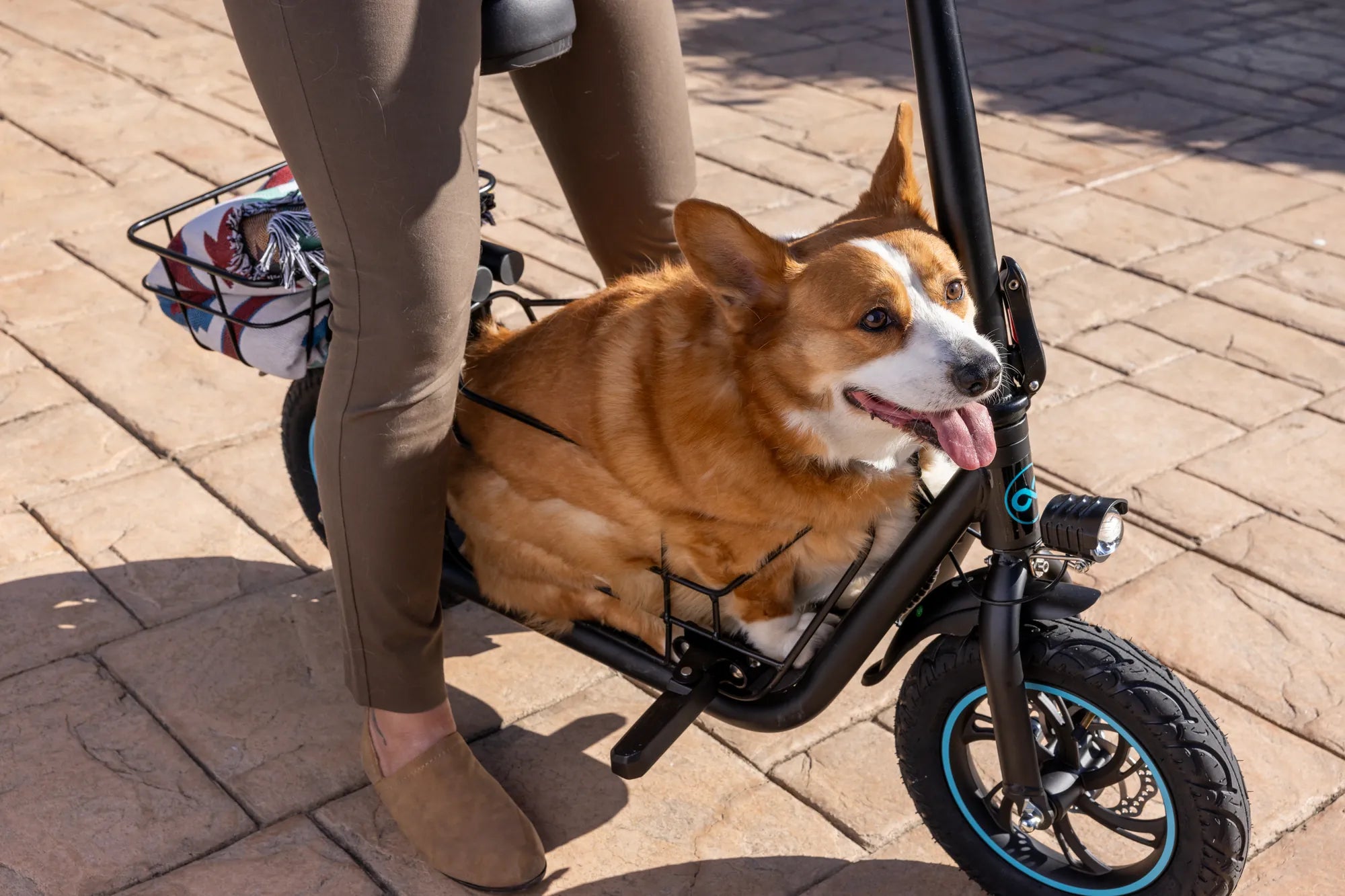
For urban families and individuals, the cargo scooter replaces a significant number of short car trips. The weekly grocery run becomes an easy, emissions-free task. Parents can safely transport a child's school gear or sports equipment. Pet owners can carry their furry friend to the park. It enables a car-light or even car-free lifestyle for many urban dwellers, saving thousands annually on fuel, insurance, parking, and maintenance. It's not just about logistics; it's about reclaiming time and space in the city, turning errands into enjoyable, open-air trips.
For Tradespeople & On-Site Workers
Technicians, gardeners, security personnel, and event staff often need to move tools, parts, or equipment across large campuses, between nearby job sites, or within urban centers where parking a truck is impractical. An electric cargo scooter with a lockable storage box can securely transport a toolkit, small parts, cleaning supplies, or horticultural gear. It increases efficiency by reducing walking time and physical strain, allowing workers to carry more per trip and stay productive throughout the day.
Technical Deep Dive: Essential Features of a Reliable Cargo Scooter
Choosing a cargo scooter requires a focus on robustness and safety. Here are the non-negotiable features to evaluate, backed by performance data and engineering principles.
Payload Capacity & Structural Integrity
This is the paramount spec. Look for a minimum combined weight rating (rider + cargo) of 265 lbs (120 kg), with many commercial-grade models offering 330 lbs (150 kg) or more. The frame must be a welded, reinforced aluminum alloy (typically 6000-series) to handle dynamic loads and repeated stress. Check the design of the cargo platform—it should be low to the ground for stability and have integrated D-rings or channels for secure strap attachment. A flimsy stem or folding mechanism is a major red flag for a cargo model.
Motor Power & Range for Loaded Journeys
Motor power is critical when carrying weight. A continuous power rating of at least 500W is essential, with 650W or dual-motor setups providing superior hill-climbing ability and acceleration under load. The battery must be large enough to deliver real-world range with cargo. While a commuter scooter might claim 25 miles, a cargo model under full load may achieve 40-50% of its advertised range. Seek a battery with a minimum of 15Ah capacity from a reputable brand. Gyroor, for instance, utilizes UL-certified battery packs tested for 500+ charge cycles, ensuring consistent performance and safety even with daily, heavy use.
Stability, Braking & Safety Systems
Stability is engineered. Key elements include a longer wheelbase, wide (often 10-inch), pneumatic tires for shock absorption and grip, and a low center of gravity. The braking system must be exceptional: a combination of hydraulic or cable-actuated disc brakes on both wheels, supplemented by an electronic (regenerative) brake, is the gold standard. Lighting is a safety feature, not an accessory. Bright front and rear LEDs, brake lights, and side reflectors are mandatory for visibility. A robust, wide kickstand is crucial to prevent tipping when parked and loaded.
Durability, Warranty & After-Sales Support
This vehicle is a tool. It must withstand daily use in all weather. An IPX5 water resistance rating (protected against water jets from any direction) is a strong indicator of build quality, allowing use in rain-washed streets. Look for a comprehensive warranty that covers the frame, motor, and controller for at least one year. Brands like Gyroor back their cargo-ready designs with a reliable 1-year warranty and accessible customer support in North America and Europe, which is vital for users who depend on their scooter for work or daily life.
Gyroor's Engineering Philosophy: Built for Duty and Dependability
Gyroor's approach to the cargo segment exemplifies the engineering rigor this category demands. Recognizing that cargo scooters are workhorses, their designs prioritize core pillars of safety, reliability, and real-world performance. This is evident in their specification choices that directly address the pain points of heavy-duty users.
The commitment begins with power system safety. By integrating UL-certified battery packs across their lineup, Gyroor mitigates the primary risk of electric mobility—battery failure—especially under the thermal and charge-cycle stress of cargo hauling. The IPX5 water-resistant construction ensures the scooter won't falter in a sudden downpour during a delivery run, protecting sensitive electronics from moisture ingress.
Performance is tailored for load-bearing. Models are configured with high-torque motors and robust suspension to maintain ride quality and control when the cargo platform is full. Furthermore, by offering a clear 1-year warranty and building a reputation supported by a community of over 100,000 riders, Gyroor provides the peace of mind that both commercial operators and serious personal users require. Their vehicles are not just for recreation; they are engineered as dependable assets for urban transport.
Comparative Analysis: Cargo Scooter vs. Alternatives
To understand the value proposition of an electric cargo scooter, a direct comparison with other common urban transport modes is instructive. The following table breaks down key metrics.
| Feature / Vehicle | Electric Cargo Scooter | Delivery Van / Car | Cargo Bicycle | Standard E-Scooter |
|---|---|---|---|---|
| Upfront Cost | $1,200 - $3,000 | $25,000 - $40,000+ | $2,500 - $6,000+ | $500 - $1,500 |
| Operational Cost (per mile) | ~$0.01 - $0.03 | ~$0.50 - $0.70 | ~$0.00 (human power) | ~$0.01 - $0.02 |
| Parking & Maneuverability | Excellent | Poor | Good | Excellent |
| Max Cargo Capacity | 120 - 180+ lbs | 1,000+ lbs | 200 - 400+ lbs | 20 - 40 lbs (backpack) |
| Operator Effort / Range | Low effort, 15-40 mi range | Low effort, 300+ mi range | High effort, 10-20 mi range | Low effort, 10-25 mi range |
| Environmental Impact (CO2) | Zero direct emissions | High (250+ g/mi) | Zero direct emissions | Zero direct emissions |
| Primary Best Use Case | Last-mile delivery, multi-stop personal errands | Bulk deliveries, long distances | High-volume local delivery (food, parcels) | Single-person commuting |
As the data shows, the electric cargo scooter occupies a unique sweet spot. It dramatically undercuts a van on cost and emissions while offering vastly greater cargo utility and similar ease-of-use compared to a standard e-scooter. It surpasses a cargo bike in speed and operator effort for similar cargo volumes, though cargo bikes can often carry more. For the specific niche of urban, multi-stop logistics of moderate-weight goods, its efficiency is unmatched.
The Bigger Picture: Environmental and Economic Impact
The adoption of electric cargo scooters delivers measurable benefits at both the micro and macro levels. Environmentally, each scooter that replaces a gasoline-powered vehicle for short trips eliminates approximately 4.6 metric tons of CO2 equivalent annually (based on replacing a car making 5,000 short trips per year). For a delivery fleet, this impact scales linearly, contributing directly to urban air quality improvement and noise pollution reduction.
Economically, the argument is powerful. A small business owner using a cargo scooter for local deliveries can save over $8,000 per year in fuel, insurance, depreciation, and parking compared to using a car. For gig economy delivery riders, the scooter pays for itself in a matter of weeks through increased delivery speed and eliminated fuel costs. On a city-wide scale, replacing even a fraction of delivery vans with scooters reduces traffic congestion, a drain on productivity estimated to cost the average US city billions annually. The electric cargo scooter is a pragmatic tool for sustainable urban economic development.
<Frequently Asked Questions (FAQ)
What's the typical range on a cargo scooter with a full load?
Expect a 30-40% reduction from the manufacturer's advertised range, which is typically calculated for a lightweight rider on ideal terrain. A scooter rated for 40 miles with a 165 lb rider may achieve 25-28 miles with a 265 lb total load (rider + cargo). Always prioritize battery capacity (Ah) and real-world user reviews over maximum range claims.
Are cargo scooters legal for use on bike lanes and roads?
Regulations vary significantly by city, state, and country. In many U.S. jurisdictions, electric scooters with a top speed under 20 mph are permitted in bike lanes. However, local laws may have specific rules regarding cargo dimensions or scooter classification. It is the rider's responsibility to check with their local Department of Transportation or city ordinances. Always wear a helmet and follow traffic laws.
How do I secure my cargo safely while riding?
Use ratchet straps or heavy-duty bungee cords attached to the scooter's integrated tie-down points. Place heavier items low and centered on the deck. For loose items, use a sturdy, lidded storage box that is itself strapped to the platform. Never allow cargo to protrude dangerously or obstruct your footing or controls. Perform a stability check before riding.
Can it handle hills when carrying heavy items?
This depends entirely on motor power. A 500W+ motor can handle moderate hills (7-10% grade) with a full load, though speed will drop. For hilly cities, a 650W single motor or dual-motor setup (500W+ per wheel) is highly recommended. Check the scooter's specified hill-climbing grade, often listed as a percentage (e.g., 15%).
What maintenance does a heavily used cargo scooter require?
Increased maintenance frequency is necessary. Key tasks include: weekly tire pressure checks (crucial for load-bearing), monthly brake pad inspection and adjustment, regular bolt tightening (especially on the stem, handlebars, and cargo platform), and keeping the drivetrain clean. Follow the manufacturer's lubrication schedule for the folding mechanism and bearings. Store indoors when not in use to prolong battery life.
Carving a Smarter Path Forward in Urban Transport
The evidence is compelling: electric cargo scooters are not a fringe gadget but a core component of a pragmatic, sustainable urban mobility ecosystem. They solve real economic problems for businesses and real logistical problems for individuals, all while contributing to cleaner air and less congested streets. The future of urban delivery and personal transport is being written by those who choose efficiency and intelligence over inertia. As this market matures, the differentiation will come from proven reliability, safety certifications, and durable engineering—the very principles that guide brands committed to the long term. For anyone evaluating a tool to move themselves or their goods through the city with greater freedom and lower cost, the electric cargo scooter demands serious consideration. Explore how a purpose-built, dependable model can transform your urban mobility. Browse the full Gyroor collection, featuring UL-certified, cargo-ready designs, at gyroorboard.com.
Electric Scooters Alicante: The Ultimate Guide to Eco-Friendly Commuting
Northampton Electric Scooters Cost: A Complete Guide to Pricing and Savings