


Introduction: Why the Modern Adult is Choosing Electric Hoverboards
The electric hoverboard for adults has evolved from a novelty gadget into a serious personal transport device. Modern models offer legitimate commuting range, robust power for varied terrain, and construction designed for daily use. This guide provides the definitive framework for selecting, riding, and maintaining your hoverboard, with a relentless focus on safety and performance.
You will learn to decode specifications, master essential riding techniques, and identify the certified, reliable brands that prioritize rider security. Whether for urban commuting or weekend recreation, an informed choice ensures a safe, enjoyable, and durable riding experience. Let's begin with the core features that define a true adult-grade electric hoverboard.
Understanding the Modern Adult Hoverboard: Key Features & Specifications
Adult hoverboards distinguish themselves through superior performance specs and durable construction. Key differentiators include motor power exceeding 350W, batteries with certified safety standards, and frames built from materials like aircraft-grade aluminum. These elements directly impact speed, range, weight capacity, and overall longevity.
Wheel size is another critical factor. While 6.5-inch wheels offer portability, 8.5-inch or 10-inch wheels provide greater stability and comfort, especially on uneven surfaces. Understanding these specifications is the first step in choosing a board that won't underperform or pose a safety risk.
Motor Power & Performance: What 350W vs. 800W Really Means
Motor wattage determines a hoverboard's torque, hill-climbing ability, and top speed. A single 350W motor is often found in entry-level models, suitable for flat, smooth surfaces. For adults, dual motor systems are standard, with total wattage defining capability.
A dual 350W (700W total) system can handle moderate inclines and riders up to 220 lbs. A dual 500W or 800W system provides stronger acceleration, better performance on hills up to a 15-20 degree grade, and support for heavier riders. More power also means less strain on the motors, contributing to longer component life.
| Total Motor Power | Typical Top Speed | Max Rider Weight | Hill Gradeability | Best Use Case |
|---|---|---|---|---|
| 500W - 700W | 7-9 mph | 220 lbs | Up to 10° | Flat urban commutes, smooth pathways |
| 800W - 1000W | 10-12 mph | 265 lbs | Up to 15°-20° | Suburban areas, gentle hills, all-terrain use |
| 1200W+ | 12-15 mph | 300+ lbs | 20°+ | Off-road trails, steep inclines, maximum performance |
Battery Life & Range: Planning Your Commute or Adventure
Battery capacity, measured in Watt-hours (Wh), is the true indicator of potential range. A higher Wh rating means more energy storage. Common capacities range from 158Wh for short trips to 440Wh+ for extended travel.
Advertised range is a best-case scenario. Real-world factors like rider weight, terrain, temperature, and riding style (frequent acceleration) can reduce it by 30-40%. For a reliable 10-12 mile commute, a 330Wh battery is a practical minimum. Crucially, the battery must be UL 2271 certified, like those used by Gyroor, ensuring it has passed rigorous safety tests for electrical and fire hazards.
Build Quality & Durability: Materials and Ratings for Daily Use
The frame material dictates durability. High-quality adult hoverboards use reinforced, aircraft-grade aluminum alloy frames that resist bending and cracking under stress. Plastic shells should be thick, impact-resistant ABS.
An IP rating defines water and dust resistance. An IPX5 rating, a standard for brands like Gyroor, means the board can withstand water jets from any direction. This allows riding through puddles and in light rain, protecting the internal electronics—a must for practical daily transportation.
The Safety First Protocol: Essential Gear and Riding Techniques
Safety is the non-negotiable foundation of responsible hoverboarding. It combines certified personal protective equipment (PPE) with practiced, defensive riding skills. Never assume a short trip doesn't require full gear; most accidents happen close to home.
Mastering control in a safe environment before navigating traffic or complex paths is paramount. This protocol isn't about limiting fun, but about ensuring you can enjoy your electric hoverboard for adults for years without preventable injury.
Non-Negotiable Safety Gear: Helmets, Pads, and More
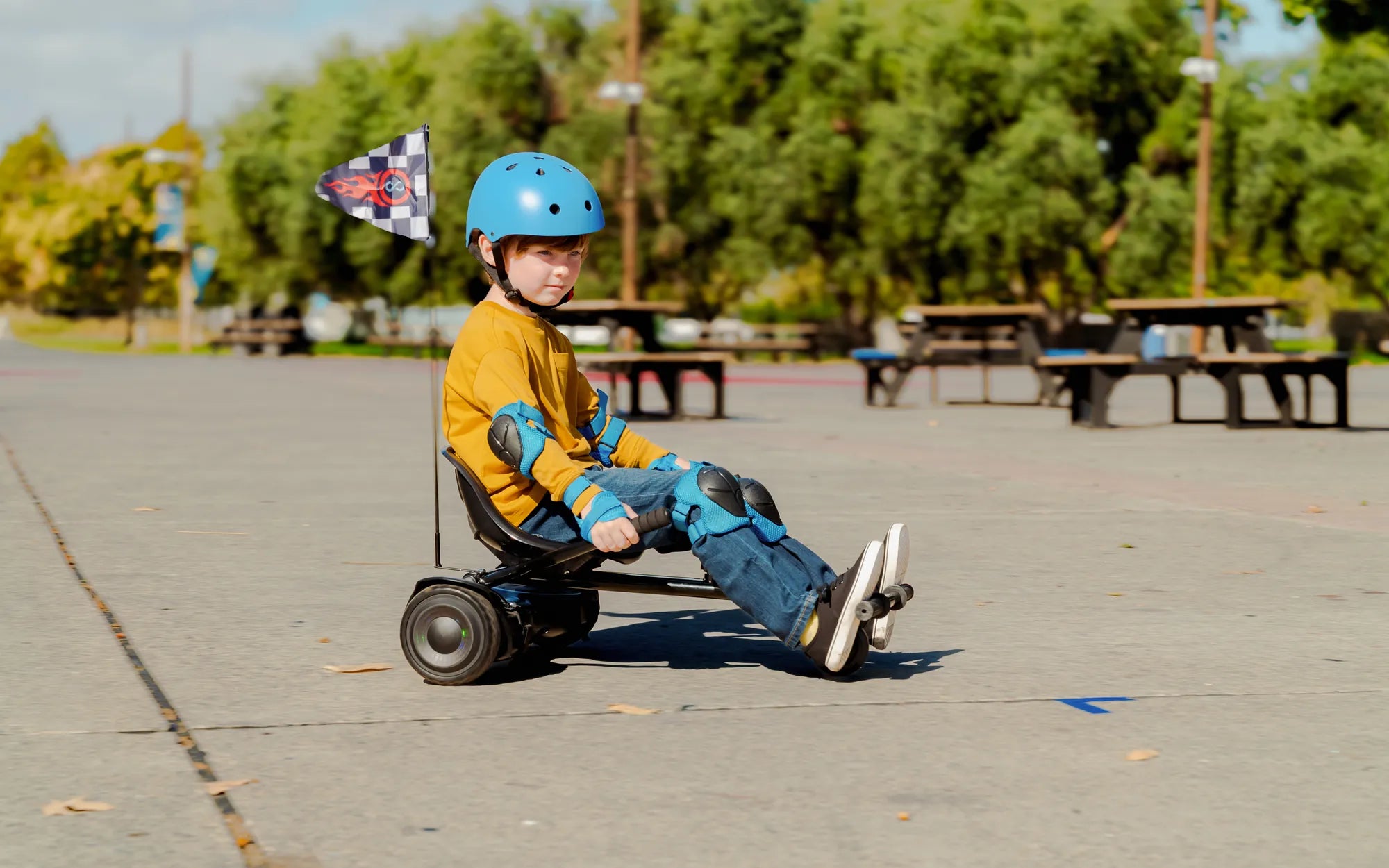
A certified multi-impact bicycle or skateboard helmet is essential. Wrist guards are arguably the second most important item, as falls often involve instinctive hand placement. Knee and elbow pads protect joints from abrasions and impacts.
For night riding, add reflective clothing or bands and consider a board with integrated LED lights. This gear forms your primary defense against the concrete, and investing in quality here is as important as investing in the board itself.
Mastering the Basics: Step-by-Step Riding and Maneuvering
Start on a flat, smooth, open area like an empty parking lot. Place the board on the ground and power it on. Step onto the board one foot at a time, starting with your dominant foot, using a wall or railing for support.
- Mounting/Dismounting: Step on/off quickly and decisively, one foot at a time. Do not shuffle your feet.
- Acceleration & Braking: Lean forward gently to move forward. To brake, shift your weight back to a centered or slightly backward position. Avoid abrupt movements.
- Turning: Apply gentle pressure forward with the toes of one foot while easing pressure on the other. Practice wide turns before attempting sharp ones.
Spend at least 30-60 minutes in this controlled environment until mounting, riding in a straight line, turning, and dismounting feel instinctive.
Advanced Maneuvering & Urban Navigation Tips
For urban riding, always assume you are invisible to drivers and pedestrians. Ride defensively. Use sidewalks where legal and safe, yielding right-of-way to pedestrians. When crossing streets, dismount and walk as a pedestrian would.
Scan the path 10-15 feet ahead for cracks, potholes, gravel, or wet surfaces. Slightly bend your knees to absorb shocks. For obstacles like curbs, dismount—do not attempt to jump. Understand and obey local laws, which may restrict hoverboards to bike lanes or prohibit them on roads and sidewalks.
How to Choose Your Perfect Hoverboard: A Buyer's Checklist
This checklist synthesizes technical specs, safety, and use-case into actionable criteria. Use it to compare models and avoid marketing hype. The goal is to find a board that matches your physical needs, riding environment, and safety standards.
Prioritize certification and warranty over flashy features. A slightly less powerful board from a reputable brand with a solid warranty is a far better investment than a high-spec model from an unknown source.
Matching Specs to Your Needs: Commuter vs. Recreational Rider
The Urban Commuter: Needs reliability, range, and portability. Prioritize a minimum 330Wh battery, a 10+ mile real-world range, a lightweight but durable frame, and bright lights for visibility. A smooth-riding tire (like airless rubber) and IPX5 rating are key for all-weather capability.
The Weekend Explorer: Needs power and terrain capability. Look for dual 500W+ motors, all-terrain or off-road tires (8.5" or larger), a high-capacity battery (400Wh+), and a robust frame with superior shock absorption. Speed and hill-climbing ability are higher priorities.
The Importance of Certification and Warranty (Gyroor's USPs)
Always verify dual UL certification: UL 2272 for the entire self-balancing scooter and UL 2271 for the battery pack. This is the benchmark for fire and electrical safety. Never purchase an uncertified board.
A comprehensive warranty is a sign of manufacturer confidence. Look for at least a 1-year warranty on the board, battery, and motor. Gyroor, for example, offers a 1-year comprehensive warranty and US-based customer support, reflecting its commitment to product longevity and rider trust.
Where to Buy and What to Avoid: Red Flags in the Market
Purchase from authorized retailers or the brand's official website. This guarantees you receive a genuine product with a valid warranty. Be wary of third-party marketplace sellers with no brand affiliation.
Critical Red Flags:
- Extremely low price (far below market average for similar specs).
- Vague or missing certification details (no mention of UL 2272/2271).
- Overstated specifications (e.g., "30-mile range" with a small battery).
- No physical business address or legitimate customer service contact.
- Spelling/grammar errors on official product pages, indicating low-quality imports.
Maintenance, Care, and Troubleshooting for Longevity
Regular maintenance preserves performance, safety, and your investment. A few simple routines performed weekly and monthly can prevent most common issues and significantly extend the lifespan of your electric hoverboard for adults.
Always refer to your user manual first. When in doubt, especially regarding electrical issues, contact the manufacturer's support. Do not attempt to open the battery compartment or modify electrical components.
Routine Care: Cleaning, Storage, and Battery Best Practices
For cleaning, power off the board and disconnect the charger. Wipe the body with a damp cloth; for tougher grime, use a mild soap solution. Avoid high-pressure hoses, even on IPX5 models. Dry the board thoroughly before storage or use.
For battery health, avoid draining it to 0%. Recharge when it drops to 20-30%. If storing for over a month, charge the battery to 50-60% and store in a cool, dry place. Re-check the charge level every 2-3 months. Use only the manufacturer-provided charger.
Common Issues and Basic Troubleshooting
Board Won't Power On: Check that the battery is charged. Ensure the power button is firmly pressed. Inspect the charger and outlet.
Board is Wobbly or Uneven: The board may need recalibration. Consult your manual for the specific calibration procedure (often involving holding buttons while powering on on a level surface).
One Side Doesn't Work: This could indicate a motor or gyroscope issue. First, try a recalibration. If it persists, contact customer support. Do not continue riding.
Reduced Range: This is often due to battery age, cold weather, or a change in riding conditions (more hills, heavier load). If sudden and severe, it may indicate a failing battery cell—contact support.
Frequently Asked Questions (FAQs) About Adult Hoverboards
Q1: Are hoverboards legal on sidewalks and roads?
A: Laws vary by city, state, and country. Generally, they are often treated like electric scooters—sometimes allowed in bike lanes, sometimes on sidewalks at low speeds, and frequently prohibited on roads. Always check your local ordinances before riding in public.
Q2: What is a realistic maximum weight limit?
A: Quality adult models support 220 to 265 lbs as standard, with heavy-duty off-road models accommodating 300 lbs or more. Exceeding the limit stresses motors and batteries, voids warranties, and creates a serious safety hazard.
Q3: How long does the battery take to charge fully?
A: Charge times vary with battery capacity. A standard 330Wh battery typically takes 3-4 hours. Larger 440Wh batteries may take 4-5 hours. Always use the provided charger and never leave it charging unattended for extended periods or overnight.
Q4: Can I ride my IPX5-rated hoverboard in the rain?
A: An IPX5 rating protects against water jets, meaning you can safely ride through puddles and in light rain. It is not waterproof for submersion or heavy downpours. Always dry the board afterwards and avoid deep standing water.
Q5: What does a typical warranty cover?
A: A robust warranty, like Gyroor's 1-year coverage, typically includes defects in materials and workmanship for the board, battery, and motor. It does not cover damage from accidents, misuse, water damage beyond the IP rating, or wear-and-tear items like tires.
Conclusion: Embracing the Ride with Confidence and Responsibility
Choosing the right electric hoverboard for adults hinges on informed decisions about safety certifications, performance specs, and brand reputation. Mastering safe riding techniques and committing to regular maintenance transforms a fun device into a reliable personal transport solution.
Your journey begins with prioritizing UL 2272 certification, investing in proper protective gear, and selecting a model from a trusted brand that stands behind its products with strong customer support. This approach ensures countless miles of safe, enjoyable riding. Ready to explore a range of UL-certified, high-performance models designed for adult riders? Browse the full Gyroor collection at gyroorboard.com to find your perfect ride.
Electric Scooter for Kids 20 mph: The Ultimate Guide to Safe and Fun Riding
Hoverboard Charge: The Ultimate Guide to Maximizing Battery Life and Performance