



Introduction: The Urban Mobility Crisis and the Electric Imperative
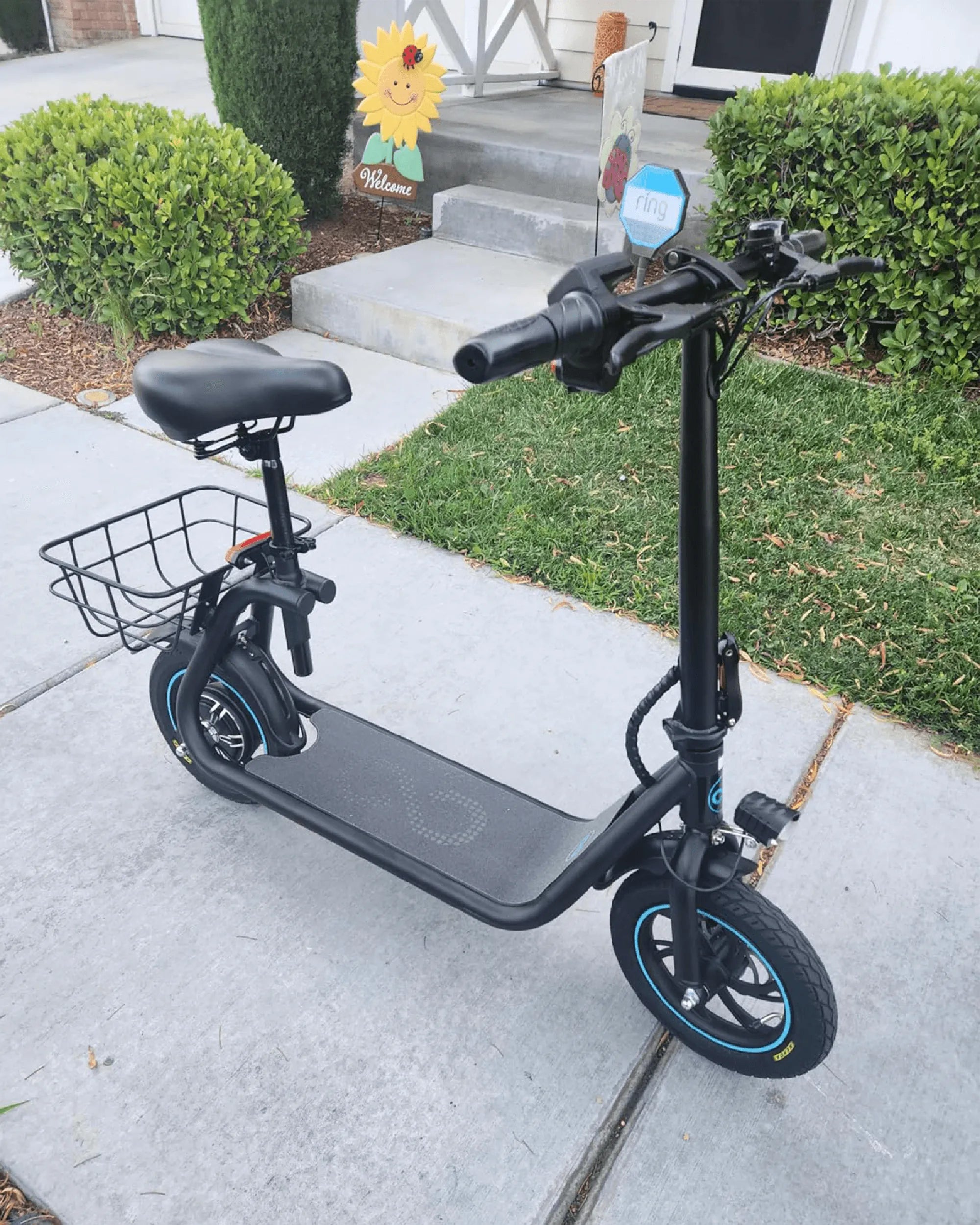
City streets are at a breaking point. Congestion strangles productivity, tailpipe emissions degrade public health, and the cost of personal car ownership continues to climb. The solution is not more lanes or more vehicles, but a smarter, cleaner, and more efficient paradigm. This is where the dual forces of electric mobility scooters and cars converge, offering a complementary system that redefines how we move. Electric Mobility Scooters and Cars: The Future of Urban Transportation is not a slogan but an emerging reality, where micro-mobility devices like e-scooters handle the "last mile" and electric vehicles (EVs) manage longer regional trips. Leading this micro-mobility charge are brands like Gyroor, a trusted name providing UL-certified, durable electric scooters to over 100,000 riders, proving that safe, reliable personal electric transport is already here.
This article will dissect the data, trends, and technologies shaping this transformation. You will learn why commuters are rapidly adopting e-scooters for short trips, how EVs are evolving beyond niche status, and the critical safety and infrastructure developments enabling this shift. We will provide a clear framework for understanding your own mobility needs in this new landscape.
The Electric Scooter Revolution: Redefining the Last Mile
The electric scooter has evolved from a recreational toy to a legitimate urban commuter tool. Its core value proposition is direct: it eliminates the most inefficient and frustrating segments of a typical urban journey. For trips under five miles, an e-scooter is often faster than a car, bus, or even a bicycle when factoring in traffic, parking search time, and walking from distant transit stops.
The economic argument is compelling. The average cost of owning and operating a new car in the United States exceeds $12,000 annually. In contrast, a high-quality commuter e-scooter represents a one-time investment often under $1,000, with negligible "fuel" costs (electricity) and minimal maintenance. For city dwellers, it also erases recurring expenses like parking fees, which can exceed $400 per month in dense metropolitan cores.
Why Commuters Are Choosing E-Scooters Over Cars for Short Trips
Data reveals a clear behavioral shift. A study by INRIX found that the average American driver spends 51 hours annually stuck in traffic, with a direct economic cost. For a 3-mile commute in moderate city traffic, a car might take 20-30 minutes door-to-door. An e-scooter traveling at 15-20 mph can cover the same distance in 10-15 minutes, consistently, by using bike lanes and avoiding gridlock.
Parking is the other decisive factor. The search for a parking spot accounts for up to 30% of urban congestion. An e-scooter can be parked legally at a bike rack or carried inside, eliminating this variable entirely. This makes it ideal for mixed-mode commuting—riding an e-scooter to a train or bus station, folding it for the ride, and then unfolding it for the final leg to the office.
Key Features for Urban Riding: A Gyroor Perspective
Not all e-scooters are built for the rigors of daily commuting. Urban use demands specific engineering. First, motor power is critical for hills and quick acceleration from stops; a 350W-500W motor is a practical minimum for most cities. Second, real-world range must exceed the user’s daily round-trip distance with a safety margin; 15-20 miles is a common sweet spot.
Durability and safety are non-negotiable. This is where brands like Gyroor differentiate themselves. An IPX5 water-resistance rating means the scooter can withstand water jets from any direction, making it viable for use in rain or on wet streets—a fundamental requirement for reliable transportation. Equally critical is the battery system. Gyroor utilizes UL-certified battery packs tested for 500+ charge cycles, which are rigorously certified for safety against overheating, short-circuiting, and fire risk, addressing a primary consumer concern.
Electric Cars: Transforming the Core Vehicle Fleet
While e-scooters optimize short-distance travel, electric cars are revolutionizing the traditional automotive sector. EVs address the macro-level issues of urban air pollution and fossil fuel dependence. Transportation is the largest source of greenhouse gas emissions in the United States, and a full transition to electric drivetrains, especially when powered by a cleaner grid, offers the most direct path to significant reductions.
The adoption curve for EVs is accelerating rapidly. Improvements in battery technology have pushed median ranges well past 250 miles on a single charge, alleviating "range anxiety." Simultaneously, the total cost of ownership is becoming competitive with internal combustion engines, as lower maintenance costs (no oil changes, fewer moving parts) and cheaper "/fuel" offset higher upfront prices. They are becoming the default choice for suburban families, ride-share drivers, and anyone whose daily travel patterns involve longer distances or cargo needs that a scooter cannot meet.
The Synergy Between E-Scooters and EVs in a Modern Lifestyle
The most efficient urban transportation system isn't a choice between an e-scooter and an EV; it's the intelligent use of both. This creates a "hub-and-spoke" or "nesting" model of mobility. A household might own an EV for weekend trips, large grocery runs, or longer commutes from the suburbs. However, for individual trips downtown—to a meeting, a restaurant, or a gym—driving the EV the entire way reintroduces all the old problems: parking costs, traffic, and congestion.
Here, the e-scooter stored in the EV's trunk becomes the perfect tool. The driver parks in a cheaper, more readily available spot on the city's fringe, then unfolds the e-scooter for the final, dense-core leg of the journey. This combination maximizes the utility of both vehicles, minimizes the collective carbon footprint, and saves significant time and money. It represents a practical, integrated approach to electric mobility.
Safety, Regulation, and Infrastructure: The Foundations of Adoption
Widespread adoption of electric transport hinges on three pillars: sensible regulation, rigorous safety standards, and supportive infrastructure. For e-scooters, city ordinances are rapidly evolving. Common regulations include geofenced slow zones, mandatory helmet laws (often for riders under 18), designated parking areas, and speed limits typically capped at 15-20 mph on bike lanes and shared paths. Understanding local rules is the rider's first responsibility.
For EVs, the infrastructure challenge is different but parallel. The expansion of public charging networks—from Level 2 chargers at workplaces and shopping centers to DC fast-charging stations along highways—is critical to support long-distance travel and apartment dwellers without home charging. Government incentives and private investment are rapidly building out this network, making EV ownership feasible for more people.
The Non-Negotiables: Battery Safety and Build Quality
This is the most critical technical discussion. The reputation of electric micro-mobility has been marred by incidents involving low-quality devices with uncertified batteries prone to thermal runaway and fire. This makes manufacturer specifications not just marketing points, but essential safety information. A UL certification for the battery pack and the entire electrical system is the industry gold standard, indicating independent verification of safety protocols.
Build quality directly impacts rider safety. Features like a wide, stable deck, reliable mechanical and electronic brakes, bright headlights and brake lights, and a robust frame that can handle potholes are essential. Gyroor’s focus on IPX5 water-resistance and UL-certified batteries, backed by a 1-year warranty, exemplifies the commitment to reliability and consumer trust required for these devices to be seen as legitimate transportation, not disposable gadgets.
Comparative Analysis: Choosing Your Electric Transport Tool
Understanding the optimal use case for each mode of electric transport is key to building an efficient personal system. The following table breaks down the primary factors.
| Factor | Electric Scooter (e.g., Gyroor Commuter Models) | Electric Car (Typical Sedan/SUV) |
|---|---|---|
| Ideal Trip Distance | 0.5 - 5 miles | 5+ miles, especially highways |
| Primary Use Case | Last-mile commute, errands in dense urban cores, mixed-mode transit pairing | Family transport, long-distance travel, cargo/hauling, adverse weather commutes |
| Upfront Cost | $500 - $1,500 | $35,000 - $60,000+ |
| Operating Cost per Mile | ~$0.01 - $0.03 (electricity) | ~$0.04 - $0.06 (electricity vs. ~$0.15 for gas) |
| Parking & Storage | Folds for portability; parks at bike racks or indoors | Requires dedicated parking space/garage; street parking fees apply |
| Environmental Impact | Extremely low direct emissions; minimal embodied energy | Zero direct emissions; grid-dependent indirect emissions; higher embodied energy |
| Key Safety Feature | UL-Certified Battery, IPX5 Water Resistance, dual braking | Advanced Driver-Assistance Systems (ADAS), reinforced frame |
The Future City: A Vision of Integrated Electric Transport
Imagine a city where transportation modes are seamlessly connected. Dedicated, protected micro-mobility lanes provide safe, fast corridors for e-scooters and e-bikes. These lanes feed into multi-modal transit hubs equipped with secure scooter parking, EV charging stations, and easy access to buses and trains. Digital mobility platforms allow users to plan and pay for trips combining an e-scooter ride, a train segment, and an EV car-share, all in one app.
In this ecosystem, the private car is no longer the default but one option among many optimized for specific needs. Reduced traffic and parking demand free up public space for parks, wider sidewalks, and outdoor dining. Air quality improves significantly, and the city becomes quieter. This is the holistic promise of a fully integrated electric transport future.
How Brands Like Gyroor Are Shaping Tomorrow's Commute
This future requires hardware that people can trust daily. Brands that prioritize safety certifications, durable construction, and strong customer support are building the foundation. Gyroor’s approach—focusing on UL-certification, meaningful water resistance, and clear warranty support—directly addresses the barriers to mainstream micro-mobility adoption. By providing reliable, safe products, they enable individuals to confidently make the shift away from car dependency for short trips, which is the first and most impactful step in reshaping urban transit patterns at scale.
FAQ: Your Questions on Electric Urban Transport, Answered
Q1: Are e-scooters safe for daily commuting?
A: With proper precautions and the right equipment, yes. Safety starts with choosing a scooter built for commuting, featuring a UL-certified battery, reliable brakes, lights, and water-resistant construction (like Gyroor's IPX5 rating). Always wear a helmet, obey traffic laws, and be highly aware of your surroundings.
Q2: Can an e-scooter truly replace my car?
A: It can replace car trips, if not the car itself, for a significant portion of urban travel. If your daily needs are primarily solo trips under 5 miles in a city with reasonable infrastructure, an e-scooter could eliminate most of your car use. For families, bad weather, or longer trips, the car (preferably an EV) remains necessary, but the scooter reduces its overall use.
Q3: What is the most important feature to look for in a commuter e-scooter?
A> Beyond adequate range and speed, battery safety and durability are paramount. Prioritize models with UL-certified or similarly internationally recognized battery certifications and a high water-resistance rating (IPX4 or higher). These features ensure long-term reliability and mitigate the biggest risks associated with e-scooters.
Q4: How do electric cars and scooters complement each other?
A: They serve different trip profiles optimally. Use the EV for longer distances, group travel, or heavy cargo. Use the e-scooter for short, solo trips in dense areas where parking is expensive or scarce. They can be used together in a "park-and-ride" model, where you drive partway and scoot the final leg, maximizing efficiency.
Q5: What is the environmental impact of switching to electric mobility?
A: It is substantially positive. Even when accounting for electricity generation, EVs produce far fewer emissions over their lifetime than gasoline cars. E-scooters have an even smaller footprint due to their tiny battery and energy use. By displacing gasoline-powered trips, especially short ones where internal combustion engines are least efficient, you directly reduce air pollution and greenhouse gas emissions.
Your Journey Towards Smarter Urban Mobility Starts Here
The evidence is clear: the future of urban transportation is electric, multimodal, and intelligent. Electric mobility scooters and cars are not competing technologies but complementary pillars of a more sustainable and efficient system. The path forward begins with an honest assessment of your own travel patterns. How many of your trips are short, solo journeys where sitting in traffic in a two-ton vehicle is simply overkill?
For those trips, the switch to a reliable electric scooter is the most immediate and impactful change you can make. It saves money, time, and reduces your environmental footprint from day one. When choosing your scooter, let safety and durability guide you. Look for the certifications that matter—UL for the battery, IP ratings for weatherproofing—and choose a brand that stands behind its product with a solid warranty and proven customer support.
Explore the models designed for the real world of commuting. Browse the full Gyroor collection at gyroorboard.com to see how over 100,000 riders have already embraced a smarter way to move.
Electric Scooters Exeter: The Future of Urban Mobility
How to Make Electric Scooters Go Faster: Proven Tips and Tricks