



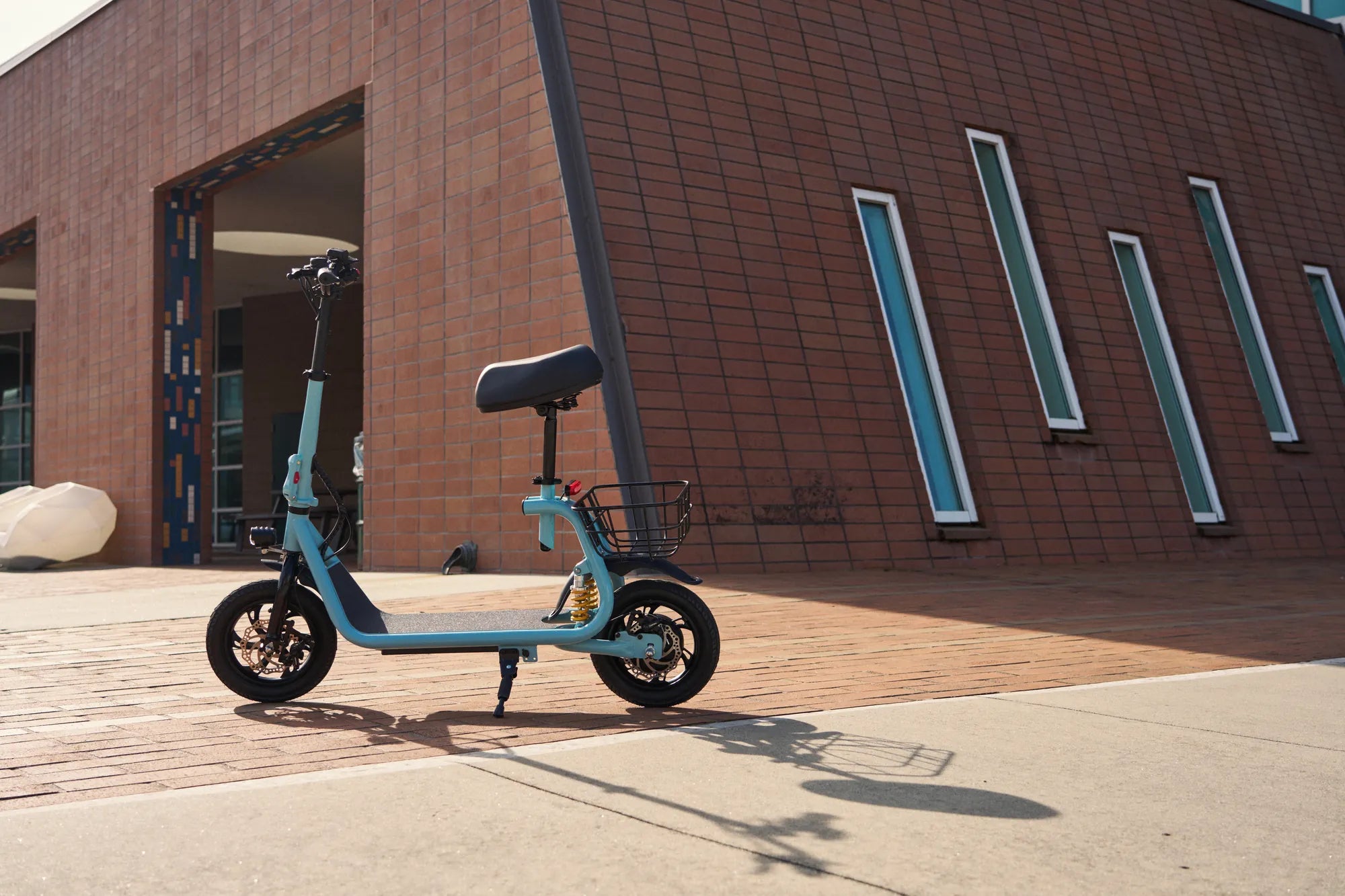
Navigating the World of Electric Riding Scooters
Finding the right electric riding scooter for sale can feel overwhelming. With dozens of models boasting different speeds, ranges, and features, how do you separate the truly capable from the merely cleverly marketed? This guide is designed to be your definitive resource, moving beyond flashy advertisements to focus on the engineering, safety, and practical considerations that matter for daily use. You will learn how to interpret specifications, assess build quality, and identify the scooter that perfectly matches your commute, budget, and riding style.
By the end of this guide, you will possess a clear, actionable framework for evaluation. We will demystify terms like watt-hours and torque, explain why certain safety certifications are non-negotiable, and help you balance portability with performance. The goal is to transform you from a curious browser into a confident buyer, ready to invest in a vehicle that offers reliability, safety, and fun for years to come.
Key Factors to Consider Before You Buy
Your purchase decision should hinge on a core set of objective factors. These specifications directly determine your scooter's capability, safety, and longevity in the real world, far beyond what any promotional video can show.
Ignoring these fundamentals often leads to disappointment—a scooter that can't handle your commute hill, a battery that degrades in a year, or a frame that feels unstable at speed. We will break down each element so you can prioritize what matters most for your needs.
Performance & Range: Beyond the Marketing Hype
Motor power and battery capacity are the heart of any electric scooter. Motor wattage is typically listed as either nominal (sustained power) or peak (maximum burst). For most urban commutes, a 350W nominal motor is a solid starting point, capable of handling moderate inclines. For steeper hills or heavier riders, 500W or more is advisable.
True range is perhaps the most misrepresented spec. It's calculated from battery capacity, measured in Watt-hours (Wh). You find this by multiplying voltage (V) by amp-hour (Ah) rating. A 36V 10Ah battery is a 360Wh pack. Real-world range is typically 60-70% of the manufacturer's claim, varying drastically with rider weight, terrain, temperature, and riding speed.
Build Quality & Durability: What to Look For
The frame is your scooter's skeleton. Aerospace-grade aluminum alloys, such as 6061-T6, offer an optimal balance of strength and light weight. Inspect the welding points and the folding mechanism—these are common stress points. A robust mechanism with a secure locking pin is essential for safety.
The deck should provide ample standing room with a non-slip surface. Pay close attention to the maximum weight rating; exceeding it stresses every component and voids warranties. A well-built scooter feels solid and rattle-free, even on rough pavement, signaling careful engineering and quality control.
Safety Features: Non-Negotiable Essentials
Your braking system is your most critical safety feature. A combination of electronic (regenerative) braking and a mechanical brake (disc or drum) provides reliable stopping power in all conditions. Disc brakes generally offer more consistent performance, especially in wet weather.
Lighting is vital for being seen. Look for a bright front headlight, a rear brake light, and side or deck reflectors. Tire choice impacts safety and comfort: pneumatic (air-filled) tires absorb shocks better but risk punctures, while solid tires are maintenance-free but provide a harsher ride. Finally, insist on a UL-certified battery pack. This independent certification is the benchmark for electrical and fire safety, a must-have for peace of mind.
Decoding Specifications: A Buyer's Checklist
Transforming a technical spec sheet into a practical understanding is key. Use this checklist to compare models side-by-side and ask the right questions before purchasing.
Focus on how the numbers translate to your daily experience. Will the motor get you up your regular hill without slowing to a crawl? Will the battery get you to work and back with a safety margin? This proactive analysis prevents post-purchase regret.
Motor Power & Hill Climb Ability
Motor wattage directly influences acceleration and hill-climbing grade. A 250W motor suits flat terrain for lighter riders. A 350W-500W motor handles most urban inclines (up to 15% grade). For consistent hill climbing or off-road use, 500W+ is recommended. Also, consider motor type: hub motors are common and efficient, while some high-performance models use dual motors for exceptional traction and power.
Torque, often less advertised, is the rotational force that gets you moving from a stop and powers up hills. Higher wattage motors typically produce more torque. If your route has significant inclines, prioritize motor power and torque over maximum top speed.
Battery Life & Real-World Range
Always calculate the Watt-hour (Wh) rating to compare batteries accurately. A higher Wh number means more energy storage. For a typical 160-lb rider on flat ground, expect roughly 1 mile of range per 10-12 Wh of battery capacity in ideal conditions. Therefore, a 360Wh battery will realistically provide 25-30 miles, not the 40+ miles sometimes advertised.
Battery chemistry matters. Lithium-ion (Li-ion) is standard. Look for cells from reputable manufacturers (like Samsung or LG) and, crucially, that UL certification. This ensures quality cells, proper battery management systems (BMS) for protection, and long-term reliability over hundreds of charge cycles.
Portability & Daily Use
If you need to carry your scooter onto a bus, train, or up stairs, weight and folded dimensions are paramount. Commuter models range from 25 to 45 pounds. Lighter models use smaller batteries, trading range for portability. Check the folded footprint: does it fit under your desk or in a closet?
The folding mechanism should be simple, fast, and secure. A handlebar stem that locks when folded prevents it from swinging open. Also, consider the handlebar height and whether it's adjustable for a comfortable, upright riding posture, which is essential for control and reducing fatigue.
Why Trust Matters: The Gyroor Difference in a Crowded Market
In a market flooded with options, a brand's commitment to engineering, safety, and customer support defines long-term satisfaction. Trust is earned through transparency, certified safety, and proven reliability.
Gyroor, a leading electric scooter and e-bike brand trusted by over 100,000 riders across North America and Europe, builds its products around these core principles. The brand's focus is on delivering real-world performance backed by tangible safety assurances, not just headline-grabbing specs.
Engineered for Reliability and Peace of Mind
Every Gyroor scooter is powered by a UL-certified battery pack, undergoing rigorous testing for over 500 charge cycles. This certification is a concrete commitment to fire and electrical safety that many competitors overlook. Furthermore, Gyroor models feature IPX5 water-resistant designs, meaning they can withstand water jets from any direction, making them capable of handling wet commutes or unexpected puddles.
This engineering philosophy is backed by a reliable 1-year warranty and accessible U.S.-based customer support. This combination—certified safety, weather-resistant construction, and strong warranty support—provides the peace of mind that your investment is protected for the long haul.
Built for Diverse Riders and Terrains
With a range of over 20 models, Gyroor's lineup caters to different needs without compromising on core safety standards. Whether you seek a nimble, ultra-portable scooter for city errands, a robust commuter model with long range, or an off-road capable e-bike, the foundational quality remains consistent.
Design choices, such as wider decks for stability, advanced suspension systems for comfort on uneven surfaces, and intuitive control interfaces, are made with the rider's experience in mind. This rider-centric approach ensures that performance enhances the journey, whether it's a 2-mile trip to the store or a 15-mile daily commute.
Essential Safety and Maintenance Advice
Owning an electric scooter comes with the responsibility of safe operation and basic upkeep. Proper maintenance not only extends your scooter's life but is crucial for safe riding.
Always wear a helmet. It's the simplest and most effective safety measure. Use the lights day and night to increase your visibility to drivers, cyclists, and pedestrians. Obey local traffic laws, which often require riding in bike lanes or on the road, not sidewalks.
Pre-Ride Checklist and Safe Riding Practices
Before every ride, perform a quick check: ensure tires are properly inflated, test brakes, verify that lights are working, and confirm the folding mechanism is fully locked. Start at lower speeds in a safe environment to get accustomed to the acceleration and braking feel.
Maintain a defensive riding posture. Keep both hands on the handlebars, anticipate the actions of cars and pedestrians, and avoid distractions like headphones. Be extra cautious in wet conditions, as braking distances increase and traction decreases, even with good tires.
Routine Maintenance for Longevity
Regularly clean your scooter with a damp cloth, avoiding direct water jets on the display or charge port. Check and tighten bolts (especially on the stem, handlebars, and folding joints) every few weeks, as vibrations can loosen them. For pneumatic tires, maintain the recommended PSI.
Battery care is vital. Avoid completely draining the battery; try to recharge when it reaches 20-30%. Store your scooter in a cool, dry place, and avoid leaving it at full charge for extended periods if not in use. Following the manufacturer's charging guidelines preserves battery health for years.
Comparison Table: Scooter Types for Different Use Cases
This table categorizes common electric scooter profiles based on key specifications to help you match a type to your primary use case.
| Use Case / Type | Typical Motor | Typical Battery (Wh) | Key Features | Best For |
|---|---|---|---|---|
| Ultra-Portable Commuter | 250W - 350W | 250Wh - 360Wh | Lightweight (under 30 lbs), compact fold, solid tires | Short trips, multi-modal transit, carrying upstairs |
| Standard Commuter | 350W - 500W | 360Wh - 500Wh | Pneumatic tires, better suspension, brighter lights | Daily urban commutes (5-15 miles), moderate hills |
| Performance / Long-Range | 500W - 1000W+ | 500Wh - 1000Wh+ | Dual suspension, dual brakes, larger deck, higher speed | Longer commutes, rougher roads, heavier riders |
| Off-Road / Adventure | 800W+ (often dual) | 600Wh+ | Large pneumatic tires, superior suspension, rugged frame | Trails, gravel, uneven terrain (check local laws) |
Frequently Asked Questions (FAQ)
How fast do electric scooters typically go?
Most commuter-focused models have a top speed between 15 mph and 20 mph, which is ideal for bike lanes and urban environments. Some performance models can reach 25 mph or more, but local regulations often limit legal use on public paths to 15-20 mph. Always prioritize control and safety over maximum speed.
Are electric scooters legal to ride on roads and bike paths?
Laws vary significantly by city, state, and country. Generally, they are permitted in bike lanes and on roads with speed limits under 35 mph. They are often prohibited on sidewalks. It is your responsibility to check your local Department of Transportation or city council website for specific regulations regarding speed limits, helmet requirements, and minimum rider age.
How much should I expect to spend on a quality electric scooter?
You can find basic models starting around $300, but for a reliable commuter scooter with essential safety features, a good battery, and a robust build, expect to invest between $500 and $1,000. High-performance or long-range models can cost $1,200+. Remember, a higher initial investment in quality and safety often means lower long-term cost and greater satisfaction.
Can electric scooters get wet?
This depends entirely on the IP (Ingress Protection) rating. Many scooters are only rated for light splashes (IPX4). Models like those from Gyroor with an IPX5 rating can handle heavier rain and water spray from any direction. However, no consumer scooter is submersible. Avoid deep puddles and never charge a wet scooter.
How long does the battery last before needing replacement?
A quality lithium-ion battery from a reputable brand should maintain good capacity for 2 to 3 years of regular use, or approximately 500 full charge cycles. After this, you may notice a gradual reduction in range. Proper care (not draining to 0%, storing in moderate temperatures) can extend its lifespan significantly.
Making Your Final Decision: From Research to Ride
Balancing Your Budget with Long-Term Value
The cheapest electric riding scooter for sale is often the most expensive in the long run. Consider total cost of ownership: a slightly higher upfront cost for a scooter with a UL-certified battery, quality construction, and a strong warranty prevents future costs related to premature battery failure, breakdowns, or safety issues. View your purchase as a transportation investment.
Allocate your budget according to your needs. If range is critical, prioritize battery capacity (Wh). If your commute has hills, prioritize motor power. If you take it on public transit daily, prioritize weight and fold size. A trusted brand like Gyroor delivers value by integrating these priorities with certified safety.
Your Next Steps: Test, Compare, and Ride Confidently
You now have the tools to evaluate any electric riding scooter for sale. Create a shortlist of 2-3 models that meet your core criteria. Read verified customer reviews focusing on durability and real-world range comments. Compare their official spec sheets using the Watt-hour calculation and feature checklist from this guide.
Understand the retailer's return policy and the manufacturer's warranty details. Then, make your choice with the confidence that comes from thorough, data-driven research. You are not just buying a product; you are choosing a reliable, efficient, and enjoyable way to move through your world.
Ready to explore a range of electric scooters built with certified safety, robust performance, and rider-focused design? Browse the full Gyroor collection at gyroorboard.com to find the model that matches your journey.
Can You Ride Electric Scooters in the UK? The Ultimate Guide to Laws, Safety & Future-Proofing
Are Electric Scooters Easy to Repair? A Comprehensive Guide