



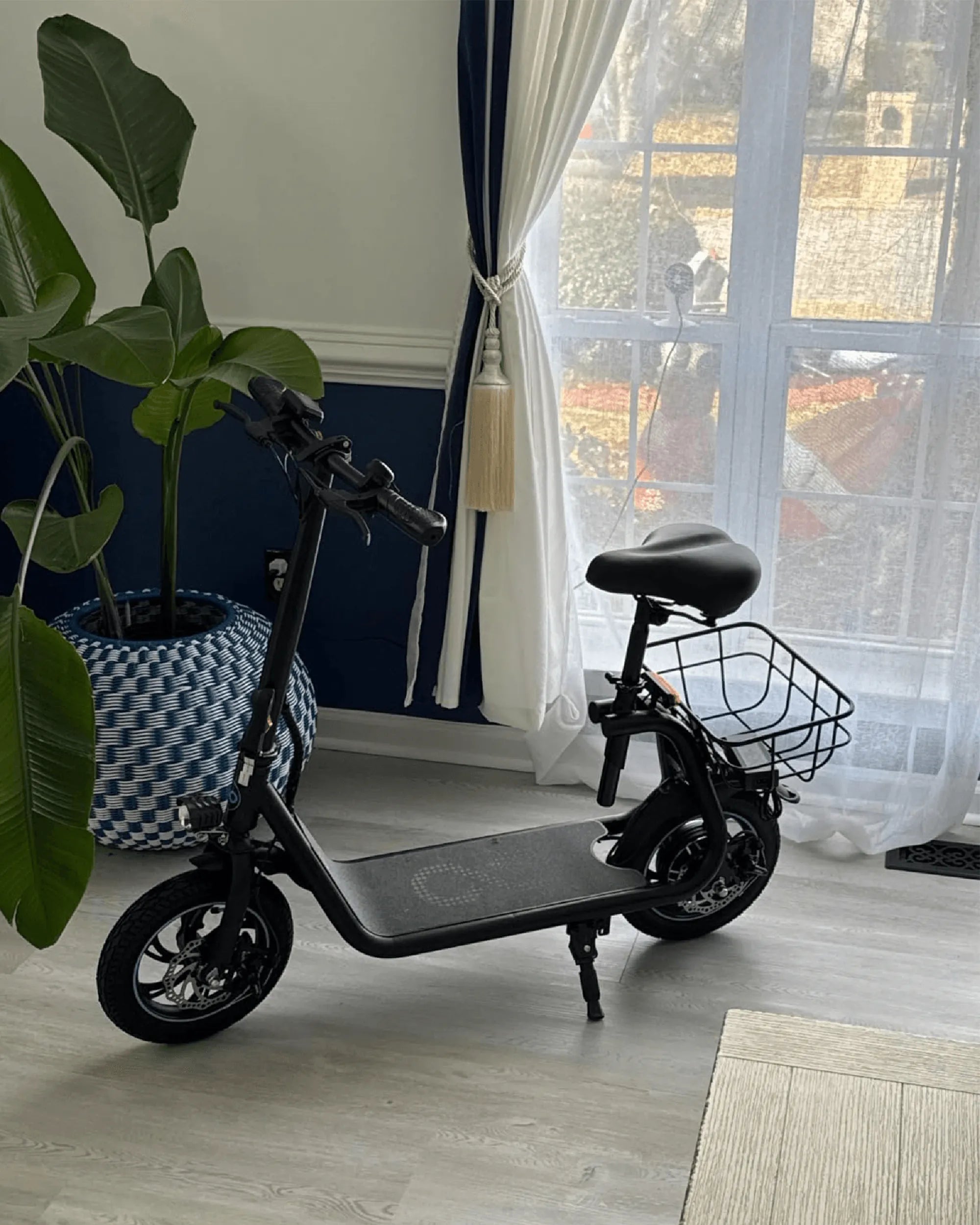
Forget everything you know about electric scooters. The primary barrier to adoption for serious commuters—range anxiety—is being shattered by a new class of high-performance machines. Electric scooters 150km 200km per charge are no longer a futuristic concept; they are available today, redefining urban and suburban mobility. This article explores how these extreme-range scooters work, who they are for, and the critical factors you must consider. We'll examine the engineering breakthroughs from leading brands like Gyroor, a trusted name with over 100,000 riders, that make commuting 50km or more on a single charge a practical, exhilarating reality.
The Technology Powering Extreme Range
Achieving 150-200km on a single charge is not just about installing a bigger battery. It's a symphony of advanced engineering where every component is optimized for maximum efficiency. The core of this revolution lies in three interconnected systems: high-density battery packs, ultra-efficient powertrains, and intelligent energy recovery.
At the heart of every long-distance electric scooter 150km 200km per charge model is a high-density lithium-ion battery pack. Modern cells offer significantly more energy storage per kilogram than those from just a few years ago. However, capacity alone isn't enough. The Battery Management System (BMS) is the unsung hero, constantly monitoring voltage, temperature, and current to protect the cells, balance charge, and maximize both lifespan and usable range.
The motor and controller must convert this stored energy into motion with minimal waste. High-torque, brushless hub motors paired with sine-wave controllers provide smooth, efficient acceleration. Regenerative braking systems capture kinetic energy during deceleration and feed it back into the battery, adding precious kilometers to your total range, especially in stop-and-go city traffic.
Battery Evolution: More Than Just Capacity
The leap to 200km ranges is powered by smart battery architecture, not just brute force. A quality pack for an electric scooter 150km 200km per charge uses premium, name-brand cells (like those from LG or Samsung) arranged in sophisticated configurations. The BMS ensures no single cell is overworked, which is critical for safety and longevity.
This intelligent management directly impacts real-world performance. It allows for more consistent power delivery as the battery depletes and enables features like fast charging without degrading the cells. For brands like Gyroor, using UL-certified battery packs tested for over 500 charge cycles is a non-negotiable standard, ensuring that the promise of long range is backed by long-term reliability and safety.
Aerodynamics & Weight Distribution
Efficiency extends beyond the drivetrain. Scooter design plays a crucial role in slicing through air resistance. A streamlined deck, integrated cabling, and a slightly inclined stem reduce drag, allowing the motor to work less at higher speeds. This aerodynamic efficiency is a key differentiator for models designed to sustain 40+ km/h over long distances.
Furthermore, strategic weight distribution is vital. Using aerospace-grade aluminum alloys keeps the frame light yet incredibly rigid, improving handling and reducing the energy required for acceleration. The placement of the heavy battery pack low and centered within the deck creates a stable, balanced ride, which is essential for safety and comfort during extended journeys.
Real-World Range vs. Claimed Range: A Data-Driven Breakdown
Manufacturer claims for an electric scooter 150km 200km per charge are typically derived under ideal laboratory conditions. Your actual mileage will vary based on a complex interplay of factors. Understanding this variance is key to setting realistic expectations and choosing the right scooter for your needs.
Rider weight is the most significant variable. Adding 20kg of load can reduce range by 15-20%. Terrain is equally critical; constant hill climbing can halve your range compared to riding on flat pavement. Your chosen riding mode has a massive impact. Eco mode, which limits top speed and acceleration, can extend range by 30-40% compared to a full-power Sport mode.
Environmental conditions and maintenance matter. Cold weather (below 10°C) reduces battery chemical efficiency, while under-inflated tires create rolling resistance. Average speed is also a factor; maintaining a steady 25 km/h is far more efficient than frequent stop-start riding or sustaining a top speed of 50 km/h.
| Factor | High Impact on Range | Low Impact on Range |
|---|---|---|
| Rider Weight & Cargo | Heavy rider (100kg+) with backpack | Light rider (60kg) with no cargo |
| Terrain | Hilly city with constant inclines | Flat, smooth bike paths |
| Riding Mode | Sport/Turbo mode enabled | Eco mode at constant speed |
| Tire Pressure | Significantly under-inflated tires | Optimally inflated, pneumatic tires |
| Ambient Temperature | Freezing winter conditions | Mild, 20°C spring/fall day |
| Estimated Range Variance | Claimed 200km → ~110km Real | Claimed 200km → ~180km Real |
Top Use Cases for 150-200km Electric Scooters
This new category of electric scooter 150km 200km per charge isn't for everyone. Its value proposition shines for specific users whose transportation needs align with its unique capabilities. These scooters transition from being a fun gadget to a serious tool for mobility and productivity.
For the urban professional with a 20km one-way commute, a long-range scooter means charging only once or twice a week. It enables spontaneous trips across the city without a second thought about battery life. The cost savings versus car ownership—eliminating fuel, parking, insurance, and maintenance—become substantial, often paying for the scooter itself within a year or two.
The Ultimate Urban Car Replacement
An electric scooter 150km 200km per charge is a legitimate alternative to a second car or even a primary vehicle in dense metropolitan areas. It can handle a week's worth of commuting, grocery runs, and social trips on a single charge. The convenience of bypassing traffic, coupled with virtually zero operating costs, presents a compelling case for sustainable urban living.
This use case highlights the importance of build quality and warranty. When a scooter becomes primary transportation, reliability is paramount. Brands that stand behind their products with comprehensive support, like Gyroor's 1-year warranty, provide the peace of mind necessary for this level of dependence.
Adventure & Off-Road Touring
For the recreational rider, extreme range unlocks exploration. A 200km capacity allows for full-day adventures on greenways, light trails, and country roads far beyond the city limits. This demands more than just a big battery; it requires a scooter built for durability.
Features like IPX5 water-resistance become essential for handling puddles and light rain. Robust suspension systems with front and rear shocks are needed to absorb bumps on uneven terrain. Wide, pneumatic tires provide necessary traction and comfort for longer rides on varied surfaces, making the journey as enjoyable as the destination.
Delivery & Gig Economy Professionals
For food delivery riders and couriers, time is money. A standard scooter might require a mid-shift charging stop, cutting into earnings. An electric scooter 150km 200km per charge can power through an entire 8-10 hour delivery shift on a single charge, maximizing active, income-generating time.
This professional use case stresses durability and low maintenance. The scooter will endure constant stop-start cycles, curb jumps, and heavy daily mileage. A robust motor, reliable brakes, and a sturdy deck designed for all-day comfort are not luxuries but necessities for this demanding application.
Key Considerations Before Investing in a Long-Range Scooter
Purchasing an electric scooter 150km 200km per charge is a significant investment. Beyond the excitement of extreme range, practical considerations around portability, safety, and long-term ownership are critical to ensuring your satisfaction.
The most immediate trade-off for a large battery is weight. Scooters in this class often weigh 30-40kg (66-88 lbs). While they may have a folding mechanism, they are not easily carried up flights of stairs or onto public transit. You must have secure, ground-floor storage at both ends of your commute.
The Trade-Offs: Weight, Charge Time, and Cost
Charging a massive battery takes time. Even with fast-charging technology, replenishing a 200km-capacity battery from empty can take 8 to 12 hours. This necessitates overnight charging as part of your routine. The upfront cost is also substantially higher than that of a short-range commuter scooter, though the total cost of ownership when replacing car trips is often lower.
These factors create a clear user profile: someone with a secure garage or storage area, a predictable daily mileage that doesn't require daily charging, and a budget that values long-term transportation savings over a low initial price.
Safety & Compliance at High Speeds
With great power comes great responsibility. Scooters capable of 40-50 km/h (25-31 mph) require appropriate safety gear. A full-face helmet, motorcycle-grade gloves, knee and elbow pads are strongly recommended. At these speeds, a fall can result in serious injury.
You must also be intimately familiar with local laws. Regulations for electric scooters vary wildly by city, state, and country. Many areas have speed limits for bike paths (often 25 km/h), power limits (typically 500W), or outright bans on certain types of vehicles. Riding a high-performance scooter responsibly means respecting these rules to ensure the safety of yourself and others.
The Importance of Warranty and Service
A long-range scooter is a complex piece of machinery. When you invest $1,500 to $3,000, a strong warranty is your safety net. Look for comprehensive coverage that includes the battery, motor, and frame for at least one year. A brand's reputation for customer service is as important as the warranty document itself.
Can you easily get replacement parts like tires, brake pads, or a throttle? Is there accessible technical support? Brands like Gyroor, which have established a track record with over 100,000 riders and offer clear support channels, reduce the risk of your investment becoming a costly paperweight if an issue arises.
Performance Comparison: Long-Range vs. Standard Commuter Scooters
To understand the value proposition of an electric scooter 150km 200km per charge, it's helpful to compare it directly to the standard commuter scooters that dominate the market. The differences extend far beyond just the range number on the spec sheet.
Standard commuter scooters (with 25-40km range) prioritize portability and affordability. They are lightweight (15-25kg), charge quickly (3-5 hours), and are perfect for last-mile connections from transit or short urban hops. Their motors (250-350W) are sufficient for flat terrain at moderate speeds.
In contrast, long-range models are built for endurance and performance. They feature powerful motors (500W to 1000W+) for tackling hills and maintaining higher speeds. Their frames are heavier and more robust to handle the stress of longer rides. The suspension is more sophisticated, and the brakes are more powerful (often dual hydraulic or disc) to manage the higher weight and speed.
The choice ultimately comes down to use case. If your daily travel is under 15km round-trip and you need to carry your scooter, a standard model is ideal. If you seek to replace car trips, have a long commute, or desire a vehicle for weekend exploration, the long-range electric scooter 150km 200km per charge is the only viable option, despite its trade-offs in weight and cost.
Maintenance and Care for High-Mileage Riders
Owning a high-performance electric scooter 150km 200km per charge is similar to owning a performance bicycle or motorcycle. Regular maintenance is not optional; it is essential for safety, performance, and maximizing the lifespan of your investment.
Weekly, check tire pressure. Under-inflated tires are the number one cause of preventable range loss and increase the risk of pinch flats. Monthly, inspect the brake pads for wear and test the brake levers for responsiveness. Ensure all bolts, especially those on the stem, handlebars, and folding mechanism, are tight and secure.
Keep the scooter clean, especially after riding in wet or dirty conditions. Wipe down the deck and frame, and check that the charging port cover is securely closed. Avoid spraying water directly at bearings or the deck. Store the scooter in a dry place, and if storing for an extended period, keep the battery charge between 40-60%.
Most importantly, follow the manufacturer's guidelines for battery care. Avoid consistently draining the battery to 0% or leaving it at 100% charge for weeks. Using the official charger is critical, as incompatible chargers can damage the BMS and pose a fire risk. Proper care ensures the UL-certified battery delivers on its promised 500+ cycle lifespan.
FAQ: Your Long-Distance Scooter Questions Answered
Q: How long does it take to charge a scooter with a 200km range?
A: Charging times vary by battery capacity and charger output. For a typical 1.5 kWh battery, a standard charger (2A) may take 10-12 hours. Some models offer optional fast chargers (4A-5A) that can cut this time to 5-7 hours. Always use the manufacturer's recommended charger.
Q: Can I ride a long-range scooter in the rain?
A: This depends entirely on the scooter's IP (Ingress Protection) rating. An IPX5 rating, like that found on many Gyroor models, means the scooter is protected against water jets from any direction, making it safe for riding in rain and through puddles. Never submerge any part of the scooter, and always dry it off after a wet ride.
Q: What maintenance does a high-performance e-scooter require?
A> Regular maintenance includes checking and inflating tires, inspecting and adjusting brakes, ensuring all bolts are tight, and keeping the scooter clean. Annually, or after every 1,000 km, a more thorough check of bearings, suspension components, and electrical connections by a professional is advisable.
Q: Are these scooters suitable for heavier riders?
A> Yes, but with caveats. Long-range scooters are generally built with more robust frames and motors, often supporting maximum rider weights of 120-150kg (265-330 lbs). However, a heavier rider will experience reduced range and acceleration. Always check the manufacturer's specified maximum load capacity before purchasing.
Q: Is the high upfront cost worth it compared to a cheaper scooter?
A> The value calculation depends on your use. If you will use it to replace car trips, the savings on fuel, parking, and maintenance can justify the cost within 1-2 years. For a casual rider making short trips, a cheaper scooter may suffice. The investment in an electric scooter 150km 200km per charge pays off through utility, reliability, and the freedom of never worrying about your battery.
Conclusion: Redefining Personal Mobility
The era of the electric scooter 150km 200km per charge marks a fundamental shift in personal electric vehicles. They have evolved from niche gadgets and last-mile solutions into legitimate primary transportation for a growing number of urban and suburban residents. This leap is powered by real advancements in battery safety, motor efficiency, and durable design from committed brands.
By eliminating range anxiety, these scooters offer a compelling alternative to car ownership, reducing congestion, pollution, and personal transportation costs. The future of long-distance commuting is not found in bigger cars, but in smarter, more efficient personal vehicles. It is found in machines that prioritize safety through UL-certification, reliability through robust engineering, and freedom through unprecedented range.
Ready to explore the future of your commute? Discover scooters built for distance, durability, and daily adventure. Browse the full Gyroor collection at gyroorboard.com and find the model that will transform how you move.
Electric Scooters for Adults Under $100: Affordable and Efficient Commuting Solutions
Small Electric Mobility Scooters for Adults: Your Guide to Efficient Travel