


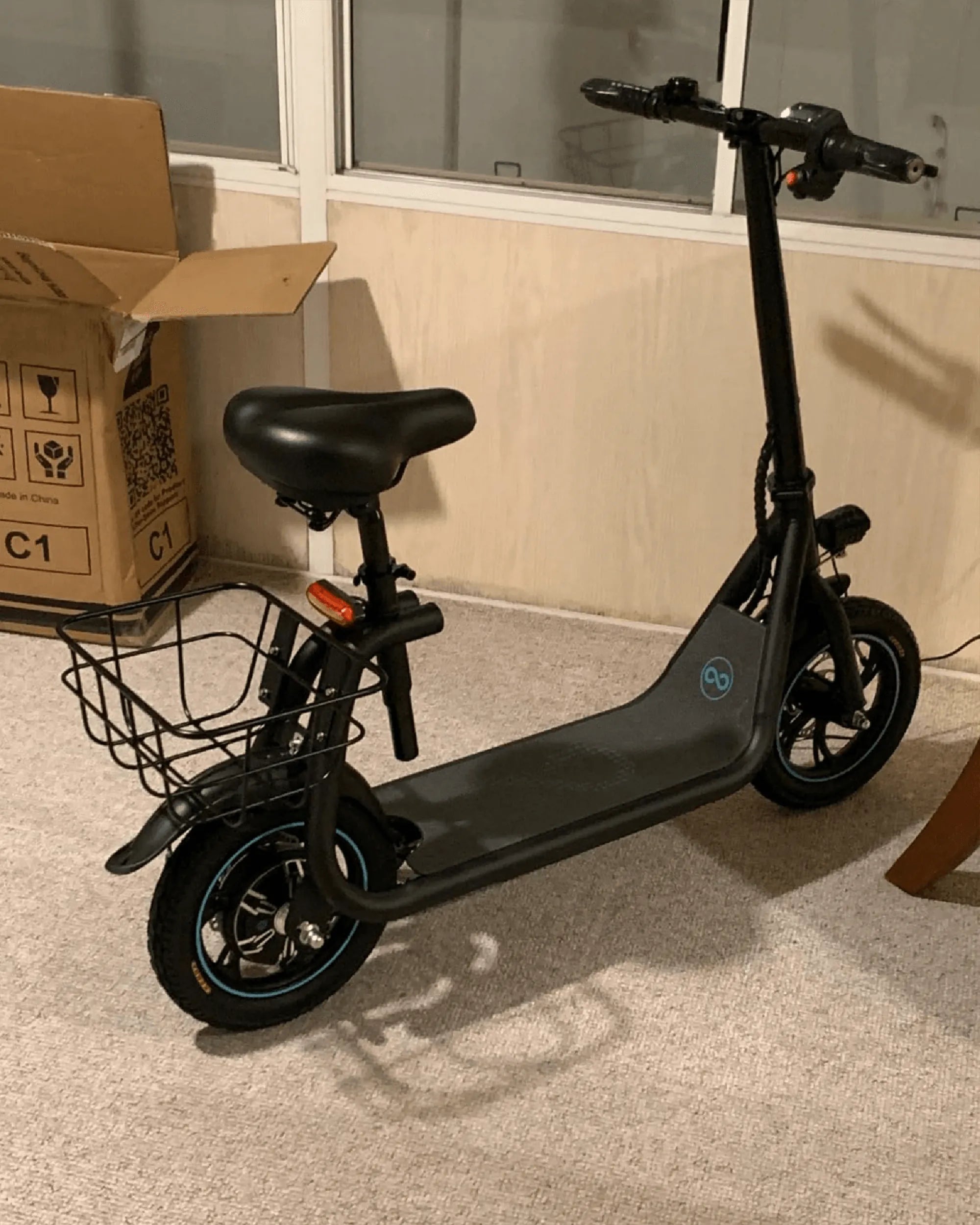
Introduction: The 25 MPH Sweet Spot in Urban Mobility
For urban commuters, the quest for the perfect personal electric vehicle often centers on one critical metric: speed. Electric scooters 25 MPH have emerged as the undisputed sweet spot, offering a powerful combination of practical velocity, regulatory compliance, and rider safety. This speed class is not an arbitrary number; it is the calculated convergence of engineering capability, legal frameworks, and human factors.
Choosing an electric scooter is about balancing the need for efficiency with the realities of city infrastructure. Scooters that are too slow (15-20 MPH) can feel sluggish, failing to significantly outpace bicycle traffic or reduce commute times meaningfully. Conversely, models pushing 30+ MPH often venture into a legal gray area, requiring licensing, registration, or confinement to private property, while also demanding a higher degree of rider skill.
This guide will dissect every facet of the 25 MPH electric scooter, from the legal landscape that defines its utility to the engineering that makes it reliable. We will explore why this specific speed threshold is transforming urban commutes for over 100,000 riders who trust brands like Gyroor for their daily travel. The focus is on intelligent mobility—achieving maximum practical speed without sacrificing safety, legality, or battery efficiency.
You will learn what specifications truly matter, how to maximize your range, and what to look for in a scooter built to handle 25 MPH day in and day out. The goal is to equip you with the knowledge to make an informed decision about a vehicle that can genuinely replace a car for short to medium urban trips.
Why 25 MPH? The Legal and Practical Framework
The prevalence of 25 MPH as a top speed for premium commuter scooters is directly tied to legislation. In the United States, electric scooter laws are primarily set at the state and municipal levels. A common regulatory framework classifies low-speed electric bicycles and scooters with a maximum speed of 20 MPH differently from those capable of higher speeds.
Many cities and states have adopted regulations where electric scooters with a top speed under 20-28 MPH are allowed on bike lanes and roads without requiring a driver's license, vehicle registration, or insurance. The 25 MPH specification deliberately positions these scooters within this widely accepted bracket, offering near-maximum legal speed for unimpeded use.
In the European Union, regulations for Personal Light Electric Vehicles (PLEVs) often follow a similar pattern. The 25 km/h (approximately 15.5 MPH) limit for pedal-assist e-bikes is a key benchmark, but many jurisdictions allow higher-powered stand-up scooters up to certain limits, often around 25-28 MPH, on designated paths, provided they meet specific safety standards.
Beyond legality, 25 MPH is a practical speed for urban environments. It matches or slightly exceeds the average speed of city traffic, which is frequently between 20-25 MPH due to lights and congestion. This allows the scooter rider to keep pace with the flow of traffic, increasing safety and predictability. It is fast enough to feel efficient and exhilarating, yet slow enough for most riders to maintain control and react to obstacles.
The Commuter's Math: Time Saved at 25 MPH
The efficiency gain of a 25 MPH scooter becomes starkly clear with simple math. Commute time is not just about top speed; it's about sustained average speed. A scooter that can comfortably cruise at 25 MPH on clear paths significantly outperforms slower models in real-world conditions.
Consider a 5-mile urban commute. A scooter with a sustained average speed of 15 MPH would complete this trip in 20 minutes. At 20 MPH, the time drops to 15 minutes. A scooter maintaining a 25 MPH average cuts the journey to just 12 minutes. That’s a 40% reduction in commute time compared to the 15 MPH model and a 20% saving over the 20 MPH scooter.
Over a five-day work week, the 25 MPH scooter saves 40 minutes of commute time compared to the 20 MPH option. Over a year, that accumulates to over 34 hours saved—almost a full work week. This table illustrates the compounding time savings:
| Average Speed | Time for 5-Mile Trip | Weekly Time (10 trips) | Annual Time Savings* |
|---|---|---|---|
| 15 MPH | 20 minutes | 200 minutes | Base |
| 20 MPH | 15 minutes | 150 minutes | ~43 hours saved |
| 25 MPH | 12 minutes | 120 minutes | ~69 hours saved |
*Based on 250 commuting days/year.
This tangible time efficiency translates directly to quality of life, making a 25 MPH electric scooter a powerful tool for reclaiming your day. It transforms the scooter from a novelty into a legitimate, time-competitive transportation solution.
Engineering for Efficient Speed: What Makes a Reliable 25 MPH Scooter?
Reaching a top speed of 25 MPH is one thing; maintaining it safely, efficiently, and reliably is an engineering challenge. It requires a harmonious balance of power, energy, and control. Not all motors and batteries are created equal, and the components that enable this performance are what separate premium scooters from disposable ones.
The heart of the system is the motor. For consistent 25 MPH performance, especially with a rider of average weight and on mild inclines, a nominal motor power of 500W to 800W is typically required. It's crucial to understand the difference between nominal and peak power. A high peak power might achieve the speed briefly, but a robust nominal power ensures the scooter can sustain 25 MPH without overheating or straining the battery.
Equally critical is the battery system. A scooter needs a high-capacity, high-quality battery pack not just for range, but to deliver the consistent current (amps) required by the motor at top speed. Voltage (often 36V, 48V, or 52V) determines potential speed and torque, while amp-hour (Ah) rating relates to range. A quality 25 MPH scooter will feature a battery with a management system (BMS) that protects against overcharge, deep discharge, and short circuits.
This is where certifications matter. Gyroor utilizes UL-certified lithium-ion battery packs in its performance models. This certification is an independent verification of safety, indicating the battery cells and pack assembly have passed rigorous tests for electrical, mechanical, and environmental safety. For a vehicle traveling at 25 MPH, this is non-negotiable for long-term reliability and rider peace of mind.
Beyond the Motor: Stability and Safety at Higher Speeds
Power alone does not make a safe 25 MPH scooter. The chassis and components must be designed for stability at higher velocities. The most important factor is wheel size. While 8-inch wheels are common on entry-level scooters, 10-inch or larger pneumatic (air-filled) tires are essential for 25 MPH travel.
Larger wheels provide greater stability, roll over cracks and imperfections more smoothly, and offer better traction. They drastically reduce the "wobble" that can occur at speed on smaller, solid tires. A longer wheelbase—the distance between the front and rear axles—also contributes significantly to high-speed stability.
A robust braking system is paramount. At 25 MPH, stopping distance increases. A combination of braking mechanisms is ideal, such as a front electronic regenerative brake (which also recovers some energy) paired with a rear mechanical disc brake. Disc brakes offer superior stopping power and consistency compared to drum or foot brakes, especially in wet conditions.
Finally, durability against the elements is key. Commuting is a daily activity, and riders encounter dust, puddles, and light rain. A scooter's Ingress Protection (IP) rating indicates its resistance. Gyroor designs its performance scooters with an IPX5 water-resistant rating. This means the scooter can withstand water jets from any direction, making it capable of handling wet roads and unexpected rain showers, protecting the sensitive electronic and battery components within.
Gyroor's 25 MPH Lineup: Models Built for the Real World
Gyroor's engineering philosophy centers on delivering reliable, real-world performance. Their 25 MPH-capable models are designed not as toys, but as legitimate transportation tools, backed by a comprehensive 1-year warranty and US-based customer support. Here’s an overview of how their lineup caters to different commuter needs within this performance bracket.
The Gyroor S1 Pro exemplifies the commuter-focused performance scooter. Built around a 500W nominal (800W peak) motor and a 48V 15.6Ah UL-certified battery, it is engineered to hit and hold 25 MPH with ease. Its 10-inch pneumatic tires and front suspension absorb urban road imperfections, while the dual braking system (electronic + disc) ensures confident stops. The IPX5 rating makes it a true all-weather companion.
For riders prioritizing extended range alongside speed, models with larger battery capacities are key. A scooter with a 48V 18Ah or higher battery can maintain 25 MPH speeds for longer distances, turning a 15-20 mile real-world range into a 25-30 mile possibility. This expands the radius of practical commutes and reduces the frequency of charging.
Portability is another consideration. Some 25 MPH scooters feature innovative folding mechanisms that reduce their footprint for easy carrying onto public transit or storage under a desk. Gyroor balances this portability with a rigid, latch-locking folding mechanism that eliminates stem wobble—a critical safety feature when riding at higher speeds. The brand’s commitment is clear: every model in this category is built to deliver safe, sustained 25 MPH performance without compromise, backed by certified components and dependable support.
Maximizing Your Ride: Tips for Range and Battery Longevity at 25 MPH
Riding at top speed has the greatest impact on your scooter's range. Understanding how to optimize your ride can mean the difference between confidently reaching your destination and pushing your scooter the last mile. The key is managing the relationship between speed, acceleration, and battery load.
Your riding style is the largest variable. Jackrabbit starts—accelerating to top speed as quickly as possible—draw massive current from the battery and drastically reduce range. Instead, use a smooth, gradual acceleration. Once at your cruising speed (e.g., 25 MPH), try to maintain a steady throttle. Constant speed is far more efficient than frequent speeding up and slowing down. Utilizing cruise control features, if available, can aid in this.
Tire pressure is a simple yet often overlooked factor. Under-inflated tires create significantly more rolling resistance, forcing the motor to work harder and consume more battery to maintain speed. Check your tire pressure weekly and keep it at the manufacturer's recommended PSI. This single action can improve your range by 5-10%.
Terrain and rider weight are fixed variables but must be planned for. Hills, headwinds, and heavier loads (rider + backpack) will reduce your top speed and range. Plan your route to use bike paths with gentle grades when possible. For battery care, always use the provided charger and avoid letting the battery fully deplete. For long-term storage, keep the battery at a 50-80% charge. Following these practices with your UL-certified battery pack will ensure it delivers its full 500+ charge cycle lifespan, maintaining performance for years.
Frequently Asked Questions (FAQ) About 25 MPH Electric Scooters
Q: Is 25 MPH too fast for a beginner?
A: It can be intimidating at first. We strongly recommend beginners start in a safe, open area like an empty parking lot. Practice acceleration, braking, and turning at low speeds before gradually increasing. Always wear a helmet. Most riders adapt quickly, and the stability of a well-built 25 MPH scooter actually inspires confidence compared to a wobbly, under-powered model.
Q: How far can I really go on a single charge at 25 MPH?
A> Manufacturer range estimates are often based on ideal conditions: a light rider on flat ground at a constant 15 MPH. Real-world range at a sustained 25 MPH is typically 60-70% of the advertised maximum. For example, a scooter rated for 40 miles at 15 MPH might achieve 25-28 miles at 25 MPH. Factor in your weight, hills, and stops for an accurate estimate.
Q: What safety gear is mandatory for riding at 25 MPH?
A> At a minimum, a properly fitted bicycle or multi-impact helmet is essential. We highly recommend additional gear: gloves can protect your hands in a fall, and knee/elbow pads are advisable, especially for new riders. Bright, reflective clothing and a helmet light or front light are crucial for visibility to vehicles at night.
Q: Are 25 MPH electric scooters allowed on bike paths and trails?
A> This is entirely dependent on local laws. In many cities, yes, they are permitted in bike lanes. On multi-use pedestrian/bike paths, there may be lower speed limits (e.g., 15 MPH). It is the rider's responsibility to know and obey all local regulations, which can vary from one neighborhood to the next. Always yield to pedestrians.
Q: What does the Gyroor warranty cover, and how does support work?
A> Gyroor offers a 1-year comprehensive warranty covering manufacturing defects in the frame, motor, battery, and electronic components. The UL-certified battery has its own specific warranty period. Support is provided through a US-based team, ensuring responsive communication and access to replacement parts, which distinguishes it from brands that only offer offshore support.
Conclusion: The Intelligent Choice for Modern Commuters
The 25 MPH electric scooter has solidified its position as the optimal solution for the urban commuter. It successfully navigates the complex intersection of desire and regulation, offering a speed that meaningfully shrinks commute times while remaining within the legal frameworks of most municipalities. This guide has demonstrated that this performance is not merely about a number on a display; it is the result of deliberate engineering focused on motor power, battery safety with UL-certification, chassis stability, and weather-resistant durability.
Choosing a scooter in this category is an investment in daily efficiency and personal freedom. The time savings are quantifiable and substantial, transforming tedious trips into quick, enjoyable journeys. However, this investment must be made wisely. Opting for a scooter from a reputable brand that prioritizes certified components, robust construction, and reliable customer support is crucial for safety and long-term satisfaction.
Brands like Gyroor have built their reputation on this very premise—delivering real-world performance without cutting corners on safety or support. When your vehicle is capable of 25 MPH, the quality of its brakes, the integrity of its battery, and the stability of its frame are not just features; they are fundamental safeguards.
Ready to experience the perfect balance of speed, efficiency, and reliability? Explore the full range of high-performance, UL-certified electric scooters engineered for the demands of the modern commute. Browse the full Gyroor collection at gyroorboard.com and find the 25 MPH scooter designed for your journey.
New Electric Scooters: The Future of Urban Mobility
Electric Chair Scooters for Adults: The Ultimate Guide to Mobility and Independence