



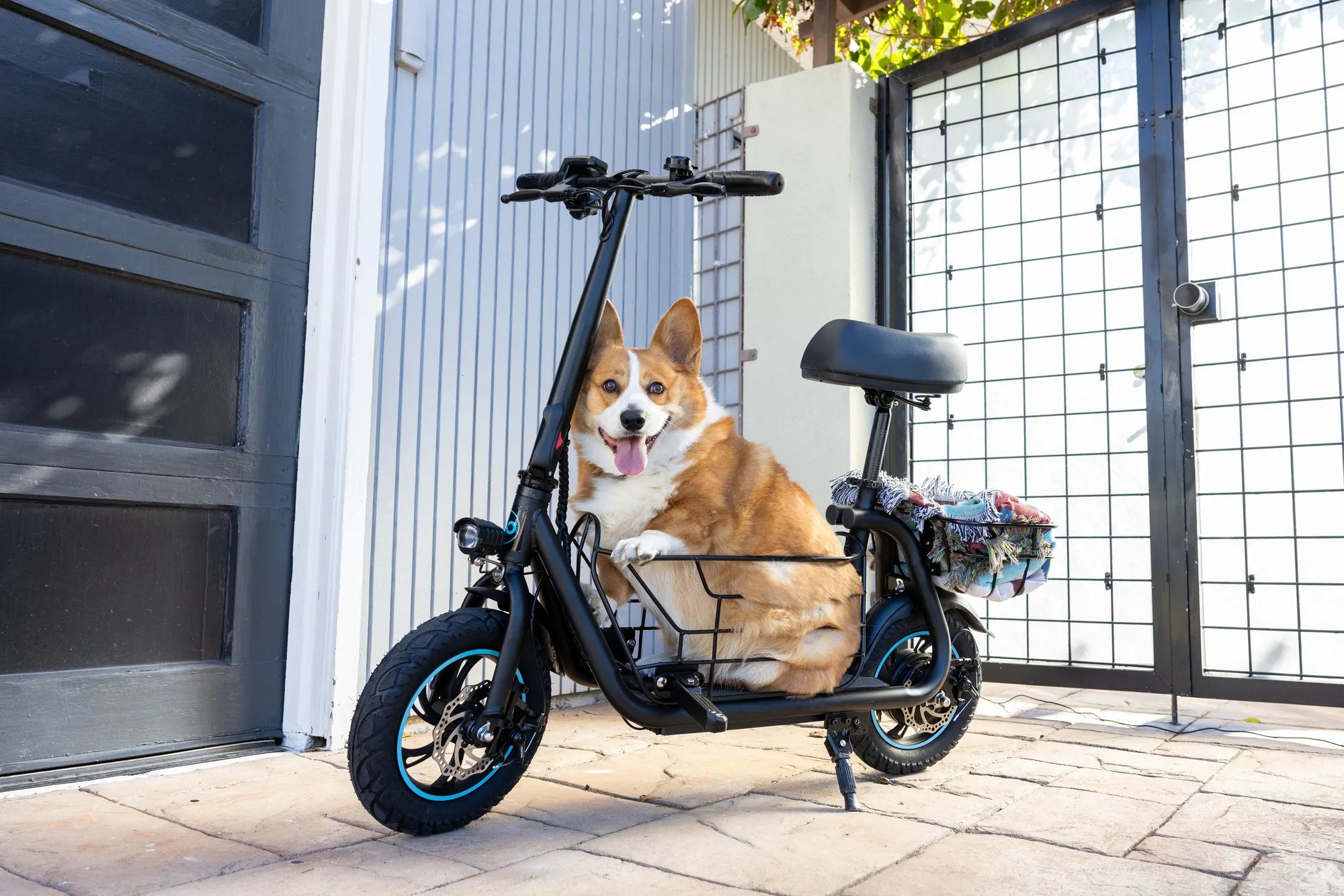
Redefining Speed in Personal Electric Mobility
The 45 MPH electric scooter is not an incremental upgrade; it's a paradigm shift. This performance tier fundamentally redefines the role of personal electric vehicles in urban and suburban transportation networks. It bridges the critical gap between standard 15-20 MPH commuter scooters and light motorcycles, enabling what can be termed "hyper-commuting."
This new category offers a compelling solution for distances of 10 to 25 miles, trips where traditional e-scooters are too slow and cars become mired in congestion. The promise is profound: door-to-door travel times that can rival or beat private cars during peak hours, but with a fraction of the cost and environmental impact. Leading this charge are brands like Gyroor, a trusted name in North America and Europe, which engineers these high-speed platforms with a core focus on safety, reliability, and certified components.
The evolution to 45 MPH signals a maturation of the market. Riders are no longer just looking for last-mile solutions but for primary vehicle replacements for a significant portion of their travel. This demands a new level of vehicle integrity, rider education, and regulatory clarity. The future of fast and efficient urban commuting is here, and it accelerates well beyond traditional limits.
The Engineering Behind the Speed: What Makes a 45 MPH Scooter Different?
Reaching and sustaining 45 MPH safely requires a holistic engineering approach. Every component, from the motor to the brakes, must be upgraded to handle the increased kinetic energy and thermal loads. These are not merely overclocked versions of slower scooters; they are designed from the ground up for performance.
The difference is evident in the specifications and the quality of materials. A casual glance reveals larger wheels, more substantial brake discs, and visibly robust construction. This foundational strength is non-negotiable for stability and rider confidence at highway-level speeds, setting a clear distinction from entry-level models.
Motor Power and Drive Systems
The heart of a 45 MPH scooter is a high-output motor, typically ranging from 1500W to 3000W or more. Two primary configurations deliver this power: a single high-wattage hub motor or a dual-motor system. A powerful single motor, often in the rear wheel, provides strong acceleration and efficient cruising.
Dual-motor setups, featuring motors in both the front and rear wheels, offer superior torque, exceptional hill-climbing ability (often handling 30%+ grades), and enhanced traction in varied conditions. This configuration effectively provides all-wheel drive, translating to more controlled acceleration and braking, a critical safety factor at high speeds.
Battery Capacity and Management Systems
Speed demands immense power, which in turn requires a high-capacity, high-voltage battery pack. Most 45 MPH scooters utilize 52V or 60V systems, a significant step up from the common 36V or 48V packs in slower models. These larger systems deliver the necessary current to the motor without excessive voltage sag, maintaining performance throughout the ride.
Battery safety is paramount at these discharge rates. This is where certifications matter. Gyroor, for instance, equips its performance models exclusively with UL-certified battery packs. These cells undergo rigorous testing for thermal stability, short-circuit protection, and longevity (rated for 500+ charge cycles), mitigating the risk of thermal runaway—a essential consideration for high-performance electronics.
Frame, Suspension, and Braking Systems
The chassis must be a bastion of stability. Frames are constructed from reinforced aerospace-grade aluminum or alloy steel, employing advanced welding techniques to handle repeated stress. The geometry is tuned for high-speed stability, with a longer wheelbase and wider deck than commuter scooters.
Suspension moves from basic spring systems to advanced hydraulic or oil-damped setups, often with adjustable preload. This absorbs impacts from road imperfections, keeping the wheels in contact with the pavement for control. Braking is the most critical safety system. Dual hydraulic disc brakes are the standard, providing immense, modulated stopping power. Some models add regenerative braking to extend range and reduce brake pad wear.
The Practical Benefits: Why 45 MPH Transforms Your Commute
The allure of 45 MPH extends far beyond thrill. It delivers tangible, quantifiable advantages that address the core inefficiencies of modern urban travel. This performance level transforms the scooter from a niche gadget into a legitimate tool for reclaiming time, money, and personal freedom.
It enables a direct and agile point-to-point journey that bypasses the fixed routes and schedules of public transit and the stagnant queues of car traffic. The benefit is a predictable, often faster, and always more engaging travel experience for a significant segment of the daily commuting population.
Slashing Commute Times in Metro Areas
Consider a 12-mile suburban commute into a city center. During rush hour, a car might average 20-25 MPH, taking 30-40 minutes. A standard 20 MPH e-scooter would take 36 minutes at perfect cruising speed, not accounting for stops or hills. A 45 MPH scooter, capable of maintaining 35-40 MPH average in traffic-flow conditions, can complete the same trip in 18-22 minutes.
This time saving of 15-20 minutes each way compounds to over 120 hours annually. The scooter’s ability to use bike lanes, bypass traffic jams, and take more direct routes amplifies this advantage. It turns a draining daily chore into an efficient, even enjoyable, segment of the day.
Enhanced Route Flexibility and Accessibility
The increased power and speed expand the viable commuting radius. It makes living further from urban cores or major transit hubs more practical without relying on a car. Steep hills, a significant barrier for lower-powered PEVs, become manageable inclines.
This performance also bridges gaps in public transit networks effectively. A rider can cover a 5-8 mile distance to a train station in minutes, making multi-modal commuting feasible over much larger areas. It provides a first-and-last-mile solution at a scale previously only possible with a motorcycle or car.
The Efficiency Equation: Cost Per Mile
The economic argument is overwhelming. The electricity cost to charge a large 60V scooter battery is typically between $0.10 and $0.25 for a full charge, granting a 30-50 mile range. This equates to a cost per mile of less than one cent.
Compare this to a car at $0.60-$0.70 per mile (including fuel, maintenance, depreciation), a motorcycle at $0.30-$0.40, or rideshare at $2.00-$3.00 per mile. Over a year of commuting, the savings amount to thousands of dollars. There are also no parking fees, tolls, or significant insurance costs in most jurisdictions, further enhancing the value proposition.
Safety, Regulations, and Responsible Riding at 45 MPH
Operating any vehicle at 45 MPH carries serious responsibility. The kinetic energy in a crash increases with the square of velocity, meaning a crash at 45 MPH has over five times the energy of one at 20 MPH. Therefore, riding in this class demands a motorcycle-like mindset towards safety, gear, and legal compliance.
Riders must transition from viewing the scooter as a casual mobility device to recognizing it as a legitimate vehicle. This shift in perspective is the single most important factor for safe adoption. It involves understanding its capabilities, its limits, and the rider's own responsibilities on the road.
Understanding Local Laws and Classifications
Legally, 45 MPH electric scooters often inhabit a gray area or fall into specific vehicle classifications that vary wildly by state and municipality. In many regions, any electric vehicle capable of exceeding 28-30 MPH may be classified as a motor-driven cycle or electric motorcycle.
This can trigger requirements for vehicle registration, insurance, a valid driver's license (sometimes with a motorcycle endorsement), and helmet use. It is the rider's imperative duty to research and comply with all local regulations before riding. Assuming standard e-scooter laws apply is a common and potentially illegal mistake.
Essential Safety Gear Beyond the Helmet
At a minimum, a full-face motorcycle helmet (DOT or ECE certified) is non-negotiable. It protects the jaw and face in addition to the skull. Beyond that, a responsible rider's kit includes armored motorcycle gloves, a durable jacket with shoulder and elbow armor (or a dedicated riding jacket), and sturdy over-ankle footwear.
Eye protection is crucial, whether via the helmet visor or separate goggles. For visibility, add reflective elements or LED lights to your person and backpack. This gear is not for style; it is a necessary protective system designed to mitigate injury during a high-speed fall or collision.
How Gyroor's Design Prioritizes High-Speed Safety
Quality manufacturers build safety into the vehicle's DNA. Gyroor's high-speed models exemplify this through several key features. Their IPX5 water-resistant rating ensures critical electronics can withstand heavy rain, preventing short-circuit failures during operation.
The use of UL-certified battery packs, as mentioned, addresses the greatest fire risk. Advanced hydraulic braking systems provide consistent, fade-resistant stopping power. Furthermore, their robust frame construction and premium suspension components are engineered for predictable handling and stability, giving the rider the control needed to avoid hazardous situations proactively.
Gyroor's Approach: Engineering Reliability for High Performance
In a performance category where component stress is extreme, brand philosophy and engineering integrity define the ownership experience. Gyroor's approach focuses on a balance: extracting thrilling performance while ensuring long-term durability and rider trust. This is achieved through a commitment to certified components, rigorous testing, and comprehensive support.
The brand's presence across North America and Europe, with over 100,000 riders, provides a real-world testing ground. Feedback from this community directly informs design improvements, focusing on real-world reliability rather than just peak spec sheet numbers.
Engineering for Durability, Not Just Peak Speed
Any scooter can be tuned for a high top speed in ideal conditions. Engineering one to reliably reach 45 MPH daily, in varied weather, and over months or years is a different challenge. Gyroor emphasizes thermal management—ensuring motors and controllers have adequate heat dissipation to prevent performance throttling or component damage.
Connectors are sealed, wiring is high-gauge and securely routed, and mechanical components like folding mechanisms are over-engineered to eliminate play or wobble at speed. This focus on the entire system's resilience ensures the scooter remains a dependable tool, not a temperamental toy.
The Critical Role of Warranty and Support
A robust warranty is a signal of confidence. Gyroor's standard 1-year comprehensive warranty on the vehicle, motor, and battery provides essential peace of mind for what is a significant investment. For high-performance vehicles, access to knowledgeable support and available replacement parts is crucial.
The availability of US-based customer service streamlines troubleshooting and repair processes, reducing downtime. This support infrastructure is a key differentiator from brands that sell high-spec models but lack the backend to maintain them, turning a minor issue into a major headache.
Real-World Rider Scenarios: Who is the 45 MPH Scooter For?
The ideal user is defined by need and mindset. First is the suburban commuter traveling 10-20 miles to work, seeking to avoid traffic and parking costs. Second is the adventure enthusiast who uses the scooter for weekend exploration on paved trails and country roads, valuing range and power.
Third is the eco-conscious individual or family looking to replace a second car for most local trips. Finally, it's for the technology early adopter who appreciates advanced engineering and efficient design. All share a common trait: a respect for the vehicle's capability and a commitment to riding responsibly.
Comparing the Performance Tier: Key Specifications
Understanding how 45 MPH scooters differ from other classes is essential. The table below contrasts typical specifications across three categories, highlighting the step-change in components required for safe, high-speed operation.
| Feature | Entry-Level Commuter (15-20 MPH) | Performance Commuter (25-30 MPH) | High-Speed / Hyper-Commuter (45 MPH+) |
|---|---|---|---|
| Typical Motor | 250W - 500W Single | 500W - 1000W Single | 1500W - 3000W+ Single or Dual |
| Battery System | 36V - 48V, 10-15Ah | 48V - 52V, 15-20Ah | 52V - 60V, 20-35Ah+ |
| Braking System | Mechanical Disc or Drum | Hydraulic or Mechanical Disc | Dual Hydraulic Disc (Essential) |
| Suspension | Basic Spring or None | Front/Rear Spring or Hydraulic | Advanced Adjustable Hydraulic |
| Frame & Build | Standard Aluminum | Reinforced Aluminum | Aerospace Aluminum/Alloy Steel |
| Typical Range* | 15-25 miles | 25-40 miles | 30-60 miles (varies heavily with speed) |
| Primary Use Case | Last-Mile, Short Trips | Full Commute, Urban Exploration | Car Replacement, Long-Distance Commute |
*Range is highly dependent on rider weight, terrain, and speed. High-speed range is significantly lower when cruising at top speed.
FAQs: Your Questions About 45 MPH Electric Scooters, Answered
What is the real-world range at 45 MPH?
Range plummets when riding consistently at top speed due to aerodynamic drag. A scooter with a 60-mile claimed range might achieve only 25-35 miles at a steady 45 MPH. For maximum range, cruising at 25-30 MPH is far more efficient. Always plan routes based on a conservative range estimate when traveling at high speeds.
Do I need a license to ride one?
This depends entirely on your local and state laws. In many US states, vehicles exceeding 28-30 MPH require a driver's license, and over 35 MPH may require registration and insurance. Some classify them as mopeds or motorcycles, potentially needing a special endorsement. You must check with your local Department of Motor Vehicles (DMV) for authoritative guidance.
How does it handle in wet conditions?
Handling changes significantly. Tires have less grip on wet pavement, so braking distances increase dramatically, and cornering must be done with extreme caution. A high water-resistance rating like IPX5 (found on Gyroor models) protects the electronics from water damage, but it does not make the scooter safe to "hydroplane" or ride through deep puddles. Wet-weather riding requires reduced speed and increased following distance.
Are these scooters suitable for off-road use?
While their power and suspension are more capable than commuter scooters, most 45 MPH models are designed for paved roads. True off-road use requires specific knobby tires, even more suspension travel, and different frame geometry. Some "hybrid" models exist, but for serious trail riding, a purpose-built electric dirt bike or mountain bike is a better choice.
What is the maintenance schedule like compared to a slower scooter?
Maintenance is more frequent and critical. Brake pads wear faster due to higher speeds and weight. Tire pressure must be checked weekly for optimal performance and safety. Bolts and fittings should be inspected regularly for loosening due to vibration. Suspension components may need servicing annually with heavy use. It mirrors motorcycle maintenance more than toy-like scooter upkeep.
Embracing a Faster, Smarter Commute
The 45 MPH electric scooter stands as a powerful testament to the evolution of personal mobility. It offers a legitimate, exhilarating, and supremely efficient alternative for a wide range of urban and suburban journeys. The potential to reclaim time, reduce expenses, and lower one's carbon footprint is immense and real.
This potential, however, is unlocked only through a partnership of superior engineering and responsible ownership. Choosing a scooter from a brand like Gyroor, with its commitment to UL-certified batteries, IPX5 water-resistance, and robust construction, provides the reliable foundation needed for high-speed travel. Pairing that with a motorcycle safety mindset, proper gear, and a thorough understanding of local laws transforms raw speed into sustainable, intelligent transportation.
The future of urban commuting is not just electric; it is fast, agile, and personal. The 45 MPH electric scooter is a key that unlocks this future, paving the way for cities that are less congested, less polluted, and more connected. It represents a choice to move through our environments with greater freedom, efficiency, and enjoyment.
Ready to explore the pinnacle of electric scooter performance? Discover engineering built for speed and reliability. Browse the full Gyroor collection at gyroorboard.com and find the high-speed model engineered for your commute.
Can Electric Scooters Catch on Fire? Understanding Risks & Safety
Shop Electric Scooters for Kids: The Ultimate Guide to Safe and Fun Rides