



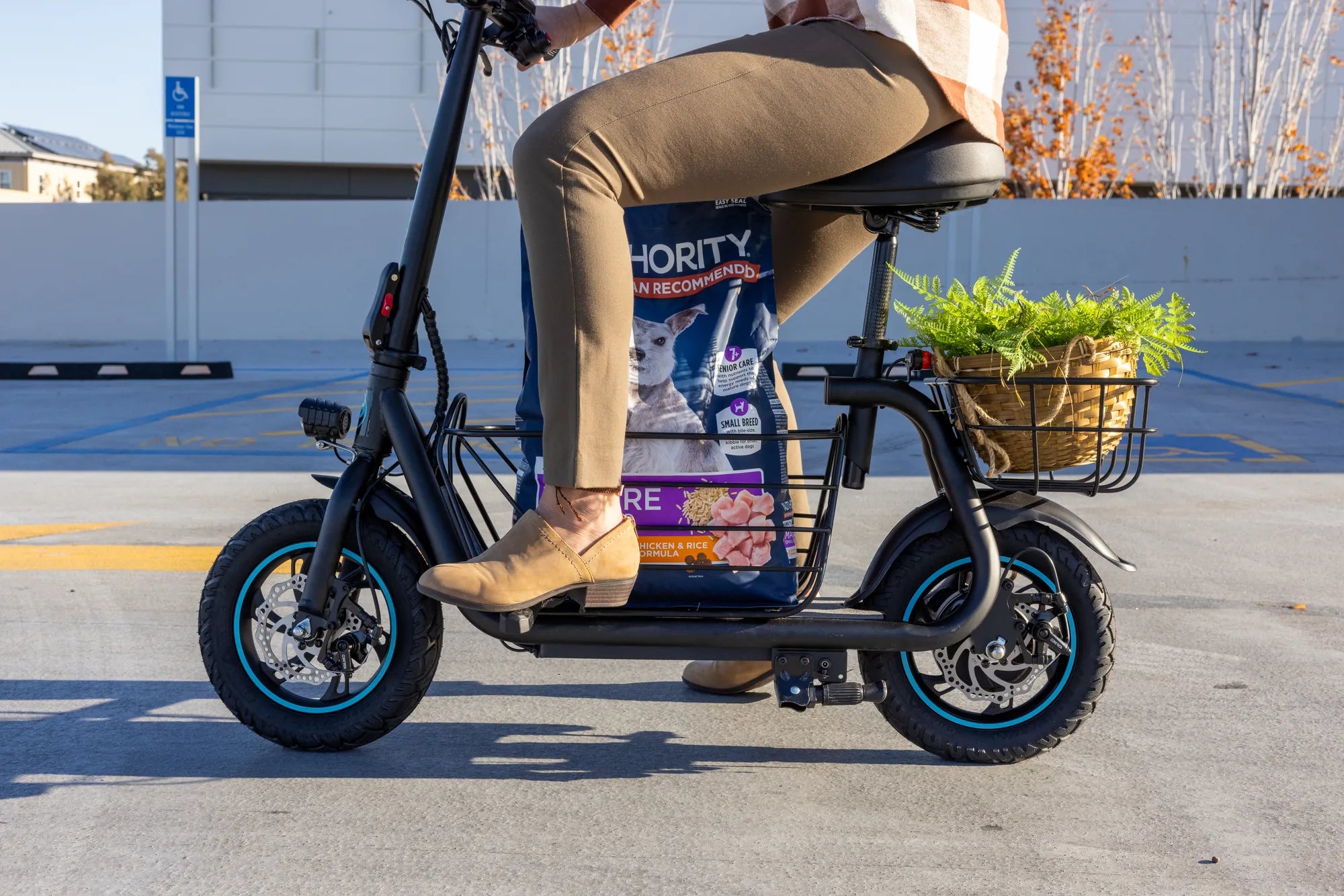
Introduction: The 60 MPH Electric Scooter – Redefining Urban Speed Limits
Forget the shared scooters littering city sidewalks. The emergence of electric scooters capable of 60 mph signals a fundamental transformation in personal electric vehicle (PEV) technology. This article will dissect the engineering, practical use cases, legal complexities, and safety imperatives of these high-performance machines. You will learn how they shift from being mere last-mile solutions to becoming genuine alternatives for longer commutes, offering a blend of agility, efficiency, and exhilaration previously unseen in urban mobility.
The demand for faster, more capable personal transportation is growing. Riders in sprawling suburbs and cities with higher-speed arterial roads are seeking vehicles that can keep pace with traffic, reduce commute times significantly, and offer the freedom to travel beyond a few city blocks. Electric scooters 60 mph: the future of high-speed urban mobility is no longer a speculative concept but an engineering reality, pushing the boundaries of what a compact, electric two-wheeler can achieve.
This evolution mirrors broader trends in electrification and micro-mobility, where performance and range are increasing exponentially. However, with great speed comes great responsibility. The leap to 60 mph introduces new considerations around rider skill, vehicle construction, and regulatory compliance that are absent from the low-speed scooter experience.
The Engineering Behind the Speed: What Makes 60 MPH Possible?
Reaching and sustaining speeds of 60 mph requires a holistic re-engineering of every core scooter component. It's not simply about attaching a more powerful motor; it's about creating a balanced, reliable, and safe system where power, control, and durability intersect.
Standard commuter scooters often use single motors ranging from 250W to 1000W. In contrast, achieving 60 mph necessitates dual motor systems, typically with a combined nominal wattage of 2000W or higher, and peak power outputs that can exceed 5000W. These dual motors, often one in each wheel, provide the immense torque and power needed for rapid acceleration and maintaining high speeds, especially on inclines.
The battery is the heart of this performance. High-speed models utilize high-voltage systems (often 60V or 72V) paired with large-capacity cells (20Ah or more) to deliver the sustained high-current discharge required by the powerful motors. This is where battery quality is non-negotiable. Inferior cells can overheat, sag under load, and become safety hazards. Brands committed to performance, like Gyroor, build their high-speed platforms around UL-certified battery packs, ensuring safety through rigorous testing for over 500 charge cycles and stable performance under extreme demand.
This immense power is managed by a sophisticated dual-motor controller, the scooter's "brain." It precisely regulates the power flow from the battery to the motors, manages regenerative braking, and often includes multiple speed modes and electronic safety cut-offs. The final piece is the mechanical platform: a reinforced aluminum or steel frame, high-performance hydraulic or electronic braking systems, and wide, air-filled tires are essential to handle the stresses of high-speed travel.
Safety at Speed: Non-Negotiable Features for 60 MPH Rides
When traveling at highway speeds on a scooter, safety features transition from conveniences to critical survival systems. Every component must be engineered to match the vehicle's performance envelope.
The braking system is paramount. Cable-actuated disc brakes, common on entry-level scooters, are insufficient. High-speed models must employ full hydraulic disc brakes on both wheels, offering superior modulation, power, and fade resistance. Some advanced models incorporate electronic braking systems (EBS) or combined braking systems (CBS) that distribute force optimally. Suspension is equally critical; a robust dual or triple spring or hydraulic suspension system is required to absorb road imperfections at speed, maintaining stability and control.
Tires must be wide (at least 10 inches) and pneumatic (air-filled). Solid tires cannot provide the necessary grip and shock absorption for safe high-speed cornering and braking. Lighting must be comprehensive: bright LED headlights, brake lights, turn signals, and deck lighting are essential for visibility to other road users. Furthermore, build quality must ensure absolute rigidity. A flexing deck at 60 mph is a recipe for instability. This is complemented by ingress protection; a rating of at least IPX5, as found on Gyroor's performance models, ensures the electronic components are protected from water jets, making the scooter viable for all-weather commuting.
The Practical Rider's Guide: Who Are 60 MPH Scooters For?
These are not scooters for everyone. They are specialized tools designed for specific riders and use cases where their performance advantages are fully realized and necessary.
The primary user is the long-distance suburban commuter. For someone with a 10-25 mile commute on roads with 45-55 mph speed limits, a 60 mph electric scooter becomes a viable car replacement. It eliminates traffic congestion, reduces parking costs to zero, and slashes fuel and maintenance expenses. The rider can maintain the flow of traffic safely, rather than being a slow-moving obstacle.
Secondly, they cater to performance enthusiasts and off-road riders. Many high-speed scooters feature rugged designs with enhanced ground clearance and suspension travel, making them capable on trails, fire roads, and other unpaved surfaces where their power and torque are an asset. Finally, they serve riders in cities with extensive bridge crossings, long boulevards, or less-dense urban layouts where higher-speed travel between districts is practical and legal.
This contrasts sharply with the typical urban scooter user, whose needs are met by lighter, sub-20 mph models for short trips under 5 miles. The 60 mph scooter user prioritizes range, speed, stability, and durability over portability and ultra-low cost.
Legal Landscape and Riding Responsibly
The legal framework for electric scooters 60 mph is complex and varies dramatically by jurisdiction. At this performance level, most government classifications shift from "electric scooter" or "motorized foot scooter" to "motorized vehicle," "motorcycle," or "moped."
This reclassification carries significant implications. It may require a valid driver's license (often a motorcycle endorsement), vehicle registration, license plates, and insurance. Helmet laws become strictly enforced, and full-face motorcycle helmets are strongly recommended for safety. Crucially, riding on sidewalks, bike paths, and multi-use trails is almost universally prohibited; these vehicles are intended for road use.
Riders must proactively research their state and local laws. What is legal in one city may be illegal in the next. Responsible riding also means advanced skill development. Mastering emergency braking, high-speed cornering, and defensive riding techniques is essential. Riding at 60 mph demands motorcycle-level awareness and respect for the road, as the consequences of a mistake are severe.
Data-Driven Comparison: 60 MPH Scooters vs. Other Commute Options
To understand the value proposition, a quantitative comparison with common alternatives is revealing. The following table illustrates key metrics for a 15-mile one-way commute in a mixed urban/suburban environment.
| Commute Option | Avg. Door-to-Door Time | Estimated Cost (Round Trip) | Parking Ease & Cost | Environmental Impact |
|---|---|---|---|---|
| 60 MPH Electric Scooter | 25-35 mins | ~$0.20 (electricity) | Easy / $0 | Very Low (Direct EV) |
| Personal Car | 40-60+ mins (with traffic) | $5-$15 (fuel, tolls, wear) | Difficult / $5-$30 | High |
| Public Transit | 60-75 mins | $4-$10 | N/A | Low-Moderate |
| Standard E-Scooter (20 mph) | 50-60 mins | ~$0.15 | Easy / $0 | Very Low |
| E-Bike (28 mph) | 40-50 mins | ~$0.10 | Moderate / $0 | Very Low |
The data shows the high-speed scooter's core advantage: significant time savings over most alternatives except a car in perfect, no-traffic conditions, but at a fraction of the operational cost and with trivial parking. It outperforms standard e-scooters and e-bikes on time for this distance due to its higher sustained speed. The environmental benefit is clear, offering car-like convenience without the carbon footprint or congestion contribution.
The Gyroor Advantage: Engineering Confidence at Every Turn
Entering the high-performance scooter category requires trust in the manufacturer's engineering and support. With over 100,000 riders across North America and Europe, Gyroor approaches this segment with a foundation built on safety, durability, and rider support.
The cornerstone is the use of UL-certified battery packs across their lineup. In a high-speed scooter demanding extreme power draw, this certification is not a marketing point but a fundamental safety requirement, ensuring battery integrity through hundreds of charge cycles. This is paired with IPX5 water-resistant construction, ensuring that a sudden downpour or wet roads don't compromise the scooter's complex electronics, a critical feature for a daily commuter vehicle.
Performance is backed by a clear 1-year warranty and accessible customer support. For a rider investing in a high-speed PEV, knowing that the manufacturer stands behind the product and its high-stress components—motors, controllers, battery, and frame—is essential for long-term ownership satisfaction. This combination of verified safety standards, environmental protection, and warranty support allows riders to focus on the experience of electric scooters 60 mph: the future of high-speed urban mobility, rather than worrying about reliability.
Frequently Asked Questions (FAQ)
Q1: What is the real-world range at 60 mph?
A: Range is highly variable. At a constant 60 mph, even large batteries may only provide 15-25 miles due to high power consumption. However, most commuting involves variable speeds. A scooter with a 60 mph top speed and a 25Ah battery may deliver 35-50 miles of real-world range when ridden at an average speed of 30-40 mph.
Q2: Are 60 mph electric scooters street-legal in my state?
A: You must check your specific state and local laws. Generally, once a scooter exceeds 20-30 mph, it is likely classified as a motor vehicle. This often requires registration, insurance, a license, and helmet use. They are almost never legal on sidewalks or dedicated bike paths.
Q3: What kind of maintenance do they require?
A> Maintenance is more intensive than for low-speed scooters. Regular tasks include checking and inflating pneumatic tires, monitoring brake pad wear and hydraulic fluid levels, inspecting suspension components, and ensuring all bolts are tight. The electrical system should be kept clean and connections checked periodically.
Q4: How does a 1-year warranty cover high-performance components?
A: A reputable warranty, like Gyroor's, should cover defects in materials and workmanship for the frame, motors, controller, and battery for one year from purchase. It's crucial to read the warranty terms to understand what is considered normal wear (like brake pads, tires) versus a manufacturing defect. Proper documentation of purchase is essential.
Q5: Is prior riding experience important?
A: Absolutely. Jumping from a 15 mph scooter to a 60 mph machine is a massive leap. It is strongly advised to have extensive experience on lower-powered PEVs and to practice with the high-speed scooter in a safe, controlled environment. Consider taking a motorcycle safety course to develop essential high-speed riding and hazard avoidance skills.
Conclusion: Speed with Purpose – The Informed Rider's Choice
The 60 mph electric scooter represents the high-performance frontier of personal micro-mobility, a tool of remarkable efficiency and capability for the right rider. Its value is unlocked not by speed alone, but through a triad of responsible ownership: a deep understanding of local laws, a commitment to developing advanced riding skills, and a critical investment in a scooter from a brand that prioritizes engineered safety and robust support. For the suburban commuter or performance enthusiast, these machines offer a thrilling and practical glimpse into a faster, cleaner, and more agile urban transit future. They solidify the role of electric scooters 60 mph as a serious component of the evolving transportation matrix.
Ready to explore high-performance electric mobility engineered with safety and reliability at its core? Browse the full Gyroor collection, featuring UL-certified batteries, IPX5 water-resistant designs, and a commitment to rider support, at gyroorboard.com.
Why Are Electric Scooters Dangerous? The Hidden Risks You Need to Know
Are Electric Scooters Allowed in Stores? What You Need to Know