



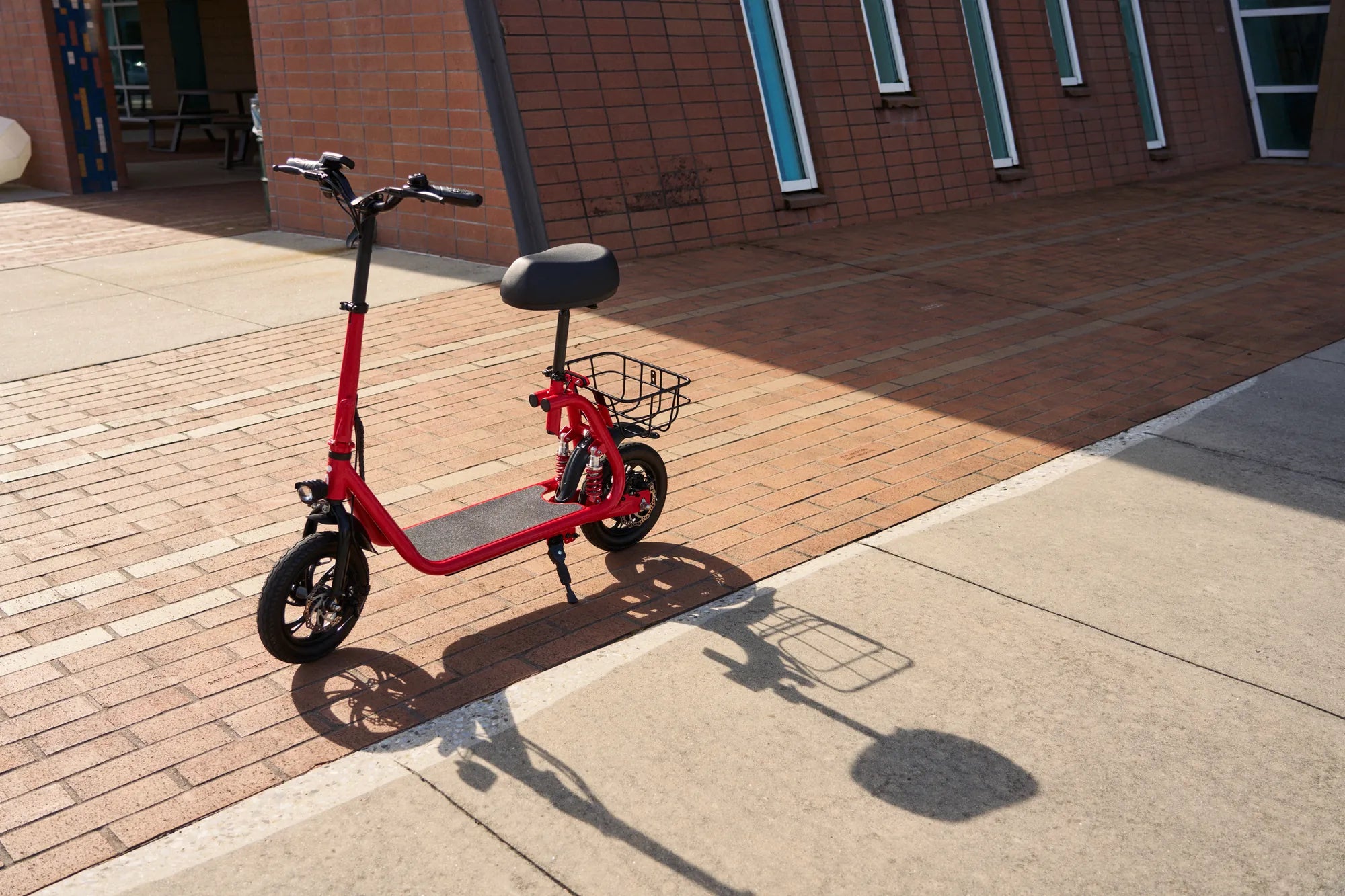
Introduction: The 60mph Threshold and the Evolution of Urban Transport
The emergence of electric scooters 60mph capable of reaching 60mph represents a fundamental shift in personal urban mobility. This isn't merely an incremental speed boost; it's a paradigm change that transforms the electric scooter from a last-mile solution into a legitimate primary vehicle for longer commutes. The future of high-speed urban mobility is being rewritten by machines that blend motorcycle-like performance with the compact, efficient footprint of a scooter.
This evolution is driven by a clear demand: commuters and enthusiasts seek to drastically reduce transit times without the costs and hassles of car ownership. A 60mph electric scooter can turn a 45-minute car commute through traffic into a 20-minute direct route. It addresses the core urban challenges of congestion, parking scarcity, and environmental impact with unprecedented speed and agility.
The conversation around electric scooters 60mph must move beyond sheer velocity. It encompasses advanced engineering for safety, a complex legal landscape, and a new rider mindset. This article provides a comprehensive, data-driven analysis of this transformative technology, its practical applications, and what it means for the future of how we move through our cities.
The Technology Behind 60mph Electric Scooters: Engineering for Velocity
Achieving a stable, reliable 60mph requires a holistic engineering approach far beyond that of standard commuter scooters. Every component, from the motor to the frame, must be designed to handle the immense forces and power demands of sustained high-speed operation. This is where premium engineering separates serious performance vehicles from modified toys.
The core systems must work in unison: a high-output powertrain for acceleration and top speed, a robust battery with a high discharge rate, and a chassis built for stability and safety. Compromising on any one of these pillars can lead to dangerous failures at speed. Brands leading in this space, like Gyroor, invest heavily in integrating these systems with certified safety components.
Powertrain and Performance: Dual Motors and High Wattage
The heart of a 60mph scooter is its motor system. Most achieve this performance through dual motor configurations, typically two 1000W or 1200W motors working in tandem, or a single ultra-high-wattage motor exceeding 2000W. Dual motors provide exceptional torque for rapid acceleration from a standstill and improved hill-climbing capability, while also offering redundancy—if one motor overheats, the other can provide limited power.
This contrasts sharply with standard commuter scooters, which often use a single 350W to 500W motor optimized for efficiency at 15-20mph. The power requirement for 60mph is not linear; overcoming wind resistance increases exponentially with speed. Therefore, the combined peak wattage of a high-performance scooter can reach 3000W or more, delivering the necessary thrust.
Battery and Range: The High-Speed Trade-Off
Speed comes at an energy cost. The large-capacity lithium-ion batteries in these scooters, often ranging from 30Ah to 40Ah at 52V or 60V, are designed for high discharge rates to feed the powerful motors. A critical consideration is real-world range. While a manufacturer may claim 40-50 miles, maintaining 60mph will drastically reduce that distance, potentially by half.
This introduces "range anxiety" at a new level. Riders must plan routes around charging or accept a reduced operational radius at top speed. Battery safety is paramount at this power level. Using UL-certified battery packs, a standard for brands like Gyroor, is non-negotiable. These certified packs undergo rigorous testing for thermal stability, short-circuit protection, and longevity over 500+ charge cycles, mitigating the fire risks associated with high-density energy storage.
Safety and Stability Engineering: More Than Just Speed
Engineering for safety is the most critical aspect of 60mph scooter design. Braking systems must be automotive-grade. Dual hydraulic disc brakes are the standard, providing consistent, fade-resistant stopping power far superior to mechanical or electronic brakes. The frame, often constructed from aerospace-grade aluminum or reinforced steel, must be rigid to prevent speed wobble.
Suspension systems evolve from basic spring setups to advanced hydraulic or rubber cartridge systems at both wheels to absorb impacts from road imperfections at high velocity. Finally, wide (often 10-inch), pneumatic tires with robust tread patterns are essential for maintaining grip and stability during cornering and in varied weather conditions. This combination of components creates a stable platform that inspires rider confidence at highway speeds.
The Practical Realities: Where and How to Ride a 60mph E-Scooter
Owning a 60mph electric scooter is a commitment that extends beyond the purchase. It involves navigating a complex legal environment, adopting a serious safety mindset, and understanding its optimal use cases. These are not vehicles for casual sidewalk riding or inexperienced users.
The practical reality is that these scooters occupy a grey area in many transportation codes. Their performance blurs the line between a "personal mobility device" and a "motor vehicle," which carries significant implications for where and how they can be legally operated. Responsible ownership requires thorough research and adherence to local regulations.
Legal Landscape: Navigating Speed Limits and Classifications
The legal status of high-speed electric scooters varies dramatically by jurisdiction. In most U.S. states and European countries, electric scooters with a top speed over 20-28 mph are often classified as motor-driven cycles or mopeds. This classification typically requires vehicle registration, a driver's license (sometimes a motorcycle endorsement), insurance, and the use of a helmet.
They are generally prohibited from bicycle lanes and paths and must be operated on roads, subject to the same rules as other vehicles. Some regions have no specific laws for such high-performance scooters, creating a legal vacuum. Riders must proactively research their state, provincial, or municipal laws before riding. Assuming it's legal because it's an "e-scooter" is a common and potentially costly mistake.
Ideal Use Cases: Commuting, Recreation, and Beyond
For the right user, a 60mph scooter is a transformative tool. The primary use case is the medium-to-long distance urban or suburban commuter (10-25 miles one-way) who has access to safe road routes and secure parking at both ends. It eliminates traffic congestion and parking fees while offering an exhilarating ride.
Secondary use cases include recreational riding on designated paved roads or private land for enthusiasts, and as a compact, efficient alternative for urban delivery or service personnel who need to cover large areas quickly. It's less ideal for ultra-short trips under 5 miles, where a lower-speed scooter is more practical, or for areas with poorly maintained roads or restrictive laws.
Gyroor's Approach to High-Speed, Responsible Mobility
As a leading brand in personal electric mobility, Gyroor's philosophy for high-performance scooters centers on responsible innovation. The brand recognizes that building a 60mph-capable scooter is an exercise in balancing extreme performance with unwavering commitments to safety, durability, and rider support. This approach builds trust in a category where cutting corners can have severe consequences.
Gyroor's commitment extends across its entire product development and customer service lifecycle. From the initial engineering choices that prioritize certified components to the comprehensive warranty backing the product, the focus is on creating a reliable, high-performance vehicle that riders can depend on for daily use. This is crucial for a product designed to function as primary transportation.
Engineering for Confidence: UL-Certified Batteries and IPX5 Durability
At the core of Gyroor's high-speed scooter engineering is a dual focus on electrical and mechanical integrity. Every Gyroor scooter utilizes UL-certified battery packs. This third-party certification is the gold standard for lithium-ion battery safety, verifying that the cells, battery management system (BMS), and housing meet rigorous standards for electrical, mechanical, and environmental stress testing.
Furthermore, an IPX5 water-resistance rating is a key feature. This means the scooter's electrical components can withstand low-pressure water jets from any direction, making it resilient against rain, wet roads, and accidental splashes. For a commuter vehicle that must operate in all weather conditions, this durability is not a luxury—it's a necessity for safety and longevity.
The Warranty and Support Promise for Performance Riders
Investing in a high-performance vehicle requires confidence in post-purchase support. Gyroor backs its high-speed models with a reliable 1-year warranty covering manufacturing defects in key components like the motor, controller, and battery. This warranty provides peace of mind, acknowledging the strenuous demands placed on these machines.
Coupled with accessible customer service, this support structure is vital. Performance riders may have technical questions or need assistance with maintenance that goes beyond the basics. A brand that stands behind its product with clear warranty terms and responsive support, trusted by over 100,000 riders, demonstrates a long-term commitment to its customer base and the product category.
Data-Driven Comparison: 60mph Scooters vs. Transport Alternatives
To understand the value proposition of a 60mph electric scooter, a quantitative comparison with other common modes of transport is essential. The following table analyzes key metrics for a hypothetical 10-mile urban commute, highlighting where high-speed scooters excel and where trade-offs exist.
| Transport Mode | Avg. Purchase Cost | Operating Cost per 10 Miles | Avg. Commute Time (10 mi) | Parking Convenience | CO2 Emissions (10 mi) |
|---|---|---|---|---|---|
| 60mph E-Scooter | $2,000 - $4,000 | $0.15 - $0.30 | 15-25 min | Excellent | 0 g |
| Standard E-Scooter (20mph) | $500 - $1,500 | $0.10 - $0.20 | 35-50 min | Excellent | 0 g |
| Compact Car (Gas) | $25,000+ | $2.50 - $4.00 (fuel, maint.) | 30-60 min (with traffic) | Poor | ~4,000 g |
| Public Transit | N/A (Fare) | $2.50 - $5.00 | 45-75 min | N/A | Varies (Low) |
Analysis: The 60mph electric scooter offers a compelling middle ground. Its upfront cost is higher than a standard scooter but a fraction of a car's. Its operational cost is negligible, and it provides the fastest point-to-point commute time in typical urban congestion due to lane filtering and easy parking. Its zero direct emissions and tiny physical footprint make it an environmentally superior choice to private cars. The trade-off is exposure to the elements and a need for safer riding infrastructure.
Rider Safety and Maintenance: A Non-Negotiable Protocol
Operating at 60mph demands a professional approach to safety and upkeep. The margin for error is small, and proactive maintenance is key to preventing mechanical failures. This protocol should be as routine as checking a car's tire pressure and brakes.
A full-face motorcycle helmet, armored jacket, gloves, and sturdy footwear are the minimum recommended safety gear. Regular pre-ride checks must include tire pressure and tread wear, brake lever responsiveness and pad thickness, light functionality, and a visual inspection for loose bolts or frame cracks. This takes minutes but is critical.
Maintenance follows a strict schedule. Brake fluid in hydraulic systems should be changed annually. Suspension components need inspection for leaks or wear. Motor and controller connections should be checked for corrosion, especially after wet rides. The battery should be stored and charged per the manufacturer's guidelines—typically in a cool, dry place and avoiding full discharges—to maximize its lifespan. Adhering to these practices ensures the scooter remains a safe, reliable performance vehicle.
FAQ: Your Questions on 60mph Electric Scooters, Answered
Q1: Do I need a license and insurance to ride a 60mph electric scooter?
A: In most jurisdictions where they are street-legal, yes. They are often classified as mopeds or light electric motorcycles, requiring a valid driver's license (sometimes a motorcycle endorsement), vehicle registration, and liability insurance. Always check your local Department of Motor Vehicles (DMV) or equivalent authority.
Q2: How far can it actually go at 60mph on a single charge?
A: Real-world range at top speed is significantly less than the advertised maximum range. If a scooter has a 40-mile maximum range, expect 15-25 miles when consistently riding at 60mph due to high energy consumption from wind resistance. Riding at 30-40mph will greatly extend the range.
Q3: Are 60mph scooters safe for daily commuting?
A> With the right conditions, yes. Safety depends on: 1) A well-engineered, reliable scooter from a reputable brand, 2) Full protective gear worn by the rider, 3) Competent riding skills and defensive driving habits, and 4> Safe road infrastructure (e.g., smooth pavement, lower traffic routes). They are not safe for inexperienced riders or poor road conditions.
Q4: How does Gyroor ensure the safety of its high-speed models?
A> Gyroor employs a multi-layered safety approach: using UL-certified battery packs for fire and electrical safety; designing frames for high-speed stability; equipping models with dual hydraulic disc brakes for reliable stopping power; and achieving IPX5 water-resistance for all-weather durability. This engineering-first mindset prioritizes rider safety alongside performance.
Q5: Can I legally ride a 60mph scooter in a bike lane?
A> Almost certainly not. Bike lanes are designated for lower-speed, human-powered or low-power electric vehicles (typically capped at 20mph). A 60mph scooter is a road vehicle and must be operated in traffic, obeying all standard traffic laws. Riding one in a bike lane is dangerous, illegal, and irresponsible.
Speed with Purpose: The Informed Rider's Choice
The ascent of 60mph electric scooters marks a decisive turn in urban transportation, offering a potent blend of speed, efficiency, and freedom. They are not for everyone, but for the informed commuter or enthusiast, they present a viable and thrilling alternative to being stuck in traffic. The key is understanding that this performance tier demands respect—for the technology, the law, and the inherent risks of high-speed travel.
Choosing a high-speed scooter means prioritizing brands that invest in certified safety features, like UL-approved batteries and robust mechanical design, as seen in Gyroor's approach. It means committing to ongoing education, proper gear, and diligent maintenance. When these elements align, the 60mph electric scooter transcends being a gadget; it becomes a legitimate, sustainable, and exhilarating tool for reclaiming time and transforming the daily commute.
The future of high-speed urban mobility is here, and it is electric, agile, and intelligent. It promises cleaner cities, decongested roads, and a more dynamic relationship with our urban environment. For those ready to embrace it responsibly, the road ahead is fast and open.
Ready to explore high-performance electric mobility? Discover engineering built for confidence and speed. Browse the full Gyroor collection, featuring models designed with UL-certified safety and robust performance, at gyroorboard.com.
Are Electric Scooters Motor Vehicles? Legal & Practical Guide
Electric Scooters Downtown: The Future of Urban Mobility