



Introduction: Why Electric Scooters are Transforming Bratislava
Bratislava faces classic urban mobility challenges: congested roads, scarce parking, and the 'last-mile' gap between public transport stops and final destinations. Electric scooters have emerged as a powerful, efficient solution. This guide, Electric Scooters Bratislava: The Ultimate Guide to Urban Mobility, is your definitive resource for navigating the city on two wheels. You will learn the local laws, discover the best routes, understand how to choose the right scooter for Bratislava's unique landscape, and master the practices for safe, sustainable commuting. Whether you're a resident streamlining your daily trip or a visitor exploring the capital, an e-scooter offers unparalleled freedom.
The city's compact yet varied layout—from the cobblestone Old Town to the expansive riverfront and suburban districts—is perfectly suited for personal electric mobility. Adopting an e-scooter means bypassing traffic jams, reducing your carbon footprint, and experiencing the city from a fresh, agile perspective. This shift represents more than a trend; it's a practical evolution in how we connect with our urban environment.
Navigating Bratislava's Rules: The Legal Landscape for E-Scooters
Understanding and adhering to local regulations is the foundation of responsible scooter use. In Bratislava, electric scooters are classified as "other vehicles" under the Road Traffic Act. The key rule is that they are prohibited on sidewalks where they endanger or obstruct pedestrians. Your primary riding areas should be bicycle lanes and paths. Where these are absent, you may use the roadway, but you must follow all standard traffic rules applicable to vehicles.
The maximum permitted speed for e-scooters on bicycle paths and roads is 25 km/h. When sharing space with pedestrians (in designated mixed zones), you must reduce your speed significantly to walking pace. Riders must be at least 15 years old. While not currently mandated by national law, wearing a helmet is strongly and unequivocally recommended for all riders. The use of lights (white front, red rear) is mandatory in low visibility and at night.
Parking requires conscientiousness. Never leave your scooter where it blocks pedestrian pathways, building entrances, disabled access ramps, or public transport stops. Use designated bicycle parking areas whenever possible. Thoughtful parking ensures continued positive public perception and avoids fines or your scooter being impounded by city authorities.
Key Areas for Scooter-Friendly Commuting
Bratislava offers excellent infrastructure for two-wheeled travel. The Danube Riverfront (Nábrežie) features extensive, smooth paths perfect for a scenic and uninterrupted commute from the UFO Bridge towards the Apollo Bridge. This route connects the Old Town with the Petržalka district seamlessly.
For crossing into the historic center, the Starý Most (Old Bridge) has a dedicated pedestrian and cyclist pathway. Within the Old Town (Staré Mesto), be mindful that many central squares and narrow streets are pedestrian zones where riding is prohibited; you should dismount and walk your scooter here. The network of bicycle lanes along major arteries like Šancová, Račianska, and Vajnorská provides efficient corridors from residential areas to the city core.
Connecting the large panelák district of Petržalka to the city center is a prime use case, bypassing the often-congested bridges by car. Furthermore, routes to Mlynská dolina (university campus) and the Bratislava Business Parks in Ružinov are well-suited for e-scooter commutes, often faster than local buses during rush hour.
Choosing Your Ride: Features That Matter in Bratislava
Bratislava's urban environment presents specific demands. Your scooter must handle gentle but persistent hills (like the approach to the Slavín monument or the Bratislava Castle district), occasional cobblestone sections, tram tracks, and variable weather. Motor power is critical; a continuous rating of at least 350W is recommended for reliable hill-climbing ability without straining the battery.
Battery range should align with your commute. Calculate your daily round-trip distance and add a 30-40% buffer for errands, detours, and battery degradation over time. For most Bratislava commutes, a real-world range of 20-25 km is a solid minimum. Tire choice is also key; larger, air-filled (pneumatic) tires (8.5 inches or more) provide much better shock absorption on uneven surfaces compared to small, solid tires.
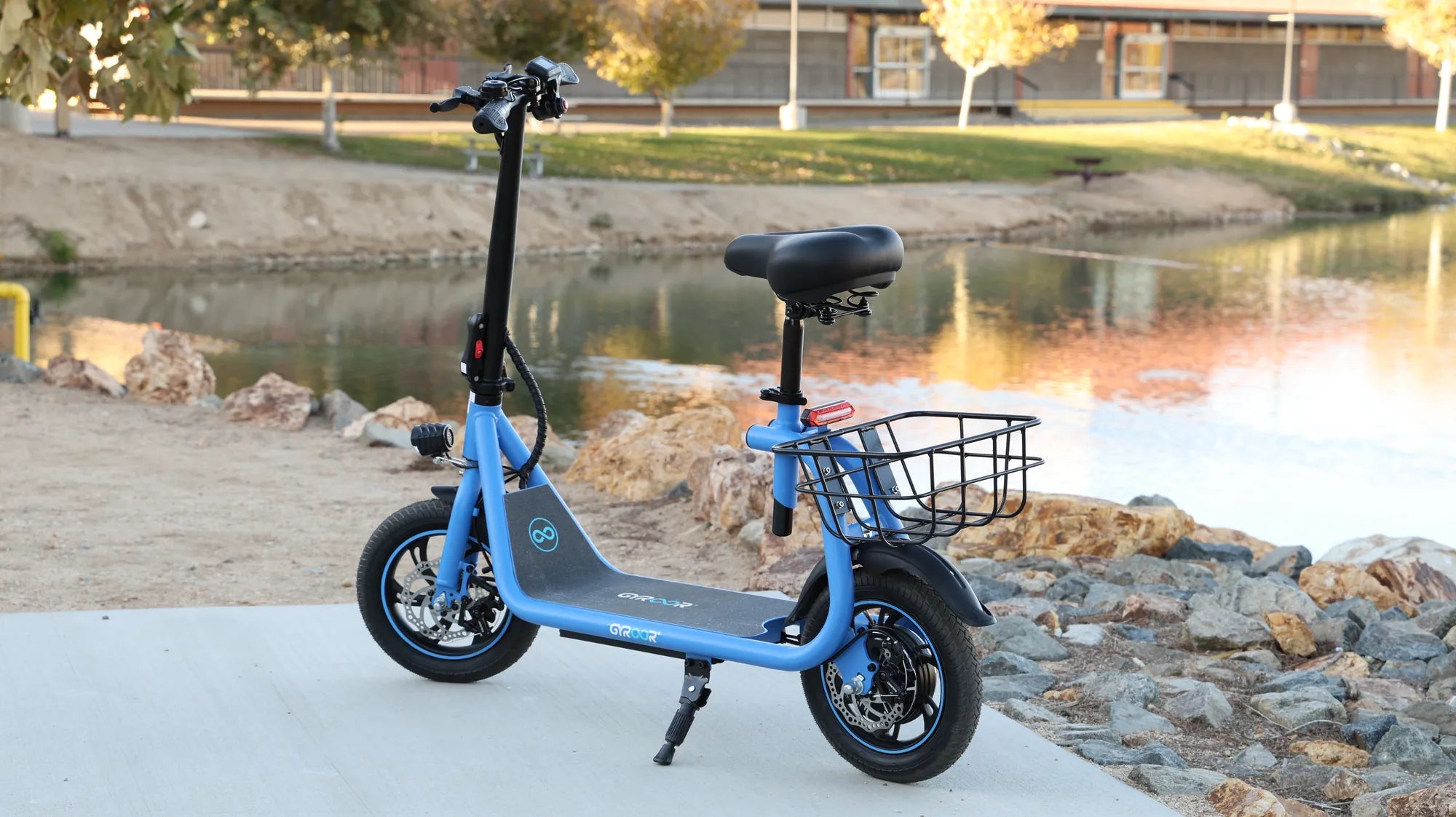
Given the city's unpredictable weather, from summer showers to wet autumn leaves, a high water-resistance rating is non-negotiable. This is where brands that prioritize build quality stand out. For instance, Gyroor electric scooters are engineered with an IPX5 water-resistant rating, meaning they can withstand water jets from any direction. This offers crucial peace of mind when caught in a sudden downpour or navigating damp streets.
Equally important is battery safety, especially if you charge your scooter in an apartment or office. Gyroor utilizes UL-certified lithium-ion battery packs that undergo rigorous testing for stability and longevity over 500+ charge cycles. Combined with a 1-year comprehensive warranty on the vehicle, these features make a personal scooter a reliable, long-term investment for Bratislava's daily commuting realities, contrasting with the uncertainty of shared-scooter availability and maintenance.
Gyroor vs. Ride-Sharing: A Practical Comparison for Bratislava
Bratislava's streets are served by several international ride-sharing operators like Bolt, Tier, and Lime. While convenient for one-off trips, regular commuters should analyze the long-term value. Owning a personal scooter, such as a model from Gyroor, offers distinct advantages in cost, consistency, and hygiene. The table below provides a clear, data-driven comparison for a typical monthly user.
| Feature | Personal Gyroor Scooter | Ride-Sharing (Bolt, Tier, etc.) |
|---|---|---|
| Monthly Cost (20 commute days) | ~€15-€25 (electricity for charging) | ~€80 - €120+ (€2 unlock + €0.25-€0.30/min) |
| Availability & Convenience | Always at your door. No app/search needed. | Unreliable in suburbs/peak times. Requires walking to find. |
| Performance & Hygiene | Consistent power, clean handlebars, personal upkeep. | Variable battery, worn brakes, public handlebars. |
| Customization & Features | Fixed. Choose model with desired range, power, tires. | Limited to available fleet model; no choice. |
| Long-Term Investment | Own the asset. Pay once, ride for years. | Pure ongoing expense with no equity. |
As the data shows, for anyone commuting more than a few times a week, a personal scooter pays for itself within a few months. Beyond cost, the benefits of guaranteed availability—especially early in the morning or late at night in residential areas—and knowing the exact mechanical condition of your vehicle are significant contributors to daily reliability and safety.
Maintenance & Safety: Ensuring a Smooth Ride Year-Round
Proper maintenance maximizes your scooter's lifespan and safety. Perform a quick pre-ride check: ensure tires are properly inflated, test both electronic and mechanical brakes, verify that lights are functional, and check that the folding mechanism (if present) is securely locked. Regular cleaning, especially after riding on wet or winter-salted roads, prevents corrosion; use a damp cloth and avoid high-pressure water jets on electrical components.
Battery care is paramount. Avoid draining the battery to 0% regularly. Try to keep the charge between 20% and 80% for daily use, with a full charge every few weeks to balance the cells. Store your scooter in a dry place at room temperature, and never leave the battery fully depleted for extended periods. For brands like Gyroor, following these practices with their UL-certified packs ensures the battery delivers its full rated cycle life.
Safety in traffic demands defensive riding. In Bratislava, be hyper-aware of tram tracks—cross them as perpendicularly as possible to avoid getting your wheel caught. Use clear hand signals when turning. Assume cars may not see you, especially at intersections and when doors are opening from parked cars. Always yield to pedestrians, particularly in shared zones. Equipping yourself with a helmet, reflective gear, and a bell or horn is not just prudent; it actively shapes a safer riding culture for everyone.
Exploring Beyond the Commute: Leisure Riding in Bratislava
An electric scooter's utility extends far beyond the daily grind. It is a fantastic tool for leisure and exploration. A weekend ride along the Danube River to the Sad Janka Kráľa park offers a beautiful escape. You can effortlessly cover the distance to the Slovak National Gallery (Esterházy Palace) or the modern Slovak Radio building without worrying about parking fees.
For a more adventurous outing, the forested paths in the Bratislava Forest Park (Bratislavský lesný park) near Koliba are accessible on scooters with robust, larger tires. The scooter allows you to create your own sightseeing tour, linking highlights like the Blue Church, Michael's Gate, and the Presidential Garden at your own pace, free from bus schedules and tour groups.
This mode of exploration is sustainable and immersive. It connects you to the city's rhythm in a way that walking, driving, or bus travel cannot match. The quiet electric motor lets you enjoy the sounds of the city, and the ability to stop instantly lets you discover hidden courtyards, street art, and cafes you might otherwise miss.
The Economic and Environmental Impact of Personal E-Mobility
Shifting to an electric scooter for daily trips creates tangible benefits for both the rider and the city. On a personal economic level, the savings compared to car ownership (fuel, insurance, parking, maintenance) or even frequent use of ride-sharing are substantial. It also saves time, one of our most valuable commodities, by cutting through congestion.
From an environmental perspective, the impact is profoundly positive. Electric scooters produce zero local emissions, contributing to cleaner air in Bratislava's urban center. They are extremely energy-efficient, requiring only a small amount of electricity to charge—often less than a standard lightbulb left on for a few hours. By replacing car trips, especially for distances under 5-10 km, each rider actively reduces traffic volume and the city's overall carbon footprint.
This collective shift supports Bratislava's goals for sustainable urban development. Increased adoption of micro-mobility reduces pressure on public transport during peak hours and can delay or eliminate the need for costly road expansions. Choosing a durable, repairable scooter from a brand that offers warranty support, like Gyroor, further aligns with sustainable consumption by promoting product longevity over disposable, short-term rentals.
FAQ: Electric Scooters in Bratislava
Q: Do I need a helmet by law in Bratislava?
A: While Slovak traffic law does not currently mandate helmets for e-scooter riders, it is the single most important safety item you can use. Wearing a helmet is strongly and universally recommended to protect against head injuries.
Q: Can I take my e-scooter on public transport (MHD)?
A: Generally, yes, but with discretion. Trams, trolleybuses, and buses allow bicycles and similar devices during off-peak hours, provided they do not obstruct other passengers. It is best to fold your scooter, avoid rush hour (typically 6:30-8:30 AM and 3:00-5:30 PM), and be courteous.
Q: Where are the best places to park my scooter in the city center?
A> Look for official bicycle parking stands, which are plentiful around main squares (Hlavné námestie, SNP námestie), near public buildings, and at transport hubs (train/bus stations). Never lock your scooter to street furniture that blocks the path.
Q: How do I handle hills like the climb to Slavín?
A> A scooter with a motor of 350W continuous power or more should handle such inclines. Reduce speed, maintain a steady throttle, and lean forward slightly to keep weight on the front wheel. If the hill is very steep, it's safer to dismount and walk.
Q: Is theft a concern, and how can I secure my scooter?
A> As with any valuable portable item, theft is a risk. Always use a high-quality, hardened steel U-lock or heavy-duty folding lock to secure the scooter's frame (not just the wheel) to a fixed, immovable object. Using two different lock types (e.g., a U-lock and a cable) further deters thieves. GPS trackers are also available as an added security layer.
Conclusion: Embracing a Smarter Way to Explore Bratislava
Adopting an electric scooter in Bratislava is a decision that pays dividends in time, money, and quality of life. It solves the practical puzzles of urban commuting while opening new avenues for discovering the city's charm. The key to a positive experience lies in selecting a scooter built for the task—with sufficient power, range, weather resistance, and safety certifications—and committing to responsible riding practices that respect both the law and fellow citizens.
This shift towards personal electric mobility is more than a convenience; it's a step towards a more agile, sustainable, and enjoyable urban future for Bratislava. By investing in reliable, well-engineered equipment, you ensure this freedom is not fleeting but a lasting part of your daily life. Ready to transform your commute and explore Bratislava with new agility? Browse the full Gyroor collection at gyroorboard.com to find the scooter engineered for the demands of your city.
Can You Ride Electric Scooters in Central Park? The Complete 2024 Guide
Electric Scooters Springfield MO: The Ultimate Guide to Eco-Friendly Commuting