

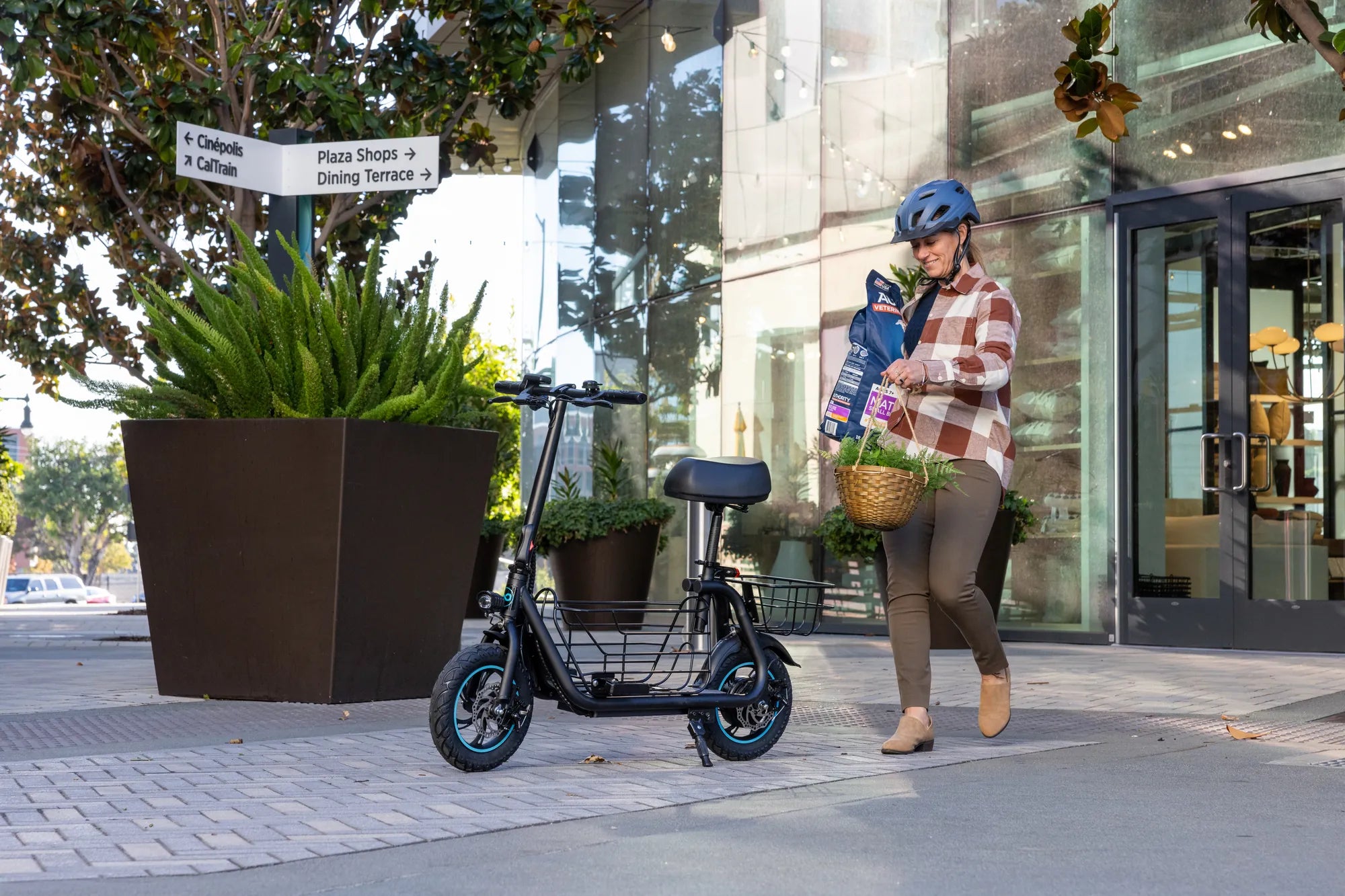
Electric scooters for 13 year olds represent a significant step toward independence, offering a blend of practical transportation and exhilarating fun. This guide cuts through the hype to provide parents with a data-driven framework for selecting a safe, reliable scooter. You will learn to identify crucial safety specifications, understand local regulations, and establish non-negotiable riding rules. We will analyze how leading brands engineer their products for young riders, ensuring you can make an informed decision that balances freedom with safety.
The Rise of Personal E-Mobility for Teens
The landscape of teen transportation has evolved dramatically. Electric scooters have emerged as a dominant choice, filling the gap between bicycles and parental chauffeur services. For a 13-year-old, an e-scooter is more than a toy; it's a tool for autonomy, enabling trips to school, friends' houses, or local parks.
This shift is driven by the scooter's perfect balance of accessibility and efficiency. Unlike a bike, the learning curve is often shorter, and the electric assist means hills and longer distances are less daunting. The compact form factor also makes storage and charging simpler than for many other personal electric vehicles.
However, this newfound mobility comes with serious responsibility. The market is saturated with options, and not all are created equal. The core challenge for parents is to find a scooter that doesn't sacrifice build quality or safety for a lower price point. A responsible choice empowers a teen while embedding multiple layers of protection.
Brands that prioritize this balance, like Gyroor, design with the young rider in mind. Their models incorporate speed limiters, robust braking, and certified batteries, directly addressing parental concerns. Understanding these features is the first step toward safe adoption.
Key Safety Features to Prioritize for a 13-Year-Old's E-Scooter
Selecting an electric scooter for a young teen requires a forensic focus on safety specifications. These features are not mere bonuses; they are essential components that directly correlate to a rider's control and well-being. Prioritizing them mitigates risk from the outset.
The physical and cognitive development of a 13-year-old varies widely. A scooter must therefore be forgiving and predictable. Key areas of focus include governed speed, reliable stopping power, and a stable platform that inspires confidence during those crucial first rides and beyond.
Speed and Power Management
Uncontrolled speed is a primary hazard. For a 13-year-old, a maximum speed of 10-15 mph is widely recommended by safety advocates. This range is fast enough for practical travel but slow enough to allow for reaction time and control. Scooters with higher top speeds should have a dedicated beginner mode that enforces this limit.
Motor power is equally important. A motor in the 250W to 350W range provides adequate torque for typical teen use—commuting on flat to moderately sloped terrain—without delivering jarring, uncontrollable acceleration. Look for scooters with smooth throttle response, not a sudden "jerk" forward.
Programmable speed modes are a critical feature. A parent can set the scooter to a low-speed mode (e.g., 8-10 mph) for initial learning, gradually unlocking higher speeds as the teen demonstrates proficiency and responsibility. This built-in progression supports skill development.
Braking System Reliability
A reliable braking system is non-negotiable. The best practice is a dual-braking system, which employs two independent methods to stop the scooter. This redundancy is vital; if one system fails or becomes less effective (e.g., a disc brake in wet conditions), the other is available.
Common braking types include electronic (regenerative), disc, drum, and foot brakes. For a teen scooter, a combination of electronic and a mechanical brake (disc or drum) is ideal. The electronic brake can slow the scooter smoothly, while the mechanical brake provides definitive stopping power.
Disc brakes generally offer stronger, more consistent performance than drum brakes, especially in varied weather. However, a well-designed drum brake is still effective and requires less maintenance. Avoid scooters that rely solely on a foot brake or a single, low-quality mechanical brake.
Build Quality and Stability
The scooter's physical construction forms the foundation of safety. The frame should be made of aerospace-grade aluminum alloy, which offers an optimal strength-to-weight ratio. This material resists bending or cracking from the stresses of daily use and occasional impacts.
Wheel and deck design profoundly affect stability. Wider, air-filled (pneumatic) tires, typically 8.5 inches or larger in diameter, provide superior shock absorption and grip compared to small, solid rubber tires. They smooth out bumps and maintain traction on uneven pavement or gravel.
A low, wide deck enhances stability by lowering the rider's center of gravity. Textured, non-slip deck tape is essential to keep feet firmly planted. Finally, check the folding mechanism and stem lock; they must be robust and secure, with no wobble or play when extended for riding.
Why Gyroor Models are Engineered with Young Riders in Mind
Gyroor has established itself as a leader in personal electric mobility by embedding safety and durability into its core design philosophy. For parents of teens, this translates to scooters built with specific guardrails that address common concerns without stifling the fun of riding.
The brand's focus on certified components, real-world durability, and accessible support creates a ecosystem of trust. It’s an approach that moves beyond marketing claims to verifiable engineering standards, providing tangible peace of mind for the entire family.
UL-Certified Battery: The Foundation of Safe Power
The battery is the heart of an electric scooter and its most critical safety component. Gyroor uses UL-certified lithium-ion battery packs in its models. UL certification means the battery has undergone rigorous independent testing for electrical, mechanical, and environmental safety.
This testing guards against risks like thermal runaway, short circuits, and fire—concerns that are paramount when a scooter is charged in a family home. These certified batteries are also rated for 500+ charge cycles, ensuring long-term reliability and reducing the likelihood of premature failure.
A removable UL-certified battery adds another layer of safety and convenience. It allows the battery to be charged separately in a well-ventilated area, away from high-traffic living spaces, and makes it easy to swap for extended range if needed.
IPX5 Water Resistance: Built for Real-World Conditions
A teen's scooter will encounter puddles, wet pavement, and light rain. An IPX5 water resistance rating means the scooter's electrical components are protected against low-pressure water jets from any direction. This is a practical rating for everyday use, far superior to non-rated or minimally rated models.
This protection ensures that splashes from roads or unexpected drizzle won't lead to immediate electrical failure or corrosion. It allows for greater riding confidence in typical urban and suburban conditions, making the scooter a dependable tool for a daily school commute.
It's important to note that IPX5 does not mean submersible. Scooters should not be ridden through deep standing water or in heavy downpours. However, this rating provides a crucial safety margin for the incidental moisture that defines real-world riding.
Warranty and Support: Long-Term Peace of Mind
Gyroor backs its electric scooters with a comprehensive 1-year warranty, covering manufacturing defects in the frame, motor, battery, and electronic controllers. This warranty signals confidence in product longevity and protects your investment.
Accessible, US-based customer support is a critical resource. When questions about maintenance arise or if a part needs replacement, having direct support channels simplifies resolution. This network of support is invaluable for ensuring the scooter remains in safe operating condition throughout its lifespan.
For a parent, this combination of warranty and support transforms the scooter from a disposable gadget into a maintainable vehicle. It provides a clear path for addressing issues, reinforcing the message that safety and reliability are ongoing priorities.
Practical Considerations: Beyond the Scooter Specs
Owning an electric scooter extends beyond the hardware. Responsible ownership involves understanding the legal framework, equipping the rider properly, and establishing clear behavioral guidelines. These practical steps are as important as selecting the right model.
Proactive planning in these areas prevents conflicts, avoids legal issues, and most importantly, reduces the risk of injury. This holistic approach ensures the scooter integrates safely into a teen's life and the community.
Knowing Local Laws and Regulations
E-scooter laws vary significantly by city, county, and state. Before purchasing, parents must research local ordinances. Key legal questions include: Is there a minimum age for e-scooter riders? Are helmets legally required for teens? Where is riding permitted—sidewalks, bike lanes, or roads?
Many municipalities prohibit sidewalk riding for anything faster than pedestrian speed, directing riders to bike lanes instead. Some areas have geofencing or speed limits in certain zones, like school areas or parks. Ignorance of these laws can result in fines and, more importantly, increase accident risk.
Start by checking your city's transportation or police department website. This due diligence is a non-negotiable first step. It also provides an excellent opportunity for a parent-teen conversation about civic responsibility and operating vehicles within the law.
Essential Safety Gear is Non-Negotiable
A helmet is an absolute requirement, not a suggestion. It must be a CPSC-certified bicycle helmet, properly fitted to the teen's head. Elbow and knee pads are strongly recommended, especially during the learning phase, as falls often involve impacts to these joints.
Sturdy, closed-toe shoes (like sneakers) are mandatory—no sandals or flip-flops. Consider high-visibility clothing or reflective accessories, particularly if riding might occur in low-light conditions like dusk. A small LED light or reflector on the scooter itself is also a wise addition.
This gear should be presented as part of the scooter's essential equipment, akin to a seatbelt in a car. Making gear non-negotiable from day one establishes a culture of safety that the teen will carry forward.
Establishing Rules and Riding Etiquette
Clear, consistent family rules are the final layer of protection. Establish these rules before the first ride. Fundamental rules include: no riding with headphones or earbuds, daytime riding only until advanced skills are proven, and a strict prohibition on passenger carrying.
Teach and practice hand signals for turning and stopping. Emphasize respectful coexistence with pedestrians, cyclists, and motorists: slow down when passing, announce yourself politely, and never weave unpredictably. Discuss proper parking—never block sidewalks, ramps, or building entrances.
Set charging protocols: always use the manufacturer-provided charger, charge on a hard, non-flammable surface, and do not leave the scooter charging unattended or overnight. These rules create structure and demonstrate that the privilege of riding comes with defined responsibilities.
Comparison: Electric Scooter vs. Other Transport Options for Teens
To contextualize the value of an electric scooter, it's helpful to compare it to other common modes of transport for 13-year-olds. Each option has distinct advantages and trade-offs in cost, convenience, safety, and skill requirement.
The following table provides a data-driven comparison to help parents evaluate what best fits their child's needs, lifestyle, and the local environment.
| Transport Option | Avg. Cost | Range / Speed | Learning Curve | Portability & Storage | Key Safety Notes |
|---|---|---|---|---|---|
| Electric Scooter | $300 - $600 | 10-15 mph, 10-15 mile range | Moderate (balance + throttle control) | Excellent (folding design, ~30 lbs) | Dependent on built-in brakes, lights, and rider gear. Risk from cars if in road. |
| Traditional Bicycle | $200 - $500 | Varies by rider, unlimited range | High (assumed known) | Good (can be heavy, needs rack/lock) | Requires traffic awareness. More stable at low speed than scooter. |
| Skateboard/Longboard | $100 - $300 | Varies by rider, muscle-powered | Steep (balance & pushing skill) | Excellent (light, carryable) | Very high fall risk. No brakes beyond foot-dragging. Low visibility to cars. |
| Walking | $0 | 3-4 mph, limited by time | None | N/A | Safest from mechanical risk, but exposes pedestrian to environmental risks. |
| Public Transit | Fare-based | Depends on route | Moderate (route planning, schedules) | N/A | Safety depends on environment, time of day, and situational awareness. |
As the table illustrates, electric scooters for 13 year olds offer a compelling mix of extended range, reasonable speed, and good portability at a moderate price point. Their safety profile is highly dependent on the quality of the scooter and the discipline of the rider, which is why feature selection and rule-setting are so vital.
Maintenance and Care for Longevity and Safety
Regular maintenance is not just about extending the scooter's life; it's a core safety practice. A well-maintained scooter is a predictable and reliable one. Teaching a teen basic maintenance fosters responsibility and ensures they can identify potential issues before they become hazards.
Establish a simple weekly or pre-ride checklist. This should include inspecting tire pressure (for air-filled tires), checking that all bolts (especially on the stem and folding mechanism) are tight, and testing the brakes for responsiveness. Wipe down the deck to maintain grip and check lights if equipped.
Battery care is paramount. Avoid draining the battery to 0% regularly; try to recharge when it reaches 20-30%. Store the scooter and battery in a cool, dry place, away from direct sunlight or extreme temperatures. Never use a third-party charger, as it can damage the battery and void the warranty.
For more involved tasks like brake pad replacement or tire changes, refer to the manufacturer's manual. Brands with strong support, like Gyroor, provide clear guides and access to genuine replacement parts, making ongoing maintenance straightforward for parents.
FAQ: Your Questions About Teens and E-Scooters, Answered
Q1: What is a good maximum speed for a 13-year-old's first electric scooter?
A: A maximum speed of 10-15 mph is ideal. This is fast enough for practical travel but allows for adequate reaction time. Look for models with speed modes so you can start at a lower limit (e.g., 8 mph) and increase it as your teen's skills and judgment improve.
Q2: Can a 13-year-old typically carry an electric scooter up stairs or onto a bus?
A: It depends on the weight. Many teen-appropriate models weigh between 25 and 35 pounds. A 35-pound scooter is manageable for short periods for many teens, but daily carrying up multiple flights of stairs could be challenging. Consider weight if portability is a key need.
Q3: How do we maintain the scooter, and what's the most important thing to check?
A> The most critical regular check is the braking system. Ensure brakes engage smoothly and bring the scooter to a complete stop without excessive force. Second, keep tires properly inflated. Basic maintenance also includes keeping the scooter clean, checking for loose parts, and following proper battery charging protocols.
Q4: Is a removable battery important for safety?
A> Yes, it offers significant advantages. It allows you to charge the battery in a safe, well-ventilated area away from living spaces, reducing any potential fire risk. It also makes it easier to secure the battery separately from the scooter and to replace it if needed without servicing the entire scooter.
Q5: Are electric scooters allowed on sidewalks in my area?
A> This is entirely location-dependent. Many cities in North America and Europe now prohibit e-scooter use on sidewalks, classifying them for use in bike lanes or on roads with speed limits under 25-30 mph. You must check your specific city and county ordinances. When in doubt, assume sidewalk riding is not permitted unless explicitly allowed.
Empowering Independence Responsibly
An electric scooter can be a transformative tool for a 13-year-old, fostering independence, responsibility, and a sense of adventure. The key to unlocking this potential safely lies in a deliberate, informed approach. It begins with choosing a scooter built to credible safety standards, continues with the non-negotiable use of protective gear, and is sustained by clear rules and ongoing maintenance.
Brands that have invested in UL-certified batteries, robust water resistance, and comprehensive warranties, like Gyroor, provide a foundation of trust. They allow parents to say "yes" to fun and freedom with greater confidence, knowing critical components are designed and tested for real-world use by young riders.
Ultimately, the goal is to provide a safe gateway to mobility. By combining the right equipment with the right education and rules, you equip your teen not just with a vehicle, but with the judgment and habits for a lifetime of safe travel. The journey toward independence starts with a single, safe ride.
Ready to explore scooters designed with teen safety as a priority? Browse the full Gyroor collection, featuring models with speed limiters, dual braking systems, and UL-certified batteries, at gyroorboard.com.
How Long Do Electric Scooters Take to Charge: A Complete Guide
Scooters Electric Scooters: The Future of Urban Mobility