



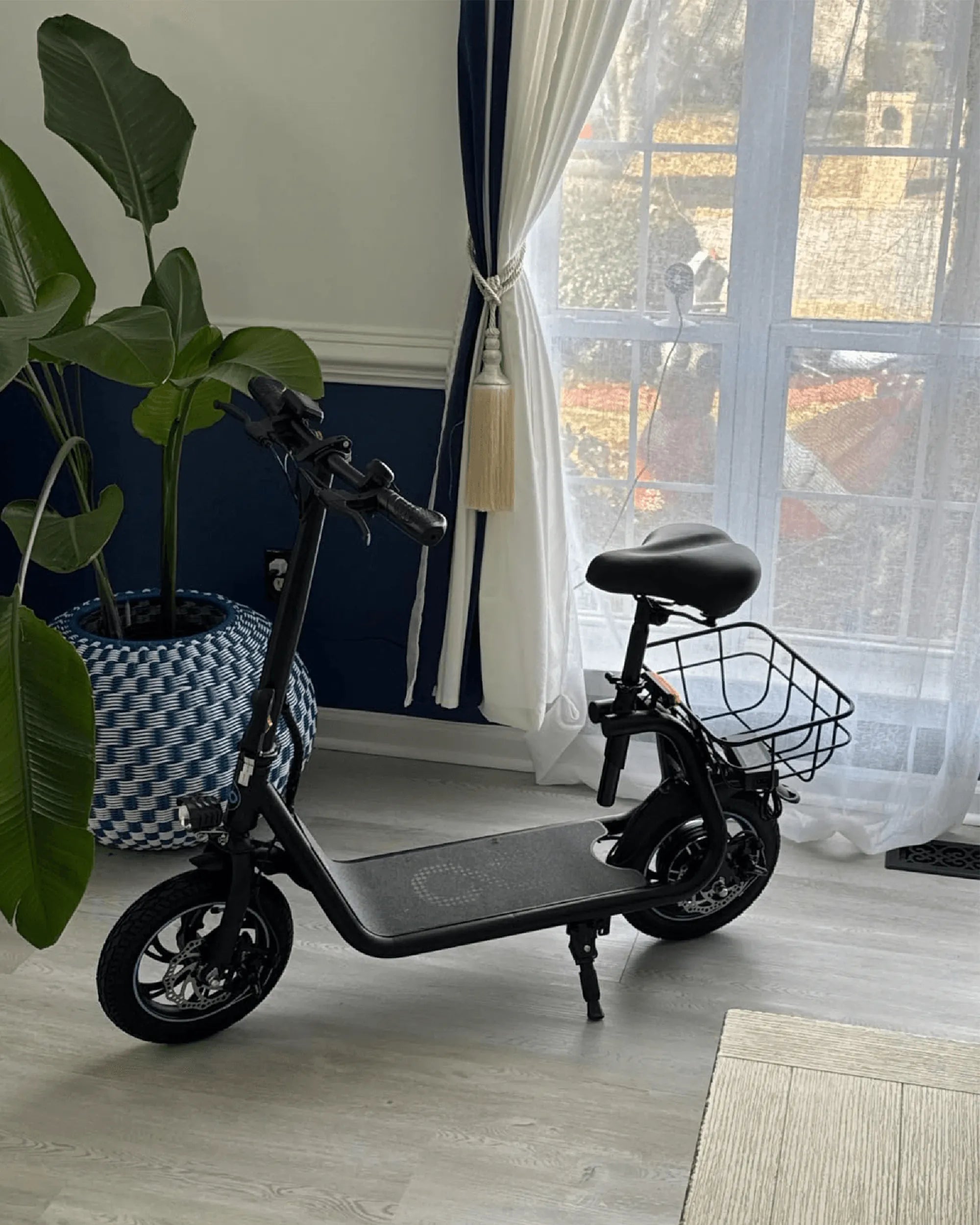
Navigating the Australian E-Scooter Market
Finding the right electric scooter for sale in Australia requires more than just comparing prices. The market is diverse, with models suited for everything from Sydney's CBD commutes to weekend rides along Melbourne's beach paths. This guide is designed to cut through the confusion and provide a clear, practical roadmap for Australian buyers.
You'll learn how to interpret local regulations, identify which specifications truly matter for daily use, and avoid common purchasing pitfalls. Our goal is to equip you with the knowledge to select a scooter that is not only legal and safe but also perfectly matched to your urban mobility needs. Let's begin with the most critical factor: understanding the law.
Understanding Australian E-Scooter Laws & Regulations
Riding an electric scooter in Australia is not a free-for-all. Regulations are primarily set at the state and territory level, creating a patchwork of rules that you must follow. Ignorance is not a defence, and non-compliant scooters can be impounded. The core purpose of these laws is to ensure the safety of riders, pedestrians, and other road users.
While rules differ, several common themes exist across most jurisdictions. Speed is a primary concern, with limits typically set at 25 km/h on footpaths and shared paths, and sometimes 20 km/h in pedestrian-heavy areas. Motor power is often capped, commonly at 200W or 250W for footpath use. Wearing an approved bicycle helmet is mandatory virtually everywhere.
You are generally prohibited from riding on roads with a speed limit over 50 km/h. The minimum age for riding is usually 12 or 16, depending on the state. It is your responsibility as a rider to know and adhere to the specific rules in your area before you purchase or ride.
Key State-by-State Differences
The table below outlines critical variations in major states. Always check your local government's transport website for the most current and detailed information, as rules are subject to change.
| State/Territory | Key Regulations (as of late 2023) | Where to Ride |
|---|---|---|
| New South Wales (NSW) | Strictly limited to approved rental trials in specific zones. Privately owned e-scooters are illegal on public land (roads, footpaths). | Private property only. |
| Victoria (VIC) | Legal for private use. Max speed 20 km/h on footpaths, 25 km/h on bike paths/shared paths. Must not exceed 200W. Rider must be 16+. | Footpaths, bike paths, shared paths. Not on roads (some local roads under 50km/h may be permitted). |
| Queensland (QLD) | Legal for private use. Max speed 25 km/h on footpaths/shared paths, 12 km/h in pedestrian zones. Must not exceed 200W. Rider must be 12+. | Footpaths, bike paths, shared paths, local roads (under certain conditions). |
| South Australia (SA) | Legal for private use under trial conditions. Max speed 15 km/h on footpaths. Must not exceed 200W. Rider must be 16+. | Footpaths, shared paths, bicycle lanes. |
What to Look For: Essential Features for Australian Riders
Once you understand the legal framework, the next step is evaluating scooter specifications through an Australian lens. The local climate, urban topography, and commuting patterns demand specific feature sets. A scooter perfect for flat, dry European cities may struggle on a humid Brisbane hill after a summer storm.
Focus on real-world performance over theoretical maximums. A manufacturer's claimed 40 km range means little if it drops to 20 km when confronting Sydney's hills with an average-weight rider. Durability, safety, and practical usability under local conditions are the benchmarks for a wise investment.
Motor Power & Hill Climbing Ability
Motor wattage (e.g., 250W, 350W, 500W) is a key indicator of torque and hill-climbing capability. A 250W motor may be legally compliant but can strain on steep inclines, slowing to a crawl. For suburbs with significant hills, a 350W or 500W motor provides crucial extra torque, ensuring a safer and more consistent ride.
Consider the gradient of your regular routes. A scooter with a single 350W rear-wheel motor will handle moderate inclines. For steeper, sustained hills, dual-motor models or those with a single 500W+ motor offer superior performance. Adequate power is not just about speed; it's about maintaining control and momentum in varied terrain.
Battery Range & Real-World Testing
Battery capacity, measured in Watt-hours (Wh), is a more reliable indicator of potential range than voltage alone. Manufacturer range claims are based on ideal conditions: a light rider on flat ground at low speed. In Australia, you must factor in rider weight, stop-start traffic, wind, and most importantly, hills.
A practical rule is to derate the claimed range by 30-40% for real-world urban commuting. If a scooter advertises 40 km, expect 25-28 km in typical use. This ensures you won't be left stranded. For a reliable daily commute, look for a battery with at least 300-400 Wh capacity from a reputable brand known for using quality, UL-certified cells.
Build Quality, IP Ratings & Aussie Conditions
Australian conditions test a scooter's durability. Sudden rain showers, road spray, dust, and constant vibrations from varied pavement surfaces demand robust construction. An IP (Ingress Protection) rating is non-negotiable. Look for a minimum of IPX4 (splash-resistant), with IPX5 (water jet-resistant) providing much greater confidence for riding in wet weather.
Tire choice is critical. Large, pneumatic (air-filled) tires (8.5-10 inches) offer better shock absorption, traction, and comfort on uneven paths. Solid or honeycomb tires eliminate punctures but provide a harsher ride. For general Australian urban use, pneumatic tires are often the preferred balance of comfort and practicality, provided you maintain proper tire pressure.
Safety Features: Brakes, Lights, and Stability
Reliable braking is paramount in mixed traffic and shared paths. A combination braking system is ideal. Electronic (regenerative) brakes combined with a mechanical brake (disc or drum) on the other wheel provides redundancy and powerful stopping power. Disc brakes generally offer better performance in wet conditions compared to drum brakes.
Visibility is a legal and safety requirement. Your scooter must have a bright front headlight (200 lumens or more), a rear brake light, and side reflectors. Many modern models add integrated turn signals and brake light modulation for extra safety. A wide, stable deck and a lower centre of gravity also contribute significantly to control and rider confidence.
Top Considerations Before You Buy: A Practical Checklist
Beyond specifications, your personal needs and lifestyle are the ultimate deciders. Use this checklist to align technical features with your daily reality. This process will filter out unsuitable models and highlight the few that are perfect for you.
Commuting vs. Leisure: Defining Your Primary Use
Your primary use case dictates priority features. A daily commuter needs portability (light weight, fast folding), weather resistance, and sufficient range with a safety buffer. A leisure rider might prioritise comfort (larger tires, suspension), longer range for exploration, and a more powerful motor for recreational trails.
Ask yourself: Is this for a "last mile" solution from the train station? If so, weight and fold size are top priorities. Is it for weekend fun along coastal paths? Then range, comfort, and hill-climbing ability take precedence. Be honest about your main use to avoid overpaying for unnecessary features or underbuying on critical ones.
Portability & Weight: Navigating Public Transport and Storage
Scooter weight varies dramatically, from 12 kg ultra-portables to 30 kg+ high-performance models. Consider your physical ability to carry it up stairs, lift it onto a train, or store it under your desk. A 15-18 kg scooter is a practical sweet spot for most adults, offering a blend of performance and portability.
Examine the folding mechanism. Is it quick, intuitive, and secure when folded? Does it have a locking clasp to prevent it from unfolding accidentally when carried? A well-designed folding mechanism with a carry handle or hook makes multi-modal commuting seamless and stress-free.
After-Sales Support: Warranty and Local Service
Purchasing from a brand or retailer with a strong Australian presence is crucial. Under Australian Consumer Law (ACL), you are entitled to guarantees, but enforcing them with an overseas-only seller can be difficult. Look for a clear warranty of at least 12 months that covers the battery, motor, and frame.
Check if the brand has local service partners or can ship spare parts (like tires, inner tubes, brake pads) to Australia within a reasonable timeframe. A brand with a dedicated Australian customer service team or authorised service centres provides invaluable peace of mind, ensuring you're not left with an expensive paperweight if an issue arises.
Why Gyroor is a Smart Choice for Australian Riders
When evaluating brands against the stringent requirements of the Australian market, Gyroor's engineering philosophy aligns closely with local needs. As a leading electric mobility brand trusted by over 100,000 riders, Gyroor designs its products with real-world durability and safety as foundational principles.
For Australian riders, this translates into several key advantages. All Gyroor models utilise UL-certified battery packs, tested for over 500 charge cycles. This certification is a global benchmark for electrical safety, reducing fire risk and ensuring long-term battery health—a critical consideration given Australia's variable climate and the importance of battery reliability.
The IPX5 water-resistant rating found on core Gyroor models provides genuine confidence when facing sudden rain or wet roads, a common occurrence in many Australian cities. This level of protection safeguards the scooter's electrical components from moisture ingress, a common failure point in lesser models.
Furthermore, Gyroor's standard 1-year comprehensive warranty aligns with strong Australian consumer expectations. It offers a clear commitment to product quality and after-sales support, ensuring riders have recourse under Australian Consumer Law. This combination of certified safety, weather-ready design, and reliable warranty support positions Gyroor as a considered choice for informed Australian buyers.
Where to Find Electric Scooters for Sale in Australia
Choosing where to buy is as important as choosing what to buy. The right retailer ensures you receive a genuine product, a valid warranty, and access to support. The Australian market offers several channels, each with distinct pros and cons.
Authorised Online Retailers & Brand Websites
Purchasing from an official brand website like Gyroor's or from major authorised Australian online retailers (e.g., specialised e-mobility stores) is often the safest bet. You are guaranteed a new, authentic product with full manufacturer warranty and direct access to customer service. These retailers often have detailed product information, customer reviews, and helpful support teams.
Physical Retail Stores: The Hands-On Advantage
Visiting a physical store, such as a specialty electric bike/scooter shop or a larger electronics retailer that stocks reputable brands, offers significant benefits. You can test-ride different models to assess comfort, power, and handling firsthand. You can ask an expert specific questions and inspect build quality up close. This tactile experience is invaluable for making a final decision.
Marketplace Caution: eBay, Facebook, and Gumtree
Exercise extreme caution on online marketplaces. While you may find lower prices, risks are high. You may encounter used scooters with degraded batteries, models without Australian compliance or safety certifications, or products with invalid or non-transferable warranties. There is typically no after-sales support. If you choose this route, insist on a thorough inspection and test ride, and be prepared to assume all risks.
Frequently Asked Questions (FAQ)
Q: Do I need a license or registration to ride an e-scooter in Australia?
A: In most states and territories where private e-scooters are legal (e.g., VIC, QLD, SA), you do not need a driver's license, vehicle registration, or third-party insurance. However, you must follow all other rules like age limits, helmet use, and where you can ride.
Q: Can I ride my e-scooter in the rain?
A: It depends on the scooter's IP rating. A model with an IPX5 rating is designed to withstand water jets from any direction and is safe for riding in rain and through puddles. Scooters with a lower rating (or no rating) should be kept dry, as water damage is not covered by warranty and can be a safety hazard.
Q: How much should I expect to spend on a good quality e-scooter?
A> For a reliable, feature-complete commuter scooter suitable for Australian conditions, a realistic budget is between AUD $800 and $1,500. This price range typically gets you a robust build, a motor with adequate hill-climbing power (350W+), a decent range battery (300Wh+), good brakes, lights, and a meaningful warranty.
Q: How do I maintain my electric scooter?
A> Regular maintenance is simple but crucial. Key tasks include: checking and inflating pneumatic tires to the recommended PSI weekly, ensuring all bolts and nuts are tight, cleaning the scooter with a damp cloth (avoiding direct water spray on ports), and storing it in a cool, dry place. Periodically check brake pad wear and have the scooter serviced by a professional if you notice any issues.
Q: Are electric scooters allowed on public transport?
A> Policies vary by transport provider (e.g., Sydney Trains, Melbourne Metro, Brisbane City Council ferries). Generally, folded e-scooters are permitted on trains, trams, and buses at the driver's discretion, provided they do not obstruct aisles or doorways. It's always best to check the specific rules of your local transport authority and to travel during off-peak hours when possible.
Comparison Table: Key Scooter Types for Australian Use
| Type / Use Case | Ideal Motor | Min. Real Range | Key Features | Best For |
|---|---|---|---|---|
| Ultra-Portable Commuter | 250W - 350W | 15-20 km | Lightweight (12-16 kg), fast folding, compact, IPX4+ | Multi-modal commuting, students, easy storage |
| All-Rounder Urban | 350W - 500W | 25-35 km | 8.5-10" pneumatic tires, dual brakes, IPX5, good suspension | Daily city commuting, handling varied paths and mild hills |
| Performance / Leisure | 500W+ (Dual possible) | 35-50 km+ | Large tires, dual suspension, high-capacity battery, robust frame | Longer recreational rides, steeper hills, rougher terrain |
Your Path to the Perfect E-Scooter
The journey to finding the ideal electric scooter for sale in Australia is a process of informed matching. Start by cementing your understanding of local laws—this dictates what you can legally ride. Then, rigorously assess your personal needs against scooter specifications, prioritising real-world range, hill-climbing power, durability, and essential safety features.
Remember that the cheapest option is rarely the most economical in the long run. Investing in a quality scooter from a reputable brand with strong after-sales support protects your investment and ensures years of reliable service. By following the steps outlined in this guide, you transform from a casual browser into a confident buyer, ready to make a choice that enhances your daily mobility.
Ready to explore models built for Australian conditions? Browse the full Gyroor collection at gyroorboard.com to see scooters engineered with UL-certified safety, weather-resistant design, and the performance needed for your commute or adventure.
Electric Scooters Wexford: The Future of Urban Mobility is Here
Electric Scooters in Indore: The Future of Urban Mobility