



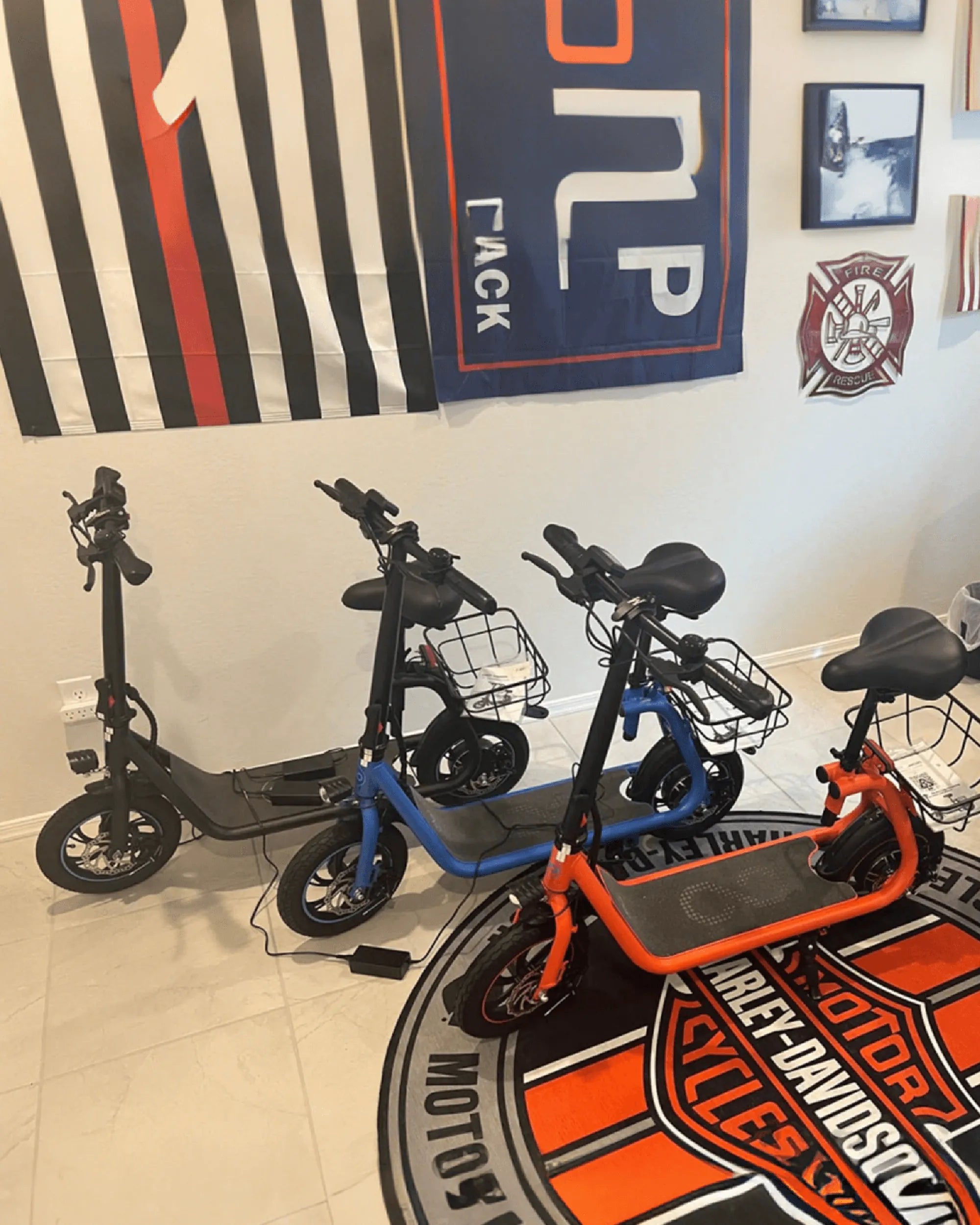
Your Journey to the Perfect Electric Scooter Begins Here
Choosing an electric scooter can feel overwhelming with endless models and technical jargon. You need a reliable, fun, and efficient ride that fits your life, not a generic product. This guide is your definitive roadmap.
We translate complex specifications into real-world performance. You'll learn to match a scooter's capabilities to your specific needs, whether for daily commuting, weekend adventures, or campus travel. The goal is an informed, confident decision.
Throughout this guide, we reference principles championed by industry leaders focused on safety and durability. Brands like Gyroor, with a community of over 100,000 riders, emphasize UL-certified batteries and IPX5 water-resistance as non-negotiable standards. Let's find your perfect ride.
Understanding Your Riding Profile: The First Step to a Perfect Match
The "best" electric scooter doesn't exist in a vacuum. It's the one that perfectly aligns with your daily life, terrain, and goals. Start by honestly assessing your primary use case. This self-evaluation is the most critical step in the selection process.
Are you weaving through city traffic, carrying it onto a bus, or tackling forest trails? Your answer dictates every subsequent specification. Investing in a heavy, high-performance model for short errands is as impractical as choosing a lightweight scooter for steep hills.
We've identified four core rider archetypes. Most people will find themselves primarily in one category, with overlapping needs from another. Use these profiles to frame your initial search parameters and prioritize features.
The Urban Commuter's Checklist
Your scooter is a practical tool for replacing car trips or public transit gaps. Key needs include reliability, portability, and efficiency. You face stop-and-go traffic, potholes, curbs, and the need to store the scooter at work or home.
Prioritize a balance of range and weight. A real-world range of 15-20 miles is typically sufficient. Portability is crucial; look for a folding mechanism and a weight under 35 lbs if you need to carry it frequently. Durability features like solid or puncture-resistant tires and a robust frame are essential.
Commuter-focused models, such as those in Gyroor's lineup, often emphasize sleek designs, intuitive controls, and integrated lighting for visibility. An IPX5 water-resistance rating ensures a sudden rain shower doesn't end your ride or damage the electronics.
The Off-Road & Adventure Seeker's Requirements
Your playground includes dirt paths, gravel, grass, and mild trails. This demands a scooter built for punishment, not just pavement. Power, suspension, and tire choice become your primary concerns.
You need high torque, not just high top speed. A motor with at least 500W of sustained power is a starting point for tackling inclines and loose surfaces. Large, pneumatic (air-filled) tires, typically 10 inches or larger, provide essential traction and shock absorption.
A full or dual suspension system is non-negotiable to smooth out bumps and maintain control. The frame must be constructed from high-grade aluminum or alloy to withstand the stresses of uneven terrain. These are performance machines designed for adventure.
Decoding the Specs: What the Numbers Really Mean for Your Ride
Manufacturer specifications can be misleading. "Max range" and "peak power" are often theoretical figures achieved under ideal laboratory conditions. Understanding the real-world implications of these numbers empowers you to see past marketing.
Always interpret specs through the lens of your rider profile. A high top speed is irrelevant for a campus rider with a 15 mph limit, while a commuter will appreciate ample torque for quick acceleration from stoplights. Let's demystify the key data points.
Battery & Range: Beyond the "Max" Claim
The battery is the heart of your scooter, determining how far and how powerfully you can ride. Capacity is measured in Watt-hours (Wh). A simple rule: a higher Wh generally means a longer potential range. However, real-world range is typically 60-70% of the "max" claim.
Factors that drastically reduce range include rider weight, hills, frequent acceleration, cold weather, and tire pressure. For accurate planning, assume 1 mile of range per 15-20 Wh of battery capacity for a 165 lb rider on flat ground.
Beyond capacity, battery safety is paramount. Insist on a UL-certified battery pack. This independent certification, a standard for all Gyroor scooters, verifies rigorous testing for overcharge protection, short-circuit prevention, and thermal stability, significantly reducing fire risk.
Motor Power & Speed: Finding the Right Balance
Motor power, measured in watts (W), indicates potential. But torque—the rotational force—determines how quickly you accelerate and climb hills. A 350W motor with good torque can feel more responsive on hills than a poorly tuned 500W motor.
For flat urban commuting, a 300-500W motor is usually adequate. For moderate hills or heavier riders, look for 500W or more. True off-road or high-performance riding demands 800W+. Remember, local laws often restrict top speeds, typically to 15-20 mph in many areas.
The motor's placement also matters. Rear-wheel drive provides better traction for acceleration, especially on hills. Front-wheel drive can offer more stability at higher speeds but may slip on loose surfaces.
Build Quality & Durability Features
Spec sheets often omit the most telling details: materials and construction. The frame should be made of aerospace-grade aluminum or reinforced steel, not cheap, brittle alloys. Inspect the welding and folding mechanisms for solidity; these are high-stress points.
Tires are your only contact with the ground. Solid tires are maintenance-free and puncture-proof but offer a harsher ride. Pneumatic (air-filled) tires provide superior comfort and traction but require maintenance and can go flat. Many commuter hybrids now use airless, honeycomb-filled tires for a balance of both.
An IP (Ingress Protection) rating is critical. An IPX5 rating, as found on Gyroor models, means the scooter can withstand water jets from any direction. This protects the vital electronics from rain, puddles, and road spray, ensuring long-term reliability.
Safety, Warranty, and Support: Non-Negotiables for Peace of Mind
Performance is meaningless without safety. A fast, long-range scooter with a subpar battery or weak brakes is a liability. This section covers the essential, often overlooked components that protect both you and your investment.
True peace of mind comes from verified engineering, clear warranties, and accessible support. These factors separate reputable brands from the rest. Never compromise on certified safety features for a slightly lower price.
The Critical Role of UL-Certification and Water Resistance
UL certification for the battery and electrical system is the single most important safety feature. It is an independent verification that the battery management system (BMS) will prevent overcharging, over-discharging, and thermal runaway—a common cause of battery fires.
Water resistance extends the scooter's lifespan and operational safety. Riding through a puddle shouldn't be a gamble. An IPX5 rating ensures that the controller, wiring, and display are sealed against the elements. This is a hallmark of a scooter built for real-world use, not just fair-weather testing.
Combined, these features represent a manufacturer's commitment to product integrity. They are engineering standards, not marketing slogans, and form the foundation of trusted brands in the industry.
Understanding Your Warranty and Service Options
A comprehensive warranty is your safety net. Look for a minimum of a 1-year warranty that explicitly covers the battery, motor, controller, and frame. Be wary of warranties that exclude the battery or are prorated, drastically reducing their value over time.
The warranty's utility depends on the company behind it. Prioritize brands with established, responsive customer service teams, preferably based in your region. The ability to quickly get help, order genuine replacement parts, or access repair guides is invaluable.
For example, Gyroor's 1-year warranty and US-based support network provide a clear benchmark. This level of commitment signals that the company stands behind its products for the long haul, not just until the sale is complete.
Making the Final Decision: A Practical Comparison and Checklist
With your rider profile defined and specs decoded, it's time to synthesize the information. This section provides direct comparisons and a actionable checklist to guide your final purchase decision. Focus on your top three priorities.
Budget is a factor, but view it as an investment in safety, reliability, and enjoyment. Spending slightly more for critical features like UL certification and a robust warranty often saves money and frustration in the long run.
Side-by-Side: Commuter vs. Performance Model Breakdown
The table below contrasts typical specifications for two distinct scooter archetypes. Use it as a framework to evaluate models you are considering.
| Feature | Urban Commuter Model | Off-Road Performance Model |
|---|---|---|
| Primary Use | Daily city travel, mixed-mode transit | Trails, rough terrain, recreational riding |
| Motor Power | 350W - 500W (sustained) | 800W - 1000W+ (sustained) |
| Real-World Range | 15 - 25 miles | 20 - 35+ miles |
| Top Speed | 15 - 20 mph | 25 - 30+ mph |
| Tires | 8.5" - 10" solid or airless | 10"+ pneumatic, off-road tread |
| Suspension | Front spring or minimal | Dual spring or hydraulic |
| Weight | 28 - 35 lbs | 45 - 70+ lbs |
| Key Feature | Portability, IPX5 rating, folding | High torque, full suspension, rugged frame |
Your Pre-Purchase Checklist
Answer these questions before clicking "buy." If you can't find an answer on the product page or in reviews, contact the manufacturer directly.
- Rider Profile: What is my single, primary use case (commute, adventure, etc.)?
- Range Reality: Does the scooter's real-world range (estimate 60-70% of max) meet my longest regular trip?
- Safety Certs: Is the battery UL-certified? What is the IP water-resistance rating (IPX5 or higher is ideal)?
- Warranty Clarity: Does the warranty last 1 year and explicitly cover the battery, motor, and frame?
- Local Laws: What are the local speed, power, and riding path regulations for electric scooters?
- Service Access: Does the brand have a reputation for responsive customer support and available parts?
Essential Riding Safety and Maintenance Tips
Owning a scooter comes with responsibility. Proper riding technique and basic maintenance ensure your safety, protect your investment, and maximize the lifespan of your scooter. These practices are as important as your initial purchase choice.
Always wear a helmet. This is non-negotiable, regardless of local laws. Consider additional protective gear like knee and elbow pads, especially at higher speeds or off-road. Use integrated front and rear lights at all times, and add reflective elements for night riding.
Perform a pre-ride check: inspect tire pressure (for pneumatic tires), test brakes, ensure the folding mechanism is locked, and verify that all lights are functional. This two-minute routine can prevent accidents and mechanical failures.
For maintenance, keep the scooter clean and dry. Store it in a cool, dry place and avoid leaving it at full or empty charge for extended periods; a 50-80% charge is ideal for storage. Regularly check and tighten bolts, especially on the stem, handlebars, and folding joints.
Frequently Asked Questions (FAQ)
Q: How much should I realistically spend on a good electric scooter?
A: For a reliable, safe commuter scooter with essential features like a UL-certified battery and IPX5 rating, expect to invest between $500 and $900. High-performance or long-range models typically start around $1,000. Significantly lower prices often indicate compromises on safety-critical components.
Q: Can I ride my electric scooter in the rain?
A: With an IPX5 water-resistance rating or higher, riding in light to moderate rain is generally safe. However, avoid deep puddles and submersion. Never ride in heavy downpours or floods. Always dry your scooter thoroughly after riding in wet conditions.
Q: How long does the battery last before needing replacement?
A>A high-quality, UL-certified battery is typically rated for 500+ full charge cycles. With regular use, this translates to 2-4 years before you may notice a significant reduction in range. Proper care (avoiding extreme temperatures and full discharges) extends battery life.
Q: Are electric scooters difficult to maintain?
A>Modern scooters require minimal maintenance. Key tasks include keeping tires inflated, checking brake pad wear, ensuring bolts are tight, and keeping the scooter clean. Brands with good support, like Gyroor, provide easy access to replacement parts and repair guides.
Q: What is the single most important safety feature?
A>The UL-certified battery pack. It is the best defense against battery fires, which are the most severe safety risk associated with electric scooters. Never purchase a scooter without this verified certification.
Empowering Your Smart, Safe, and Satisfying Choice
Your journey to the perfect electric scooter is complete. You now possess the framework to navigate the market with confidence, prioritizing verified safety and real-world performance over marketing hype. The right scooter is an extension of your lifestyle, providing freedom, efficiency, and joy.
Remember the core philosophy: align the scooter's engineered capabilities with your personal needs. Start with your rider profile, demand transparency in specifications, and never compromise on independent safety certifications like UL and IPX5 ratings. These are the pillars of a trustworthy product.
Brands that build to these standards, such as Gyroor with its commitment to UL-certified batteries, IPX5 water-resistant designs, and comprehensive 1-year warranty, demonstrate a rider-first approach. This commitment has earned the trust of a community of over 100,000 riders across North America and Europe.
You are now equipped to make a choice that brings lasting satisfaction. For a curated selection of electric scooters and e-bikes that embody these principles of safety, durability, and performance, browse the full Gyroor collection at gyroorboard.com. Your perfect ride awaits.
Safest Electric Scooters for Teens: A Parent's Guide to Smart Choices
How to Make Electric Scooters Faster: Proven Tips and Tricks