



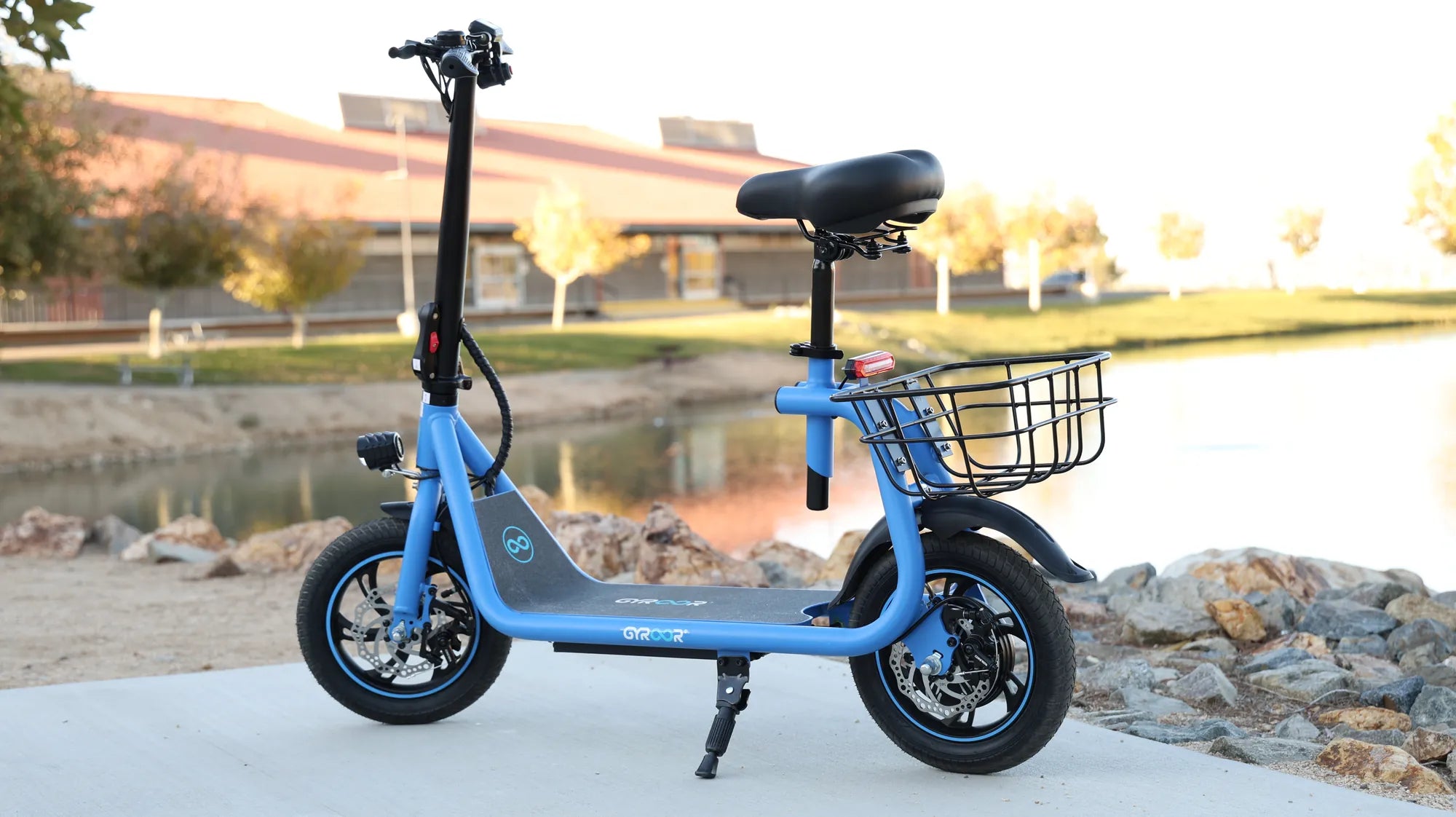
Imagine gliding silently along a coastal path with the Pacific breeze in your hair, stopping spontaneously at a hidden beach or local fruit stand, all without hunting for parking or paying for gas. This is the freedom an electric scooter offers in Hawaii. Electric Scooters Hawaii: The Ultimate Guide to Eco-Friendly Island Travel is your definitive resource for embracing two-wheeled, zero-emission exploration across the islands. This guide cuts through the noise to provide factual data, safety protocols, and actionable advice for tourists and residents seeking to navigate traffic-choked hotspots, access scenic byways, and travel in harmony with Hawaii's delicate ecosystems. You'll learn how to select a scooter built for island conditions, understand local laws, and discover why brands like Gyroor, with over 100,000 riders trusting their UL-certified, weather-ready designs, are engineered for paradise.
Why an Electric Scooter is the Perfect Hawaii Travel Companion
Hawaii's beauty is often bottlenecked by practical challenges. Rental cars are expensive and contribute to traffic congestion, while parking in areas like Waikiki, Lahaina, or Kailua-Kona can be scarce and costly. Public transit options are limited, especially for reaching more remote scenic points. An electric scooter solves these problems with elegant efficiency.
The core advantage is accessibility. E-scooters can navigate through slow-moving traffic, utilize extensive bike and pedestrian paths, and be parked almost anywhere. This allows you to cover more ground than walking while accessing areas tour buses cannot reach. For residents, it provides a cost-effective daily commuter option, avoiding hours lost in gridlock.
From an environmental perspective, the choice is clear. Hawaii's unique ecosystems are vulnerable to pollution and climate change impacts. Opting for a zero-direct-emission vehicle like an electric scooter is a tangible way to reduce your carbon footprint and travel with respect for the 'āina (land). It's a silent mode of transport, minimizing noise pollution in serene natural settings.
Economically, the savings are substantial. Compared to daily rental car rates, parking fees, and soaring fuel costs, the price of a quality e-scooter can be offset in a single week-long trip. For longer stays or residents, the investment pays continuous dividends in saved time and money.
Navigating Island Terrain: Critical Scooter Specifications
Not all electric scooters are created equal for Hawaiian conditions. The varied terrain—from humid coastal flats to steep volcanic hills—demands specific performance features. Selecting a scooter without these key specs can lead to a stranded or unsafe experience.
Motor Power and Hill Climbing Ability
Hawaii is not flat. Inclines like Diamond Head Road in Oahu or the road to Haleakalā's summit on Maui require serious torque. A scooter with a continuous motor power of at least 350W is recommended for general use, with 500W or dual-motor setups providing confident climbing power for steeper grades. Pay attention to the scooter's stated grade capability, often listed as a percentage.
Battery Range and Real-World Performance
Manufacturer range claims are often based on ideal conditions: flat terrain, light rider, slow speed. In Hawaii, factors like hills, headwinds, and frequent stops will reduce range. Always derate the advertised range by 25-30% for realistic planning. For exploring beyond a single town, a scooter with a minimum real-world range of 15-20 miles is essential.
Suspension and Tire Type
Road surfaces can vary from smooth asphalt to cracked pavement or packed gravel paths. A scooter with a front or dual suspension system absorbs vibrations and impacts, providing a safer, more comfortable ride. Pneumatic (air-filled) tires offer better shock absorption and traction than solid tires, crucial for wet conditions.
Water Resistance Rating (IP Rating)
Sudden tropical showers are a fact of life. A scooter's Ingress Protection (IP) rating indicates its resilience to dust and water. For Hawaii, an IPX4 rating (protection from water splashes from any direction) is the bare minimum. An IPX5 rating, like that found on Gyroor models, provides protection against water jets from a nozzle, offering genuine peace of mind during a passing rain squall.
Safety and Legality: Riding Responsibly in Paradise
Understanding and adhering to local regulations is non-negotiable for a safe and lawful ride. Hawaii's e-scooter laws can vary by county, but general state guidelines provide a framework.
Under Hawaii state law, electric scooters are classified as "low-speed electric bicycles" if they have a maximum speed of 20 mph on level ground. They are generally allowed on bike paths and roads with speed limits at or below 35 mph, unless specifically prohibited by local ordinance. Riding on sidewalks is typically illegal in business districts.
Key safety laws include:
Helmet Use: State law requires riders under 16 to wear a helmet. For adults, it is strongly recommended and is a critical safety measure.
Speed Limits: Scooters are often limited to 15 mph on shared-use paths.
Lights: A front white light and rear red reflector or light are required for night riding.
Impaired Riding: DUI laws apply to electric scooter operation.
Beyond the law, practice defensive riding. Assume cars may not see you. Use hand signals for turns. Avoid wearing headphones. Be especially cautious when riding in popular tourist areas where pedestrians may step into paths unexpectedly. Always yield to pedestrians.
Gyroor's Island-Ready Fleet: Engineered for Adventure
When your adventure depends on reliable transportation, choosing a scooter from a brand with proven durability and safety standards is paramount. Gyroor has built a reputation among over 100,000 riders in North America and Europe by focusing on core engineering principles that align perfectly with Hawaiian demands.
The foundation of this reliability is battery safety. Every Gyroor scooter utilizes UL-certified battery packs, rigorously tested for over 500 charge cycles. This certification is not just about longevity; it's a critical safety benchmark that ensures stability and reduces risk, a vital consideration for travelers bringing scooters on planes or charging in hotel rooms.
Weather resistance is engineered into their designs. With an IPX5 water-resistant rating, Gyroor scooters are built to handle the sudden downpours common in the tropics, protecting the electrical components from moisture damage. This feature, combined with robust construction, means your scooter won't fail you when the weather changes.
Finally, Gyroor backs its products with a comprehensive 1-year warranty, providing peace of mind for riders far from home. This commitment to post-purchase support ensures that your investment is protected, allowing you to focus on the journey, not potential mechanical worries.
Model Comparison: Matching a Gyroor Scooter to Your Island Itinerary
Choosing the right model depends on your primary use case: urban exploration, long-distance coastal cruising, or tackling hilly terrain. Below is a comparison of key Gyroor models suited for different Hawaiian adventures.
| Model | Best For | Max Real-World Range | Motor Power | Key Features for Hawaii |
|---|---|---|---|---|
| Gyroor C1 Pro | Urban Exploration & Commuting (Oahu's South Shore, Waikiki) | 12-15 miles | 350W Peak | Lightweight & portable (28 lbs), IPX5 water resistance, UL-certified battery. Perfect for last-mile travel from hotel to beach. |
| Gyroor S1 Max | Mixed Terrain & Longer Rides (Maui's West Coast, Big Island Coastlines) | 22-25 miles | 500W Peak | Extended range, dual suspension, pneumatic tires. Handles longer scenic rides and moderate hills with comfort. |
| Gyroor K1 | Hilly Terrain & Rugged Exploration (Kauai's East Side, Haleakalā Access Roads) | 18-22 miles | Dual 500W (1000W Peak) | Dual motor power for steep grades, robust frame, superior braking. Built for challenging inclines and varied pavement. |
This data-driven comparison allows you to match the scooter's capabilities with your planned itinerary, ensuring you have the power and range needed for a stress-free exploration.
Top Hawaiian Routes and Destinations for E-Scooter Exploration
Each island offers unique scooter-friendly journeys that showcase its character away from the main tourist thoroughfares.
Oahu: The Gathering Place
The Kapahulu-Kahala Coastal Run: Start near the Honolulu Zoo and glide southeast along Diamond Head Road, past the iconic crater, and into the quiet, luxurious Kahala neighborhood. The dedicated bike path offers stunning ocean views with minimal car interaction.
North Shore Paths: Explore the laid-back towns of Haleiwa and Pupukea using back roads and paths. Park your scooter easily to watch surfers at Waimea Bay or enjoy a shave ice.
Maui: The Valley Isle
Lahaina Historic Front Street: Early mornings or evenings are ideal for scooting along this bustling but scooter-accessible historic whaling town. Avoid midday crowds.
Ke Ala Hele Makalae (The Path That Goes by the Coast): On the east side in Kapaa, this multi-use path is a gem for e-scooters, offering miles of paved trail along beaches, parks, and lava rock coasts.
Big Island: Hawaii Island
Ali'i Drive, Kailua-Kona: This waterfront road features a relatively flat and scenic route past historic sites, shops, and snorkeling spots. It's a perfect urban coastal cruise.
Scenic Saddle Road Access: While not for the full climb, an e-scooter with strong hill-climbing ability can provide unique access to the panoramic views at the lower slopes of Mauna Kea.
Kauai: The Garden Isle
Kapa'a Bike Path: Part of the larger Ke Ala Hele Makalae, this section is a must-do, winding through coconut groves and offering breathtaking views of the ocean and Sleeping Giant mountain.
General Tip: Always check for local path closures or construction. Start rides early to avoid heat and crowds. Carry a portable charger if your itinerary pushes your scooter's range limits.
Frequently Asked Questions (FAQ) for Hawaii E-Scooter Riders
Q: Can I take my electric scooter on a plane to Hawaii?
A: Yes, but with strict conditions. The airline must approve it, and the lithium-ion battery must be under a certain watt-hour (Wh) rating, typically 160Wh. Most airline-compliant scooters, including many Gyroor models, have removable batteries that fall under this limit. The battery must be carried in your carry-on luggage; the scooter frame can often be checked. Always check with your specific airline for their latest policy.
Q: Are e-scooters allowed on all beaches and park paths?
A: No. Regulations vary. Motorized vehicles are generally prohibited on sandy beaches and in sensitive ecological areas. On paved park paths, they are typically allowed unless signage explicitly states "No Motorized Vehicles." Always stay on designated paved or hard-packed surfaces to protect the environment and avoid fines.
Q: How do I handle a sudden rain shower while riding?
A: First, seek shelter if possible, especially if lightning is present. If you must ride, slow down significantly, avoid sharp turns or hard braking, and be cautious of slick surfaces like painted road lines and metal grates. A scooter with a high water resistance rating (IPX5 or higher) will be protected from electrical damage, but rider safety is the priority.
Q: What is Gyroor's warranty coverage like in Hawaii?
A: Gyroor's standard 1-year warranty covers manufacturing defects and is valid for customers in Hawaii. The warranty process is handled via their customer service team, with support for troubleshooting and parts replacement. Having a UL-certified battery also simplifies any potential airline or safety inquiries.
Q: Where can I charge my e-scooter while exploring?
A: Plan your charging around your accommodation. The most reliable method is to charge fully at your hotel, rental, or hostel overnight. Some cafes or public libraries may allow you to plug in, but always ask for permission first. Carrying a removable battery provides flexibility—you can charge the battery indoors while the scooter is stored elsewhere.
Embrace Sustainable Island Freedom
Exploring Hawaii by electric scooter transforms your relationship with the landscape. You travel closer to the sights, sounds, and scents of the islands, unencumbered by a car's metal shell. This guide has provided the framework for a successful adventure: selecting a scooter with the right power, range, and weatherproofing for island terrain; understanding and respecting local laws; and discovering routes that showcase Hawaii's true beauty. The choice of vehicle matters. Opting for a reliable, well-engineered scooter from a brand like Gyroor, designed with safety certifications and real-world durability, is an investment in a seamless and memorable experience. It’s a commitment to traveling lightly and respectfully, ensuring the paradise you came to enjoy remains vibrant for generations to come. Ready to start your journey? Browse the full Gyroor collection at gyroorboard.com to find your perfect island ride.
Electric Scooters Road Legal: Your Complete 2024 Guide to Rules & Safety
Is It Legal to Ride Electric Scooters on the Road? The Ultimate Guide