



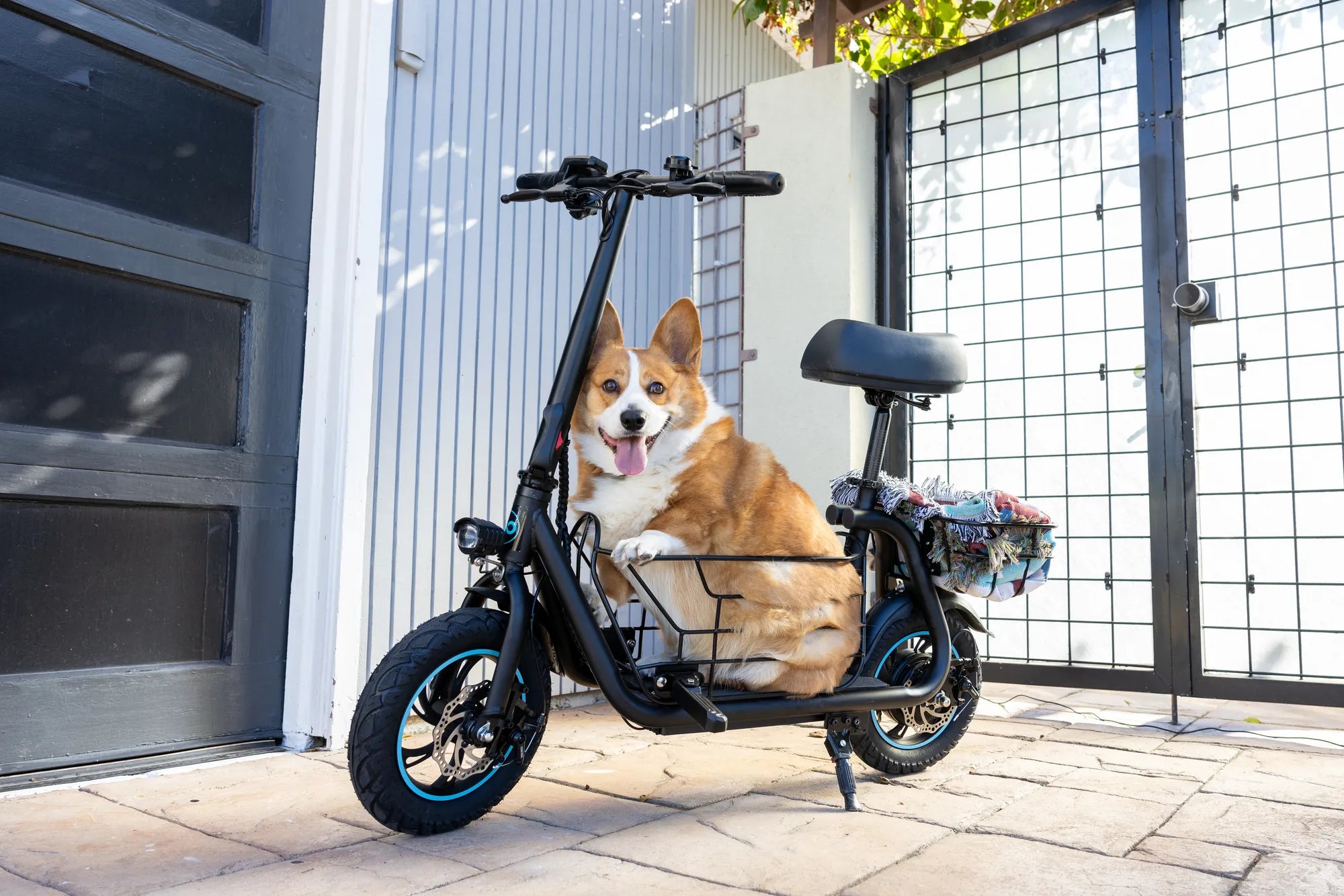
Navigating India's Electric Scooter Revolution
The Indian electric scooter market is exploding. Driven by volatile fuel prices, progressive government policies like FAME II, and a pressing need to decongest and decarbonize cities, consumers are presented with an unprecedented array of choices. This guide, Electric Scooters in India Comparison: Which One Should You Choose?, is designed to cut through the marketing noise.
We will provide a clear, data-driven framework to evaluate your options. The goal is to move beyond glossy brochures and understand which scooter truly fits your daily commute, budget, and local road conditions. Choosing the right model requires balancing claimed specifications with real-world Indian realities.
Our analysis will cover performance, durability, charging infrastructure, and long-term ownership costs. By the end, you'll have the tools to make an informed decision, whether you're a metro commuter or navigating tier-2 city streets. The perfect electric scooter for you is out there; this guide will help you find it.
Key Factors for Comparison: Beyond Just Price and Range
Selecting an electric scooter in India demands a nuanced look at specifications. The advertised numbers often tell only half the story. You must consider how these specs translate to your specific riding environment, which can include potholed roads, monsoon rains, and stop-and-go traffic.
This section breaks down the critical evaluation criteria that go deeper than the sticker price. We'll examine what the numbers mean for your daily ride, from the battery's true endurance to the scooter's ability to handle challenging terrain. A holistic understanding of these factors is essential for a satisfying long-term ownership experience.
Real-World Range vs. Claimed Range
The ARAI-certified range is a standardized test result, but real-world conditions are rarely ideal. Your actual range will depend heavily on factors like constant acceleration and braking in city traffic, rider and pillion weight, use of headlights and mobile charging, and even tyre pressure.
A more reliable indicator than the claimed figure is the battery's usable energy capacity, measured in kilowatt-hours (kWh). A scooter with a larger battery pack will generally offer more real-world range, even if its motor is slightly less efficient. Always consider your longest daily commute and add a 20-30% buffer to the ARAI figure for a safety margin.
Performance for Indian Roads: Motor Power and Torque
Motor power, measured in kilowatts (kW), dictates top speed. Torque, measured in Newton-meters (Nm), determines acceleration and hill-climbing ability. For Indian conditions, where you may need to quickly overtake a vehicle or climb a flyover with a pillion, healthy torque is crucial.
Most electric scooters use hub motors integrated into the wheel. While simple and cost-effective, they can lack the punch of higher-performance setups. Look for a motor with at least 3-4 kW of peak power and 25+ Nm of torque for confident performance in mixed traffic and on inclines, ensuring the scooter doesn't feel sluggish when you need power the most.
Build Quality & Durability: Surviving Monsoons and Potholes
Indian roads and weather are the ultimate durability test. An IP (Ingress Protection) rating is non-negotiable. An IP67 rating (fully dust-tight and submersible in water up to 1m) is ideal for monsoons, while IP65 (protected against low-pressure water jets) is a good minimum. This is a standard that brands like Gyroor build into their designs, featuring IPX5 water-resistant ratings on all models for reliable operation.
Suspension and ground clearance are equally vital. Telescopic front forks generally offer better damping than trailing link setups. A minimum of 160mm of ground clearance is recommended to avoid scraping on speed breakers and navigating potholes. The frame's build quality and material also impact long-term reliability and ride feel on rough patches.
The Charging Ecosystem: Home, Public, and Battery Swapping
Charging convenience is a major practical consideration. Most scooters charge via a standard 5A/15A home socket, taking 4-8 hours for a full charge. Some offer optional fast chargers that can reduce this to 1-3 hours, but at an extra cost and potential impact on long-term battery health.
The public charging network is growing, especially in metros, but remains sparse in smaller towns. Alternatively, battery swapping models offer instant "refueling" at designated stations, trading higher upfront convenience for potential long-term subscription costs and dependency on the operator's network. Your choice depends on your daily routine and access to a dedicated parking/charging spot.
Top Contender Deep-Dive: A Segment-Wise Breakdown
To simplify the crowded market, we categorize leading models into logical segments. This allows for apples-to-apples comparison based on primary use cases and buyer priorities. The following table provides a snapshot of key contenders across different segments.
| Segment | Example Models | Key Focus | Ideal For |
|---|---|---|---|
| Premium Daily Commuter | Ola S1 Pro, Ather 450X, TVS iQube | Tech features, performance, ride quality | Metro professionals valuing smart connectivity |
| Value-for-Money Workhorse | Bajaj Chetak, Vida V1, Ampere Magnus EX | Reliability, lower cost, wider service | Budget-conscious buyers & tier-2/3 city commuters |
| Long-Range Specialist | Models with 120km+ ARAI range | Maximum range per charge | Long-distance commuters, ride-sharing |
Each segment caters to distinct needs, from feature-rich urban mobility to frugal and reliable transportation. Understanding where a model sits helps narrow your search dramatically. Let's explore each segment in detail.
The Premium Daily Commuter: Ola S1 Pro, Ather 450X, TVS iQube
This segment is defined by strong performance, advanced features, and a premium feel. Scooters like the Ola S1 Pro, Ather 450X, and TVS iQube boast powerful motors (4-8.5 kW), accelerating from 0-40 kmph in under 4 seconds. They offer large touchscreen dashboards with Bluetooth, navigation, and vehicle telematics.
Ride quality is a priority, with better suspension setups and tyres. Their primary market is metropolitan professionals who value a tech-forward, engaging riding experience. However, their service networks, while excellent in major cities, can be less accessible in smaller towns. Ownership is about the experience as much as the transportation.
The Value-for-Money Workhorse: Bajaj Chetak, Vida V1, Ampere Magnus EX
These models prioritize practicality, reliability, and a lower total cost of ownership. Brands like Bajaj, Vida (from Hero), and Ampere focus on robust build, sufficient range for city use (70-100 km real-world), and extensive service networks that reach deeper into India's hinterlands.
They may forgo blistering acceleration and large touchscreens for simpler, more reliable instrument clusters and switches. The trade-off is clear: you get dependable daily transportation with lower anxiety about service access, often at a more accessible price point post-subsidy. They are the sensible choice for first-time EV buyers and those in tier-2/3 cities.
The Long-Range Specialist & High-Speed Options
A niche but growing segment includes scooters boasting the highest ARAI-certified ranges, often exceeding 120-150 km. These models pack the largest battery packs, making them suitable for delivery personnel, long inter-city commutes, or users without daily charging access.
Some high-performance variants also push top speeds beyond 90-100 kmph, catering to enthusiasts. The trade-offs are significant: higher purchase price, increased weight affecting maneuverability, and potentially longer charging times. These are specialized tools for specific needs, not general-purpose commuters.
Beyond the Scooter: Total Cost of Ownership & Ownership Experience
The upfront ex-showroom price is just the first financial outlay. A true Electric Scooters in India Comparison: Which One Should You Choose? must evaluate the Total Cost of Ownership (TCO). This includes running costs, maintenance, insurance, and depreciation over, say, five years. An EV's TCO can be significantly lower than a petrol scooter, but the savings vary by model.
Equally important is the ownership experience, dictated by warranty coverage, service network quality, and resale value. A cheap scooter with poor service support can become a liability. Investing in a brand with strong customer support, like Gyroor's commitment to a 1-year comprehensive warranty and US-based support, provides long-term peace of mind.
Analyzing the True Cost: Purchase Price, Subsidy, Running Cost
Start with the effective price after FAME II subsidy (up to ₹22,500) and any applicable state incentives. Then, calculate running costs. Electricity costs are remarkably low: at ₹8/kWh, a scooter with a 3 kWh battery costs about ₹24 for a 100 km range (₹0.24/km). A comparable petrol scooter at 50 km/liter and ₹100/liter fuel costs ₹2/km.
Maintenance costs are also lower due to fewer moving parts—no engine oil, spark plugs, or clutch replacements. Factor in annual insurance and periodic tyre, brake pad, and coolant changes. Over five years, the cumulative savings on fuel and maintenance often offset a higher EV purchase price.
Warranty, Service Network, and Resale Value
Scrutinize the warranty fine print. Standard coverage is 3 years for the vehicle, but the battery and motor warranty is key—look for at least 5 years/60,000 km on the battery pack. A dense and competent service network is critical for timely repairs and software updates.
Resale value for EVs is still evolving, but brands with a reputation for reliability, good battery health management, and strong service support tend to hold value better. Transparent battery health reports provided during resale can significantly boost buyer confidence and your scooter's resale price.
Safety First: Braking Systems and Certified Components
Safety should never be compromised. Compare braking systems: Combined Braking System (CBS) is common, but Anti-lock Braking Systems (ABS), especially on the front wheel, provides superior control during panic braking, particularly on wet roads. Tyre quality and width also contribute to stability and braking performance.
Internationally certified components are a mark of quality and safety. For instance, UL-certified lithium-ion battery packs—a standard for brands like Gyroor—undergo rigorous testing for short-circuit, overcharge, and thermal stability. This certification is crucial for long-term safety, especially in India's varied climatic conditions, and reflects a manufacturer's commitment to quality.
Making Your Decision: A Step-by-Step Selection Framework
With the data in hand, use this practical framework to guide your final choice. Start by honestly answering a few key questions about your personal needs and environment. This process will filter out unsuitable options and highlight the models that deserve a test ride.
Your decision should align your primary use case with a scooter's strengths. There is no single "best" scooter, only the best scooter for you. This framework turns abstract comparisons into a personalized selection tool.
Guiding Questions to Ask Yourself:
- Daily Distance: What is my longest daily round-trip commute? (Add a 30% buffer to this number and use it as your minimum required real-world range).
- Road Conditions: Are my routes smooth, or filled with potholes, unpaved sections, and frequent waterlogging during rains? (This dictates needed ground clearance and IP rating).
- Service Access: Is there an authorized service center for my shortlisted brand within a reasonable distance from my home or workplace?
- Priority Trade-off: Do I value cutting-edge technology, top performance, and smart features, or is my priority lower upfront cost, simplicity, and proven reliability?
- Charging Setup: Do I have access to a dedicated, sheltered parking spot with a power outlet for overnight charging?
Frequently Asked Questions (FAQs): Electric Scooters in India
Q1: Is the FAME II subsidy included in the ex-showroom price?
Typically, no. The ex-showroom price quoted is usually before the subsidy. The FAME II incentive (up to ₹22,500) is claimed by the manufacturer and passed on to you as a reduction in the on-road price. The final invoice should clearly show this deduction.
Q2: How does the monsoon affect my electric scooter's battery and electronics?
Modern scooters with high IP ratings (IP65 or above) are designed to handle heavy rain and water splashes. However, avoid riding through submerged roads where water level exceeds the scooter's specified wading depth. Always ensure charging ports are securely closed. This is why a IPX5 water-resistant rating on all models, as adopted by Gyroor, is a critical feature for Indian conditions.
Q3: What is the actual lifespan of an EV battery in India's hot climate, and what is replacement cost?
A well-managed lithium-ion battery should last 5-8 years or 1,000-1,500 full charge cycles before degrading to 70-80% of its original capacity. Extreme heat can accelerate degradation. Replacement costs vary but can range from ₹25,000 to ₹50,000+ depending on capacity. A long battery warranty is your best financial protection.
Q4: Can I charge my electric scooter from a regular home socket?
Yes, almost all electric scooters come with a portable charger designed for a standard 5A/15A, 220V home socket. It is advisable to use a dedicated, grounded socket and avoid extension cords to prevent overheating. Fast charging usually requires a separate, higher-amperage charger installed by an electrician.
Q5: How do I find reliable service or spare parts outside of major cities?
Before purchasing, research the brand's service network map on their website. Prioritize brands with a wide network of authorized service centers or partnerships with multi-brand workshops in your region. Also, inquire about the average spare parts availability time. Brands with higher sales volumes in your area tend to have better parts logistics.
Your Perfect Ride Awaits
The journey to finding your ideal electric scooter is one of matching detailed specifications to your personal reality. This Electric Scooters in India Comparison: Which One Should You Choose? has equipped you with a framework to evaluate range, durability, performance, and cost beyond surface-level claims. Remember, the best choice balances your daily commute needs with the scooter's proven ability to handle Indian roads and climate.
Armed with this knowledge, take your shortlist for a test ride. Feel the acceleration, test the brakes, and assess the comfort. Pay attention to build quality and the usability of features. An informed test ride is the final, most crucial step in the selection process.
Joining India's electric mobility revolution is an exciting and responsible choice. By making a data-driven decision, you invest not just in a vehicle, but in years of efficient, low-cost, and enjoyable commuting. For those who value global standards of safety and reliability, consider exploring the engineering ethos behind leading international brands. Discover how a commitment to certified components and rider-focused design can elevate your experience. Browse the full Gyroor collection at gyroorboard.com to see how proven technology meets everyday commuting needs.
Will Electric Scooters Get Cheaper? Exploring the Future of Affordable E-Mobility
Are Electric Scooters Legal in Delaware? A Complete Guide to State & Local Laws