

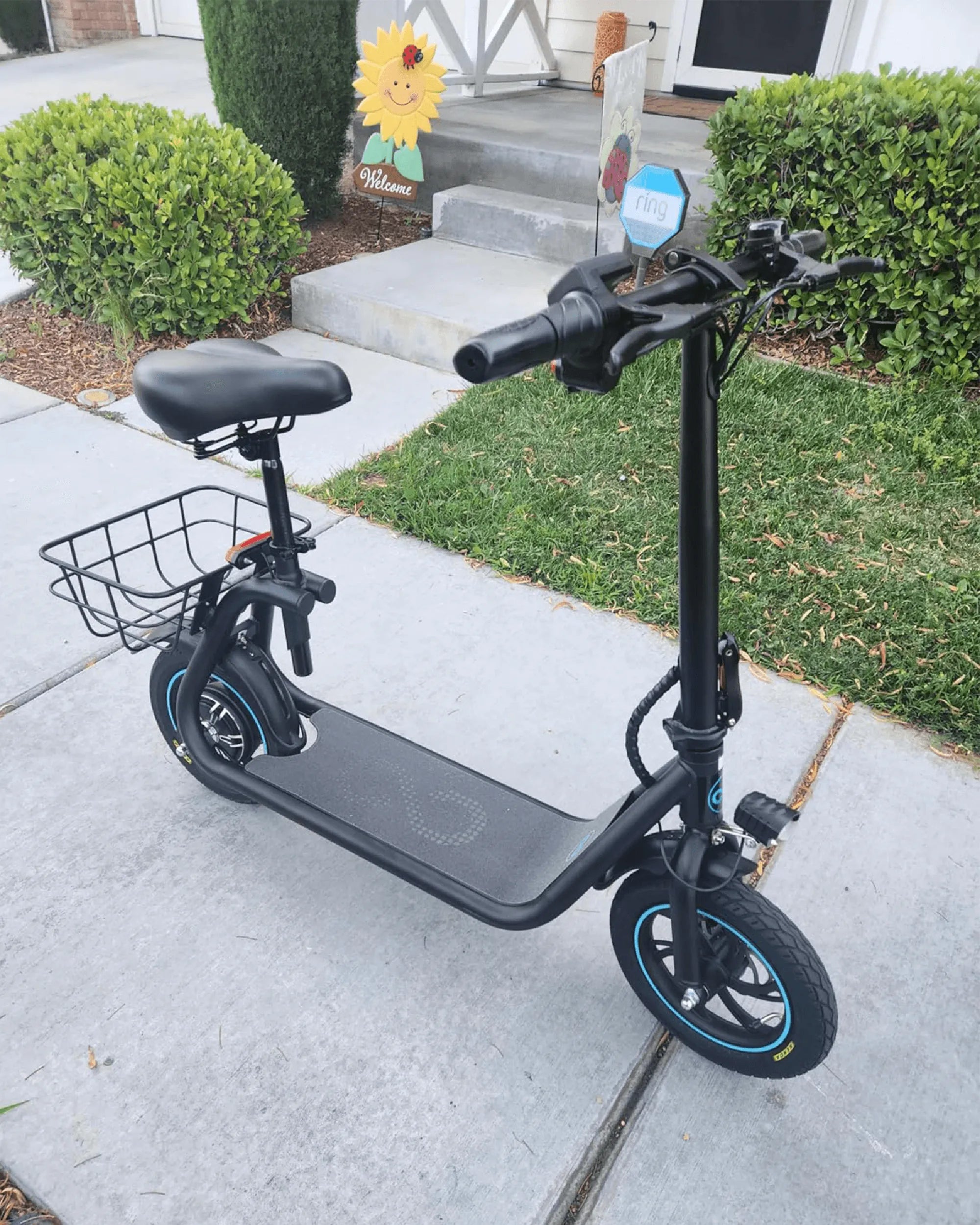
Introduction: Madurai's Urban Mobility at a Turning Point
Madurai, the cultural heart of Tamil Nadu, faces a modern paradox. Its ancient, narrow streets around the Meenakshi Temple clash daily with the swelling traffic of a growing city. Traditional petrol two-wheelers, while ubiquitous, contribute to congestion, noise, and declining air quality in this historic urban center. A quiet, efficient, and agile solution is emerging to navigate this challenge: the electric scooter.
The adoption of Electric Scooters in Madurai: The Future of Urban Mobility represents a practical shift towards sustainable transportation. For students, professionals, and residents alike, e-scooters offer a way to bypass traffic snarls, reduce commuting costs significantly, and contribute to preserving the city's heritage from pollution. This isn't just a global trend; it's a locally relevant answer to Madurai's specific urban puzzle.
This comprehensive guide will analyze why electric scooters are gaining rapid traction, detail the essential features needed for Madurai's conditions, and provide a factual roadmap for potential riders. We will examine real-world data on range, costs, and regulations, empowering you to make an informed decision about joining this mobility revolution.
Why Electric Scooters Are Gaining Traction in Madurai
The rise of electric two-wheelers in Madurai is driven by a powerful combination of economic, practical, and environmental factors. With petrol prices exhibiting consistent volatility, the operating cost of an e-scooter—often just a few rupees per charge—provides compelling financial logic for daily commuters. This economic advantage is impossible for cost-conscious residents and businesses to ignore.
Beyond fuel savings, electric scooters solve critical last-mile connectivity gaps. Madurai's public transport hubs, like the Periyar and Mattuthavani bus stands, are major transit points. An e-scooter provides a perfect link from these hubs to final destinations in residential areas like Anna Nagar or K.K. Nagar, completing journeys that auto-rickshaws may find less profitable.
Environmental consciousness is also growing. Civic bodies and residents are increasingly aware of the need to reduce emissions, particularly around sensitive heritage zones. Electric scooters produce zero tailpipe emissions, directly contributing to cleaner air around the temple complex and the city at large, aligning with broader sustainability goals.
Navigating Madurai's Unique Landscape: From Temple Streets to IT Corridors
The city's morphology makes it uniquely suited for electric scooter adoption. In the densely packed streets of the old city, near the Meenakshi Temple Bazaar, larger vehicles struggle. An electric scooter's compact size and nimble handling allow riders to navigate through tight spaces with ease, making trips to the market or temple efficient.
For the student population in areas surrounding Madurai Kamaraj University and Thiagarajar College, e-scooters offer affordable, independent mobility for campus commutes and local errands. Their quiet operation is a benefit in academic environments.
Professionals commuting to emerging commercial and IT corridors, such as the areas along the Alagarkoil Road, find e-scooters ideal for beating rush-hour traffic. The ability to cover distances of 5-15 km on a single charge perfectly matches the commute patterns from suburban residential zones to these new economic hubs.
Key Features to Look for in a Madurai-Ready Electric Scooter
Not all electric scooters are created equal, especially for Madurai's demanding environment. Selecting the right model requires matching specifications to local conditions. Key performance indicators must be evaluated through the lens of daily use in the city's heat, potential rain, and varied road surfaces.
Primary considerations include motor power for Madurai's occasional inclines and under-bridge passages, real-world range for common commute loops, and robust suspension for navigating uneven roads. Build quality is non-negotiable; the scooter must withstand daily use on busy streets.
Portability can be a factor for those who need to carry their scooter into offices or homes for charging. Finally, a clear instrument cluster and intuitive controls are essential for safe riding in Madurai's dynamic traffic conditions. The right combination of these features defines a truly Madurai-ready vehicle.
Conquering Heat and Monsoon: Battery & Build for Madurai's Climate
Madurai's climate presents two major challenges: intense, prolonged heat and seasonal monsoon rains. These conditions directly impact the most critical component of an e-scooter—its battery. High ambient temperatures can degrade cheap, uncertified batteries rapidly, leading to reduced capacity, swelling, and serious safety hazards.
This is why opting for a scooter with a UL-certified battery pack is crucial. Brands like Gyroor use these rigorously tested batteries, which are engineered to perform safely across a wide temperature range and endure over 500 charge cycles, ensuring longevity despite the heat. Never compromise on this certification.
Similarly, build quality must account for sudden downpours. A minimum of IPX5 water resistance is recommended for Madurai. This rating means the scooter can withstand water jets from any direction, protecting its electrical systems during monsoon rides or when cleaning. This combination of thermal-safe batteries and water-resistant design guarantees year-round reliability.
Power and Range for Daily Commutes: What's Practical?
Understanding real-world range is more important than theoretical maximums. For most Madurai residents, daily travel is a series of short-to-medium trips. A realistic assessment of needs is key.
Consider these common Madurai routes: Vilangudi to Periyar Bus Stand (~6 km one way), K.K. Nagar to Meenakshi Temple (~5 km), or Thirupparankundram to the IT corridor (~12 km). A scooter with a real-world range of 20-25 km per charge can comfortably cover these commutes with a safety margin, eliminating daily range anxiety.
Motor power dictates performance. A 250W motor is sufficient for flat terrain and lighter riders, but a 350W or 500W motor provides better acceleration and hill-climbing ability, useful for areas like the Nagamalai foothills or overpasses. The following table compares typical specifications against Madurai commute needs:
| Use Case | Recommended Motor | Required Real Range | Ideal Battery Capacity |
|---|---|---|---|
| College Campus / Short Errands (Old City) | 250W - 350W | 15-20 km | 7.5Ah - 10Ah |
| Suburban to City Center Commute (e.g., Anna Nagar to Temple) | 350W | 20-25 km | 10Ah |
| Longer Commute with Inclines (e.g., to IT Park) | 500W | 25-35 km | 10Ah - 15Ah |
Gyroor Electric Scooters: Engineered for Madurai's Demands
When the required features for Madurai—UL-certified batteries, IPX5 water resistance, reliable motors, and a robust warranty—are assembled, they describe the core engineering philosophy of leading brands like Gyroor. With over 100,000 riders across North America and Europe, Gyroor's focus on safety and durability translates directly to the demanding conditions of Indian cities.
Gyroor's lineup, from compact commuter scooters to more powerful models, is built around certified components. This foundational commitment to safety is critical in a market where battery fires have raised consumer concerns. By prioritizing long-term reliability over short-term cost-cutting, these scooters offer genuine peace of mind.
The brand's models are designed to handle varied urban terrain. Whether it's the pothole-absorbing suspension on some models or the wide, air-filled tires on their e-bikes for stability, the design considerations match the reality of Madurai's roads. This makes Electric Scooters in Madurai: The Future of Urban Mobility a tangible reality with the right equipment.
Safety and Peace of Mind: The Importance of Warranty and Certified Components
The purchase of an electric scooter is an investment in daily mobility. Protecting that investment requires robust after-sales support. A comprehensive 1-year warranty on the vehicle, battery, and motor is a minimum standard for a trusted brand. This warranty signals the manufacturer's confidence in its product's longevity under daily use.
As discussed, UL-certification for the battery and electrical systems is not a luxury but a essential safety benchmark. It verifies independent testing for overcharge protection, temperature management, and short-circuit prevention. For the rider, this translates to a significantly lower risk of battery-related incidents, a paramount concern.
Accessible customer support, whether local or via dedicated channels, ensures that any operational queries or service needs are addressed promptly. This end-to-end ecosystem of certified hardware, strong warranty, and reliable support defines a responsible brand and delivers true long-term value to the Madurai rider.
The Practical Rider's Guide: Cost, Regulations, and Charging in Madurai
Transitioning to an electric scooter involves understanding the practicalities of ownership. The first consideration is Total Cost of Ownership (TCO). While the upfront cost may be higher than a basic petrol scooter, the savings on fuel and maintenance are substantial. Electricity costs for charging are typically 10-15% of the cost of petrol for the same distance. With fewer moving parts, service costs are also lower.
Regarding regulations, electric scooters with a motor power under 250W and a speed under 25 km/h may not require registration or a license in many Indian states, but rules are evolving. It is always advisable to check the latest Tamil Nadu Motor Vehicles Department guidelines. Wearing a helmet is legally mandatory and critically important for safety, regardless of scooter speed.
Charging is straightforward. Most e-scooters charge from a standard 220V home wall outlet, taking 4-6 hours for a full charge. For commuters, opportunity charging at the office or college can extend daily range. While public charging infrastructure is still developing in Madurai, the primary model will remain home charging, making it essential to have secure parking with access to a power point.
Frequently Asked Questions (FAQ)
Q1: How much money can I really save by switching to an electric scooter in Madurai?
A1: Savings are significant. If you commute 20 km daily, a petrol scooter may cost around ₹70-₹100 in fuel per day. Charging an e-scooter for the same distance costs approximately ₹5-₹10. Annual savings on fuel alone can exceed ₹20,000, plus reduced maintenance costs for oil changes and engine servicing.
Q2: Are electric scooters powerful enough for Madurai's roads and occasional hills?
A2> Yes, if you choose the right model. For most city roads, a 350W motor is sufficient. For areas with inclines like Nagamalai or overpasses, a 500W motor provides ample power. Always check the motor wattage and hill-climb angle specification before purchasing.
Q3: What happens if it breaks down? Is service available locally in Madurai?
A3> Service availability is expanding rapidly. Reputable brands are establishing authorized service networks in major cities like Madurai. Before buying, inquire about the nearest service center or the brand's service process (e.g., pick-up/drop-off). Brands with a strong online presence often have efficient pan-India service partnerships.
Q4: Is it safe to charge the scooter overnight or during a power cut?
A4> Scooters with UL-certified batteries and smart Battery Management Systems (BMS) have automatic cut-off once fully charged, making overnight charging generally safe. However, it's a good practice to avoid charging on flammable surfaces. During a power cut, charging simply pauses and resumes when power returns, posing no risk to the battery.
Q5: Can I carry a pillion rider on an electric scooter?
A5> This depends entirely on the scooter's design and specifications. Many consumer-grade electric scooters are designed for a single rider only, with a maximum load capacity of around 100 kg. Some sturdier models, particularly e-bikes or higher-end scooters, are built for two. Always check the manufacturer's stated maximum load capacity and design intent for safety.
Looking Ahead: The Role of E-Scooters in Madurai's Sustainable Future
The integration of electric scooters into Madurai's transport fabric points toward a cleaner, more efficient urban future. Widespread adoption can directly reduce traffic congestion and noise pollution, especially in the heritage precincts around the Meenakshi Temple, enhancing the experience for both residents and pilgrims.
This shift can catalyze supportive infrastructure, encouraging the municipality to develop more dedicated cycle/e-vehicle lanes and public charging stations, perhaps integrated with parking facilities. Such infrastructure would make e-scooters even more convenient and safe, creating a positive feedback loop for adoption.
Ultimately, the choice to ride an electric scooter is a personal step with collective impact. It represents a commitment to a sustainable mobility model that respects Madurai's past while embracing its future. By reducing fossil fuel dependence and emissions, each rider contributes to preserving the city's cultural and environmental health for generations to come.
The future of urban mobility in Madurai is quiet, clean, and efficient. It's time to move with it. Explore a range of reliable, safety-certified options designed for cities like yours. Browse the full Gyroor collection at gyroorboard.com to find the electric scooter that matches your Madurai commute.
Austin Texas Electric Scooters: The Ultimate Guide to Riding Smart and Safe
Electric Scooters 50km 80km Per Charge: The Ultimate Guide to Long-Range Commuting