



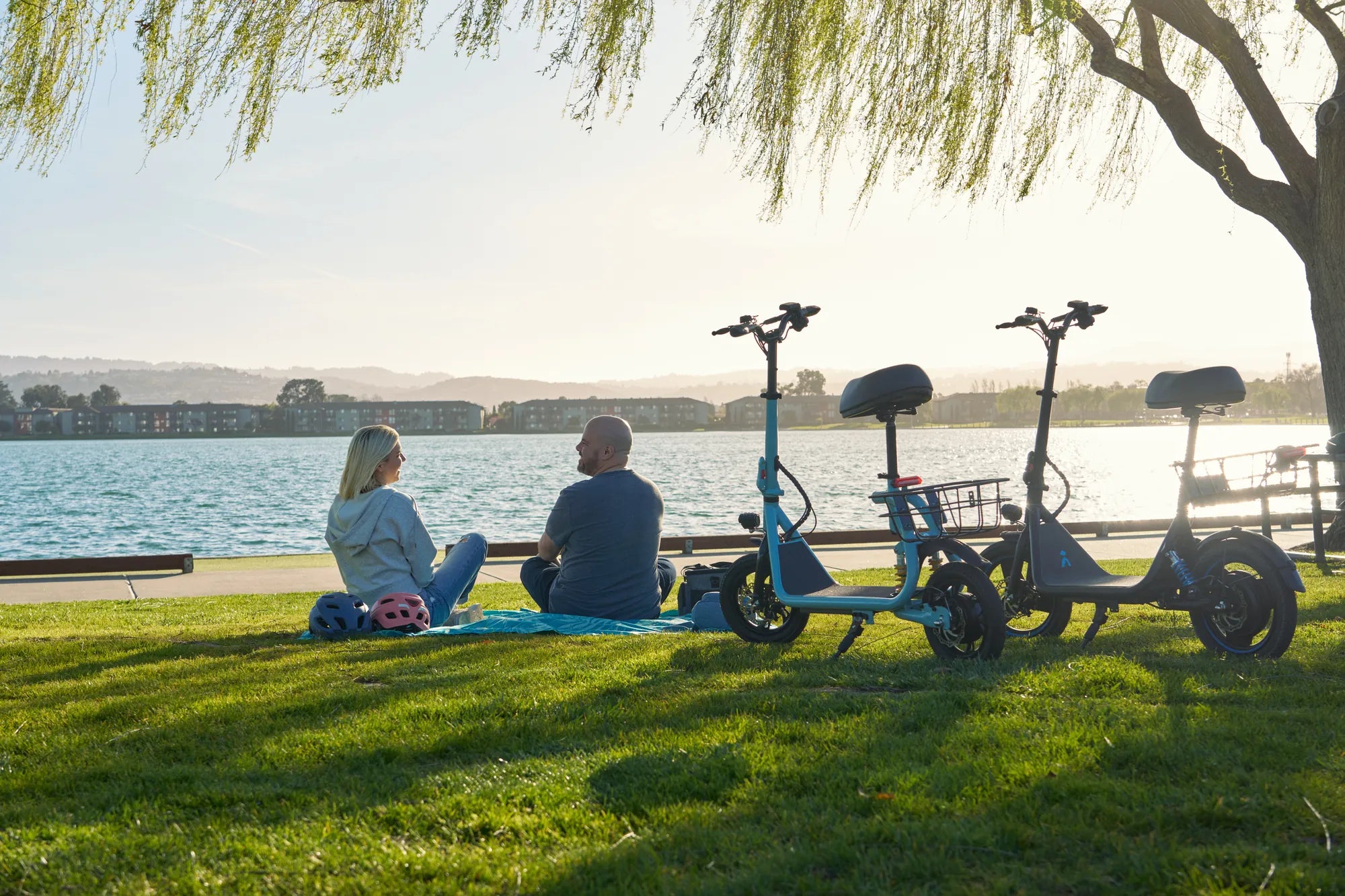
Navigating Tamil Nadu's Urban Landscape
Chennai's Marina Beach road at peak hour, Coimbatore's bustling Cross Cut Road, and Madurai's narrow lanes around the Meenakshi Temple share a common challenge: crippling traffic congestion and deteriorating air quality. The search for an efficient, economical, and sustainable personal mobility solution has never been more urgent for Tamil Nadu's urban residents. Enter electric scooters, a technology rapidly moving from novelty to necessity.
This article explores why Electric Scooters in Tamilnadu: The Future of Urban Mobility is not just a catchy phrase but a tangible reality. We will dissect the state's supportive policy framework, analyze the practical considerations for local buyers, and examine how leading global brands are engineering products specifically for this demanding market. The future of getting around Chennai, Coimbatore, Trichy, and Salem is quiet, clean, and electric.
The Rise of E-Scooters: Why Tamil Nadu is Embracing the Change
Tamil Nadu's shift towards electric mobility is driven by a powerful convergence of policy, economics, and environmental consciousness. The Tamil Nadu Electric Vehicle Policy 2023 provides a clear roadmap, aiming for the state to become a global EV hub. It offers capital subsidies, road tax exemptions, and support for charging infrastructure, creating a fertile ground for adoption.
Beyond policy, the economic argument is compelling. With petrol prices consistently volatile, the cost-per-kilometer for an electric scooter is a fraction of its internal combustion engine (ICE) counterpart. For students, office-goers, and delivery personnel, this translates to direct, significant monthly savings. The growing network of public charging stations in IT corridors and city centers is steadily alleviating range anxiety.
Culturally, there's a marked shift, particularly among the youth and professionals. Owning an electric vehicle is increasingly seen as a statement of modern, eco-conscious living. This aligns with a broader, global trend but is deeply resonant in a state proud of its progress and environmental heritage. The practicality of avoiding long queues at fuel stations is an added, daily convenience that users cherish.
The adoption of Electric Scooters in Tamilnadu: The Future of Urban Mobility is thus a rational choice. It's supported by the government, kinder to the wallet, and aligns with a growing collective responsibility towards cleaner cities. This trifecta is accelerating their presence on every street.
Key Considerations for Choosing an E-Scooter in Tamil Nadu
Selecting the right electric scooter requires a keen understanding of Tamil Nadu's unique urban fabric and climate. A model perfect for Amsterdam's bike lanes may fail on a waterlogged Chennai street or a hot, dusty Coimbatore road. Informed buyers must prioritize features that ensure safety, durability, and hassle-free ownership.
Battery Performance & Range for City Commutes
Advertised range and real-world range are often different, especially in stop-start city traffic. For a Chennai commuter traveling from Tambaram to Nungambakkam (approx. 25 km round trip), a scooter with a true 40-50 km range is essential. Consider daily errands and detours; a buffer is crucial.
More critical than just capacity is battery quality and safety. Tamil Nadu's hot and humid climate accelerates the degradation of poorly made battery cells. This makes UL-certified battery packs, like those used in Gyroor scooters, non-negotiable. These certifications guarantee the battery has passed rigorous tests for thermal stability, overcharge protection, and longevity, directly impacting safety and long-term value.
Build Quality for Diverse Road Conditions
From Chennai's smooth Rajiv Gandhi Salai to the occasional pothole on a Madurai bypass, build quality is paramount. A robust suspension system (preferably front hydraulic and rear spring) is essential for comfort and control. Wider, pneumatic tires provide better stability and grip on wet roads and uneven surfaces.
The braking system must be responsive and reliable. A combination of disc (front) and drum (rear) brakes offers strong stopping power. Furthermore, a high Ingress Protection (IP) rating for water and dust resistance is critical. An IPX5 rating, standard on Gyroor models, means the scooter can withstand water jets from any direction, making it monsoon-ready and safe to wash.
Legal Compliance & Incentives
Purchasing a compliant vehicle ensures a smooth ownership journey. Electric scooters with a motor power below 250W and speed below 25 km/h may not require registration in some interpretations, but for higher-performance models, registration is mandatory. The process is straightforward: provide the invoice, RC copy, insurance, and address proof at the local RTO.
The financial benefits are substantial. Under the state policy, buyers can avail of a capital subsidy directly from the manufacturer/dealer, significantly reducing the on-road price. Additionally, a full exemption on road tax for EVs provides yearly savings. Always purchase from brands that provide the necessary certification documents (FAME-II compliance, ARAI/ICAT certification) to seamlessly avail these benefits.
Gyroor E-Scooters: Engineered for Tamil Nadu's Commuters
With over 100,000 riders trusting the brand across North America and Europe, Gyroor's entry into the Indian market is built on a foundation of proven reliability and safety-first engineering. Their product philosophy aligns perfectly with the demands identified for Tamil Nadu's riders, offering peace of mind through rigorous certification and durable design.
Safety First: UL-Certified Batteries & Reliable Warranty
The core of any EV is its battery. Gyroor's commitment to safety is demonstrated by its use of UL-certified lithium-ion battery packs across its lineup. These batteries are tested for 500+ charge cycles, ensuring they retain capacity even after years of daily use in Chennai's heat. This directly addresses the primary safety concern for EV buyers.
Backing this technology is a comprehensive 1-year warranty on the vehicle, providing assurance against manufacturing defects. For a consumer making a significant investment, this warranty, coupled with accessible customer support, transforms the purchase from a transaction into a trusted, long-term partnership for urban mobility.
Built to Last: IPX5 Water-Resistance and Durable Design
Recognizing the challenges of tropical weather, Gyroor designs its scooters with an IPX5 water-resistant rating. This engineering choice ensures that sudden monsoon showers or routine cleaning do not compromise the scooter's electrical systems. The frames are built from high-grade materials to withstand daily urban use, from navigating crowded market streets to carrying groceries.
The focus on durability extends to components like the motor, controllers, and wiring harnesses, which are selected and sealed to perform reliably in humid conditions. This holistic approach to ruggedness means the scooter is an asset, not a liability, during the toughest months of the Tamil Nadu climate.
Models for Every Urban Journey
Gyroor's hypothetical lineup for the Indian market would cater to diverse needs. A compact, lightweight model with a 25-30 km range would be ideal for college students in Tirunelveli or for short last-mile trips from metro stations in Chennai. It would prioritize maneuverability and ease of use.
For the professional with a longer commute from OMR to the city center, a premium model with a 50-70 km range, enhanced suspension, and digital connectivity features would be the fit. This model would address the need for comfort, sufficient range for a day's travel, and modern amenities, solidifying the concept of Electric Scooters in Tamilnadu: The Future of Urban Mobility.
The Practicalities: Owning an E-Scooter in Tamil Nadu
Transitioning to an electric scooter involves understanding the new rhythms of ownership—charging, costs, and maintenance. These practical aspects are where the long-term advantages become most apparent.
Charging at Home & Growing Public Infrastructure
Charging is as simple as plugging into a standard 220V home socket. A full charge for a typical scooter battery (1-1.5 kWh) costs between ₹5-₹10, depending on local electricity rates. This is a fraction of the ₹150-₹200 needed for a full petrol tank. Most scooters charge overnight in 4-6 hours.
Public infrastructure is expanding rapidly. TN government and private players are installing charging stations in shopping malls, multiplexes, and office complexes across major cities. Apps now help locate the nearest point, making longer intra-city trips increasingly feasible and reinforcing the infrastructure for Electric Scooters in Tamilnadu: The Future of Urban Mobility.
Cost-Breakdown: Investment vs. Long-Term Savings
The true value of an electric scooter is revealed over time. While the upfront cost may be higher than a basic petrol scooter, the operational savings are dramatic. The following table illustrates a simplified 5-year Total Cost of Ownership (TCO) comparison.
| Cost Factor | Electric Scooter (e.g., Gyroor) | Typical 110cc Petrol Scooter |
|---|---|---|
| On-Road Price (After Subsidy) | ₹85,000 - ₹1,10,000 | ₹80,000 - ₹95,000 |
| Annual Fuel/Electricity Cost* | ₹1,800 (₹150/month) | ₹18,000 (₹1,500/month) |
| Annual Maintenance Cost* | ₹1,000 - ₹2,000 | ₹3,000 - ₹5,000 |
| 5-Year TCO Estimate | ₹1,00,000 - ₹1,25,000 | ₹1,70,000 - ₹2,00,000 |
*Estimates based on 30km daily commute. Excludes insurance, which is similar for both.
The data is clear: the electric scooter becomes cheaper within 1-2 years, saving the owner tens of thousands of rupees over the vehicle's life.
Maintenance and Support Network
EVs have far fewer moving parts than ICE vehicles—no engine oil, spark plugs, air filters, or complex gearboxes. This translates to minimal scheduled maintenance: primarily brake adjustments, tire checks, and occasional software updates. The reduced mechanical complexity enhances reliability.
For support, reputable brands are establishing service networks through partnerships with local automotive service centers in key cities like Coimbatore, Madurai, and Trichy. This ensures that spare parts and expert technicians are accessible, providing owners with the confidence that help is available if needed.
Frequently Asked Questions (FAQs)
Q1: What is the maximum speed and real-world range I can expect on Chennai's roads?
Most commuter-focused electric scooters in India have a top speed of 25-45 km/h, which is ideal for city traffic. Real-world range depends on factors like rider weight, terrain, and use of throttle. On flat Chennai roads, a scooter with a 48V/15Ah battery can deliver 40-50 km per charge. Aggressive acceleration and frequent stops will reduce this.
Q2: Are Gyroor e-scooters suitable for Tamil Nadu's monsoon season?
Yes, absolutely. Gyroor scooters are built with an IPX5 water-resistant rating. This means the electrical components are sealed to withstand heavy rain and water splashes from any direction. However, it is always advised to avoid riding through deeply flooded streets where water level exceeds the chassis height.
Q3: What is the process for registering an electric scooter in Tamil Nadu?
For scooters requiring registration (typically those exceeding 250W power), you must visit your local RTO with the following: 1) Invoice from the dealer, 2) Form 20 & 21 (application forms), 3) Valid insurance certificate, 4) Address proof, and 5) PUC certificate (though zero-emission, it's often required). The dealer usually assists with this process.
Q4: How do I claim the state government's EV subsidy?
The subsidy under the Tamil Nadu EV Policy is usually handled at the point of sale. The manufacturer or dealer will reduce the vehicle's ex-showroom price by the subsidy amount after verifying your eligibility (generally for vehicles meeting FAME-II norms). You pay the subsidized price, and the dealer claims the amount back from the government. Confirm this process with your dealer.
Q5: Where can I get my e-scooter serviced in Coimbatore or Madurai?
Leading brands establish authorized service centers or partner with multi-brand EV workshops in major cities. Before purchasing, inquire about the brand's service network in your city. Many brands, including Gyroor, are expanding their service partnerships to ensure customers in Tier-2 cities like Coimbatore and Madurai have easy access to maintenance and spare parts.
Steering Towards a Smarter, Cleaner Future
The evidence is overwhelming. Electric Scooters in Tamilnadu: The Future of Urban Mobility represents a pragmatic, economical, and sustainable path forward for the state's congested cities. They directly tackle air and noise pollution, reduce the financial burden of commuting on families, and align with the state's ambitious economic and environmental goals.
The key to a positive experience lies in choosing a vehicle built for the long haul—one that prioritizes certified battery safety, durable and weather-resistant construction, and is backed by reliable service. This is where globally tested brands like Gyroor, with their focus on UL-certification, IPX5 ratings, and comprehensive warranty, offer Tamil Nadu's commuters a trustworthy gateway to this new era of mobility.
The streets of Tamil Nadu are on the cusp of a quiet revolution. The familiar roar of petrol engines is gradually giving way to the quiet hum of electric motors, signaling not just a change in technology, but a smarter, cleaner, and more efficient way of urban life. The future is not just coming; it's ready to ride.
Ready to join the electric revolution? Explore durable, safety-certified electric scooters designed for real-world conditions. Browse the full Gyroor collection at gyroorboard.com.
Electric Scooters Ibiza: The Ultimate Way to Explore the Island
Top 20 Electric Scooters: The Ultimate Guide for 2024