



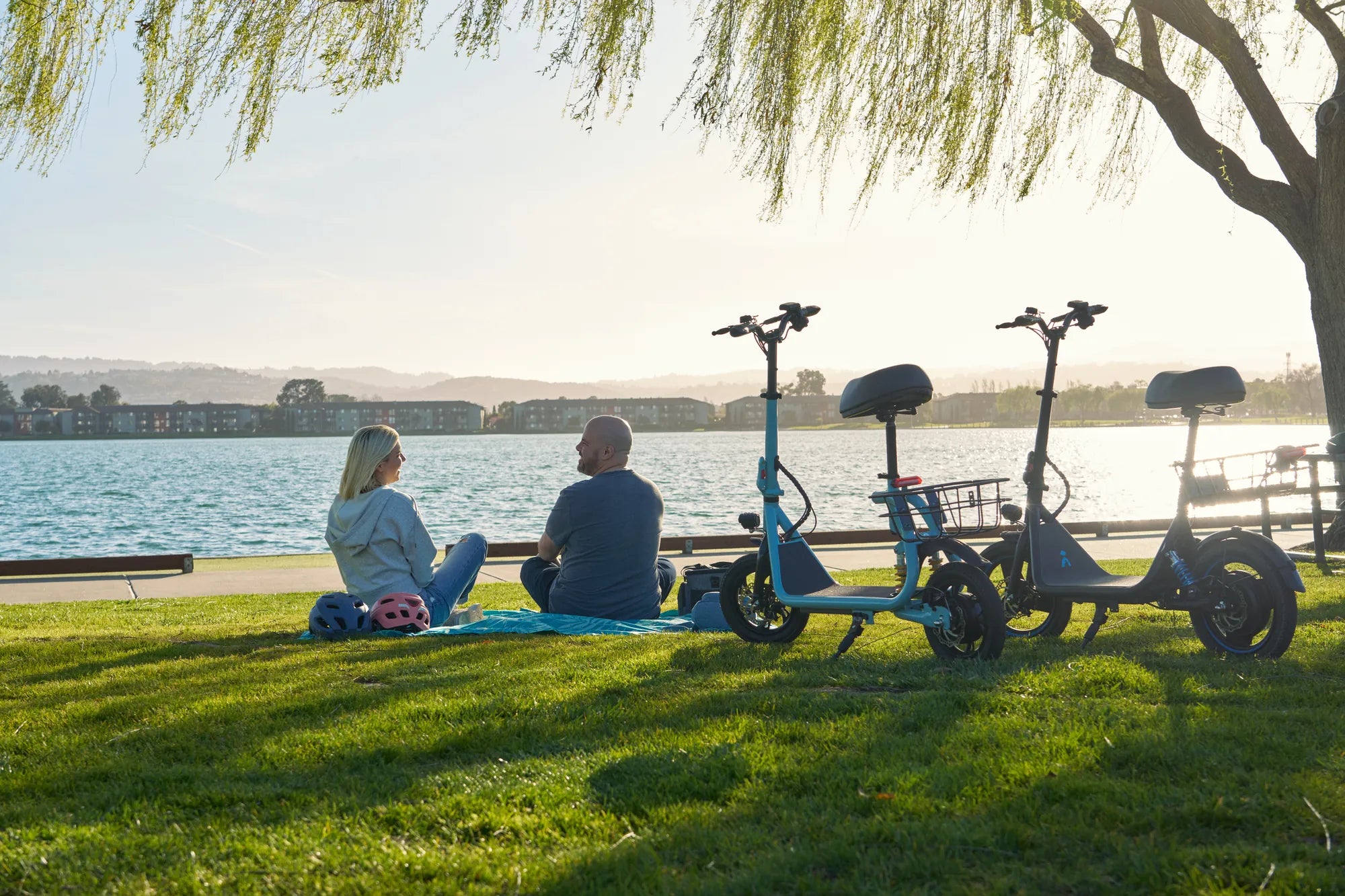
Introduction: Leicester's Evolving Commute
Leicester faces a classic urban challenge: congested roads, expensive parking, and a pressing need to reduce carbon emissions. The electric scooter emerges not as a novelty, but as a pragmatic, efficient solution to these interconnected problems. For students navigating between campuses, professionals commuting from the suburbs, or residents running errands, the personal electric vehicle offers a compelling alternative.
This shift represents a fundamental change in how we move through our city. The adoption of Electric Scooters Leicester is accelerating, driven by their practicality for short-to-medium urban journeys. Brands like Gyroor, a leader with over 100,000 riders across North America and Europe, are bringing engineering rigor and safety-first design to this mobility revolution.
This article provides a comprehensive, factual analysis of e-scooters in the Leicester context. We will examine the legal landscape, dissect the technical specifications that matter for our geography, and provide a clear framework for choosing a reliable vehicle built for daily use. The future of urban commuting in Leicester is quieter, cleaner, and more efficient—and it's arriving on two wheels.
Why Leicester is Perfect for Electric Scooters
Leicester's urban geography and infrastructure create an ideal environment for electric scooter adoption. The city centre is compact, with many key employment, education, and retail hubs within a 3-5 mile radius—a distance perfectly suited for e-scooter range capabilities. Furthermore, the city's topography is predominantly flat, reducing the strain on scooter motors and batteries compared to more hilly UK cities.
Existing and planned cycling infrastructure provides a foundational network for safe riding. Routes like the Watermead Park trail, the Great Central Way, and the growing number of dedicated cycle lanes in the city centre offer relatively protected pathways. Leicester City Council's stated commitments to sustainable transport and improving air quality align directly with the benefits of zero-emission personal mobility.
The demographic fit is equally strong. With a large student population at the University of Leicester and De Montfort University, there is a high concentration of residents for whom cost-effective, flexible transport is a priority. Professionals living in areas like Clarendon Park, Oadby, or Syston can bypass traffic on key commuter corridors such as the A6 or A607.
Economically, the case is clear. Avoiding city centre parking fees, which can exceed £15 per day, and rising fuel costs creates significant savings. An electric scooter charged at home costs mere pence per journey. For a city of Leicester's size and layout, the Electric Scooters Leicester proposition is not just viable; it is optimal for a substantial portion of the population's daily travel needs.
Navigating Leicester's E-Scooter Laws & Safety
Understanding the Legal Framework
The legal status of privately-owned electric scooters in the UK is currently unambiguous. Under the Highway Act 1835 and the Road Traffic Act 1988, they are classified as Personal Light Electric Vehicles (PLEVs) and are considered motor vehicles. Consequently, it is illegal to ride a privately-owned e-scooter on public roads, cycle lanes, or pavements.
Their use is restricted to private land with the landowner's permission. This contrasts with government-approved rental trials, which have operated in select UK cities under specific regulations. As of now, Leicester has not hosted an official public rental trial scheme.
This legal landscape is under review. The Department for Transport has conducted consultations on e-scooter regulation, with potential new laws expected to create a framework for legal use, likely involving speed limits, power restrictions, and mandatory insurance. Prospective buyers must be aware of the current law while making informed purchases for future legal use or immediate use on private land.
Essential Safety Gear and Riding Etiquette
Safety is non-negotiable. A full-face or certified bicycle helmet is the most critical piece of safety equipment. Riders should also use high-visibility clothing or vests, especially in Leicester's often grey weather, and ensure their scooter has front and rear lights active at all times.
Responsible riding etiquette is paramount for community acceptance and safety. This includes giving clear, wide berth to pedestrians, dismounting in crowded areas, and never riding on pavements. Anticipating road conditions—like the tram tracks in the city centre or wet leaves in Victoria Park—is a key skill. Parking should be considerate, never obstructing footpaths, access routes, or disabled bays.
Understanding and signalling your intentions is crucial. Use hand signals for turns, make eye contact with drivers at junctions, and always assume you have not been seen. Adopting a defensive riding posture, similar to cycling, significantly reduces risk. These practices build the foundation for safe integration into Leicester's transport ecosystem when legislation changes.
Choosing Your Leicester Commute Companion: Key Features
Selecting an e-scooter requires matching technical specifications to your specific Leicester commute. The focus must be on real-world performance, durability, and safety, not just headline-grabbing top speeds. The right features solve daily pain points: range anxiety, weather worries, and practicality.
Battery Range & Leicester's Hills: What You Really Need
Manufacturer range claims are often based on ideal conditions. For Leicester, a realistic calculation is essential. A scooter with a 25km (15.5-mile) real-world range can comfortably handle a return trip from the University of Leicester campus to Fosse Park, with a safety buffer.
For a commuter from Knighton into the city centre and back, a 30km+ range is advisable. While Leicester is relatively flat, inclines like London Road or the ascent from Bede Park to De Montfort University demand a motor with sufficient torque. A continuous motor power of 350W or more is recommended for these gradients without significant speed loss, ensuring a consistent and reliable commute.
Durability for British Weather: IP Ratings and Build Quality
Leicester's weather demands a scooter built for more than sunny days. The IP (Ingress Protection) rating is critical. An IPX5 rating, as found on Gyroor models, means the scooter is protected against water jets from any direction, making it safe to ride in light rain and on wet paths—a common occurrence.
Build quality directly impacts longevity on city streets. Pneumatic (air-filled) tyres offer better shock absorption on uneven surfaces compared to solid tyres, crucial for comfort on Leicester's varied tarmac. A robust, often aluminium-alloy frame and a reliable folding mechanism that withstands daily use are indicators of a scooter designed for a multi-year lifespan, not just a season.
Portability and Storage: From the Train to the Flat
Multi-modal commuting is a reality for many. A scooter's folded dimensions and weight determine if you can take it on a bus or store it under a desk. Models under 15kg are manageable for carrying up stairs, a key consideration for flat-dwellers or students in halls.
The folding mechanism should be simple, secure, and not prone to wobble when unfolded. Compact folded size is also vital for storage in cramped living spaces. This portability transforms the scooter from a mere vehicle into a seamless part of your daily logistics, enabling you to cover the "last mile" from a train station like Leicester or South Wigston with ease.
Gyroor: Engineered for Leicester's Streets
In a market with varying quality, Gyroor stands out by aligning its core engineering principles with the specific demands of urban commuting in cities like Leicester. Their focus on certified safety, weather resilience, and rider support directly addresses the primary concerns of new and experienced riders.
Safety First: UL-Certified Batteries and Reliable Braking
The battery is the heart of an e-scooter and its greatest potential risk point. Gyroor's use of UL-certified battery packs is a major differentiator. UL certification involves rigorous testing for overcharge, short circuit, and extreme temperature performance, drastically reducing fire risk—a paramount concern for home charging.
Stopping power is equally critical. Gyroor models typically combine electronic (regenerative) braking with a mechanical disc or drum brake. This dual-system provides reliable, consistent stopping force in both dry and wet conditions, essential for navigating Leicester's busy junctions and shared-use paths safely. Safety is not a feature; it's the foundation of their design.
Built to Last: The 1-Year Warranty and IPX5 Assurance
The combination of a comprehensive 1-year warranty and an IPX5 water-resistance rating offers tangible long-term value and peace of mind. The warranty protects against manufacturing defects and signals confidence in the product's durability. For Leicester riders, it means support is available for the scooter's critical first year of daily use.
The IPX5 rating specifically tackles the city's weather challenges. It allows riders to commute without constant anxiety about a sudden shower, knowing the electrical components are protected. This assurance extends the scooter's usable days per year, enhancing its value proposition and making it a truly all-weather transport option, ready for a typical British drizzle.
Model Comparison: Finding Your Leicester Match
Choosing the right model depends on your primary use-case. Below is a comparison based on generic Gyroor model categories relevant to Leicester riders.
| Model Type | Real-World Range | Approx. Weight | Max Speed | Ideal Leicester User |
|---|---|---|---|---|
| City Commuter | 25-35 km | 14-16 kg | 25 km/h | Student or professional with a short, flat commute (e.g., Westcotes to City Centre). Prioritises portability. |
| Long-Range Explorer | 40-55 km | 18-22 kg | 30-35 km/h | Suburban commuter (e.g., from Birstall or Aylestone) needing extended range and power for occasional inclines. |
| Ultra-Portable | 20-25 km | 12-14 kg | 20-25 km/h | The multi-modal rider combining bus/train with scooter. Perfect for easy carrying and compact storage. |
For most Leicester residents, the City Commuter category offers the best balance of range, weight, and performance. It directly enables the core Electric Scooters Leicester use-case: efficient, reliable daily urban travel.
The Rider's Perspective: A Week with an E-Scooter in Leicester
Adopting an electric scooter reshapes the daily experience of the city. Imagine a commute from Stoneygate to the Cultural Quarter. By car, this could take 20-30 minutes in rush hour, plus time to find and pay for parking. On an e-scooter using cycle paths and quieter roads, it becomes a consistent 15-minute, stress-free journey.
The financial benefits compound quickly. Eliminating fuel, parking fees, and bus fares can save £50-£100 per month for a regular commuter. The convenience factor is immense: spontaneous trips to the supermarket, weaving through stalled traffic, and the ability to explore green spaces like Abbey Park without worrying about parking access.
A simple cost-benefit analysis over one year is revealing. Against an average purchase cost of £500-£800 for a quality scooter like a Gyroor, the annual savings from avoided transport costs can often recoup the initial investment within 12-18 months. Beyond economics, the time saved and the reduction in personal carbon footprint contribute to a tangible improvement in quality of life and civic responsibility.
The experience also fosters a new connection to the urban environment. You notice more, travel at a human scale, and contribute to quieter, cleaner streets. This perspective is central to the vision for Electric Scooters Leicester as part of a sustainable future.
Frequently Asked Questions for Leicester Riders
Q: Can I legally ride my own e-scooter in Leicester right now?
A: No. As of the current law, riding a privately-owned e-scooter on public roads, cycle lanes, or pavements in Leicester is illegal. Use is permitted only on private land. Stay informed on potential law changes through the UK Government website.
Q: Where are the best cycle paths/safe routes for e-scooters in Leicester?
A> When legislation permits, excellent routes include the Great Central Way (north-south traffic-free route), the Watermead Country Park trails, and the dedicated cycle paths along Welford Road and Aylestone Road. Always plan your route using known cycling infrastructure for greater safety.
Q: How do I maintain my e-scooter in rainy or winter conditions?
A> Even with an IPX5 rating, post-ride care is key. Wipe down the deck and frame to remove road salt and grime. Check tyre pressure regularly, as cold weather can reduce it. Avoid charging the scooter immediately after a wet ride; let it dry first. Store it in a dry place if possible.
Q: What is the true cost of ownership (charging costs, maintenance)?
A> The electricity cost is minimal—approximately 5-10 pence for a full charge. The main costs are potential tyre replacements (annually with heavy use) and brake pad changes. Buying from a brand with good warranty support, like Gyroor, helps manage unexpected repair costs.
Q: Are Gyroor scooters compatible with local repair shops or support?
A> Gyroor provides direct customer support and warranty service. While some general e-scooter or e-bike shops may handle basic mechanical issues (tyres, brakes), complex electrical repairs are best handled through the manufacturer's official channels to maintain warranty and ensure correct parts.
Conclusion: Your Next Step Towards a Smarter Leicester Commute
The evidence is compelling: electric scooters offer a practical, economical, and sustainable answer to Leicester's urban mobility challenges. The city's geography, infrastructure, and demographic needs align perfectly with the capabilities of modern, well-engineered e-scooters. As legislation evolves to reflect this new reality, informed preparation is key.
The critical choice lies in selecting a vehicle built for longevity and safety, not just low initial cost. Investing in a scooter with UL-certified batteries, robust weather protection like an IPX5 rating, and reliable manufacturer support ensures your commute solution is safe, durable, and ready for Leicester's streets. This is the standard set by brands like Gyroor, engineered for the real world.
The future of urban commuting in Leicester is intelligent, personal, and electric. By choosing quality and riding responsibly, you contribute to a cleaner, less congested, and more livable city. Explore the technical specifications, understand the features that matter, and make an investment that will power your commute for years to come. Your journey towards a smarter commute starts with informed research.
Browse the full Gyroor collection at gyroorboard.com to explore models engineered for durability, safety, and the demands of city life.
Are People on Electric Scooters Pedestrians? Navigating the Legal Gray Zone
Are People on Electric Scooters Pedestrians? Navigating the Legal Gray Zone