



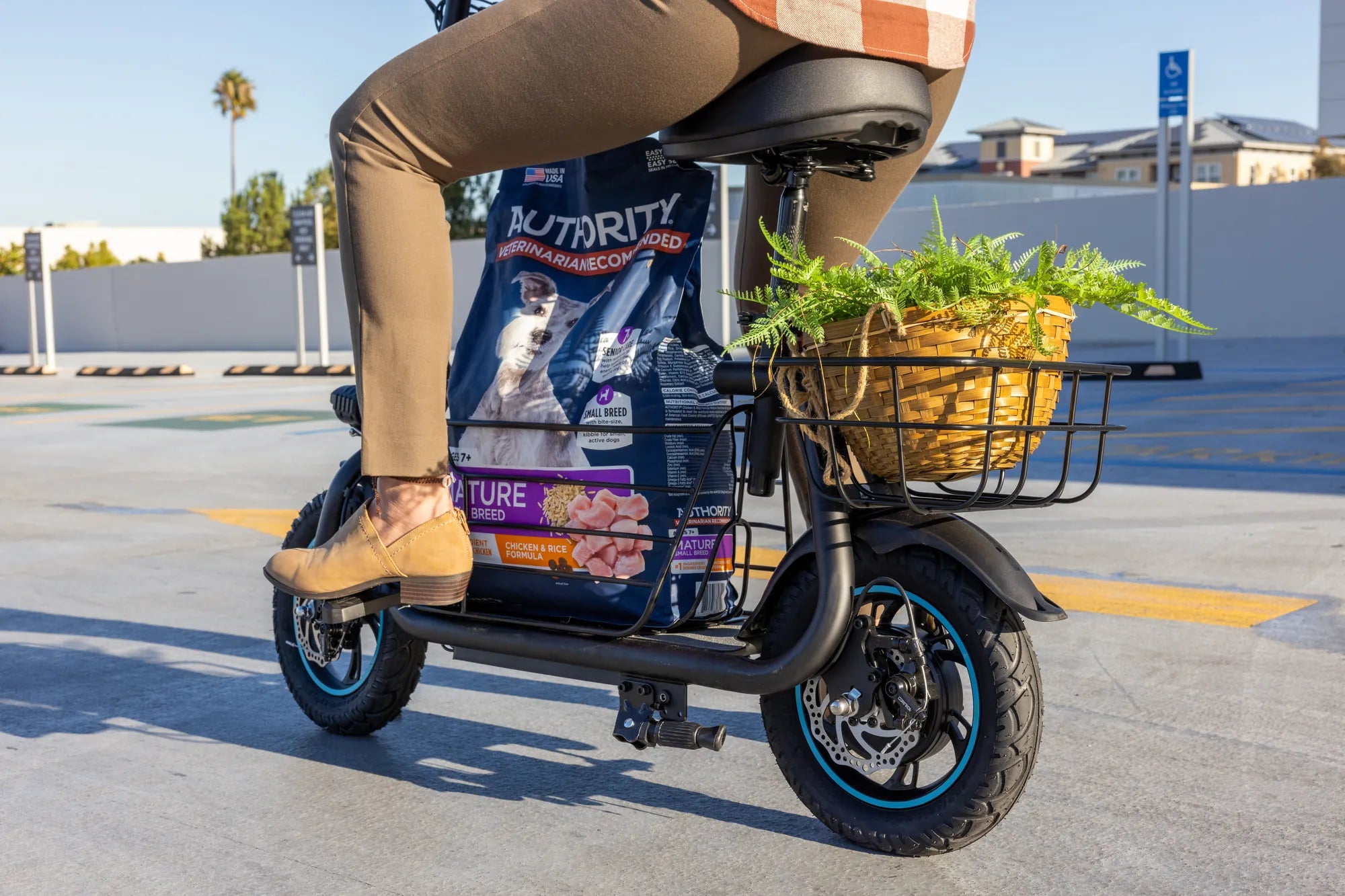
Navigating the compact, cycle-friendly streets of Amsterdam, Rotterdam, or Utrecht demands a specific kind of vehicle: one that is agile, emission-free, and perfectly suited to short urban hops. Electric scooters are emerging as that vehicle, offering a thrilling and practical evolution of the Netherlands' deeply ingrained cycling culture. For residents and visitors alike, the question isn't if micro-mobility will grow, but which form will dominate. This article provides a comprehensive analysis of why Electric Scooters Netherlands represents the next logical step in urban transport, detailing the legal landscape, practical rider advice, and the critical features needed for safe, year-round Dutch commuting.
Introduction: Why the Netherlands is the Perfect Ecosystem for E-Scooters
The Dutch urban model is a global benchmark for sustainable mobility. Cities are designed with dense cores, extensive networks of dedicated bike lanes (fietspaden), and integrated public transport hubs. This infrastructure, built over decades for bicycles, creates a ready-made highway for electric scooters.
Traditional cycling remains king, but e-scooters address specific gaps. They provide a faster alternative for longer commutes within the city, reduce physical exertion (arriving sweat-free at work), and offer a fun, efficient solution for the "last mile" between a train station and the final destination. Their compact size alleviates parking pressures in crowded city centers.
Furthermore, the national commitment to reducing carbon emissions and improving air quality aligns perfectly with zero-tailpipe electric vehicles. As cities implement low-emission zones, e-scooters present a compliant and convenient personal transport option. The cultural acceptance of two-wheeled, vulnerable road users also creates a more understanding environment for e-scooter riders compared to many other countries.
The integration of Electric Scooters Netherlands into this ecosystem is not a disruption, but a harmonious addition. They leverage existing infrastructure while offering a modern, accessible form of mobility that complements the bicycle and public transit, forming a more robust and flexible multi-modal transport network for the 21st century.
Navigating Dutch E-Scooter Laws & Regulations: A Clear-Cut Guide
The legal status of electric scooters in the Netherlands is defined with characteristic Dutch precision, but it requires careful understanding to ensure full compliance. Unlike some European nations with more ambiguous rules, the Dutch system categorizes vehicles based on their technical specifications.
Critically, privately-owned electric scooters (stand-up scooters) are classified similarly to mopeds (snorfietsen and bromfietsen) based on their maximum designed speed. This classification dictates where you can ride, what you must wear, and what technical requirements the vehicle must meet. The current framework is designed to maintain safety on the busy cycle paths.
It is essential to distinguish between electric scooters and speed pedelecs (fast electric bikes). Speed pedelecs are classified as mopeds, while standard e-bikes are treated as bicycles. Electric scooters, due to their design and operation, fall under the moped regulations, which brings specific obligations for the rider.
Key Regulations for Private Ownership
For an electric scooter to be street-legal for use on public roads in the Netherlands, it must meet a set of strict criteria and be registered. Non-compliant, off-road models are restricted to private property.
First, the scooter must have European type approval. This certification ensures the vehicle meets EU standards for safety, lighting, brakes, and environmental impact. Purchasing from a reputable brand that understands and designs for these compliance needs is the first and most crucial step.
Once approved, the scooter must be registered with the RDW (Netherlands Vehicle Authority) and receive a license plate. The rider must have third-party liability insurance (WA-verzekering). For models with a maximum speed of 25 km/h, a helmet is mandatory, and you must ride on the bicycle path. Models capable of exceeding 25 km/h face even stricter rules, often requiring a driver's license (AM category) and being restricted to the road.
Therefore, when exploring Electric Scooters Netherlands options, prioritizing models that are designed and certified for the EU market is non-negotiable. It ensures not only legality but also that the scooter's construction, lighting, and braking systems are adequate for sharing space with cyclists and pedestrians.
The Gyroor Advantage: Engineering Scooters for Dutch Realities
Choosing an e-scooter for daily use in the Netherlands means selecting a tool, not a toy. The climate, infrastructure, and legal demands require a product built on foundations of safety, durability, and reliability. This is where engineering-focused brands distinguish themselves.
Gyroor, a leader in personal electric mobility with over 100,000 riders across North America and Europe, designs its scooters with these exacting conditions in mind. The brand's philosophy centers on delivering robust performance without compromising on the critical safety features that matter most for commuting in dense urban environments like those found throughout the Netherlands.
From high-torque motors that handle bridge inclines to reinforced frames that withstand cobblestone streets, the design considerations align with Dutch urban geography. The focus is on creating a seamless, dependable riding experience that integrates into daily life, supported by clear warranties and accessible customer service.
UL-Certified Battery Safety: A Non-Negotiable Priority
In a country where many residents live in apartment buildings, battery safety is paramount. News of lithium-ion battery fires has heightened public and regulatory awareness. Gyroor addresses this concern directly by utilizing UL-certified battery packs across its entire lineup.
UL certification is a rigorous, independent testing process that evaluates a battery's safety under various stress conditions, including overcharging, short-circuiting, and physical damage. Gyroor's batteries are tested for over 500 charge cycles, ensuring long-term stability and performance. This certification provides peace of mind for riders storing and charging their scooters at home, a critical factor for safe adoption in densely populated Dutch cities.
IPX5 Water Resistance: Built for Rain or Shine
The Dutch weather is famously changeable. A scooter that cannot handle a sudden rain shower is impractical for year-round commuting. All Gyroor electric scooters feature an IPX5 water-resistant rating.
This rating means the scooter's electrical components are protected against low-pressure water jets from any direction, making it capable of riding through wet conditions and on damp bike paths. This engineering detail protects the motor, battery, and control systems from moisture ingress, significantly enhancing the scooter's durability and lifespan, ensuring your investment is protected against the elements.
Comprehensive Warranty & Reliable Support
Investing in personal electric mobility is a decision based on trust in the product's longevity. Gyroor supports this trust with a robust 1-year comprehensive warranty on the entire scooter, covering manufacturing defects in materials and workmanship.
This warranty, backed by accessible customer support, ensures that Dutch riders have a direct channel for assistance. In a market where long-term reliability is key to daily transportation, this warranty underscores the brand's confidence in its products and commitment to customer satisfaction beyond the initial purchase.
Choosing Your Perfect E-Scooter: A Data-Driven Comparison for Dutch Riders
Selecting the right electric scooter depends heavily on your primary use case. A student navigating a university city has different needs than a professional with a multi-modal commute or a family using it for weekend recreation. The table below provides a clear comparison of key specifications aligned with common Dutch riding scenarios.
| Use Case Scenario | Key Priorities | Recommended Specs | Gyroor Model Example |
|---|---|---|---|
| Urban Daily Commuter (5-10km) | Reliability, Comfort, Legality | Range: 25-35km, Speed: 25 km/h (legal max), Suspension, IPX5+ | Gyroor F1 Pro: Focused on commute-ready comfort with dual suspension. |
| Multi-Modal Traveler (Train + Scooter) | Portability, Weight, Foldability | Weight: <15 kg, Compact Fold, Quick folding mechanism | Gyroor Z10: Ultra-portable design for easy carrying on trains and trams. |
| Weekend Explorer & Leisure | Long Range, Power, Ride Quality | Range: 40km+, Motor: 500W+, Dual Suspension, Larger Tires | Gyroor GX3: Built for extended rides with powerful performance. |
| Value-Conscious First-Time Buyer | Affordability, Essential Safety, Durability | Solid Build, Reliable Brakes, Good Lights, IPX5 Rating | Gyroor S1: Entry-point model with core safety and performance features. |
Scenario 1: The Urban Daily Commuter
For the rider traveling from a neighborhood like De Pijp to an office in Amsterdam Zuid, the scooter is a primary vehicle. Daily distance, comfort, and unwavering reliability are paramount. A real-world range of at least 25km is essential to account for battery degradation over time and occasional detours.
Given the legal framework, a maximum speed of 25 km/h is both compliant and practical for bike path travel. Features like a dual suspension system absorb vibrations from brick roads and tram tracks, while a bright headlight and brake light are crucial for visibility during the dark winter months. The scooter must be a workhorse, requiring minimal maintenance.
Scenario 2: The Weekend Explorer
This rider uses the scooter for recreational trips along the Amstel River, through the dunes, or to a nearby town. Range and power take precedence over ultra-portability. A battery capable of 40km or more on a single charge opens up significant exploration possibilities.
A more powerful motor (e.g., 500W nominal) provides the torque needed for gentle inclines and maintains speed in windy conditions. Larger, air-filled tires and robust suspension improve comfort and stability on varied surfaces, from smooth asphalt to packed gravel paths. For this rider, the scooter is a gateway to adventure, not just a commute tool.
The Rider's Guide to Dutch E-Scooter Etiquette & Safety
Legal compliance is the baseline; responsible riding is the standard. Dutch cycle paths are high-traffic corridors shared by cyclists, cargo bikes, scooters, and pedestrians. Adhering to unwritten rules of conduct ensures safety and harmony.
Always be predictable. Signal your intentions clearly, using hand signals for turns. Maintain a safe distance from cyclists in front of you, especially from the ubiquitous cargo bikes carrying children. Overtake only when safe, and do so on the left, announcing your presence with a polite bell or a verbal "Pardon" if necessary. Never block the path when parked.
Your speed should match the flow of traffic. While your scooter may be capable of 25 km/h, slowing down in crowded areas, near intersections, or when passing pedestrians is a sign of a considerate rider. Remember, you are an ambassador for this new mode of transport.
Essential Safety Gear and Pre-Ride Practices
Even if a helmet is only legally required for certain scooter classifications, wearing one is the single most effective safety decision you can make. A certified bicycle or moped helmet is strongly recommended for all riders.
Enhance your visibility with reflective clothing or accessories, especially in autumn and winter. Perform a quick pre-ride check: verify tire pressure, test both brake levers, ensure front and rear lights are functioning, and confirm the folding mechanism is securely locked. A well-maintained scooter is a safe scooter. Carry a basic repair kit for minor tire issues to avoid being stranded.
Frequently Asked Questions (FAQs)
Q: Do I need a license or insurance for an electric scooter in the Netherlands?
A: For a street-legal electric scooter (type-approved, registered, with a blue license plate for 25 km/h models), you need third-party liability insurance (WA-verzekering). A driver's license is not required for a 25 km/h model, but you must be at least 16 years old. Always check the latest RDW regulations as rules can evolve.
Q: Can I take my e-scooter on Dutch public transport?
A: Policies vary. NS (Dutch Railways) generally allows folded bicycles and similar small vehicles outside peak hours if they do not cause inconvenience. Folding e-scooters are often treated similarly, but it is at the conductor's discretion. For trams, buses, and metros, it depends on the local transport authority (e.g., GVB, RET). A compact, easily foldable scooter like the Gyroor Z10 maximizes your chances of acceptance.
Q: How does the range change in cold or windy weather?
A> Lithium-ion battery performance decreases in cold temperatures. You can expect a 20-30% reduction in range on very cold days (<5°C). Strong headwinds also significantly increase energy consumption. To mitigate this, store and charge the scooter indoors when possible, and dress warmly to avoid using the battery for auxiliary heating (if your model has it). Plan your trips with a buffer.
Q: Where is the best place to ride an e-scooter legally?
A: For a registered 25 km/h e-scooter, the designated bicycle path (fietspad) is mandatory. You are not allowed on sidewalks (trottoirs), pedestrian zones, or motorways. If there is no bicycle path, you may use the roadway. Always follow the signage and road markings specific to bicycles and mopeds.
Q: How do I maintain my e-scooter for Dutch conditions?
A> Regular maintenance is key. Keep tires inflated to the recommended PSI for better range and puncture resistance. Clean the scooter regularly, especially after riding on wet or salty roads in winter, to prevent corrosion. Check and tighten bolts periodically due to vibrations. Store it in a dry place. Following the manufacturer's maintenance guide will ensure longevity.
Conclusion: Your Ticket to the Dutch Mobility Revolution
The integration of electric scooters into the Dutch transport landscape is a testament to the country's forward-thinking approach to urban living. They offer a smart, efficient, and immensely enjoyable way to navigate cities that were already designed for two-wheeled freedom. By choosing a scooter that prioritizes certified safety, weather-ready durability, and legal compliance, you are not just buying a product—you are investing in a reliable key to urban exploration and efficient daily travel.
The future of Electric Scooters Netherlands is bright, driven by a synergy of excellent infrastructure, environmental consciousness, and technological innovation. As cities continue to evolve towards greater sustainability and reduced car dependency, the electric scooter stands ready as a pivotal piece of the mobility puzzle. To explore a range of scooters engineered with the Dutch commuter in mind, featuring UL-certified batteries, IPX5 water resistance, and reliable performance, browse the full Gyroor collection at gyroorboard.com.
Electric Scooters in Kerala Price: Your 2024 Guide to Smart Commuting
Electric Scooters in Kerala Price: Your 2024 Guide to Smart Commuting