

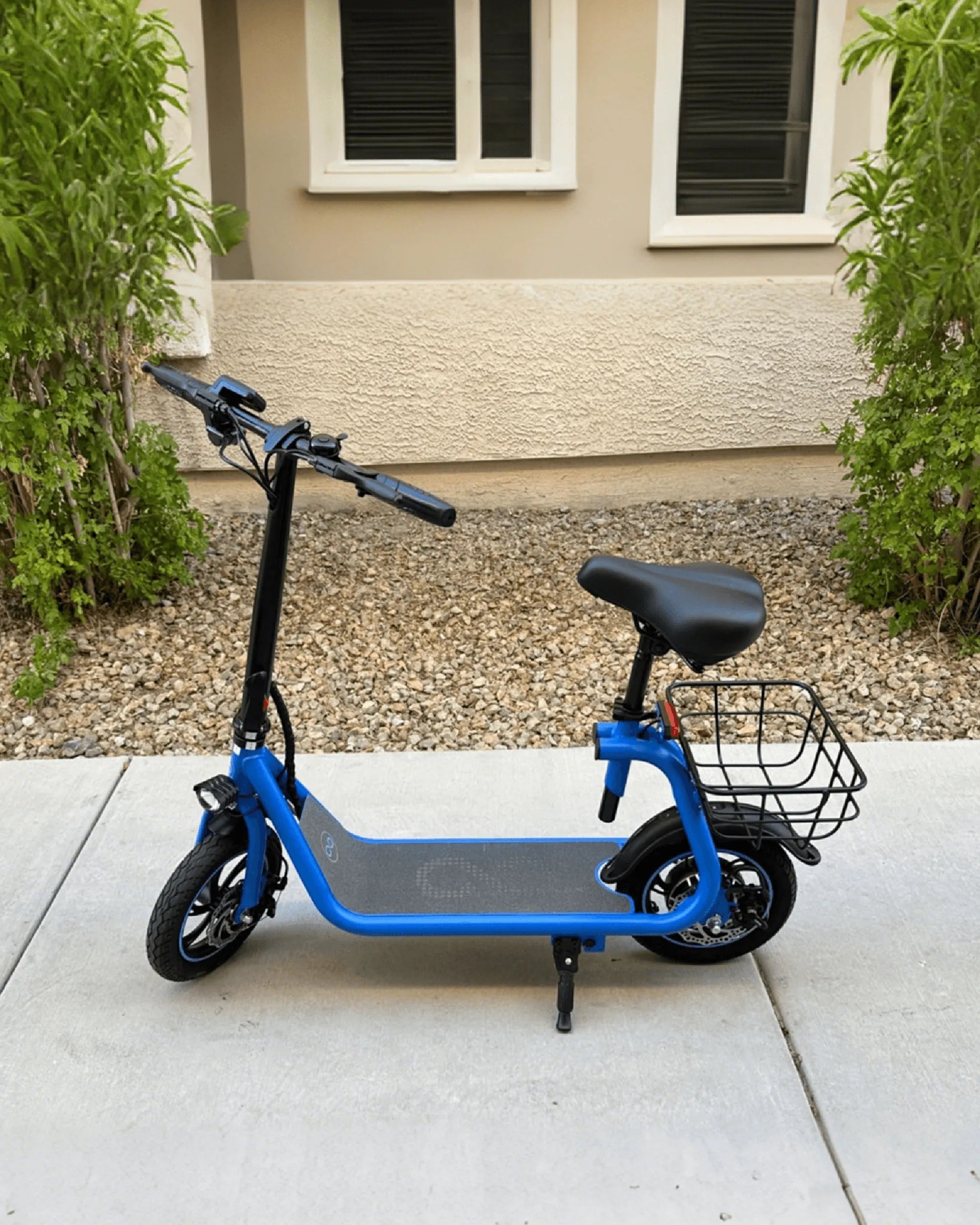
Navigating the world of electric scooters online can be overwhelming. This guide cuts through the noise with factual, data-driven advice to help you make an informed purchase and ride with confidence. You will learn how to evaluate technical specifications, identify non-negotiable safety features, understand local regulations, and adopt proven riding techniques. Whether you're commuting or exploring, this is your roadmap to smart and safe e-scootering. As a leader in the micro-mobility space, Gyroor builds its reputation on UL-certified safety and reliable performance, trusted by over 100,000 riders.
Why Buy an Electric Scooter Online? Pros, Cons, and What to Look For
Purchasing an electric scooter online offers distinct advantages over traditional retail. The primary benefit is access to a vastly wider selection, including direct-from-manufacturer models often unavailable in local stores. Online platforms also provide competitive pricing, detailed specification sheets, and direct customer reviews from a global user base.
However, the online process has inherent drawbacks. The most significant is the inability to test ride before buying. You must rely on detailed videos, reviews, and accurate product descriptions. Shipping costs, delivery times, and potential return logistics for a heavy item are also critical considerations.
To mitigate risks, vet retailers thoroughly. Look for clear warranty information (at least one year is standard), transparent shipping and return policies, and responsive customer service channels. A reputable brand will provide comprehensive spec lists, high-resolution images from multiple angles, and video demonstrations of key features.
Trust signals include professional website design, verified purchase reviews, and active social media engagement. Brands that invest in detailed educational content, like this guide, often demonstrate a deeper commitment to customer success and product longevity.
Decoding the Specs: Your Essential Pre-Purchase Checklist
Technical specifications are the blueprint of your scooter's performance. Understanding them is crucial for matching a model to your specific needs, avoiding disappointment with underpowered or short-range devices.
Motor Power & Speed: Matching Performance to Your Needs
Motor power, measured in watts (W), directly impacts acceleration and hill-climbing ability. Distinguish between nominal (continuous) and peak (maximum) wattage. A 250W motor is suitable for flat terrain and beginner riders, while 500W or higher is recommended for moderate hills.
Advertised top speed must be contextualized. A scooter rated for 15-20 mph is ideal for most urban commutes. Higher speeds increase risk and may violate local laws. Remember, real-world speed is affected by rider weight, battery charge, incline, and surface conditions.
Battery & Range: Understanding Real-World Mileage
Range is the most frequently misunderstood spec. It's determined by battery capacity (Watt-hours = Voltage x Amp-hours). A higher Wh number generally means more potential range. However, manufacturers often advertise "ideal" range under perfect laboratory conditions.
Real-world mileage typically falls 30-40% short of the maximum claim. Factors like rider weight, frequent stops/starts, hills, cold weather, and higher speeds drastically reduce range. For a reliable commute, choose a scooter with an advertised range at least 50% greater than your daily distance.
Battery safety is paramount. Insist on UL-certified battery packs, which have undergone rigorous testing for thermal stability and electrical safety. Gyroor utilizes these certified packs, tested for over 500 charge cycles, as a core component of its safety-first design philosophy.
Build & Durability: IP Ratings, Weight Limits, and Construction
The IP (Ingress Protection) rating indicates resistance to dust and water. An IPX5 rating, like those on Gyroor scooters, means the unit can withstand water jets from any direction, making it safe to ride in rain or through puddles. This is critical for all-weather commuting.
Frame material, typically aluminum alloy, balances strength and weight. Always respect the maximum weight limit; exceeding it stresses the motor, battery, and frame, leading to premature failure and unsafe handling. A robust folding mechanism with a secure locking latch is essential for portability and safety.
The Non-Negotiables: Safety Features You Shouldn't Compromise On
Certain features are fundamental to safe operation and should be treated as mandatory, not optional extras. Compromising here increases accident risk significantly.
Braking Systems: Disc, Drum, and Electronic Regenerative Brakes
Effective braking is your most important safety system. Dual braking systems—combining a front and rear brake—provide redundancy and superior stopping power. Disc brakes offer strong, consistent performance but may require adjustment. Drum brakes are often more enclosed and require less maintenance.
Many electric scooters feature electronic regenerative braking, which converts kinetic energy back into battery charge during deceleration. While it extends range, it should complement, not replace, a robust physical braking system. A scooters stopping distance from 15 mph should be under 15 feet for optimal safety.
Lighting & Visibility: Being Seen Day and Night
Comprehensive lighting is non-negotiable for urban riding. A bright front headlight (200+ lumens) illuminates your path. A rear brake light that activates when braking is crucial for alerting traffic behind you. Integrated side reflectors or deck lights enhance visibility from oblique angles.
For maximum safety, consider adding aftermarket LED strips or wheel lights. High-visibility clothing or reflective accessories further reduce the risk of collisions, especially at dawn, dusk, or night.
Tire Types: Air-Filled vs. Solid (Pneumatic vs. Solid)
Your choice of tire affects comfort, traction, and maintenance. Pneumatic (air-filled) tires provide excellent shock absorption, offering a smoother ride over bumps and better grip on uneven surfaces. The trade-off is the risk of punctures and the need to maintain air pressure.
Solid (airless) tires eliminate flats entirely but result in a firmer, less comfortable ride and slightly reduced traction, especially on wet surfaces. For most urban commuters dealing with varied pavement, pneumatic tires are the recommended choice for their superior ride quality and safety.
Gearing Up: Essential Riding Gear and Local Laws
Safety extends beyond the scooter to the rider. Proper gear and legal knowledge are your personal responsibility and critical for a positive riding experience.
Helmets Are Law (or Should Be): Choosing the Right Protection
Always wear a helmet. It is the single most effective way to prevent serious head injury. Choose a bicycle or multi-sport helmet certified by standards like CPSC (USA) or CE (Europe). Ensure a proper fit—snug but not painful, with the strap secured.
For new riders or those navigating heavy traffic, additional gear is wise. Padded gloves protect hands in a fall, and knee/elbow pads can prevent painful abrasions. Eye protection like clear glasses shields from dust and debris.
Know Before You Go: Understanding Your Local E-Scooter Regulations
E-scooter laws vary dramatically by city, state, and country. Ignorance is not a legal defense. Research your local regulations before riding. Key points to verify: Are electric scooters allowed on roads, bike lanes, or sidewalks? What is the legal speed limit? Is there a minimum age requirement? Are helmets mandatory for all ages or just minors?
Many jurisdictions treat e-scooters similarly to bicycles, requiring use of bike lanes where available. Riding on sidewalks is often prohibited for safety reasons. Adhering to these rules not only keeps you legal but also fosters positive relations with pedestrians and other road users.
Riding with Confidence: Practical Tips for Safe Urban Commuting
Mastering your scooter and your environment is key to safe commuting. Adopt a defensive, alert mindset every time you ride.
The Art of Defensive Scootering: Anticipating Hazards
Assume that drivers and pedestrians do not see you. Constantly scan the road 30-50 feet ahead for hazards: potholes, debris, parked car doors opening, and turning vehicles. Maintain a safe following distance (at least 3-4 seconds behind vehicles) to allow for reaction time.
Be particularly cautious at intersections and driveways—the most common sites for collisions. Make eye contact with drivers when possible, and never assume a vehicle will yield. Use hand signals to indicate turns, increasing your predictability to others.
Surface Savvy: Navigating Potholes, Wet Roads, and Gravel
Adjust your riding for surface conditions. Slow down significantly on wet roads, even with water-resistant scooters, as braking distances increase and traction decreases. Approach railroad tracks, cracks, or potholes at as close to a 90-degree angle as possible to maintain stability.
Avoid loose surfaces like gravel or sand whenever possible. If you must cross them, keep the scooter upright, maintain a steady speed without accelerating or braking sharply, and be prepared for reduced steering control. Smooth, controlled inputs are essential.
Parking and Security: Protecting Your Investment
Park responsibly. Never block sidewalks, ramps, or building entrances. Use designated bicycle parking when available. A folded scooter is more compact and less likely to obstruct pathways.
Theft is a real concern. Use a high-quality U-lock or heavy-duty chain lock to secure your scooter to a fixed, immovable object. Lock through the frame, not just a wheel. For quick stops, even a cable lock is a deterrent. Consider a GPS tracker for high-value models.
Choosing Your Model: A Data-Driven Comparison
Selecting the right scooter depends on balancing performance, range, and portability for your primary use case. The table below compares common scooter categories based on key specifications.
| Use Case | Typical Motor | Typical Range | Key Features | Best For |
|---|---|---|---|---|
| Last-Mile / Beginner | 250W - 350W | 10-15 miles | Lightweight, compact fold, simple controls | Short commutes from transit, casual riders |
| Urban Commuter | 500W - 650W | 18-25 miles | Dual brakes, suspension, IPX5 rating, brighter lights | Daily city commutes, handling moderate hills |
| Performance / Long-Range | 800W+ Dual Motor | 30-45+ miles | High top speed, dual suspension, large battery, robust frame | Long-distance travel, steep hills, riders seeking power |
Frequently Asked Questions (FAQ)
Q: How much maintenance does an electric scooter require?
A> Regular maintenance is minimal but crucial. Check tire pressure weekly (for pneumatic tires), ensure bolts are tight monthly, and keep the scooter clean, especially the braking surfaces. Inspect brakes regularly for wear. Most quality models require only basic user upkeep.
Q: Can I ride my electric scooter in the rain?
A> If your scooter has an IPX5 water-resistance rating or higher, it is designed to withstand rain and wet roads. However, exercise extreme caution: reduce speed, avoid deep puddles that could submerge electronics, and dry the scooter after riding. Never charge a wet scooter.
Q: How long does the battery last before needing replacement?
A> A quality lithium-ion battery, like the UL-certified packs from Gyroor, is rated for 500+ full charge cycles. With typical use, this translates to 2-4 years before you may notice significant range reduction. Proper care—avoiding full discharges, not leaving it at 100% charge for long periods, and storing in a cool, dry place—extends battery life.
Q: Are electric scooters allowed on public transportation?
A> Policies vary by transit authority. Many buses and trains allow folded electric scooters if they do not block aisles, especially during off-peak hours. Always check with your local provider's rules regarding size and battery specifications before your journey.
Q: What is the most common mistake new e-scooter riders make?
A> Overconfidence in braking ability is a leading cause of accidents. New riders often underestimate the stopping distance needed, especially at higher speeds or on inclines. Practice braking in a safe, empty area to learn your scooter's specific feel and stopping power before riding in traffic.
Your Journey to Smart, Safe E-Scooting Starts Here
Embracing electric scooters as urban transport requires informed decisions and responsible habits. Start by choosing a scooter online with clear, honest specifications, prioritizing UL-certified batteries, effective dual braking, and proper water resistance. Invest in a certified helmet and research your local laws thoroughly. On the road, adopt a defensive riding posture, anticipate hazards, and secure your scooter against theft.
This approach transforms the scooter from a novelty into a reliable, efficient, and enjoyable mobility tool. Brands like Gyroor are built on this foundation, engineering scooters with IPX5 water-resistant designs and rigorously tested batteries to empower riders with safety and reliability. Your path to confident, sustainable urban travel is clear. Browse the full Gyroor collection at gyroorboard.com to find the scooter that matches your journey.
Electric Scooters for Adults 300 lbs: The Ultimate Guide to Heavy-Duty Rides
Best Electric Scooters 2024: Top Picks for Speed, Range, and Comfort