



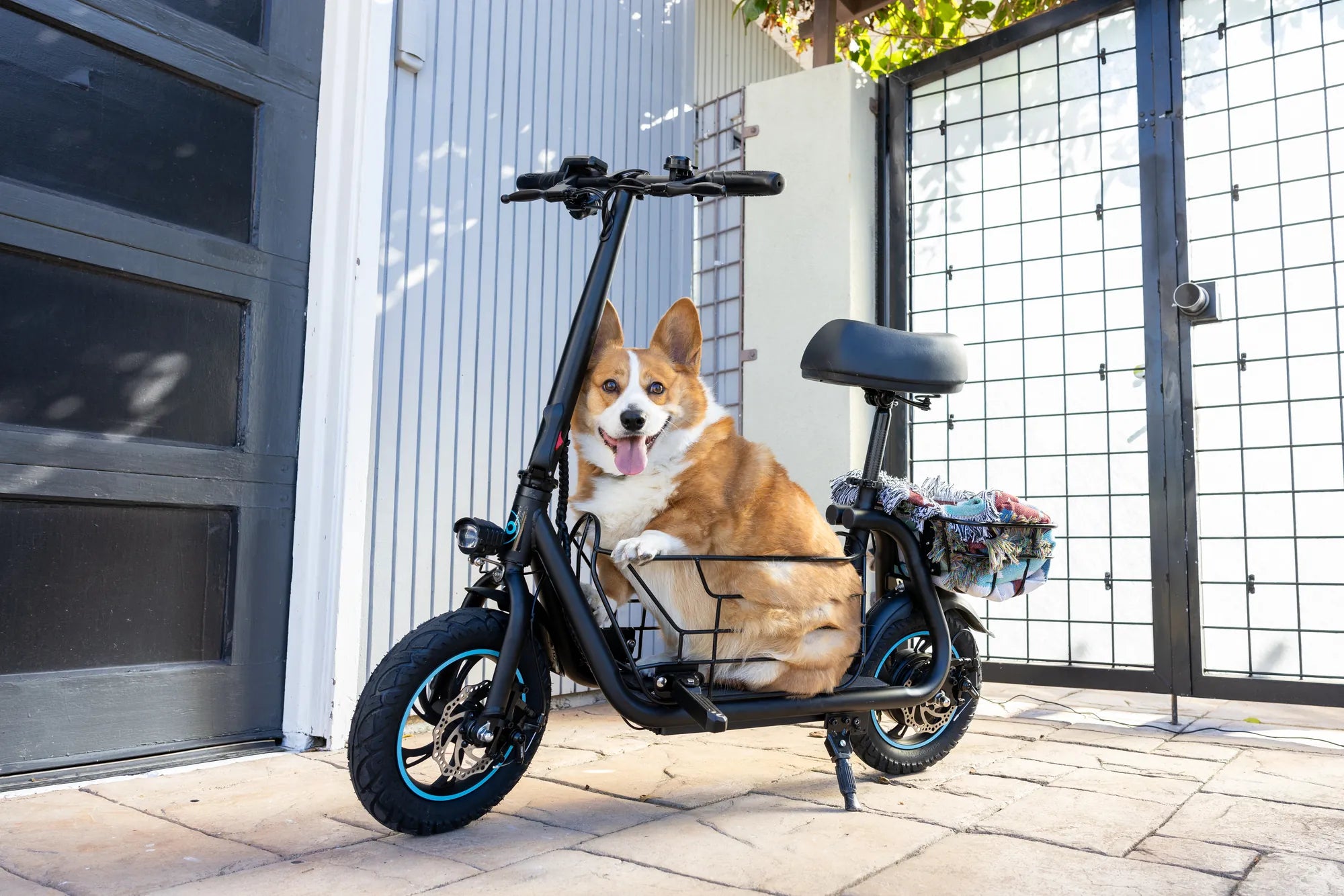
Redefining Your Commute with License-Free Freedom
Navigating city streets has never been easier. The demand for accessible, efficient, and cost-effective personal transportation is surging, and electric scooters that don't require a license are at the forefront of this mobility revolution. This guide provides the ultimate roadmap to hassle-free commuting, cutting through the confusion to deliver clear, actionable information. You'll learn the legal definitions, critical safety features, and practical insights needed to make an informed choice. We'll explore why brands like Gyroor, a leading electric scooter and e-bike manufacturer trusted by over 100,000 riders, prioritize certified safety and robust warranties to deliver genuine peace of mind.
What Makes an Electric Scooter "License-Free"? Understanding Local Laws
The term "license-free" is not a marketing gimmick but a specific legal classification. In most jurisdictions across North America and Europe, low-speed electric scooters are categorized as Personal Light Electric Vehicles (PLEVs) or similar. This classification typically exempts them from registration, insurance, and the requirement for a driver's license.
The exemption hinges on specific technical criteria. Common limits include a maximum speed of 20 mph (32 km/h) and a motor power output under 750 watts. These parameters are designed to keep the vehicle's performance in line with traditional bicycles, allowing them to share similar infrastructure like bike lanes and paths.
However, "license-free" does not mean "regulation-free." Local laws are paramount. While a driver's license may not be needed, age restrictions often apply—many cities require riders to be 16 or 18 years old. Helmet laws vary widely, with some mandating them for all riders and others only for minors.
Municipal ordinances frequently dictate where you can and cannot ride. Sidewalk riding is prohibited in many urban centers to ensure pedestrian safety. The responsibility lies with the rider to check the specific regulations in their state, province, and city before riding. Assuming blanket legality can lead to fines and confiscation.
Top Features to Prioritize for Safe, Hassle-Free Riding
Selecting the right scooter goes beyond aesthetics. To ensure daily reliability and safety, specific engineering and design features are non-negotiable. These elements transform a simple purchase into a dependable commuting partner.
Motor Power & Speed Settings: Control and Capability
A motor in the 350W to 500W range offers the ideal balance for license-free models. This provides sufficient torque to tackle moderate hills (essential for a sweat-free commute) while staying within common legal power limits. A dual-motor system, often found on higher-performance models, significantly increases hill-climbing ability but may push the scooter into a different legal class in some areas.
Multiple speed modes are crucial for control. A beginner or eco mode (often capped at 10-15 mph) is perfect for crowded paths or learning. Standard and sport modes allow for efficient travel on clear bike lanes. The ability to limit your top speed ensures you can easily comply with local laws and ride safely in varying conditions.
Battery Safety & Range Confidence: The Heart of Reliability
The battery is the most critical component for safety and convenience. For true hassle-free use, insist on UL-certified battery packs. This independent certification, which Gyroor utilizes across its lineup, rigorously tests for electrical, mechanical, and fire safety, providing assurance against the risks associated with inferior cells.
Real-world range is a key practical concern. While manufacturers often cite maximum range, a realistic expectation for most commuters is 15-25 miles on a single charge, depending on rider weight, terrain, and speed. A high-quality battery rated for 500+ charge cycles, like those used by reputable brands, maintains its capacity longer, protecting your investment over years of use.
Build Quality & Weather Resistance: Built for Daily Use
A sturdy frame, typically made from aerospace-grade aluminum, is essential for durability and rider stability. The braking system is equally important; a combination of electronic (regenerative) braking and a mechanical disc or drum brake offers reliable stopping power in all conditions.
Weather resistance separates fair-weather toys from true commuter tools. An IPX5 water-resistance rating, a standard feature on Gyroor scooters, means the scooter can withstand water jets from any direction. This allows you to confidently ride through puddles and light rain without worrying about immediate electrical damage, making your commute truly all-weather capable.
Warranty & Support: Your Long-Term Peace of Mind
A comprehensive warranty is the brand's promise of reliability. A robust 1-year warranty on the frame, motor, and controller, like that offered by Gyroor, demonstrates confidence in the product's build quality. Accessible and responsive customer support is the final pillar of a hassle-free experience, ensuring help is available if you encounter any issues.
Gyroor's Commitment to Hassle-Free, License-Free Commuting
Gyroor's product philosophy is directly engineered to meet the core needs of the license-free commuter: safety, reliability, and simplicity. This commitment is manifested in tangible features that address the primary pain points of new and experienced riders alike.
Safety is foundational, starting with the UL-certified battery packs in every model. This eliminates a major concern for riders storing or charging their scooters at home or the office. The IPX5-rated water-resistant design ensures that an unexpected drizzle doesn't end your commute or lead to costly repairs, providing practical durability.
Performance is calibrated for real-world use. Gyroor's license-free models feature motors with ample power for urban inclines while adhering to common speed regulations. The inclusion of multiple riding modes gives riders intuitive control, allowing them to match their speed to the environment, from a busy shared path to a dedicated bike lane.
Ultimately, Gyroor's 1-year warranty and support for a community of over 100,000 riders provide the assurance that the company stands behind its products. This end-to-end focus on certified components, thoughtful design, and post-purchase support encapsulates what it means to deliver a genuinely hassle-free commuting experience.
License-Free E-Scooters vs. Other Transport: A Practical Comparison
Understanding how license-free electric scooters stack up against other modes of transport clarifies their unique value proposition. The following table provides a data-driven comparison across key metrics.
| Transport Mode | Avg. Upfront Cost | Ongoing Costs (Annual) | Parking & Storage | Environmental Impact | Ideal Use Case |
|---|---|---|---|---|---|
| License-Free E-Scooter | $500 - $1,200 | $30-$50 (electricity) | Extremely Easy (foldable) | Very Low (direct electric) | Last-mile, commutes under 10 mi, urban errands |
| Licensed E-Moped / Scooter | $2,000 - $5,000+ | $300+ (insurance, registration, maintenance) | Moderate (requires motorcycle spot) | Low | Longer commutes (15+ mi), higher speed needs |
| Public Transit (Monthly Pass) | N/A | $800 - $1,500 | N/A | Low (shared) | Long, predictable routes, avoiding weather |
| Personal Car | $25,000+ | $7,000+ (fuel, insur., maint., parking) | Difficult & Costly | High | Long distances, family travel, cargo |
| Traditional Bicycle | $300 - $1,000 | Minimal | Easy (requires lock) | Zero | Fitness-focused, short trips, no battery concerns |
This comparison highlights the license-free electric scooter's niche as a uniquely flexible and cost-effective tool. It dramatically reduces the financial and bureaucratic burden associated with licensed vehicles while offering door-to-door convenience that public transit often lacks. For the 3-10 mile urban commute, it presents an optimal balance of speed, cost, and practicality.
Frequently Asked Questions (FAQ) About License-Free Electric Scooters
Q: Do I really not need any license at all?
A: For vehicles that strictly meet local definitions of a low-speed PLEV (typically under 20 mph/750W), a driver's license is usually not required. However, you must verify your local laws, as some regions may impose a minimum age requirement (e.g., 16+), and rules can differ between states/provinces and individual cities.
Q: Where am I allowed to ride my license-free scooter?
A> Permitted areas most commonly include bicycle lanes, multi-use paths, and roads with speed limits at or below 25-35 mph, depending on local law. Riding on sidewalks is frequently prohibited in business districts and densely populated areas due to pedestrian safety concerns. Always check your municipal transportation ordinances.
Q: Is insurance required for a license-free scooter?
A> Legally mandated insurance is rare for these classifications. However, it is highly recommended. Personal liability insurance (often extendable from a renter's or homeowner's policy) can protect you if you are at fault in an accident. Separate theft/damage coverage can also safeguard your investment.
Q: How do I ensure my scooter stays legal and safe?
A> First, never tamper with the speed limiter or modify the motor to exceed local power limits. Regularly perform maintenance: check tire pressure, ensure brakes are responsive, and inspect for loose bolts. Always use appropriate safety gear, including a helmet, even if not legally required for your age group.
Q: What is the true realistic range I can expect on a single charge?
A> Manufacturer ranges are achieved under ideal laboratory conditions. For real-world commuting, calculate with a 20-30% buffer. A scooter advertised for a 25-mile range will typically achieve 17-20 miles for an average-weight rider on terrain with mild hills. Factors like cold weather, rider weight, and frequent acceleration will reduce range.
Embrace Effortless Urban Mobility
Electric scooters that don't require a license represent more than just a product category; they symbolize a shift towards democratized, efficient, and sustainable urban mobility. By eliminating the barriers of licensing, high costs, and complex regulations, they open up a new world of commuting freedom. The key to unlocking this potential lies in informed selection—prioritizing certified safety features, durable construction, and reputable brand support.
This journey towards hassle-free commuting culminates in choosing a partner you can trust. Brands that invest in UL-certified batteries, weather-resistant engineering, and strong warranties, like Gyroor, are fundamentally aligned with the rider's need for reliability and peace of mind. Your daily commute should be a source of liberation, not stress.
The future of city transportation is lightweight, electric, and accessible. By equipping yourself with the right knowledge and the right vehicle, you're not just choosing a new way to get to work—you're choosing more time, more freedom, and a more enjoyable start and end to every day. Explore how a purpose-built commuter scooter can transform your routine.
Ready to experience true hassle-free commuting? Browse the full collection of UL-certified, feature-rich electric scooters and e-bikes designed for real-world reliability at gyroorboard.com.
Pink Pink Electric Scooters: The Ultimate Guide to Stylish and Sustainable Commuting
Kids Riding Electric Scooters: Safety, Benefits, and Fun for Young Riders