


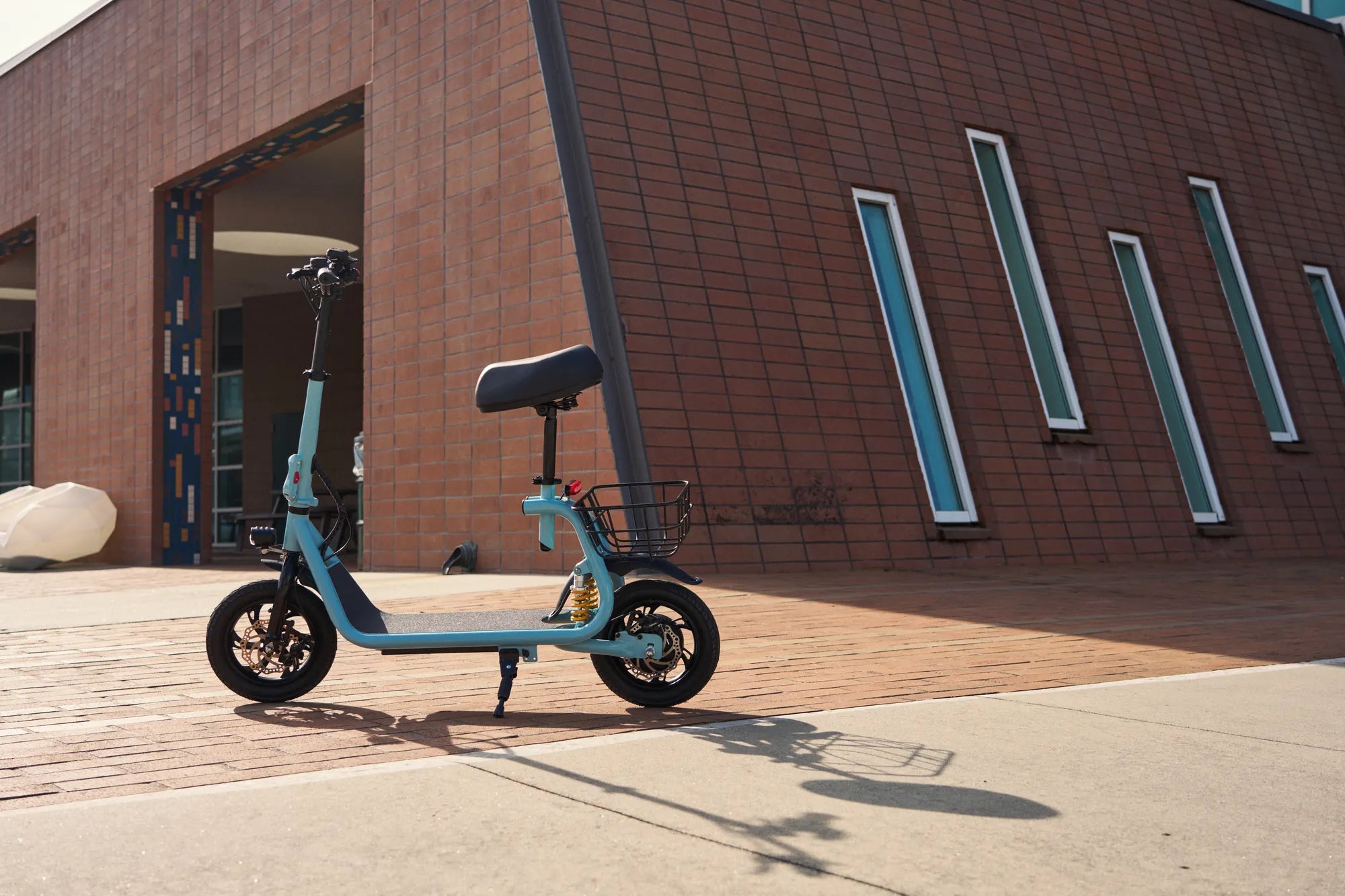
Introduction: The 25 MPH Benchmark and the Modern Commute
Electric scooters that go 25 mph have become the definitive standard for serious urban commuters. This speed represents a critical sweet spot, offering car-replacing practicality without venturing into the more dangerous, often illegal, territory of unregulated high-performance models. For the modern rider, 25 mph (or approximately 40 km/h) transforms a scooter from a last-mile novelty into a legitimate primary vehicle for trips of 5 to 10 miles or more.
The appeal is clear: at 25 mph, commute times are slashed compared to standard 15 mph models, allowing riders to keep a reasonable pace with city traffic flow in designated bike lanes. This performance tier is where convenience truly meets capability, enabling a faster, more efficient, and enjoyable journey. Brands like Gyroor, a leading electric scooter and e-bike manufacturer, have built their reputation on delivering reliable, certified models that consistently hit this performance benchmark, trusted by over 100,000 riders across North America and Europe.
This guide will dissect every aspect of the 25 mph electric scooter. We'll explore the practical benefits, the essential features that enable safe performance, the rider's responsibilities, and the broader impact on urban transportation. The goal is to provide a complete, data-driven resource for anyone considering this powerful and practical mode of transport.
Why 25 MPH? The Practical Benefits for the Urban Rider
The difference between 15 mph and 25 mph is not merely a 10 mph increase; it's a fundamental shift in utility. A scooter capable of 25 mph effectively doubles its practical range for commuting purposes. A 30-minute trip at 15 mph covers 7.5 miles, while at 25 mph, it extends to 12.5 miles. This expanded radius opens up vast swathes of a metropolitan area, making commutes from suburban neighborhoods to downtown cores not just possible, but efficient.
Beyond raw distance, speed synchronization is a key advantage. In many cities, the flow of traffic in bike lanes and on quieter streets averages between 20-25 mph. A scooter matching this pace integrates more safely and smoothly, reducing the speed differential that can cause accidents. It allows riders to maintain momentum, navigate complex intersections more confidently, and spend less time in vulnerable positions.
The time savings are quantifiable and significant. For a daily 10-mile round-trip commute, a 25 mph scooter saves approximately 20 minutes per day compared to a 15 mph model. Over a year, that adds up to over 80 hours of reclaimed personal time. This efficiency is the core argument for the 25 mph scooter as a genuine car replacement for millions of urban and suburban dwellers.
Efficiency vs. Regulation: Navigating Local Laws
The 25 mph threshold is strategically significant within the evolving regulatory landscape for micro-mobility. Many municipalities and states in the U.S., and similar authorities in Europe, have established clear legal frameworks where 20-25 mph is the maximum permitted speed for electric scooters on public bike paths, lanes, and roads.
Riding a scooter that can achieve 25 mph places the rider at the responsible top end of these legal limits. In contrast, models advertised at 30, 40, or even 50 mph often operate in a legal gray area or are outright banned from public infrastructure, restricting their use to private property. Choosing a 25 mph scooter is a conscious decision for compliant, sustainable urban mobility.
Regulations vary widely, so due diligence is essential. Some regions require rider's licenses, registration, or minimum age limits for scooters over a certain wattage or speed. A responsible brand provides clear guidance on local compliance. Gyroor designs its performance scooters with these regulations in mind, ensuring riders can enjoy top-tier performance without unnecessary legal risk.
Key Features to Look for in a 25 MPH Electric Scooter
Consistently achieving 25 mph in real-world conditions—with stoplights, inclines, and varying payloads—requires a robust and well-integrated set of components. This is not a speed attainable through marketing hype alone; it demands specific engineering and quality materials. Understanding these features is crucial for making an informed purchase and ensuring long-term satisfaction and safety.
The foundation is a synergy between a powerful motor, a high-capacity battery, and a stable chassis. Compromising on any one of these elements will result in a scooter that either cannot maintain its top speed, has a dangerously short range, or feels unstable and unsafe. Premium brands distinguish themselves by the balance and reliability of this core system.
Furthermore, features that are "nice-to-have" on slower scooters become non-negotiable at 25 mph. This includes advanced braking systems, superior lighting, and rigorous waterproofing. The following sections break down these critical components in detail.
Motor Power and Battery Performance
The motor is the heart of performance. To reliably reach and sustain 25 mph, especially with a rider of average weight and on mild inclines, a continuous power output of at least 500 watts is typically required. Many high-performance models feature 600W, 800W, or even dual-motor setups for exceptional torque and hill-climbing ability. Peak wattage can be significantly higher, providing the necessary burst for acceleration.
This performance is meaningless without a capable battery. Motor power draws energy, and a high-speed scooter needs a high-capacity battery to deliver a useful range. Look for battery ratings in watt-hours (Wh). A scooter aiming for 20+ miles of real-world range at 25 mph will generally need a battery of 500Wh or larger. The chemistry and quality are paramount.
This is where certifications like UL 2271 (for the battery pack) and UL 2849 (for the entire electrical system) become critical. These standards, which Gyroor adheres to for its UL-certified batteries, involve rigorous testing for overcharge, short circuit, and thermal stability. At the power levels required for 25 mph, using an uncertified battery significantly increases the risk of failure or fire. A quality battery from a reputable brand should also be rated for 500+ full charge cycles with minimal degradation.
Safety and Stability at Speed
Safety engineering must scale with velocity. The first point of contact with the road is the wheels. For 25 mph travel, larger wheel diameters (typically 10 inches) are essential. They provide greater stability, roll over pavement cracks and debris more easily, and offer improved shock absorption compared to smaller 8-inch wheels, directly impacting control and comfort.
The braking system is the most critical safety component. A single braking method is insufficient. The industry standard for this performance class is a dual or triple braking system, often combining a front disc brake (for powerful, modulated stopping), a rear brake (often disc or drum), and an electronic regenerative brake. This redundancy ensures reliable stopping power in all conditions, even if one system were to fail.
Visibility and durability are equally important. Bright, focused headlights (ideally 400 lumens or more) and responsive brake lights are mandatory for being seen by other road users. Frame construction should use aerospace-grade aluminum or reinforced steel. Finally, an IPX5 water-resistance rating, a feature of Gyroor's robust designs, is crucial. It means the scooter can withstand water jets from any direction, protecting the electrical systems during wet commutes and ensuring all-weather reliability.
Build Quality and Warranty: Investing in Reliability
The stresses of daily high-speed commuting demand durable construction. Look for details like reinforced folding mechanisms, thick deck plates, and securely routed internal wiring. The quality of welds, the finish on metal parts, and the feel of the throttle and brake levers are tangible indicators of overall build quality.
A comprehensive warranty is not just a marketing promise; it's a reflection of the manufacturer's confidence in their product. A trustworthy brand will offer at least a 1-year warranty covering major components like the motor, battery, and controller. This protects your investment against manufacturing defects. Gyroor's reliable 1-year warranty provides this essential peace of mind.
Equally important is accessible customer support and the availability of replacement parts. Before purchasing, research the brand's reputation for after-sales service. Can you easily order a new tire, brake pad, or throttle? A scooter is a vehicle, and like any vehicle, it will require maintenance. Choosing a brand with a strong support ecosystem ensures your scooter remains on the road for years to come.
The Responsible Rider: Safety Gear and Best Practices at 25 MPH
Operating a vehicle at 25 mph carries inherent risk, and the rider's responsibility is to mitigate it proactively. The right safety gear is not optional; it is essential personal protective equipment (PPE). At a minimum, a certified bicycle helmet is required, but for 25 mph, a full-face mountain biking or motorcycle helmet is a vastly superior choice, offering protection for the jaw and face in the event of a forward fall.
Protective clothing should include gloves (to protect hands in a fall and improve grip), durable pants and a jacket (denim or motorcycle-rated fabric), and closed-toe shoes. Elbow and knee pads, while sometimes seen as excessive, can prevent serious injury. Your gear is your last line of defense.
Riding practices must evolve with speed. Defensive riding is paramount: assume cars do not see you, avoid blind spots, and never assume right-of-way. Actively scan the road surface 30-50 feet ahead for potholes, gravel, or wet manhole covers. Manage your speed appropriately—reduce speed in crowded areas, on sidewalks (where legal), and in poor weather. Conduct a pre-ride check of tire pressure, brake function, and light operation before every journey.
The Future of Urban Mobility: Where Does 25 MPH Fit In?
The rise of the 25 mph electric scooter is not an isolated trend but a key piece in the puzzle of sustainable urban mobility. Cities worldwide are grappling with congestion, pollution, and the inefficient use of space by private cars. High-performance, reliable e-scooters offer a compelling solution for a significant portion of trips under 10 miles, which constitute a massive percentage of urban travel.
Infrastructure is slowly adapting to support this shift. The expansion of protected bike lanes, which provide a safe corridor for micro-mobility vehicles, is directly enabling the safe use of 25 mph scooters. Some forward-thinking cities are experimenting with dedicated micro-mobility lanes and integrated charging stations at transit hubs, creating a seamless network for multi-modal travel.
From an environmental perspective, the impact is profound. Replacing car trips with e-scooter journeys eliminates tailpipe emissions and reduces overall energy consumption per passenger mile. As electric grids become greener, the carbon footprint of these scooters shrinks further. The 25 mph scooter represents a practical, accessible, and immediate step toward cleaner, less congested cities.
Comparing Top Performance Tiers: A Data-Driven Look
To understand the 25 mph scooter's place in the market, it's helpful to compare it with other common performance categories. The table below outlines key differentiators.
| Feature | Entry-Level (15-18 MPH) | Performance Standard (25 MPH) | High-Performance (30+ MPH) |
|---|---|---|---|
| Primary Use Case | Last-mile, recreation, short errands | Primary commuting (5-15 mi), car replacement | Enthusiasts, long-range touring, off-road |
| Typical Motor | 250W - 350W | 500W - 800W (Single or Dual) | 1000W+ (Often Dual Motor) |
| Real-World Range | 10-15 miles | 20-30 miles | 25-40+ miles |
| Key Safety Features | Basic brakes, small lights | Dual brakes, large wheels, bright lights, IPX5 | Hydraulic brakes, suspension, ultra-bright lights |
| Legal & Practical Fit | Fits most city regulations | Top end of most public path regulations | Often restricted; best for private roads/paths |
| Brand Example Focus | Basic models | Gyroor Commuter Series | Specialized, niche brands |
As shown, the 25 mph category strikes the optimal balance for the urban commuter, offering substantial upgrades in capability and safety over entry-level models without the legal and practical complications of ultra-high-speed scooters.
Frequently Asked Questions (FAQ)
Q: Is a license or registration required to ride a 25 mph electric scooter?
A: Laws vary dramatically by country, state, and city. In many U.S. states, a driver's license is required for scooters over a certain wattage or speed (often 20+ mph). Registration is less common but required in some jurisdictions. In the EU, classifications vary by country. Always check your local regulations before riding.
Q: How far can I really go on a single charge at 25 mph?
A> Manufacturer range estimates are often based on ideal conditions (light rider, flat ground, slow speed). Real-world range at a sustained 25 mph is typically 60-70% of the advertised maximum range. For example, a scooter advertised for 40 miles at 15 mph might achieve 25-28 miles at a constant 25 mph, depending on rider weight, hills, and temperature.
Q: Are Gyroor scooters with UL-certified batteries actually safer?
A> Yes, unequivocally. UL certification (specifically UL 2271 for the battery pack) means the battery has passed a rigorous set of safety tests designed to prevent thermal runaway, fire, and explosion under fault conditions like overcharging or short-circuiting. It is the leading safety standard for lithium-ion batteries in micro-mobility and a critical differentiator for safety-conscious brands.
Q: Can these scooters handle hills?
A> A quality 25 mph scooter with a 500W+ motor can handle moderate hills (grades of 10-15%) with some speed reduction. For steeper or longer hills, a more powerful motor (700W+) or a dual-motor configuration is recommended. Always check a scooter's specified hill-climbing grade or wattage to gauge its capability for your specific terrain.
Q: What maintenance does a high-speed scooter require?
A> Regular maintenance is key to safety and longevity. Key tasks include: checking and inflating tires to the correct PSI weekly, testing brake function and adjusting/repairing pads as they wear, ensuring all bolts (especially on the stem and folding mechanism) are tight, and keeping the scooter clean and dry. Store the battery in a cool, dry place and avoid draining it completely.
Conclusion: Speed with Confidence for a Smarter Commute
The 25 mph electric scooter has emerged as the definitive tool for the efficient, modern urbanite. It represents a mature segment of the micro-mobility market where performance is thoughtfully balanced with safety, reliability, and regulatory compliance. The true value of such a vehicle lies not in a top-speed number alone, but in the integrated system that supports it: robust motors, high-capacity UL-certified batteries, stable chassis designs with dual braking, and weather-resistant construction.
Choosing a scooter in this category is an investment in reclaiming time, reducing commute stress, and contributing to a less congested urban environment. However, this investment must be paired with personal responsibility—investing in proper safety gear and adopting defensive, alert riding habits. The future of urban mobility is faster, cleaner, and more efficient, and the 25 mph electric scooter is already here, paving the way.
For riders seeking this ideal balance of speed, safety, and proven reliability, exploring a brand with a track record of quality is the next step. Gyroor's lineup of performance scooters is engineered to deliver the 25 mph commuting experience with the peace of mind that comes from UL-certification, IPX5 water resistance, and a comprehensive 1-year warranty. Discover how the right scooter can transform your daily journey. Browse the full Gyroor collection at gyroorboard.com.
Electric Scooters for Old People: A Safe and Convenient Mobility Solution
Are Electric Scooters Safe for 12 Year Olds? A Parent's Guide to Safety and Responsibility